
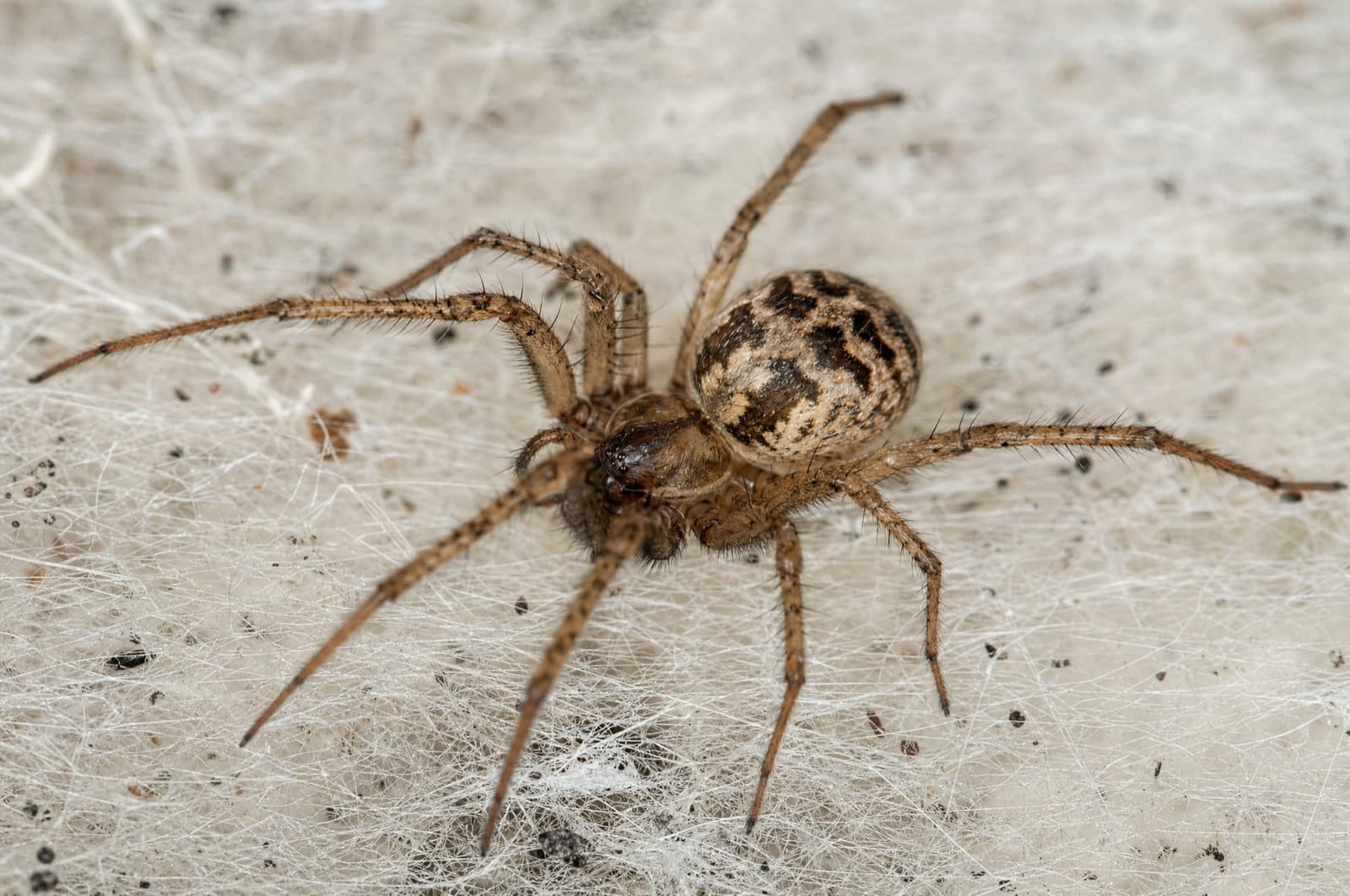
What Attracts House Spiders to Your House?
At a glance
- Short answer: Prey and shelter — nothing about house spiders is special
- The verdict: The usual four
The attractant verdict
Four possible answers to why this species turned up. Three stay unlit — and that's the argument: the honest answer could have been any of them, and for this species it wasn't.
This is the most common answer in this hub — an answer, not a shortfall.
Prey and shelter — nothing about house spiders is special
Our own old page said house spiders are drawn in by "a combination of factors... food sources, nesting" — technically true, but written to sound like a distinctive mechanism when it's really just prey and shelter, the same two things that explain most spiders indoors.
Small flying and crawling insects to eat, and an undisturbed, moisture-favoring corner to build a web in — kitchens, basements, and bathrooms qualify because they tend to have both. A house spider isn't attracted to anything you did; it's attracted to what's already living there.
“Prey and shelter — the same two things that attract almost every spider. Nothing about a house spider is special, and that's the honest answer.”
Why it's here, in full
Why there's no special story here
A spider indoors is following two things: prey and shelter. It doesn't eat food debris, so kitchen crumbs or an open trash can don't attract it directly — what draws it is the small insects that those conditions attract, and a spider simply follows its food source indoors. Damp, undisturbed corners like basements, crawlspaces, and bathroom baseboards tend to have both more insects and more places to build an undisturbed web, which is why spiders concentrate there.
That's the whole mechanism. It isn't about the house being unusually inviting to spiders specifically — it's the same prey-and-shelter logic that explains most arthropods on this list, just running through insects instead of through you.
How to tell it's actually this species
Real signs only — a species with four honest tells gets four, and stops. Where a sign is weak on its own, we say so.
Webbing in undisturbed corners, window frames, or behind furniture
Small, discarded egg sacs tucked near a web
Shed skins left behind after molting near a web site
Spider sightings concentrated in damp areas such as basements or bathrooms
Could be something else: Any of several common indoor spider species can show up in these same damp areas, so sightings alone don't identify which one.
Want house spider gone?
This page only answers why it's here. Every removal step for this exact species — what to seal, what to set, what actually works — lives on its own dedicated guide.
Two questions, two pages
Here: why it turned up at all — the honest answer, blame removed.
There: the step-by-step removal guide for this exact species.
Key takeaways
- House spiders follow insect prey and undisturbed shelter, not household food.
- Damp, quiet corners like basements and bathrooms attract more of the insects spiders hunt.
- Webbing, shed skins, and egg sacs are the clearest signs of an established spider.
- Removal steps live at /top-diy-methods/house-spider.
Want it gone, not just explained?
This page is about why house spiders show up. Removal is covered at /top-diy-methods/house-spider.
Frequently asked
Sources(2)
- [1]Colorado State University Extension — Spiders in the Home
Indoor spiders are found where moisture and prey insects are available, such as basements and bathrooms
extensionverified 2026-07-17 - [2]UC Statewide IPM Program — Spiders
Spiders indoors are following prey insects and shelter rather than household food, and eliminating prey limits their numbers
extensionverified 2026-07-17
Written & reviewed by
VerifiedDaniel Brady
NH-Licensed Pesticide Applicator · License #782664 (NHDAMF, RSA 430)
Daniel Brady is the New Hampshire–licensed applicator behind Anchor Pest Services, a family-owned pest control company serving the Manchester area since 2017.
Last updated Jul 2026
Prey and shelter — nothing unusual here
If spiders are already established, we handle the rest
Same-day inspections across southern and central New Hampshire.
- Family-owned in Manchester since 2017
- NH commercial applicator #782664, category F1
- We will tell you when the answer is do nothing
NH License #782664 · No obligation · We answer in person