
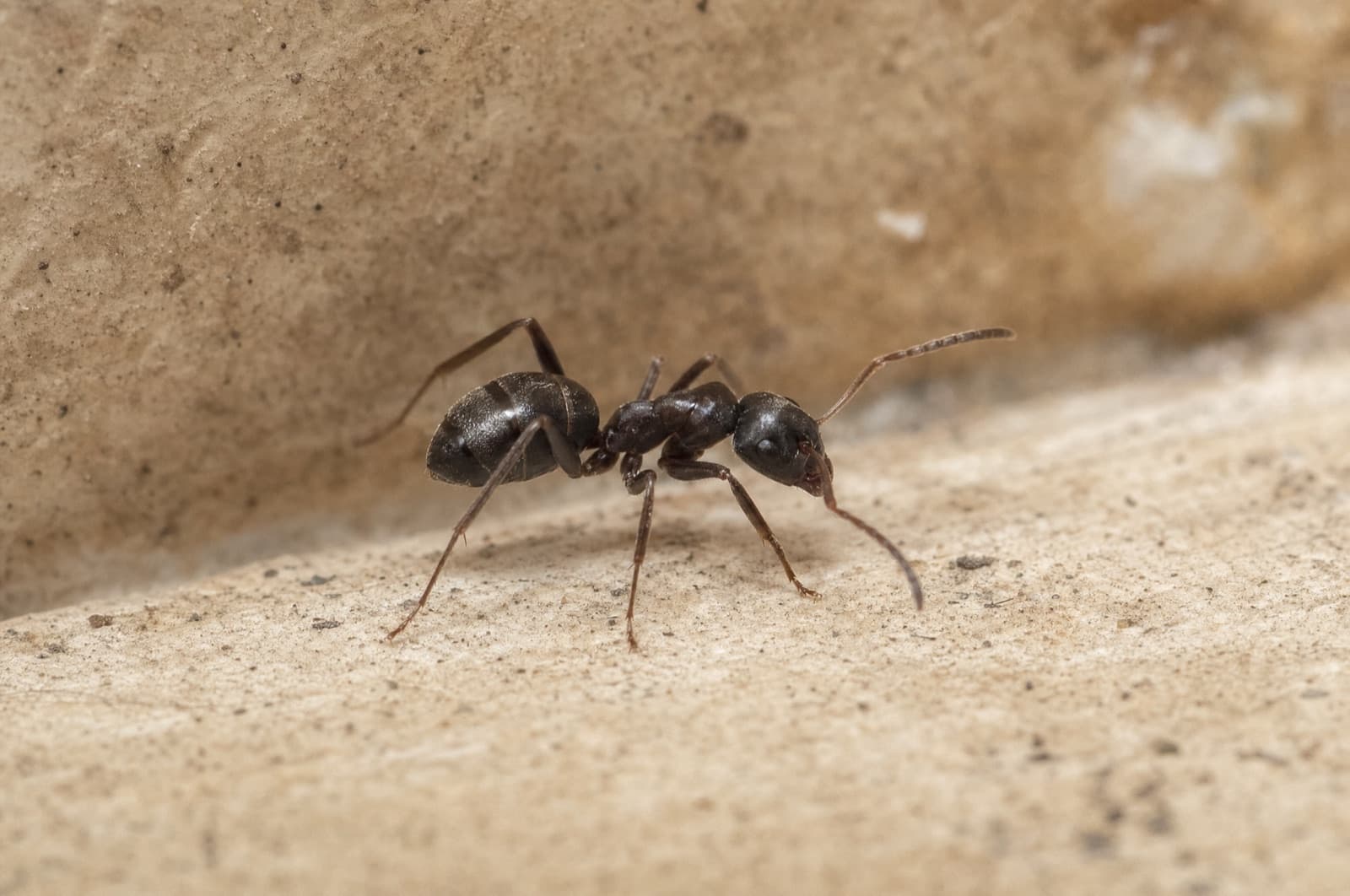
What Attracts Odorous House Ants to Your House?
At a glance
- Short answer: Food and moisture — nothing about odorous house ants is special
- The verdict: The usual four
The attractant verdict
Four possible answers to why this species turned up. Three stay unlit — and that's the argument: the honest answer could have been any of them, and for this species it wasn't.
This is the most common answer in this hub — an answer, not a shortfall.
Food and moisture — nothing about odorous house ants is special
Our own old page said odorous house ants are drawn in because they're "searching for food, moisture, and shelter" — accurate, and worth stating plainly instead of implying a more specific reason exists.
A sugary or sweet food source foraging ants can carry back to the colony, and a moist, shaded nesting site nearby — under mulch, inside a wall void, beneath a slab, or in a potted plant. This species is an opportunistic nester rather than a picky one, so it takes whatever damp, food-adjacent spot is available.
“Food and moisture — the same two things that attract almost every ant. Nothing about an odorous house ant is special, and that's the honest answer.”
Why it's here, in full
Why there's no special story here
Odorous house ants forage widely for sugars and sweets and will nest almost anywhere that stays consistently moist and shaded — under mulch or debris outdoors, or inside a wall void, beneath a slab, or in a potted plant indoors. That combination, food to forage toward and moisture to nest near, is the entire explanation, and it's the same combination that explains most common household ants.
Because this species nests opportunistically rather than in one preferred spot, addressing moisture sources — leaking pipes, gutters spilling near the foundation, overwatered plants — tends to matter more than anything about the food itself.
How to tell it's actually this species
Real signs only — a species with four honest tells gets four, and stops. Where a sign is weak on its own, we say so.
A visible trail of ants following a consistent path to a sugar or food source
A strong, rotten-coconut-like odor when an ant is crushed
Ant activity concentrated around a sink, potted plant, or other consistently damp spot
Could be something else: Moisture-loving activity in the same locations can also come from other ant species or unrelated small insects, so location alone doesn't confirm which species.
Want odorous house ant gone?
This page only answers why it's here. Every removal step for this exact species — what to seal, what to set, what actually works — lives on its own dedicated guide.
Two questions, two pages
Here: why it turned up at all — the honest answer, blame removed.
There: the step-by-step removal guide for this exact species.
Key takeaways
- Odorous house ants forage for sugary food and nest wherever moisture is reliable.
- They're opportunistic nesters, settling in wall voids, under slabs, or in potted plants rather than one fixed spot.
- A crushed ant's rotten-coconut smell is the clearest identifying sign.
- Removal steps live at /top-diy-methods/odorous-house-ant.
Want it gone, not just explained?
This page is about why odorous house ants show up. Removal is covered at /top-diy-methods/odorous-house-ant.
Frequently asked
Sources(2)
- [1]Utah State University Extension — Odorous House Ants
Odorous house ants are opportunistic nesters that prefer moist, shady areas near a food source
extensionverified 2026-07-17 - [2]University of Minnesota Extension — Ants
Household ants are drawn indoors by accessible food and moisture, and reducing moisture sources reduces nesting opportunities
extensionverified 2026-07-17
Written & reviewed by
VerifiedDaniel Brady
NH-Licensed Pesticide Applicator · License #782664 (NHDAMF, RSA 430)
Daniel Brady is the New Hampshire–licensed applicator behind Anchor Pest Services, a family-owned pest control company serving the Manchester area since 2017.
Last updated Jul 2026
Food and moisture — nothing unusual here
If ants are already established, we handle the rest
Same-day inspections across southern and central New Hampshire.
- Family-owned in Manchester since 2017
- NH commercial applicator #782664, category F1
- We will tell you when the answer is do nothing
NH License #782664 · No obligation · We answer in person