
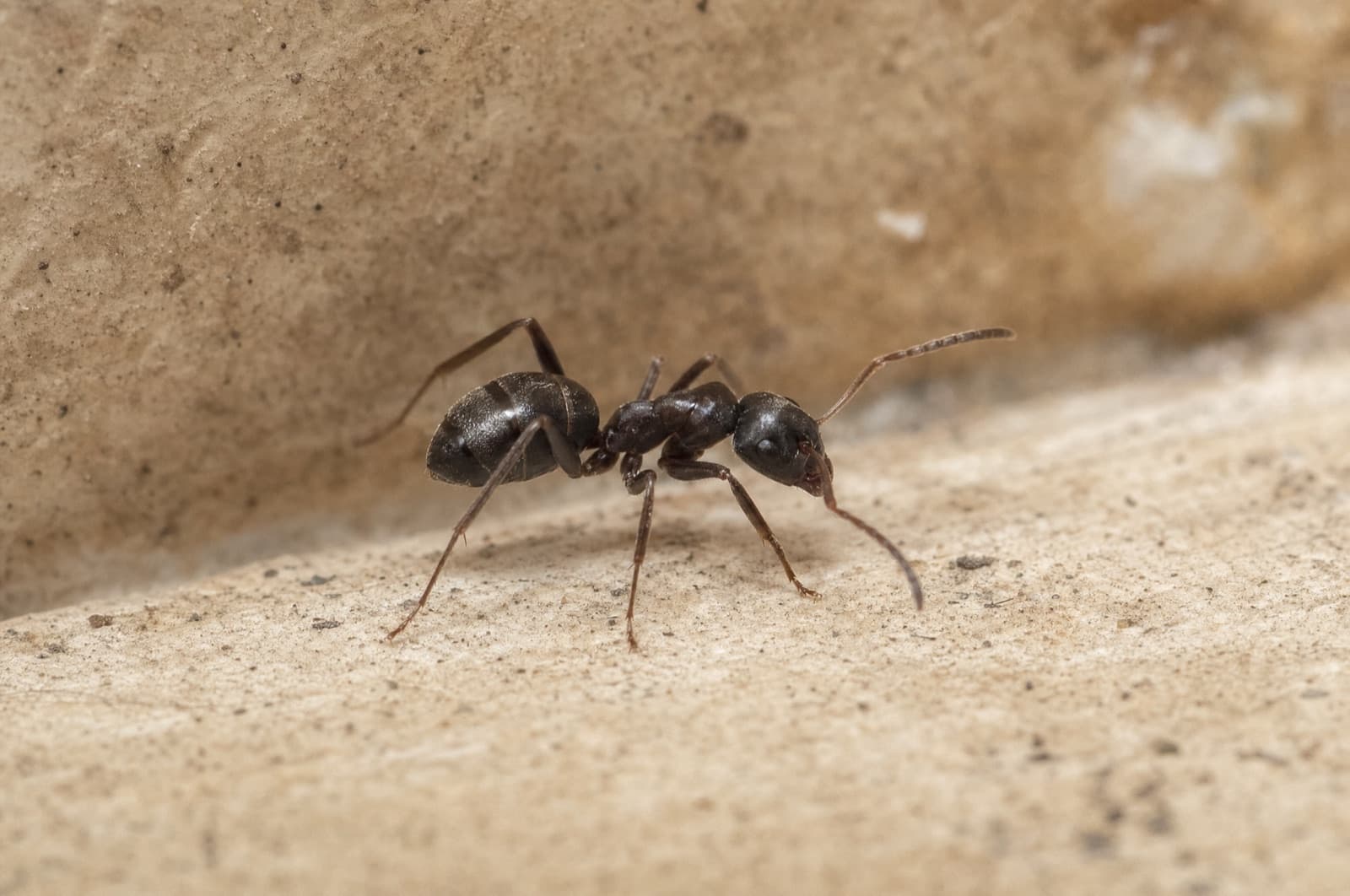
How to Get Rid of Odorous House Ants
At a glance
- Difficulty: Beginner
- Time: Days to weeks for bait to work
- Cost: Low — a labeled sweet bait and basic sealing/moisture fixes
- Success: High with bait and patience; contact spray tends to make the problem worse, not better
Can you DIY Odorous House Ant?
The verdict on Odorous House Ant DIY
A classic bait-responsive nuisance ant — as long as you don't spray them.
Odorous house ants (Tapinoma sessile) are multi-queen and multi-colony ("polydomous"), which means they split into more colonies when stressed by a repellent spray — the opposite of what you want. Sweet-based slow-acting bait, by contrast, is carried back to the colony and reaches the queens, the mechanism that actually eliminates the nest. This is a straightforward, beginner-friendly DIY job when you use bait and skip the spray.
The 5 DIY methods — honestly graded
Every approach graded for this species, in IPM order — prevention first, chemistry late. Pick a method to see how it works, the steps, and what it actually takes.
Prevention / Exclusion
ModerateReduces the moisture and food access that draws them in, though won't eliminate an established colony on its own.
Odorous house ants prefer moist, shaded habitat close to a food source and often move indoors after rain. Cutting off moisture and food access makes the space less attractive, complementing bait.
Best for: Reducing recruitment alongside a bait program
Seal cracks and gaps
Caulk cracks around windows and the foundation.
Fix moisture sources
Address leaks and damp areas that draw foraging ants indoors, especially after rain.
Store sweets and trim vegetation
Keep sugary foods in sealed containers, and trim vegetation touching the house.
Tools & materials
Why DIY falls short here
Not scare tactics — the specific, proportionate reasons a home attempt can stall for this species.
Contact spray causes colony budding
Multi-queen colonies split into more colonies when stressed by repellent sprays, spreading the infestation instead of ending it.
Under-baiting a polydomous network
One trail baited while others remain active means the colony persists elsewhere — this species can be persistent and often needs follow-up bait rounds.
Wrong bait type
Odorous house ants favor sweets — a protein-only bait may see poor uptake.
How risky is it, really?
An honest read — most nuisance species are genuinely low risk, and we say so.
Odorous house ants do not bite unless provoked and cannot sting. They do not cause damage to structures. The main real-world issue is food contamination and persistent nuisance trailing, not a health threat.
- Food contaminationCommon
Discard exposed food and store dry goods sealed
Utah State University Extension
- Persistent nuisance trailing without follow-up baitCommon
This species can be persistent — a second bait round is often needed
Utah State University Extension
- No sting, no structural damage, no meaningful health threatRare
A rare provoked bite is the extent of any direct physical risk
Utah State University Extension
Odorous House Ants in Multiple Rooms?
When a multi-queen colony network keeps returning, Anchor Pest Services handles thorough inspection and treatment across southern and central New Hampshire. Family-owned since 2017, NH license #782664.
Call a pro when…
- Trails persist after a couple of rounds of correctly placed sweet bait
- Activity in multiple rooms or areas of the home
- You'd rather not identify and monitor multiple trail locations yourself
General Pest Control
Most odorous house ant activity is a solvable DIY bait job. A pro is worth calling if trails persist after correctly placed sweet bait, or if you're finding activity in multiple rooms suggesting a large, well-established colony network.
Keep them out
- Seal cracks around windows and the foundation
- Fix moisture sources that draw foraging ants indoors
- Store sweets in sealed containers
Odorous house ants in New Hampshire
Odorous house ants are a common NH nuisance ant, especially noticeable after rain when foraging workers move indoors seeking moisture and food. They're easy to identify by a distinctive rotten-coconut or blue-cheese smell released when crushed — a genuinely useful, low-tech identification trick if you're unsure which ant you're seeing.
Peak season
Spring through fall, with noticeable spikes after rain
First-frost anchor
Manchester first hard frost ~Oct 19 (50%) / Oct 29 (80%), NOAA 1991–2020
Make sure it's a Odorous House Ant
Two quick detours worth taking — confirm the ID, then learn what drew it in so it doesn't come back.
Frequently asked
Sources & further reading(3)
- [1]Washington State University Extension — Odorous House Ant
Rotten-coconut/blue-cheese smell identification
extensionverified 2026-07-13 - [2]University of Wisconsin Extension — Odorous House Ants
Bait mechanism, identification
extensionverified 2026-07-13 - [3]Utah State University Extension — Odorous House Ant
No bite/no sting, colony budding from repellent spray, persistence
extensionverified 2026-07-13
Written & reviewed by
VerifiedDaniel Brady
NH-Licensed Pesticide Applicator · License #782664 (NHDAMF, RSA 430)
Daniel Brady is the New Hampshire–licensed applicator behind Anchor Pest Services, a family-owned pest control company serving the Manchester area since 2017.
Last updated July 2026
Other species you can tackle
Same category — the dot shows each one's DIY verdict at a glance (green = friendly, amber = doable with care, red = call a pro).
Professional Pest Control
Odorous House Ants in Multiple Rooms?
When a multi-queen colony network keeps returning, Anchor Pest Services handles thorough inspection and treatment across southern and central New Hampshire. Family-owned since 2017, NH license #782664.
- Bait-first, no repellent-spray shortcuts
- NH-licensed applicators (#782664)
- Free inspection — same-day service across southern NH
NH License #782664 · No obligation · We answer in person
Your next step
- Book a NH pro
Ant Pest Control
Book now - What to do next
Odorous House Ant — Quick ID for New Hampshire
Read the answer - What to do next
Carpenter ants vs. black ants: how to tell them apart
Read the answer - What to do next
Common Ants in New Hampshire: 12 Species You'll Actually See (And 4 You Won't)
Read the answer - Also relevant
Odorous House Ant — Quick ID for New Hampshire
Read the answer - Also relevant
Ant Prevention: Moisture Control Stops NH's Top Pest
Read the answer