
What Attracts Phorid Flies to Your House?
At a glance
- Short answer: A steady stream of phorid flies on a ground floor can mean a broken sewer line under the slab — the flies are breeding in what's leaking out.
- The verdict: Something specific
The attractant verdict
Four possible answers to why this species turned up. Three stay unlit — and that's the argument: the honest answer could have been any of them, and for this species it wasn't.
A steady stream of phorid flies on a ground floor can mean a broken sewer line under the slab — the flies are breeding in what's leaking out.
Most advice, including our own previous page, says phorid flies are attracted "due to their need for food, moisture, and suitable breeding sites," listed as generic factors. The genuinely useful, specific version of that answer is that a persistent phorid problem on a ground floor is a classic sign of a hidden plumbing failure.
Phorid flies (humpbacked or scuttle flies) breed in moist, decaying organic matter of plant or animal origin, and they can complete a generation quickly in a favorable spot. A large, persistent phorid population confined to one ground-floor area — rather than scattered evenly through a house — is a recognized signal of a broken drain or sewer line leaking sewage into the soil beneath a slab, where the larvae breed directly in that contaminated soil. Ordinary kitchen or garbage sources can also support smaller phorid populations, but a stubborn, localized indoor infestation points specifically toward a hidden plumbing problem.
“A steady stream of phorid flies on a ground floor can mean a broken sewer line under the slab — the flies are breeding in what's leaking out.”
Moist decaying organic matter, most notably sewage-contaminated soil beneath a slab from a cracked or broken drain line, where larvae can develop largely out of sight.
It turns a stubborn, unexplained phorid problem into a plumbing question rather than a cleaning question. A persistent, localized population is a legitimate reason to have a drain line inspected, not just the kitchen.
Calibrated from: University of Maryland Extension, North Carolina State University Extension, and Virginia Cooperative Extension: phorid flies breed in moist decaying organic matter, and a persistent indoor population is a recognized indicator of a broken sewer or drain line beneath a slab.
Why it's here, in full
Why a stubborn phorid problem points at plumbing, not the kitchen
Phorid flies are efficient breeders in moist, decaying organic matter, and University of Maryland Extension, North Carolina State University Extension, and Virginia Cooperative Extension all describe the same pattern: while ordinary kitchen or garbage sources can support a phorid population, a large, persistent infestation confined to one ground-floor area is a recognized sign of a broken or cracked sewer or drain line leaking sewage into the soil beneath a slab. Larvae develop directly in that contaminated soil, hidden from view and unaffected by normal household cleaning.
That's the useful distinction for a homeowner: if phorid flies keep reappearing in the same spot despite thorough cleaning of visible garbage, drains, and food sources, the honest next step is having the drain line inspected rather than repeating the same cleaning routine. The flies are simply following a breeding source that happens to be underground and out of sight, not responding to anything about how the house is kept.
How to tell it's actually this species
Real signs only — a species with four honest tells gets four, and stops. Where a sign is weak on its own, we say so.
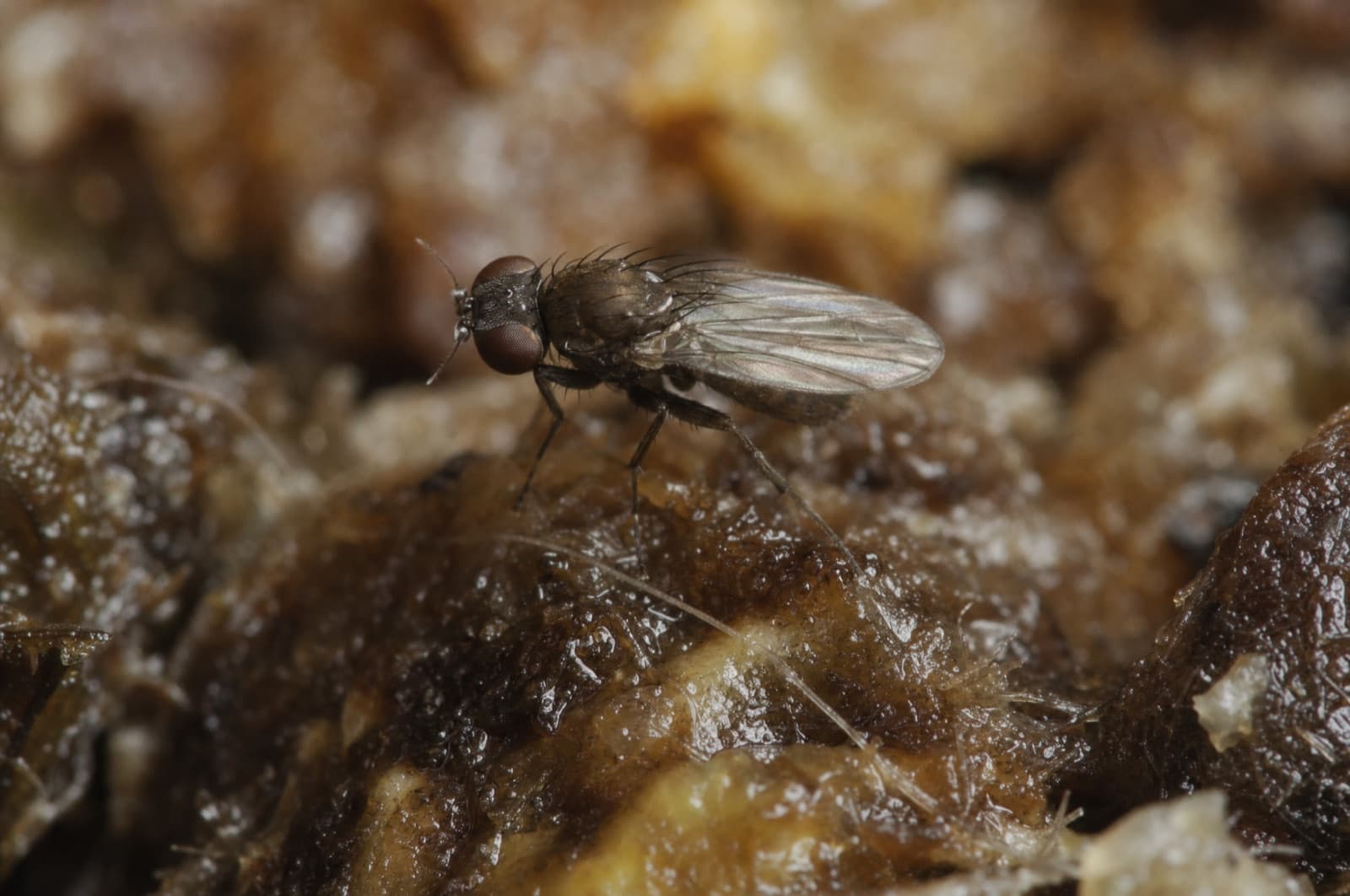
Small, dark, humpbacked flies that tend to run rapidly across a surface rather than fly directly when disturbed
A persistent, worsening fly presence confined to one ground-floor room or area, rather than spread throughout the house
A musty or sewage-like odor near a slab, floor drain, or bathroom that doesn't resolve with normal cleaning
Could be something else: A sewage-like odor can also come from a dry P-trap or a venting issue rather than a broken line; either way it's worth having checked rather than masked.
Flies persisting for weeks despite thorough kitchen and garbage cleanup
Want phorid fly gone?
This page only answers why it's here. Every removal step for this exact species — what to seal, what to set, what actually works — lives on its own dedicated guide.
Two questions, two pages
Here: why it turned up at all — the honest answer, blame removed.
There: the step-by-step removal guide for this exact species.
Key takeaways
- Phorid flies breed in moist decaying organic matter, which can include sewage-contaminated soil under a slab.
- A persistent, localized ground-floor infestation is a recognized sign of a broken drain or sewer line.
- Kitchen and garbage cleaning won't resolve a plumbing-sourced infestation.
- Inspection and removal steps are covered at /top-diy-methods/phorid-fly.
Cleaned everything and still seeing phorid flies?
This page is about why they persist. Drain-line inspection and removal steps are covered at /top-diy-methods/phorid-fly.
Frequently asked
Sources(3)
- [1]University of Maryland Extension — Phorid Flies
Phorid fly breeding in decaying organic matter, including sewage-contaminated soil from a broken drain line
extensionverified 2026-07-17 - [2]North Carolina State University Extension — Phorid Flies
Persistent indoor phorid infestations as an indicator of a broken sewer or drain line
extensionverified 2026-07-17 - [3]Virginia Cooperative Extension — Phorid Flies (ENTO-433)
Phorid fly biology and breeding sources, including plumbing-related sources
extensionverified 2026-07-17
Written & reviewed by
VerifiedDaniel Brady
NH-Licensed Pesticide Applicator · License #782664 (NHDAMF, RSA 430)
Daniel Brady is the New Hampshire–licensed applicator behind Anchor Pest Services, a family-owned pest control company serving the Manchester area since 2017.
Last updated Jul 2026
It might be the pipe, not the kitchen
We check the drain line, not just the garbage
Inspections across southern and central New Hampshire for stubborn, localized phorid fly problems.
- Family-owned in Manchester since 2017
- NH commercial applicator #782664, category F1
- We will tell you when the answer is do nothing
NH License #782664 · No obligation · We answer in person