
Phorid Flies in New Hampshire — ID, Signs & How to Get Rid of Them
Also called Humpbacked fly · Scuttle fly · Coffin fly
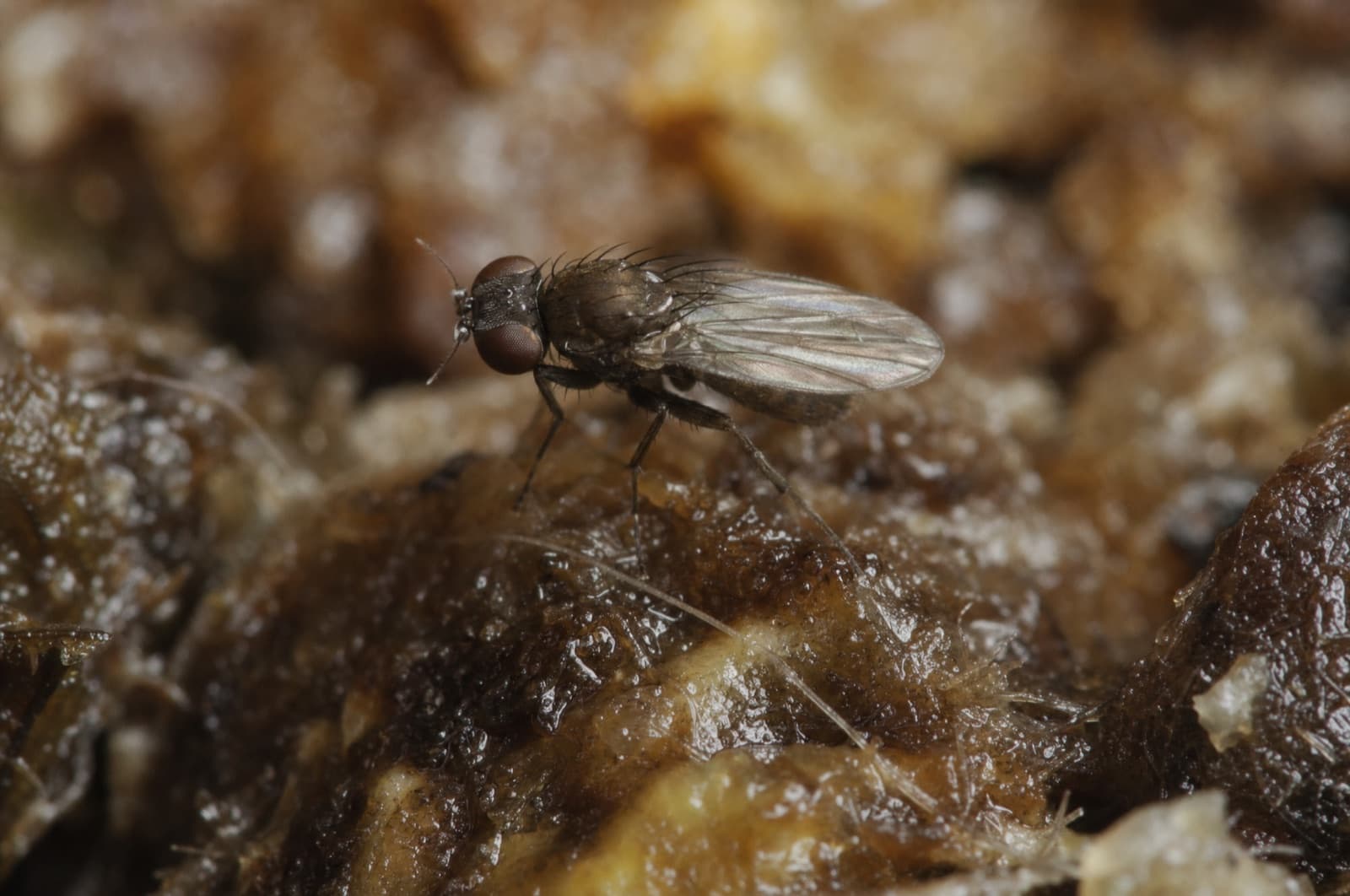
A phorid fly is a tiny (0.5–6 mm) humpbacked fly that scuttles across surfaces instead of flying, and breeds in moist, decaying organic matter — drain gunk, garbage, a dead rodent, or a cracked sewer line. The only lasting fix is finding and removing that breeding source; sprays alone never work.
- Adult size
- 0.5–6 mm
- smaller than a fruit fly; PennState Extension
- Tell-tale move
- Runs, not flies
- scuttles erratically across surfaces
- Profile
- Humped thorax
- the 'humpbacked fly' silhouette
- Breeds in
- Moist decaying matter
- drains, trash, carrion, sewage
The little fly that runs across your counter
Phorid flies (family Phoridae) — also called humpbacked flies, scuttle flies, or coffin flies — are one of the most common and most misdiagnosed small flies in New Hampshire homes and restaurants. People usually mistake them for fruit flies or fungus gnats, then waste weeks spraying the air while the real problem festers out of sight.
The giveaway is behavior: instead of hovering, a phorid fly darts in quick, jerky runs across counters, walls, and around drains, and only takes short flights when disturbed. That behavior, plus the distinctive arched 'humpbacked' profile, separates it from every look-alike.
Phorid flies matter because of where they breed: any pocket of moist, decaying organic material. In a NH home that usually means the slime layer inside a floor or sink drain, a garbage disposal, a forgotten recycling bin, or — the case pros dread — a cracked sewer pipe under a slab or a dead mouse in a wall void. Find and eliminate that source and the flies stop; miss it and they come back no matter how much you spray.
How to identify a phorid fly
Three features separate phorid flies from the fruit flies, fungus gnats, and drain flies they're constantly confused with: the humped back, the scuttling run, and the absence of red eyes.
Phorid fly
- Scientific name
- Family Phoridae (often Megaselia spp.)
- Family
- Phoridae
- Size
- 0.5–6 mm (most ~2–3 mm)
- Coloration
- Dull tan, brown, or black; not metallic
- Habitat
- Anywhere with moist decaying organic matter — drains, garbage, sewage, compost, dead animals, overwatered soil.
- Active season
- Year-round indoors; outdoor activity warm months
- Diet
- Larvae feed on decaying organic matter, fungi, and carrion; adults sponge up fluids from the same.
- Reproduction
- Egg to adult in as little as 1–4 weeks in warm conditions; a single female lays dozens of eggs.
- Lifespan
- Adults ~1–2 weeks
Common throughout New Hampshire and worldwide; active indoors year-round.
The tells — key ID features
- Distinct arched, humpbacked thorax when viewed from the side — the single best ID cue.
- Runs rapidly and erratically across surfaces, taking only brief flights.
- Tiny: noticeably smaller than a house fly, similar to or smaller than a fruit fly.
- Dull tan to black body — never the metallic green/blue of bottle or blow flies.
- Dark eyes (not the bright red eyes of a common fruit fly).
- Found clustered near drains, trash, or a specific damp spot rather than over fruit bowls.
Size, to scale
0.5–6 mm
About the size of a flax seed, or smaller than a grain of rice
Fruit fly
How to tell — Fruit flies usually have bright red eyes, a rounder body, and hover around ripe produce; phorids run and have a humped back.
Fungus gnat
How to tell — Fungus gnats are dark, long-legged, weak flyers tied to houseplant soil; phorids are stouter, humped, and tied to drains/decay.
Drain fly (moth fly)
How to tell — Drain flies are fuzzy and moth-like with broad wings; phorids are smooth and scuttle quickly.
Signs of a problem
Phorid flies announce themselves by behavior and location more than by sight. These are the signs that you're dealing with phorids — and that there's an active breeding source nearby.
Small flies running, not hovering, on counters and walls
What it means — Classic phorid behavior — and a sign the source is close by, indoors.
Flies consistently appearing around a drain, disposal, or floor sink
What it means — The biofilm inside that drain is almost certainly the breeding site.
A sudden indoor swarm with no food source in sight
What it means — Points to a hidden source — a leaking sewer line, broken pipe, or dead animal in a void.
Flies persist after you clean produce and take out trash
What it means — The real source is structural (drains/plumbing), not the kitchen surface.
Outbreak follows rodent activity or a recent leak
What it means — A carcass or saturated organic material is feeding the larvae.
The real risks, calibrated
Phorid flies don't bite or sting, but because they develop in sewage, garbage, and carrion and then walk on food-contact surfaces, they are a genuine sanitation and contamination concern.
Food & surface contamination
ModerateOnset: Ongoing while active
Adults move from filth and decay directly onto food, dishes, and prep surfaces, mechanically transferring bacteria.
Signals a hidden plumbing or sanitation failure
ModerateOnset: Within days of an outbreak
A persistent indoor source often means a cracked drain line, sewer leak, or decaying animal that needs to be found and fixed.
Health-code problems for food businesses
HighOnset: On inspection
In NH restaurants and kitchens, a phorid infestation can trigger inspection violations until the source is corrected.
DIY — what works, what backfires
Phorid control is detective work, not spraying. The goal is to locate and destroy the moist breeding medium. Here's what actually works — and what wastes your time.
What actually works
- Find the source: tape a clear cup or sticky trap over each suspect drain overnight — flies emerging under one cup pinpoints the breeding site.
- Mechanically clean the implicated drain: scrub the pipe walls with a stiff brush to remove the organic biofilm, then follow with an enzyme/bacterial drain cleaner.
- Empty, clean, and dry garbage cans, recycling bins, and disposal splash guards.
- Check for hidden sources after rodent season — a dead mouse in a wall or a long-unused floor drain.
- Fix leaks and keep drains running; phorids need persistent moisture and organic buildup.
What backfires
- Don't rely on aerosol fly spray or fogging — it kills visible adults but never touches the larvae in the source.
- Don't just pour bleach down the drain — it disinfects but doesn't physically remove the organic film the larvae feed in.
- Don't assume it's fruit flies and only clean the produce — phorid sources are usually structural.
- Don't ignore a sudden, sourceless indoor swarm — it can mean a broken sewer line under a slab that needs a pro.
Phorid flies in New Hampshire homes & kitchens
Across Manchester, Nashua, and Concord, phorid flies turn up year-round indoors because they breed in climate-controlled interior moisture — they don't need NH's warm season the way mosquitoes do. The most common southern-NH sources we see are kitchen and basement floor drains, garbage disposals, and mop sinks in commercial kitchens. A sudden, persistent indoor outbreak in winter is a classic red flag for a hidden plumbing leak or a dead animal in a wall after rodent season.
Peak season
Year-round indoors; worst after rodent season or a plumbing leak
You might actually have
- Fruit flies (around ripe produce and recycling)
- Fungus gnats (in overwatered houseplant soil)
- Drain flies / moth flies (the same drain biofilm)
We serve these communities
- NH-licensed applicator · #782664
- Same-day service
- Family-owned since 2017
Service Area Map
Southern New Hampshire
When to call a pro for phorid flies
If you've cleaned the obvious drains and the flies keep coming, the source is hidden — and that's where a licensed technician with the right tools (drain cameras, moisture meters, sourcing experience) saves you weeks of guesswork.
When to call a pro
- Flies keep returning after you've cleaned every reachable drain and bin.
- A sudden indoor swarm with no visible food or drain source (possible broken sewer line).
- The outbreak is in a restaurant or commercial kitchen facing an inspection.
- You suspect a dead animal in a wall or ceiling void you can't reach.
Keep drains clean and running
Routinely brush and enzyme-treat kitchen and basement drains so organic film never builds up.
Manage trash and recycling
Use lidded bins, rinse recyclables, and empty often — especially in summer.
Seal up rodents
Exclude mice before fall so a carcass never becomes a phorid breeding site.
Not sure it's a phorid fly?
A licensed NH technician can confirm the species and tell you honestly whether it's a DIY fix or a job for a pro — free inspection, same-day service across Southern New Hampshire.
Frequently asked questions
Sources(4)
- [1]Penn State Extension — Phorid Flies
identification, biology, breeding sources
extensionverified 2026-06-30 - [2]University of Kentucky Entomology — Humpbacked / Phorid Flies
behavior, control approach, hidden sources
extensionverified 2026-06-30 - [3]UNH Cooperative Extension — Managing Small Flies Indoors
NH sanitation-first control guidance
extensionverified 2026-06-30 - [4]
Written & reviewed by
VerifiedDaniel Brady
NH-Licensed Pesticide Applicator · License #782664 (NHDAMF, RSA 430)
Daniel Brady is the New Hampshire–licensed applicator behind Anchor Pest Services, a family-owned pest control company serving the Manchester area since 2017.
Last updated 2026-06-30

New Hampshire pest control
Dealing with phorid flys in your home?
Anchor Pest Services identifies and handles phorid fly problems across southern and central New Hampshire. Family-owned since 2017, NH license #782664.
- NH-licensed applicators (#782664)
- Same-day service · free inspection
- Family-owned since 2017
Your next step
- What to do next
How to Get Rid of Phorid Flies
Read the answer - What to do next
Where Do Flies Go in the Winter? NH Cluster Fly Timing
Read the answer - What to do next
Chemical Fly Control: A Supplement, Not the Fix
Read the answer - What to do next
Where Do Flies Go In The Winter?
Read the answer - Related guide
House Flies in New Hampshire — ID, Disease Risk & Control
Read the answer