
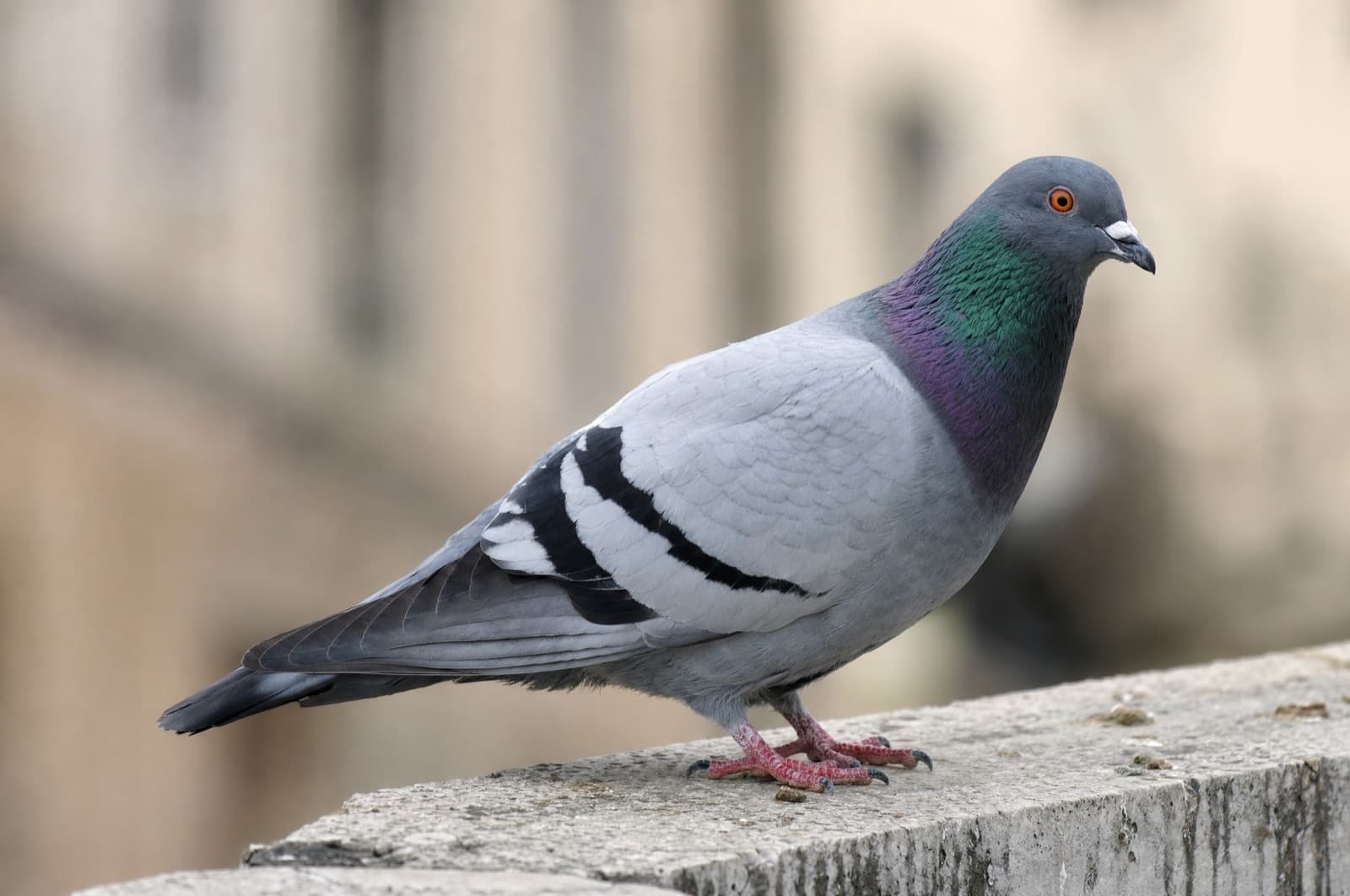
What Attracts Pigeons to Your House?
At a glance
- Short answer: Food and shelter — nothing about pigeons is special
- The verdict: The usual four
The attractant verdict
Four possible answers to why this species turned up. Three stay unlit — and that's the argument: the honest answer could have been any of them, and for this species it wasn't.
This is the most common answer in this hub — an answer, not a shortfall.
Food and shelter — nothing about pigeons is special
Our own old page said pigeons are attracted "for a few key reasons, primarily related to food, shelter, and safety" — accurate, but written as though it were a distinctive discovery rather than the same ordinary explanation that applies to most birds around a building.
A ledge, roof edge, rafter, or overhang that functions like the cliff ledges pigeons nested on before cities existed, combined with a steady nearby food source. Pigeons are cliff-dwellers by ancestry, which is exactly what a tall building with flat ledges recreates.
“Food and shelter — the same two things that explain most birds around a house. Nothing about a pigeon is special, and that's the honest answer.”
Why it's here, in full
Why there's no special story here
Pigeons descend from rock doves, cliff-nesting birds that used flat, sheltered ledges above open ground. A building with a roof edge, rafter, sign face, or window ledge offers essentially the same structure, which is why pigeons take to buildings so readily without needing anything unusual about a specific house.
Add a reliable nearby food source — spilled grain, food scraps, or people intentionally feeding them — and the two conditions pigeons actually need are both met. That's the entire explanation: a ledge that works like a cliff, and food close enough to reach without leaving the roost for long.
How to tell it's actually this species
Real signs only — a species with four honest tells gets four, and stops. Where a sign is weak on its own, we say so.
Droppings accumulating on a ledge, roof edge, or under a favored roosting spot
Could be something else: Droppings alone don't identify the species — house sparrows and starlings leave similar accumulations in comparable locations.
Nesting material — twigs and debris — collecting on a flat ledge, rafter, or vent hood
Pigeons repeatedly gathering at the same feeding spot, such as near a dumpster or a spot where people feed birds
Cooing and wing noise concentrated around a specific roof area or ledge
Want pigeon gone?
This page only answers why it's here. Every removal step for this exact species — what to seal, what to set, what actually works — lives on its own dedicated guide.
Two questions, two pages
Here: why it turned up at all — the honest answer, blame removed.
There: the step-by-step removal guide for this exact species.
Key takeaways
- Pigeons are drawn by food and roosting shelter, not by anything unique to a particular building.
- Flat ledges, roof edges, and rafters substitute for the cliff faces pigeons nested on before cities existed.
- Droppings and nesting debris are common signs but don't confirm the species by themselves.
- Removal and exclusion steps live at /top-diy-methods/pigeon.
Want it gone, not just explained?
This page is about why pigeons show up. Roost removal is covered at /top-diy-methods/pigeon.
Frequently asked
Sources(2)
- [1]Iowa State University Extension — Nuisance Birds: Damage Management
Pigeons roost and nest on building ledges, rafters, and beams and are drawn by accessible food nearby
extensionverified 2026-07-17 - [2]New Mexico State University Extension — Controlling Nuisance Birds
Pigeons use building ledges and structures as substitutes for the cliff ledges used by their wild ancestors
extensionverified 2026-07-17
Written & reviewed by
VerifiedDaniel Brady
NH-Licensed Pesticide Applicator · License #782664 (NHDAMF, RSA 430)
Daniel Brady is the New Hampshire–licensed applicator behind Anchor Pest Services, a family-owned pest control company serving the Manchester area since 2017.
Last updated Jul 2026
Food and shelter — nothing unusual here
If pigeons have already settled in, we handle the rest
Same-day inspections across southern and central New Hampshire.
- Family-owned in Manchester since 2017
- NH commercial applicator #782664, category F1
- We will tell you when the answer is do nothing
NH License #782664 · No obligation · We answer in person