
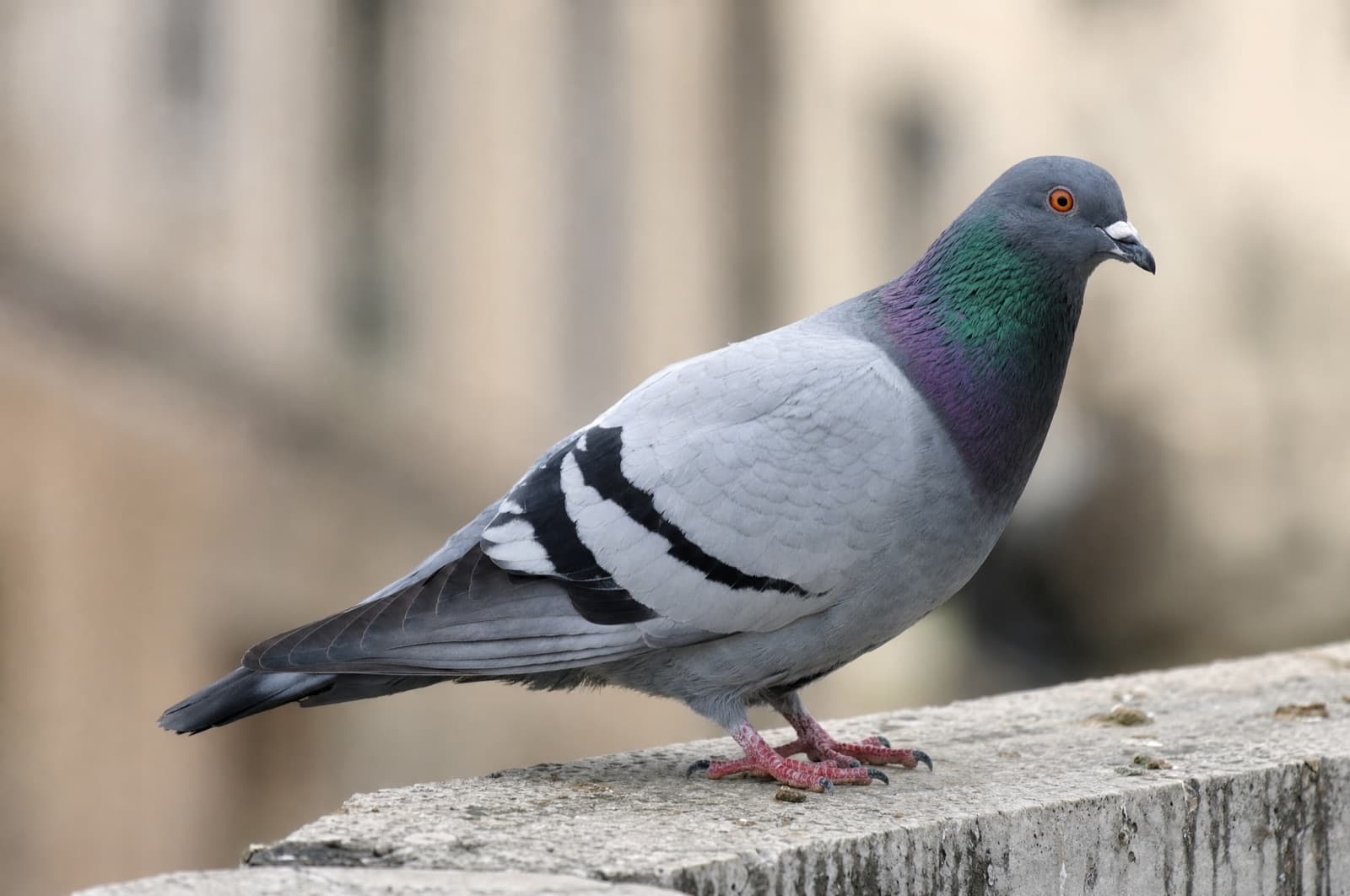
How to Get Rid of Pigeons
At a glance
- Difficulty: Intermediate
- Time: A weekend for a single roof/ledge; longer for multiple access points
- Cost: Low to moderate — spikes, netting, sloped covers
- Success: Good with complete ledge/roost exclusion; poor if any accessible ledge stays open
Can you DIY Pigeon?
The verdict on Pigeon DIY
Legal, doable exclusion — pigeons are non-native and MBTA-unprotected.
The rock pigeon (rock dove) is a non-native, human-introduced species and the U.S. Fish and Wildlife Service's official list confirms it falls outside the federal Migratory Bird Treaty Act, so ledge exclusion, netting, and deterrence are legal DIY steps. The complication is access and persistence: pigeons show strong site fidelity to a roost, ledges and rooflines are often hard and unsafe to reach without a ladder or lift, and accumulated droppings from a long-term roost need careful cleanup.
The 5 DIY methods — honestly graded
Every approach graded for this species, in IPM order — prevention first, chemistry late. Pick a method to see how it works, the steps, and what it actually takes.
Prevention / Exclusion
Works wellThe durable fix — physical exclusion on ledges and roost sites holds up far better than any deterrent gadget.
Pigeons roost and nest on flat ledges, signage, and under solar panels. Denying a flat landing surface or blocking the void entirely removes the site rather than just discouraging use of it.
Best for: Denying roost/nest access on ledges, roofs, and under solar panels
Deny flat ledges
Install anti-roost spikes or tensioned bird wire on ledges, sills, and signage where pigeons perch.
TipSloped "bird slide" covers on flat ledges work well and need no ongoing maintenance.Net off voids and gaps
Net alcoves, canopies, and gaps under solar panels where pigeons roost or nest, and remove existing nests (legal for this species).
Tools & materials
Why DIY falls short here
Not scare tactics — the specific, proportionate reasons a home attempt can stall for this species.
Strong site fidelity
Pigeons return reliably to a natal or established roost, so exclusion has to be complete — a single open ledge undoes the rest of the work.
Height and access
Rooflines, ledges, and under-panel gaps are often difficult and unsafe for a homeowner to reach without a ladder, harness, or lift.
Accumulated droppings
A long-established roost can leave heavy droppings buildup that needs careful, wet cleanup with gloves and a mask rather than casual sweeping.
How risky is it, really?
An honest read — most nuisance species are genuinely low risk, and we say so.
Casual proximity to pigeons is low risk. New York City's health department states plainly that pigeon-related disease risk is rare and that routine cleaning of droppings, like from a windowsill, doesn't pose a serious health risk to most people. The genuine, proportionate concern is disturbing large, long-term droppings accumulations during cleanup, not everyday contact.
- Histoplasmosis or cryptococcosis from disturbing large droppings accumulationsRare
A cleanup-context risk mainly for large, long-term accumulations (attics, ledges with years of buildup); wet the material first, wear gloves and an N95, and hand large cleanups to a professional
CDC / NYC Health
- Ectoparasites in nesting materialOccasional
A nuisance during nest removal, not a significant disease vector for humans in typical exposure
Extension entomology
- Slip hazard and structural corrosion from droppingsCommon
The most common real-world impact of a heavy roost — property and safety, not health
NYC Health / property-management guidance
High-Ledge Pigeon Roost? Let a Pro Handle the Access.
Multi-story ledges and heavy droppings accumulation aren't a safe DIY project. Anchor Pest Services handles full exclusion and cleanup across southern and central New Hampshire. Family-owned since 2017, NH license #782664.
Call a pro when…
- High or multi-story ledges/rooflines unsafe to access yourself
- Heavy, long-term droppings accumulation needing careful cleanup
- Recurring roosting despite your own exclusion attempts
General Pest Control
A single roof or ledge is a reasonable DIY exclusion project. Call a pro for hard-to-reach or multi-story access points, a long-established roost with heavy droppings buildup, or if exclusion keeps failing despite your own efforts.
Keep them out
- Install spikes, wire, or sloped covers on every accessible flat ledge
- Remove spilled birdseed and secure trash
- Net off gaps under solar panels and canopies
Pigeons in New Hampshire
In New Hampshire, rock pigeons roost and nest year-round on buildings, bridges, and barns, with breeding activity peaking in spring and again in late summer. Because they're non-migratory and site-faithful, exclusion installed at any time of year holds — there's no seasonal window you need to catch, unlike species with a defined nesting season.
Peak season
Year-round presence; breeding peaks spring and late summer
Make sure it's a Pigeon
Two quick detours worth taking — confirm the ID, then learn what drew it in so it doesn't come back.
Frequently asked
Sources & further reading(4)
- [1]U.S. Fish & Wildlife Service — Service Publishes Final List of Non-Native Bird Species
Rock pigeon's non-native, MBTA-unprotected status
govverified 2026-07-13 - [2]NYC Health — Pigeons and Health
Proportionate framing that pigeon-related disease risk is rare in casual contact
govverified 2026-07-13 - [3]CDC — Histoplasmosis Prevention
Cleanup-context histoplasmosis risk from droppings accumulation
govverified 2026-07-13 - [4]CDC/NIOSH — Histoplasmosis Related Risks
Occupational/large-cleanup histoplasmosis risk guidance
govverified 2026-07-13
Written & reviewed by
VerifiedDaniel Brady
NH-Licensed Pesticide Applicator · License #782664 (NHDAMF, RSA 430)
Daniel Brady is the New Hampshire–licensed applicator behind Anchor Pest Services, a family-owned pest control company serving the Manchester area since 2017.
Last updated July 2026
Other species you can tackle
Same category — the dot shows each one's DIY verdict at a glance (green = friendly, amber = doable with care, red = call a pro).
Professional Pest Control
High-Ledge Pigeon Roost? Let a Pro Handle the Access.
Multi-story ledges and heavy droppings accumulation aren't a safe DIY project. Anchor Pest Services handles full exclusion and cleanup across southern and central New Hampshire. Family-owned since 2017, NH license #782664.
- Legal, humane exclusion methods
- NH-licensed technicians (#782664)
- Free inspection — same-day service across southern NH
NH License #782664 · No obligation · We answer in person