
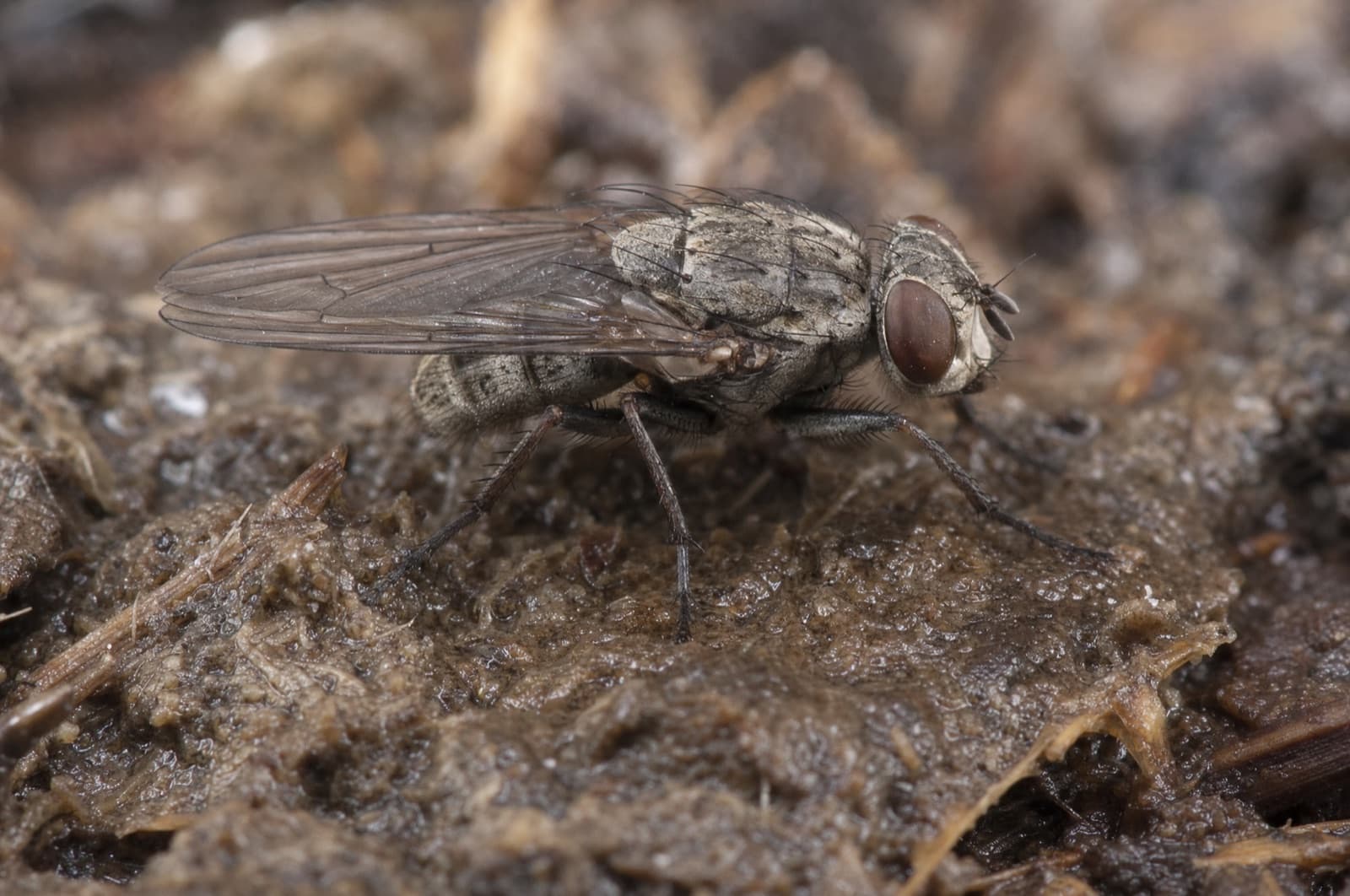
What Attracts Stable Flies to Your House?
At a glance
- Short answer: Stable flies breed in wet, fermenting hay, straw, and manure — not your garbage
- The verdict: Something specific
The attractant verdict
Four possible answers to why this species turned up. Three stay unlit — and that's the argument: the honest answer could have been any of them, and for this species it wasn't.
Stable flies breed in wet, fermenting hay, straw, and manure — not your garbage
Our own old page said stable flies are drawn in "by food sources, smells, and breeding environments" — vague enough to sound like the same generic explanation used for house flies, when stable flies actually need a specific breeding substrate that ordinary household garbage doesn't reliably provide.
A wet, fermenting mixture of hay, straw, spilled feed, and manure or urine-soaked bedding nearby — classically around livestock or poultry areas, but also achievable wherever grass clippings, mulch, or similar plant matter stay wet and begin to ferment. Both male and female stable flies bite to feed on blood, so an active problem is about a nearby breeding source, not about anything in a kitchen or trash can.
“Stable flies aren't chasing your garbage — they're bred in wet, fermenting hay, straw, and manure nearby, and no amount of household cleaning changes that.”
A wet, fermenting mixture of decaying plant matter and manure or urine — classically hay, straw, spilled feed, and bedding around livestock, but also achievable in damp grass clippings, mulch, or compost that stays consistently wet. Fermentation of the plant matter is what makes the substrate suitable for larval development; stable flies develop poorly in manure alone without that fermenting plant material mixed in.
This rules out the generic "garbage and food debris" framing used for house flies. A property with no nearby livestock, poultry, or wet, decaying plant material has little reason to develop a stable fly problem regardless of household cleanliness, while a property near any of those sources can have one no matter how clean the house is.
Calibrated from: Utah State University Extension — Stable Fly (https://extension.usu.edu/planthealth/ipm/notes_nuisance/stable-fly); Texas A&M AgriLife Extension — Integrated Pest Management of Flies in Texas Dairies (https://extensionentomology.tamu.edu/resources/management-guides/integrated-pest-management-of-flies-in-texas-dairies/)
Why it's here, in full
What actually breeds them
Stable flies need a wet, fermenting mixture of fibrous plant material — hay, straw, spilled feed, or grass clippings — combined with manure or urine-soaked bedding. Fermentation of that plant matter is what makes the substrate workable for larval development; stable flies do measurably worse in manure alone without fermenting plant material mixed in. Classic sources are the winter feeding and bedding areas around cattle, horses, or poultry, but the same conditions can turn up around a residential property wherever wet grass clippings, spoiled mulch, or a poorly managed compost pile sit long enough to ferment.
That's a meaningfully different substrate from the wetter, more purely manure- or garbage-based breeding sites that house flies use, which is why this species points toward a specific outdoor material rather than general household mess.
Why a clean house doesn't fix it
Because the breeding substrate is entirely outdoors and unrelated to food storage or garbage handling indoors, household cleanliness has little bearing on a stable fly problem one way or another. What matters is whether that wet, fermenting hay-straw-manure mixture exists somewhere nearby, whether that's a barn, a horse paddock, or a residential compost and clippings pile that's gotten too wet and gone unturned. Identifying and addressing that specific material is the real lever here, and removal guidance for an active problem is covered at /top-diy-methods/stable-fly.
How to tell it's actually this species
Real signs only — a species with four honest tells gets four, and stops. Where a sign is weak on its own, we say so.
Painful bites, usually on the ankles or lower legs, from flies that land and feed quickly
Could be something else: Several biting insects can cause similar ankle-level bites, so this alone doesn't confirm stable flies specifically.
Flies resting on sunny, light-colored exterior walls, fences, or vehicles between feedings
Increased fly activity near a compost pile, wet grass clippings, or a livestock or poultry area that stays consistently damp
Want stable fly gone?
This page only answers why it's here. Every removal step for this exact species — what to seal, what to set, what actually works — lives on its own dedicated guide.
Two questions, two pages
Here: why it turned up at all — the honest answer, blame removed.
There: the step-by-step removal guide for this exact species.
Key takeaways
- Stable flies breed in a wet, fermenting mixture of hay, straw, spilled feed, and manure or urine-soaked bedding — not household garbage.
- Both sexes bite to feed on blood, usually targeting the ankles and lower legs.
- A residential compost pile or wet grass clippings can create the same breeding conditions as a livestock area.
- Removal steps live at /top-diy-methods/stable-fly.
Want it gone, not just explained?
This page is about what breeds stable flies nearby. Removal is covered at /top-diy-methods/stable-fly.
Frequently asked
Sources(2)
- [1]Utah State University Extension — Stable Fly
Stable flies breed in decaying, fermenting mixtures of hay, straw, spilled feed, and manure rather than in household garbage
extensionverified 2026-07-17 - [2]Texas A&M AgriLife Extension — Integrated Pest Management of Flies in Texas Dairies
Fermentation of plant matter mixed with manure and urine-soaked bedding is what makes a substrate suitable for stable fly larval development
extensionverified 2026-07-17
Written & reviewed by
VerifiedDaniel Brady
NH-Licensed Pesticide Applicator · License #782664 (NHDAMF, RSA 430)
Daniel Brady is the New Hampshire–licensed applicator behind Anchor Pest Services, a family-owned pest control company serving the Manchester area since 2017.
Last updated Jul 2026
A specific breeding substrate, not household mess
If stable flies are already a problem, we can help
Same-day inspections across southern and central New Hampshire.
- Family-owned in Manchester since 2017
- NH commercial applicator #782664, category F1
- We will tell you when the answer is do nothing
NH License #782664 · No obligation · We answer in person