
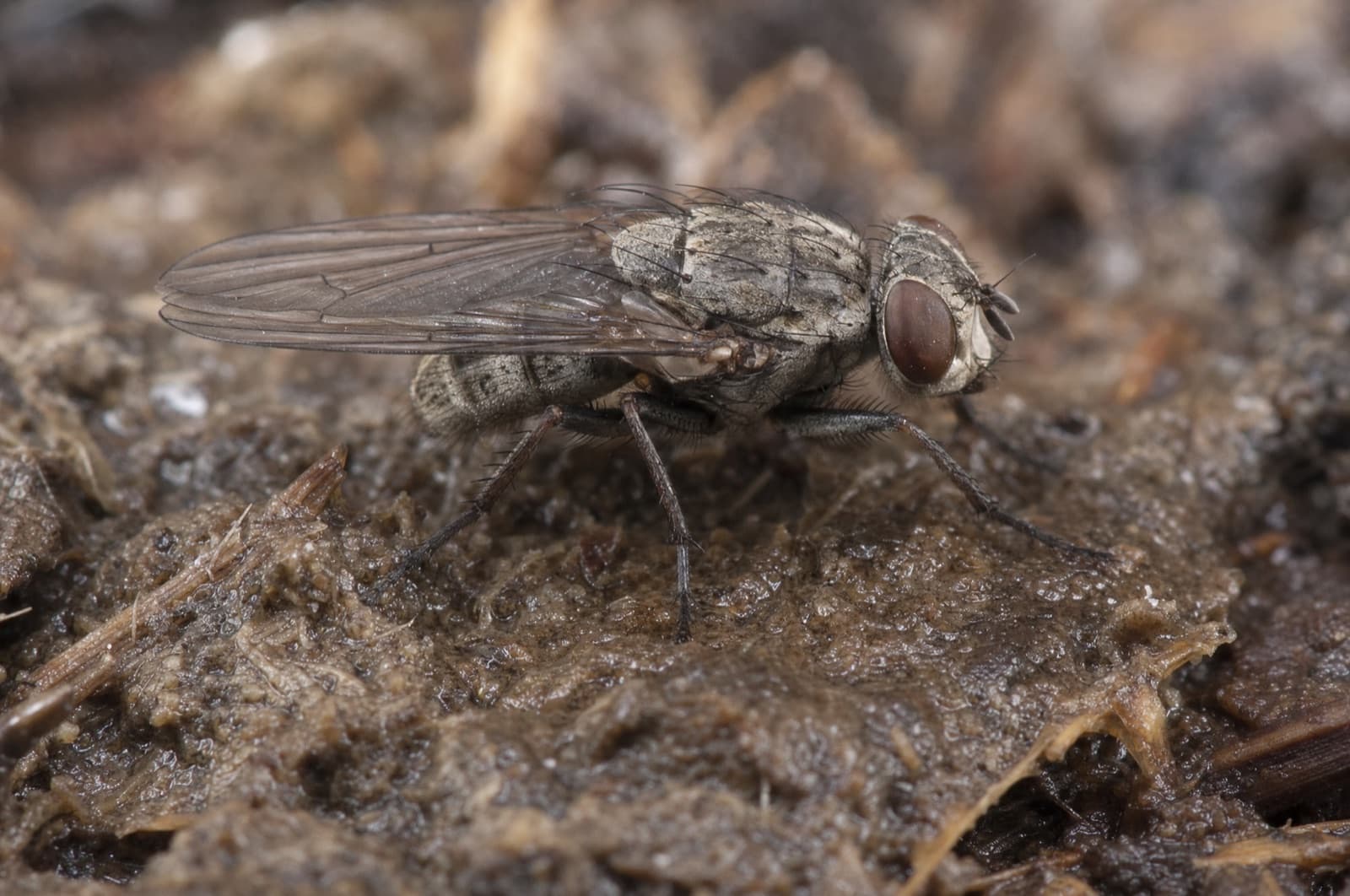
How to Get Rid of Stable Flies
At a glance
- Difficulty: Intermediate
- Time: An afternoon of yard cleanup, ongoing during summer
- Cost: Low — rake, bags, an EPA-registered repellent
- Success: Moderate — good for reducing bites on your own property, but nearby breeding sources are out of your control
Can you DIY Stable Fly?
The verdict on Stable Fly DIY
Doable DIY, but stable flies are strong fliers — a neighbor's breeding site can undo your work.
Unlike the common housefly, both male and female stable flies actually bite, using a bayonet-like proboscis to feed on blood — usually at the ankles, and they can bite through thin clothing. The DIY approach is removing wet, decaying organic matter (soiled bedding, wet hay, rotting grass clippings, shoreline vegetation) where they breed, combined with CDC-endorsed repellents while you're outdoors. The complication is that stable flies can fly long distances for a blood meal, so a breeding site on a neighboring property or nearby farm can reinfest a clean yard.
The 5 DIY methods — honestly graded
Every approach graded for this species, in IPM order — prevention first, chemistry late. Pick a method to see how it works, the steps, and what it actually takes.
Prevention / Exclusion
Works wellRemoving wet organic breeding material on your own property is the highest-leverage step you control.
Stable flies breed in decaying organic matter with the right moisture level — soiled bedding, wet hay, grass clippings, or shoreline wrack. Removing that material eliminates the local breeding sites within your control.
Best for: Reducing breeding sites on your own property
Rake and remove wet organic debris
Clear rotting grass clippings, wet hay or straw, and any soiled bedding material from your yard, especially near any animal areas.
Keep yards and animal areas clean
Regularly bag and dispose of organic waste rather than letting it accumulate and stay wet.
Tools & materials
Why DIY falls short here
Not scare tactics — the specific, proportionate reasons a home attempt can stall for this species.
Strong, long-distance fliers
Stable flies may travel long distances for a blood meal, so a neighbor's or nearby farm's breeding source can keep reinfesting your yard no matter how clean you keep your own property.
Missing wet organic breeding pockets
A single wet hay or grass-clipping pile can produce enormous numbers of flies — Texas A&M research cites a single round-bale feeding site producing over a million flies, so a small missed pocket can undo your cleanup.
How risky is it, really?
An honest read — most nuisance species are genuinely low risk, and we say so.
The real issue with stable flies is bite pain, not disease. Globally, stable flies can vector livestock pathogens in agricultural settings, but in a typical New Hampshire residential context the concern is a painful bite, not human disease transmission.
- Painful bites, usually to ankles and lower legsCommon
Occurs outdoors in summer near breeding sites; noticeably more painful than a housefly landing
University of Minnesota Extension; Merck Veterinary Manual
- Human disease transmissionRare
Negligible in a typical NH residential context — the concern here is bite pain, not disease
Merck Veterinary Manual
Still Getting Bitten in Your Own Yard?
A neighboring breeding source can undo your best sanitation work. Anchor Pest Services offers targeted treatment across southern and central New Hampshire. Family-owned since 2017, NH license #782664.
Call a pro when…
- Bites persist despite thorough removal of wet organic matter on your property
- You suspect a breeding source on a neighboring or nearby property
- You want targeted treatment of fly resting areas done correctly
General Pest Control
A pro adds the most value against stable flies when the breeding source is off your property — a neighboring farm, pasture, or unmaintained lot you don't control — and yard-level sanitation alone isn't reducing bites.
Keep them out
- Remove wet hay, grass clippings, and soiled bedding promptly
- Use an EPA-registered repellent with a CDC-endorsed active ingredient outdoors
- Check shoreline or wet low-lying areas on your property for breeding material
Stable flies in New Hampshire
In New Hampshire, stable flies are most often an outdoor, warm-season nuisance around properties with wet organic matter — pastures, compost piles, or lakeside/wetland vegetation wrack near the water. Bites tend to cluster in summer and are usually a yard problem rather than an indoor one.
Peak season
Summer, outdoors near wet organic matter or waterfront vegetation
Make sure it's a Stable Fly
Two quick detours worth taking — confirm the ID, then learn what drew it in so it doesn't come back.
Frequently asked
Sources & further reading(3)
- [1]University of Minnesota Extension — Flies (Nuisance Insects)
Biology, breeding sites, long-distance flight behavior
extensionverified 2026-07-13 - [2]Merck Veterinary Manual — Stable Flies
Biting behavior, disease-vector context
medicalverified 2026-07-13 - [3]Spalding Labs — Stop Biting Stable Flies
Breeding-site scale, parasitoid wasp biological control, targeted treatment
industryverified 2026-07-13
Written & reviewed by
VerifiedDaniel Brady
NH-Licensed Pesticide Applicator · License #782664 (NHDAMF, RSA 430)
Daniel Brady is the New Hampshire–licensed applicator behind Anchor Pest Services, a family-owned pest control company serving the Manchester area since 2017.
Last updated July 2026
Other species you can tackle
Same category — the dot shows each one's DIY verdict at a glance (green = friendly, amber = doable with care, red = call a pro).
Professional Pest Control
Still Getting Bitten in Your Own Yard?
A neighboring breeding source can undo your best sanitation work. Anchor Pest Services offers targeted treatment across southern and central New Hampshire. Family-owned since 2017, NH license #782664.
- NH-licensed applicators (#782664)
- Free inspection — same-day service across southern NH
NH License #782664 · No obligation · We answer in person