
What Attracts Voles to Your House?
At a glance
- Short answer: Grass and ground cover — nothing about voles is special
- The verdict: The usual four
The attractant verdict
Four possible answers to why this species turned up. Three stay unlit — and that's the argument: the honest answer could have been any of them, and for this species it wasn't.
This is the most common answer in this hub — an answer, not a shortfall.
Grass and ground cover — nothing about voles is special
Our own old page said voles seek out places that provide "food, shelter, and safety" — accurate, though it's worth being direct that this is mostly a lawn and landscaping story, since voles rarely become an indoor problem the way house mice do.
Tall, unmowed grass and thick mulch or ground cover close to a foundation, garden, or tree line, which gives voles both food — grass, roots, and bark — and the low cover they need to travel through surface runways without exposure to predators. Keeping grass mowed short and cover away from the base of trees removes most of what draws them close.
“Grass and ground cover — the same ordinary needs behind most yard wildlife. Nothing about a vole is special, and that's the honest answer.”
Why it's here, in full
Why there's no special story here
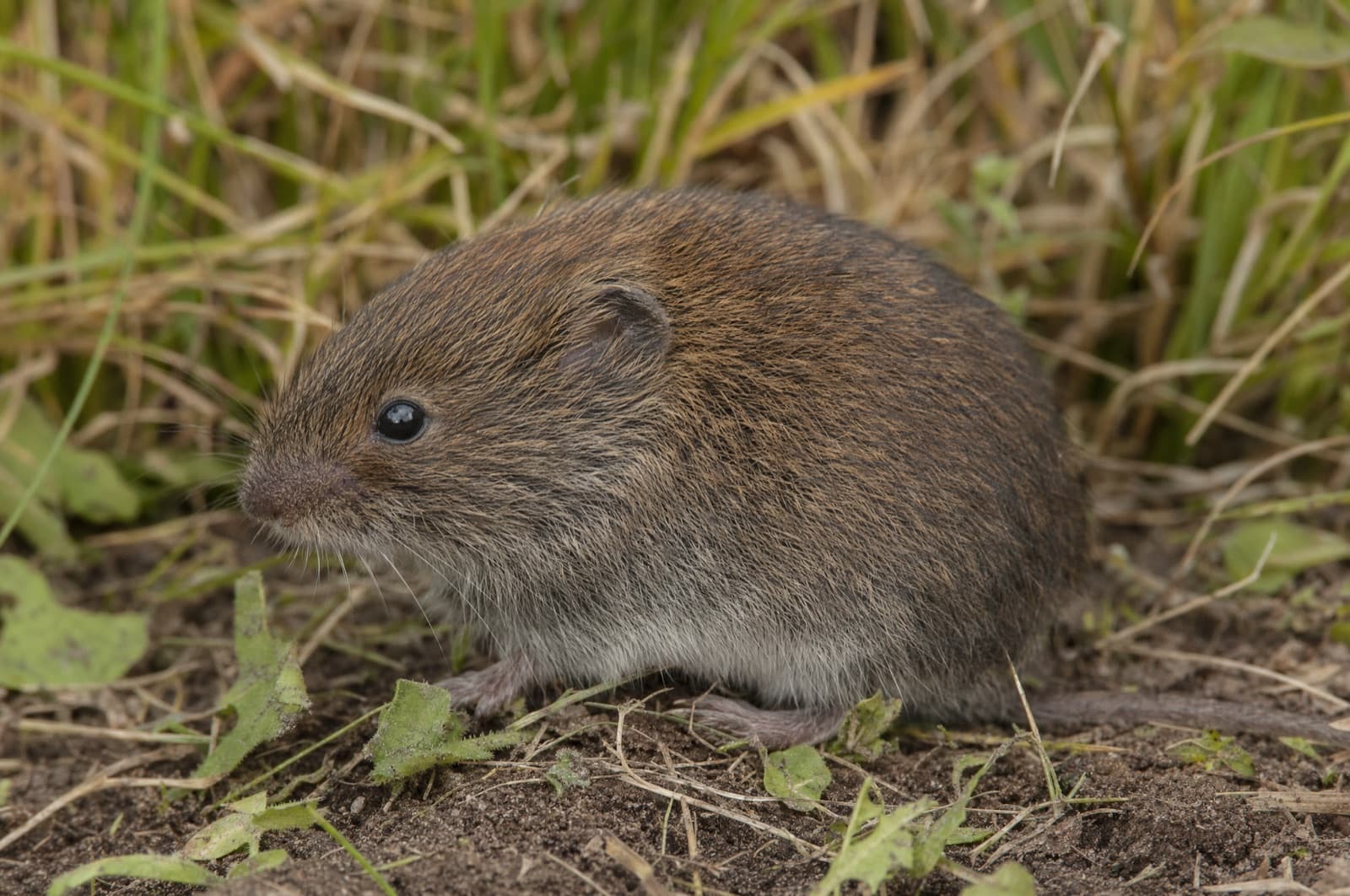
Voles spend nearly all their time at ground level, feeding on grass, roots, and the bark of young trees and shrubs, and moving through a network of shallow burrows and closely clipped surface runways. Tall or unmowed grass right against a foundation or tree line gives them exactly what they need — a food source and enough cover to travel without being exposed — which is why lawn damage, not an indoor sighting, is how most people first notice a vole problem.
Unlike house mice, voles rarely move indoors; their whole life cycle plays out on the ground outside. Keeping grass mowed short around gardens and tree bases, and reducing thick ground cover near the foundation, removes most of what draws them close to a structure at all.
How to tell it's actually this species
Real signs only — a species with four honest tells gets four, and stops. Where a sign is weak on its own, we say so.
Narrow, closely clipped surface runways, about 1 to 2 inches wide, crisscrossing a lawn, most visible after snowmelt
Gnaw marks in side-by-side grooves on tree bark near the ground
Small burrow openings in a lawn or garden bed
Patchy, dead-looking grass in a runway pattern that recovers once mowed and reseeded
Want vole gone?
This page only answers why it's here. Every removal step for this exact species — what to seal, what to set, what actually works — lives on its own dedicated guide.
Two questions, two pages
Here: why it turned up at all — the honest answer, blame removed.
There: the step-by-step removal guide for this exact species.
Key takeaways
- Voles are a lawn and garden animal, not typically an indoor pest like house mice.
- Tall grass and thick ground cover near a foundation give them both food and travel cover.
- Closely clipped surface runways after snowmelt are the clearest sign of vole activity.
- Removal and lawn recovery steps live at /top-diy-methods/vole.
Want it gone, not just explained?
This page is about why voles show up in the yard. Removal and lawn recovery are covered at /top-diy-methods/vole.
Frequently asked
Sources(2)
- [1]University of Minnesota Extension — How to Manage Vole Damage
Voles feed on grass and roots and travel through surface runways in tall grass and ground cover near structures
extensionverified 2026-07-17 - [2]Iowa State University Extension — Voles: Damage Management
Vole runways and tree bark damage are the most common signs of activity, tied to grass and ground cover near a structure
extensionverified 2026-07-17
Written & reviewed by
VerifiedDaniel Brady
NH-Licensed Pesticide Applicator · License #782664 (NHDAMF, RSA 430)
Daniel Brady is the New Hampshire–licensed applicator behind Anchor Pest Services, a family-owned pest control company serving the Manchester area since 2017.
Last updated Jul 2026
Grass and cover — nothing unusual here
If voles are already active in your yard, we can help
Same-day inspections across southern and central New Hampshire.
- Family-owned in Manchester since 2017
- NH commercial applicator #782664, category F1
- We will tell you when the answer is do nothing
NH License #782664 · No obligation · We answer in person