
How to Get Rid of Voles
At a glance
- Difficulty: Beginner
- Time: A weekend for exclusion and trap setup; ongoing mowing/mulch management
- Cost: Low — hardware cloth, a mower, and a handful of mouse-style snap traps
- Success: Good with consistent habitat modification; some reinvasion from adjacent fields is normal
Can you DIY Vole?
The verdict on Vole DIY
A genuinely easy DIY — voles are a yard problem, not a health threat.
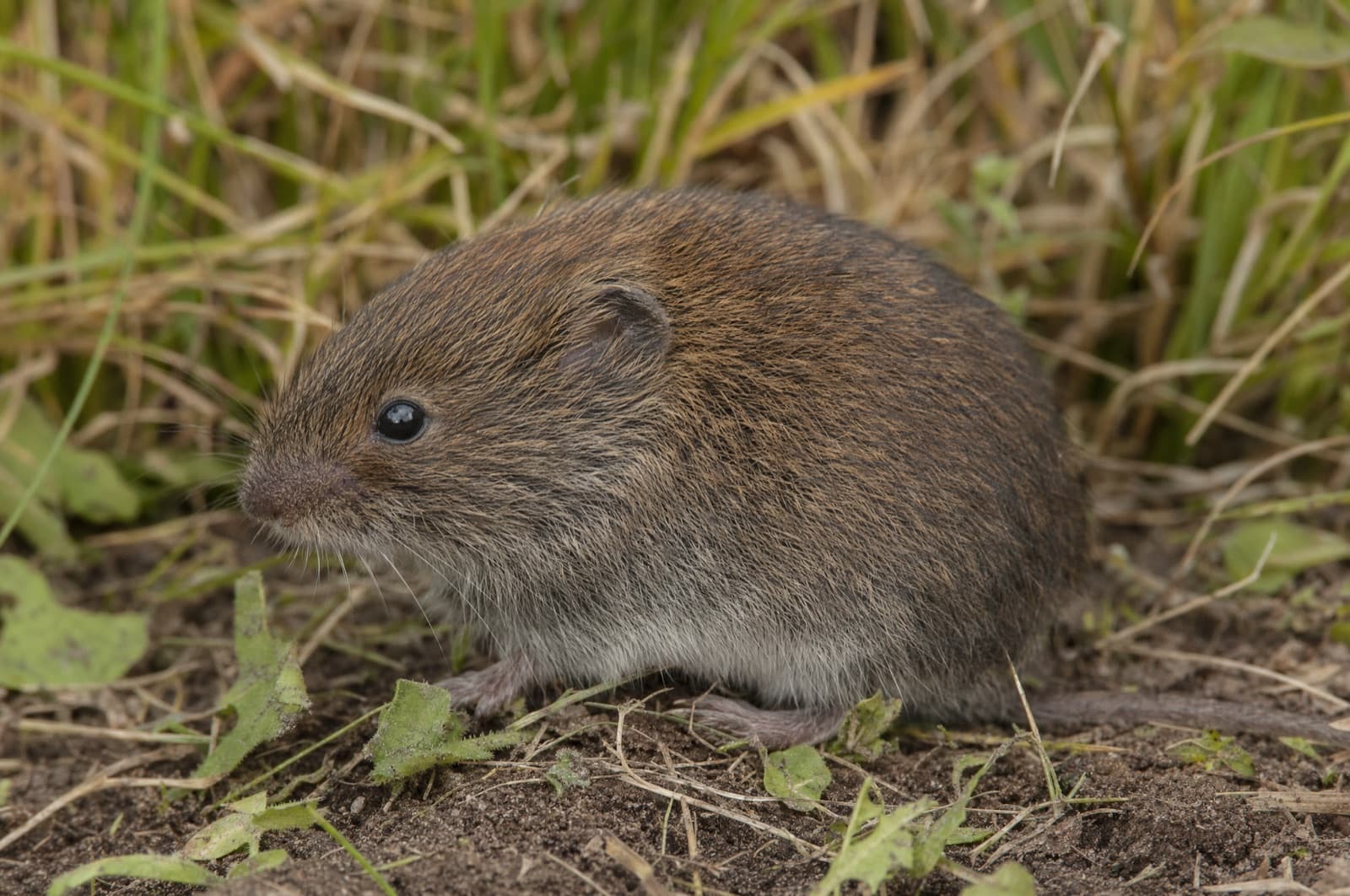
Voles are small, mouse-like rodents that live in grass and mulch, running visible surface tunnels between food sources. They don't nest indoors, don't carry a meaningful disease risk to people, and respond well to habitat changes and trapping any homeowner can do. The whole job is removing the ground cover they need to move safely (mow short, clear mulch and leaf litter), protecting young trees and shrubs with trunk guards, and trapping active runways. UNH Extension frames winter lawn damage as 'usually not permanent' — this is a cosmetic and garden problem, not a structural or health one.
The 5 DIY methods — honestly graded
Every approach graded for this species, in IPM order — prevention first, chemistry late. Pick a method to see how it works, the steps, and what it actually takes.
Prevention / Exclusion
Works wellThe most effective lever for voles — remove the cover they need to move safely and the population thins out on its own.
Voles avoid open ground because it exposes them to predators, so they rely on tall grass, mulch, and leaf litter as cover for their runways. Cutting that cover and physically guarding trunks removes both the habitat and the food access that sustain a local population.
Best for: Preventing girdling damage to trees/shrubs and shrinking the population long-term
Cut the cover
Keep grass mowed short and remove mulch, leaf litter, and dense ground cover from around trunks and foundations — voles need this cover for their runways.
TipA 3-foot vegetation-free zone around beds and foundations meaningfully reduces vole activity.Guard young trees and shrubs
Install 1/4-inch hardware-cloth cylinders around young tree and shrub trunks, buried about 2 inches into the soil, to stop girdling — the lasting damage voles cause.
Tools & materials
Why DIY falls short here
Not scare tactics — the specific, proportionate reasons a home attempt can stall for this species.
High reproductive rate and reinvasion
Voles breed prolifically and adjacent field or hedgerow populations refill a cleared yard, so a single round of trapping without ongoing habitat management doesn't hold.
Hidden runways under snow or mulch
Winter runway damage under snow cover, and tunnels hidden by mulch, often aren't noticed until spring, by which point girdling on young trees may already be done.
Scale
Trapping alone rarely covers a whole lawn or garden bed — it works best as a supplement to habitat modification, not a replacement for it.
How risky is it, really?
An honest read — most nuisance species are genuinely low risk, and we say so.
Voles are a garden and lawn nuisance with minimal direct human-health relevance — this is genuinely a low-risk species, and any source implying otherwise is overstating it. The real cost is plant and turf damage, not disease.
- Girdling and root damage that can kill young shrubs and treesCommon
Plant damage only — the main reason to act on a vole population. Trunk guards prevent it.
UNH Cooperative Extension
- Turf runway scarringCommon
Cosmetic and usually self-repairing once mowing and growth resume in spring, per UNH Extension.
UNH Cooperative Extension
- Direct disease transmission to peopleRare
Minimal relevance — voles are not a meaningful vector for household health risks, unlike deer mice or rats.
General rodent-health literature
Vole Damage Not Slowing Down?
Most vole problems are genuinely DIY, but a large property with persistent damage may be worth a professional habitat assessment. Anchor Pest Services serves southern and central New Hampshire. Family-owned since 2017, NH license #782664.
Call a pro when…
- Widespread lawn or garden damage across a large property despite ongoing habitat modification
- Repeated girdling losses on valuable trees or shrubs
- You want a professional habitat assessment rather than trial-and-error trapping
General Pest Control
Most vole problems resolve with habitat modification and trapping — you likely don't need a pro. Consider one for a large property with persistent, widespread damage despite consistent DIY effort, or if you'd rather not manage dozens of trap placements yourself.
Keep them out
- Keep grass mowed short and clear mulch/leaf litter from beds and foundations
- Guard young tree and shrub trunks with buried hardware-cloth cylinders
- Remove spilled birdseed, a common vole food source
Voles in New Hampshire
Vole damage often shows up as tan, worn runways in the lawn once snow melts in early spring — the tunneling happened under snow cover through the New Hampshire winter, largely unnoticed. UNH Extension notes this surface damage is usually not permanent, but girdling on young trees and shrubs from winter feeding can be. Fall cleanup of mulch and leaf litter before the ground freezes is the highest-value prevention step.
Peak season
Winter activity under snow cover; damage visible in early spring
First-frost anchor
Manchester first hard frost ~Oct 19 (50%) / Oct 29 (80%), NOAA 1991-2020
Make sure it's a Vole
Two quick detours worth taking — confirm the ID, then learn what drew it in so it doesn't come back.
Frequently asked
Sources & further reading(3)
- [1]UNH Cooperative Extension — Mole or Vole?
Vole vs. mole identification; winter runway damage framed as usually not permanent
extensionverified 2026-07-13 - [2]UMass Extension — Vole Damage to Lawns
Turf runway damage and lawn recovery
extensionverified 2026-07-13 - [3]University of Minnesota Extension — Vole Damage
Habitat modification, trunk guards, and trapping guidance
extensionverified 2026-07-13
Written & reviewed by
VerifiedDaniel Brady
NH-Licensed Pesticide Applicator · License #782664 (NHDAMF, RSA 430)
Daniel Brady is the New Hampshire–licensed applicator behind Anchor Pest Services, a family-owned pest control company serving the Manchester area since 2017.
Last updated July 2026
Other species you can tackle
Same category — the dot shows each one's DIY verdict at a glance (green = friendly, amber = doable with care, red = call a pro).
Professional Pest Control
Vole Damage Not Slowing Down?
Most vole problems are genuinely DIY, but a large property with persistent damage may be worth a professional habitat assessment. Anchor Pest Services serves southern and central New Hampshire. Family-owned since 2017, NH license #782664.
- Habitat + exclusion assessment
- NH-licensed applicators (#782664)
- Free inspection — same-day service across southern NH
NH License #782664 · No obligation · We answer in person