
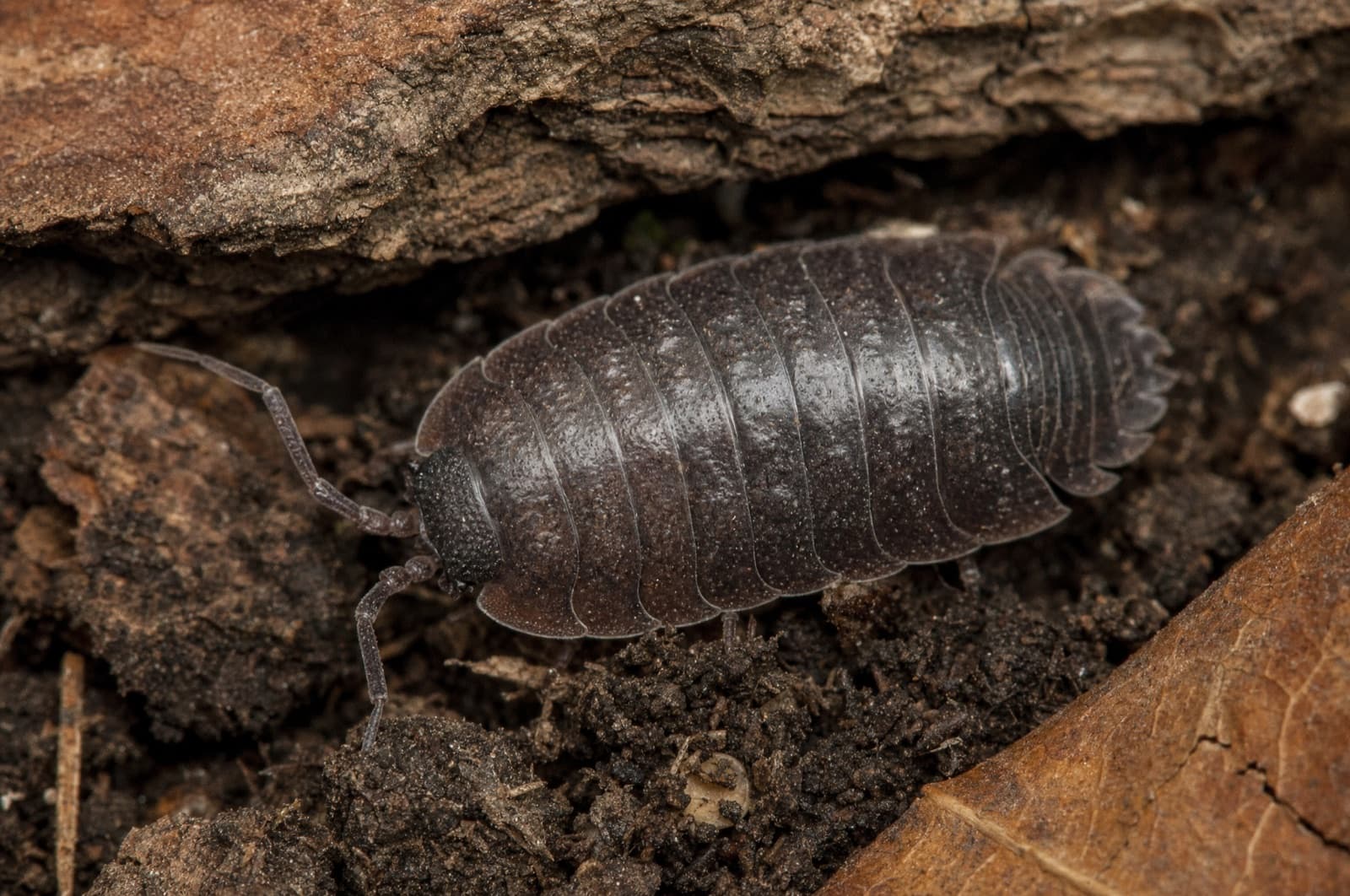
What Attracts Woodlice to Your House?
At a glance
- Short answer: Moisture and decaying organic matter — nothing about woodlice is special
- The verdict: The usual four
The attractant verdict
Four possible answers to why this species turned up. Three stay unlit — and that's the argument: the honest answer could have been any of them, and for this species it wasn't.
This is the most common answer in this hub — an answer, not a shortfall.
Moisture and decaying organic matter — nothing about woodlice is special
Our own old page said woodlice are attracted "due to a few key factors" including moisture — accurate, though it's worth being direct that "woodlouse" isn't a separate species with its own story; it's a regional common name overlapping heavily with pillbugs and sowbugs.
Consistently damp mulch, leaf litter, or soil right against the foundation, where these terrestrial crustaceans feed on decaying plant matter and hide during the day. They lose water quickly through a thin outer shell, so they're bound to whatever spot nearby stays reliably humid, and an indoor sighting is almost always a stray that wandered in rather than an established population.
“Moisture is the whole story. Nothing about a woodlouse is special, and that's the honest answer.”
Why it's here, in full
Why there's no special story here
"Woodlouse" doesn't name a biologically distinct problem from pillbugs or sowbugs — it's a common name for the same group of terrestrial crustaceans, and the attraction is identical: constant moisture. They feed on decaying organic matter under mulch, boards, and leaf litter against a foundation, hiding there during the day because that's where humidity stays high enough for them to survive.
They don't come indoors looking for food or shelter on purpose. An indoor sighting is almost always a stray that wandered in from the same damp habitat just outside and ended up somewhere too dry to last. Reducing consistently wet mulch or debris piled directly against the foundation is the only thing that meaningfully changes how many end up near an entry point.
How to tell it's actually this species
Real signs only — a species with four honest tells gets four, and stops. Where a sign is weak on its own, we say so.
Woodlice found near damp entry points such as basement doors or window wells
Clusters under mulch, leaf litter, or garden debris piled against the foundation outside
Occasional individual sightings indoors, usually near a ground-floor entry point
Could be something else: A single woodlouse indoors is typically a stray that wandered in and dried out, not a sign of an indoor infestation.
Want woodlouse gone?
This page only answers why it's here. Every removal step for this exact species — what to seal, what to set, what actually works — lives on its own dedicated guide.
Two questions, two pages
Here: why it turned up at all — the honest answer, blame removed.
There: the step-by-step removal guide for this exact species.
Key takeaways
- "Woodlouse" is a common name overlapping heavily with pillbug and sowbug — not a separate story.
- These land crustaceans need constant moisture and feed on decaying organic matter outdoors.
- Indoor sightings are almost always stray individuals, not an established indoor population.
- Removal steps live at /top-diy-methods/woodlouse.
Want them gone, not just explained?
This page is about why woodlice wander in. Removal is covered at /top-diy-methods/woodlouse.
Frequently asked
Sources(2)
- [1]University of Maryland Extension — Pillbugs and Sowbugs
Woodlice, pillbugs, and sowbugs are terrestrial crustaceans that require high moisture and feed on decaying organic matter outdoors
extensionverified 2026-07-17 - [2]University of Florida IFAS Extension — Pillbugs, Sowbugs, Centipedes, Millipedes, and Earwigs
Indoor sightings of this crustacean group are typically incidental strays from outdoor moisture-dependent populations
extensionverified 2026-07-17
Written & reviewed by
VerifiedDaniel Brady
NH-Licensed Pesticide Applicator · License #782664 (NHDAMF, RSA 430)
Daniel Brady is the New Hampshire–licensed applicator behind Anchor Pest Services, a family-owned pest control company serving the Manchester area since 2017.
Last updated Jul 2026
Moisture — nothing unusual here
If woodlice keep turning up indoors, we can help
Same-day inspections across southern and central New Hampshire.
- Family-owned in Manchester since 2017
- NH commercial applicator #782664, category F1
- We will tell you when the answer is do nothing
NH License #782664 · No obligation · We answer in person