
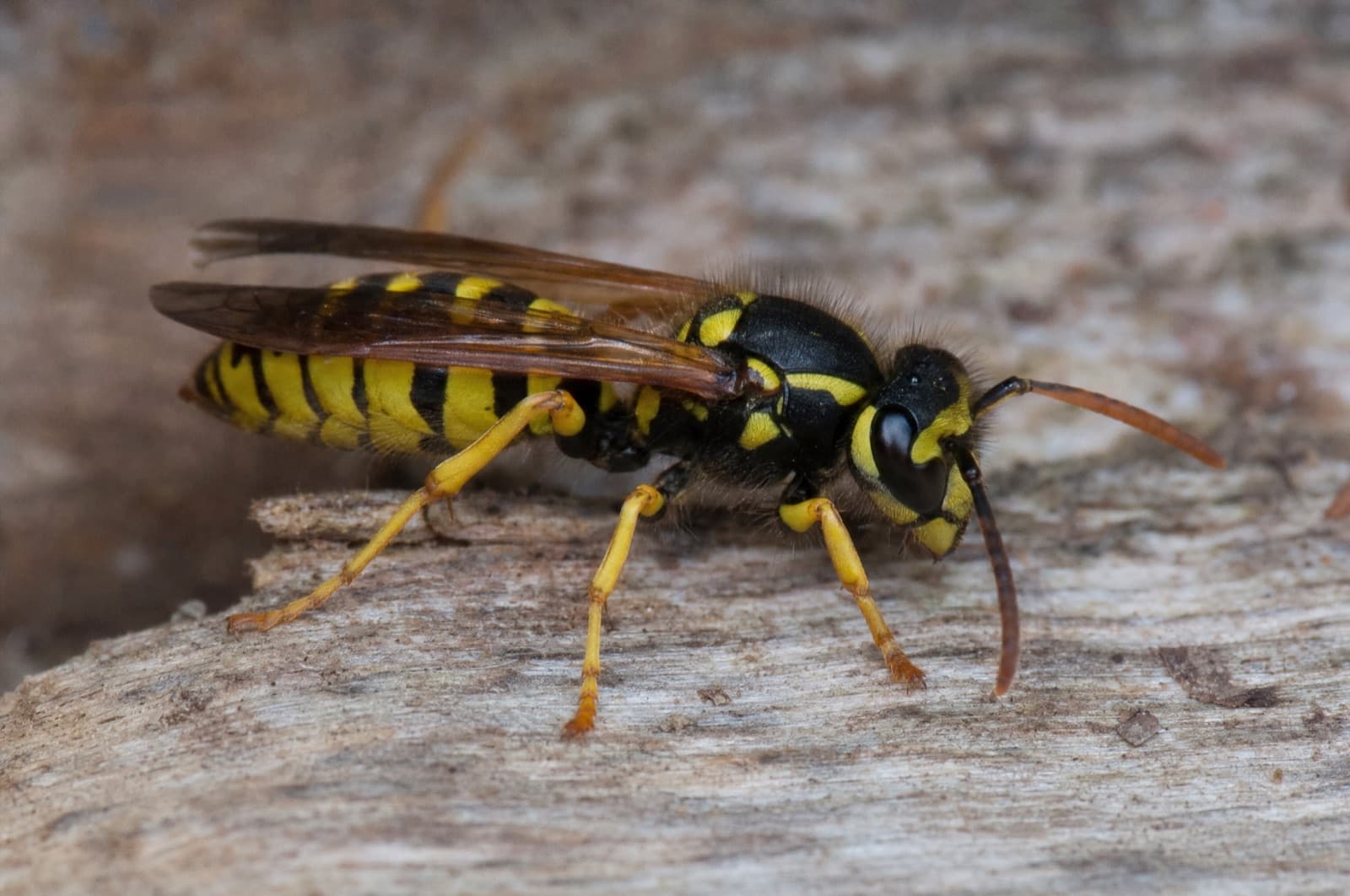
What Attracts Yellowjackets to Your House?
At a glance
- Short answer: Nesting cavities and food — nothing about yellowjackets is special
- The verdict: The usual four
The attractant verdict
Four possible answers to why this species turned up. Three stay unlit — and that's the argument: the honest answer could have been any of them, and for this species it wasn't.
This is the most common answer in this hub — an answer, not a shortfall.
Nesting cavities and food — nothing about yellowjackets is special
Our own old page said yellowjackets are attracted "primarily due to food sources, nesting sites, and warmth" — a reasonable summary, though it blurs together two things that actually happen at different times of year: hunting insects early on, scavenging human food later.
An enclosed cavity to nest in — an abandoned rodent burrow, a wall void, or a gap in an attic — combined with prey insects earlier in the season and scavenged protein and sugar later. Colonies grow through summer, and by late summer and fall the workers' priorities shift heavily toward garbage, picnic food, and sweet drinks as the colony's own food needs change.
“Nesting cavities and food — the same ordinary needs behind most wasps. Nothing about a yellowjacket is special, and that's the honest answer.”
Why it's here, in full
Why there's no special story here
Yellowjacket colonies need an enclosed cavity to build a nest in — an old rodent burrow underground is the classic spot, but a gap in a wall void, attic, or hollow structure works just as well. Early in the season, workers are mostly hunting live insects to feed developing larvae, which is a genuine pest-control benefit most people don't notice. As the colony grows through summer and into fall, though, its food needs shift toward protein and sugar the workers scavenge from garbage, picnic food, and sweet drinks, which is why late-season yellowjacket problems around trash cans and outdoor eating areas feel so much more aggressive.
That seasonal shift, not anything unusual about a house, explains most of what people notice about this species.
How to tell it's actually this species
Real signs only — a species with four honest tells gets four, and stops. Where a sign is weak on its own, we say so.
Steady wasp traffic in and out of a single ground burrow, wall gap, or attic vent
A noticeable increase in wasp activity around garbage cans or outdoor food in late summer
Could be something else: Late-season scavenging around food and trash can involve several stinging insect species, so this alone doesn't confirm yellowjackets specifically.
A papery gray nest material visible at a wall or attic gap, if the nest has expanded into a void
Want yellowjacket gone?
This page only answers why it's here. Every removal step for this exact species — what to seal, what to set, what actually works — lives on its own dedicated guide.
Two questions, two pages
Here: why it turned up at all — the honest answer, blame removed.
There: the step-by-step removal guide for this exact species.
Key takeaways
- Yellowjackets nest in enclosed cavities — ground burrows, wall voids, or attic gaps — not out in the open.
- Early-season colonies mostly hunt live insects; late-season colonies scavenge protein and sugar instead.
- That seasonal shift is why yellowjackets seem far more aggressive around garbage and food in late summer and fall.
- Removal steps live at /top-diy-methods/yellowjacket.
Want it gone, not just explained?
This page is about why yellowjackets nest here. Removal is covered at /top-diy-methods/yellowjacket.
Frequently asked
Sources(2)
- [1]UC Statewide IPM Program — Yellowjackets and Other Social Wasps
Yellowjacket colonies nest in enclosed cavities and shift from hunting insects to scavenging food and garbage as the season progresses
extensionverified 2026-07-17 - [2]University of Maryland Extension — Social Wasps: Yellowjackets, Hornets, and Paper Wasps
Yellowjackets build nests below ground in old rodent burrows or in cavities such as wall voids and attics
extensionverified 2026-07-17
Written & reviewed by
VerifiedDaniel Brady
NH-Licensed Pesticide Applicator · License #782664 (NHDAMF, RSA 430)
Daniel Brady is the New Hampshire–licensed applicator behind Anchor Pest Services, a family-owned pest control company serving the Manchester area since 2017.
Last updated Jul 2026
Nesting cavities and food — nothing unusual here
If a nest is already active, we handle the rest
Same-day inspections across southern and central New Hampshire.
- Family-owned in Manchester since 2017
- NH commercial applicator #782664, category F1
- We will tell you when the answer is do nothing
NH License #782664 · No obligation · We answer in person