
Skip to content
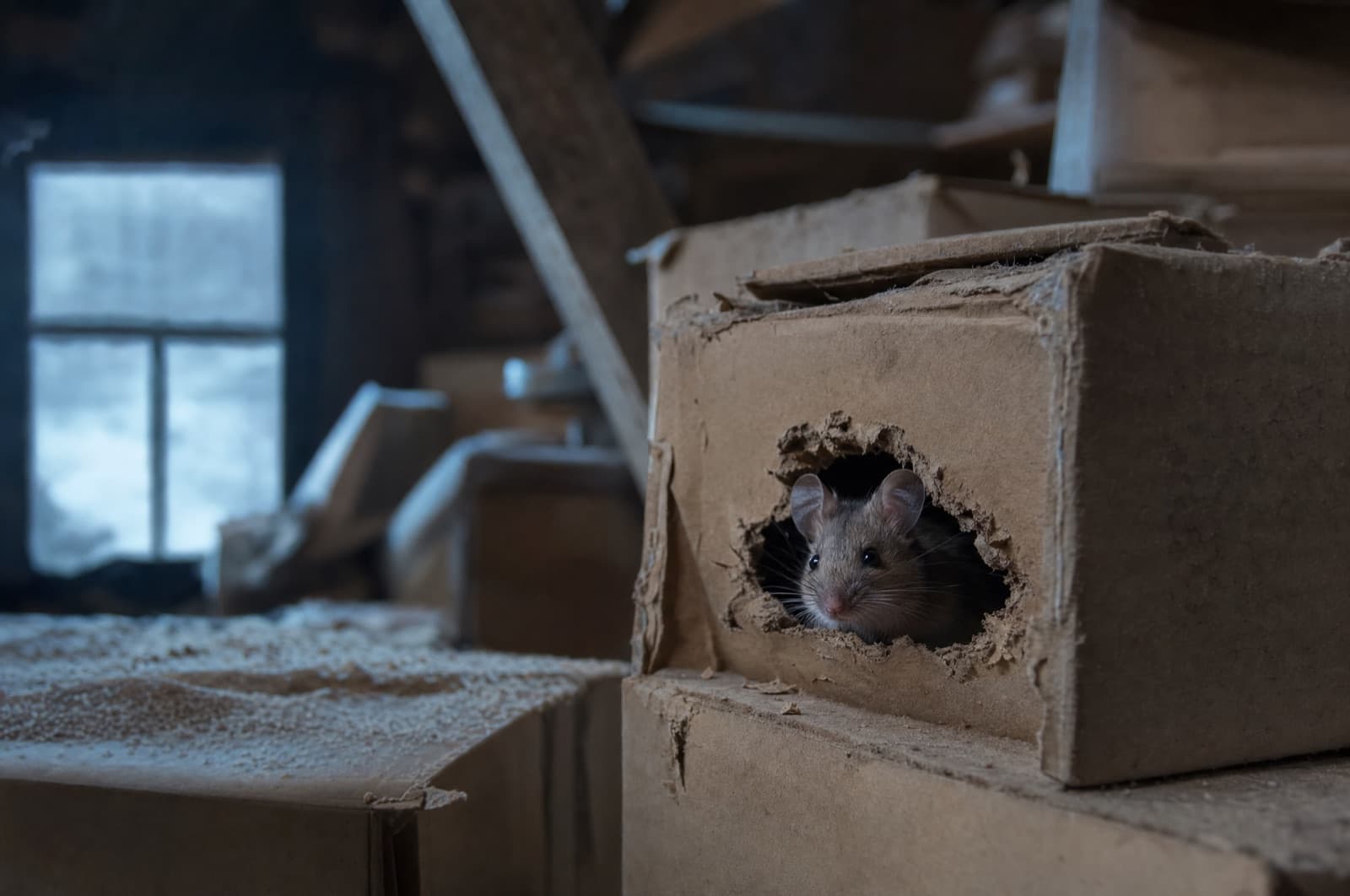
A house mouse in a gnawed cardboard storage box in a cold New Hampshire attic
Daniel Brady · NH-Licensed Pesticide Applicator · License #782664
Reviewed by Daniel Brady

What is the best time to inspect for pests in homes before winter?

Do it now
The best time to inspect, and seal, is early fall, before the first sustained cold drives rodents indoors.In Manchester, that means late September through mid-October, ahead of the first hard frost around October 19 to 29. Rodents seek winter shelter inside buildings following the first cold spell each fall, so an inspection done after that cold snap has already arrived means you're inspecting after the behavior it's meant to prevent has already started. Exclusion completed before frost is a genuine do-this-first companion to any inspection.

At a glance

  • The verdict: Do it now
The honest answer

The short of it

The verdict
Do it now

Inspect and seal before the first hard frost, because that cold snap is the actual behavioral trigger that sends rodents looking for a way in.

When it has to happen

The winter timing window

The window
Act now

Late September through approximately October 19 in Manchester, NH -- ahead of the region's first hard frost.

Why that date

Frost risk in Manchester begins around October 4 and becomes nearly certain by October 29 (NOAA-derived data). The first sustained cold spell each fall is the documented behavioral trigger that sends rodents looking for indoor shelter, so an inspection and seal completed before that trigger arrives addresses the cause before the animal has a reason to move. CDC's entry-gap guidance -- roughly 1/4 inch for mice, 1/2 inch for rats -- is what an inspection during this window is specifically looking to find and close.

If you missed it
Don't wait for spring. Inspecting and sealing still helps at any point in the winter -- it's simply harder with snow cover obscuring foundation-level gaps, and if rodents have already moved in, the goal shifts from pure prevention to finding and closing entry points while also addressing whatever got in. A mid-winter inspection is a genuinely worthwhile fallback, not a wasted trip.
Next year’s date
Put the inspection on the calendar for late September, ahead of Manchester's typical October 4 frost-risk onset, and treat it as an annual routine rather than a one-time fix.
In depth

The full picture

01

Why the timing is the whole point

This isn't a generic "do it sometime in fall" recommendation -- there's a specific mechanism behind the date. Rodents seek winter shelter inside buildings following the first cold spell each fall, which means the trigger for indoor migration is a weather event, not a calendar date on its own. Manchester's frost risk begins around October 4 and becomes nearly certain by October 29, so an inspection done in late September through mid-October happens before that trigger, while gaps are still easy to find and no rodent yet has a behavioral reason to be searching for one.

An inspection done after the first hard frost has already passed is inspecting after the trigger has fired -- which can still find and close gaps, but it's addressing a home that may already have new occupants rather than preventing them from arriving in the first place.

02

What the inspection is actually looking for

The specific target is entry gaps at the sizes CDC identifies as functional thresholds: roughly 1/4 inch for mice, about the width of a pencil, and 1/2 inch for rats, about the size of a nickel to a half-dollar. That means the inspection isn't a vague walk-around -- it's a focused check of foundation cracks, utility penetrations, door sweeps, vents, and any gap near where pipes or wiring enter the structure.

Most of what an inspection at this stage finds is a homeowner job: steel wool packed into a small gap, caulk at a sill plate, a new door sweep. A smaller number of findings, larger structural openings, gaps high on a roofline, are a trade or professional job. The inspection's value is telling you honestly which category each gap falls into.

03

If you're reading this after the frost has already come

The honest answer here is not to treat this as ruined. Inspecting and sealing still works in the middle of winter -- it's simply a different job at that point, since the goal shifts from pure prevention to finding and closing gaps that may already have rodents on the other side of them. Snow cover makes foundation-level gaps harder to spot, which is the practical reason earlier is better, but it doesn't make a mid-winter inspection worthless.

What changes is the follow-up: a mid-winter inspection should pair with the sign-based checks described elsewhere in this cluster, droppings, gnaw marks, nighttime scratching, since you're now checking for both open gaps and evidence that something has already used one.

Key takeaways
5 points
  • Rodents seek indoor shelter following the first sustained cold spell each fall -- that weather event, not a fixed date, is the real trigger.
  • In Manchester, frost risk begins around October 4 and a hard frost is typical by October 19 to 29 -- inspect and seal before that window.
  • The target gap sizes are specific: about 1/4 inch for mice, about 1/2 inch for rats.
  • Most gaps found at this stage are a homeowner fix -- steel wool and caulk; larger structural openings warrant a trade or professional.
  • Missing the pre-frost window doesn't waste the effort -- inspecting mid-winter still helps, it's just harder under snow cover and may need to address rodents already inside.
New Hampshire context

Timing the inspection to Manchester's frost calendar

NOAA-derived frost data puts Manchester's frost risk beginning around October 4, with a hard frost typical by October 19 to 29. A thorough inspection in late September gives a homeowner two to three weeks of margin before that behavioral trigger arrives -- enough time to find gaps, order any needed materials, and seal them before the cold snap that actually changes rodent behavior.

Southern New Hampshire's mix of older housing stock, foundations of varying types, and homes near woods or water means the specific gaps worth checking vary house to house, but the calendar logic holds everywhere in the region: earlier in the fall is unambiguously better than later, and the reason is behavioral, not superstitious.

  • NH-licensed #782664

    Southern New Hampshire

  • Family-owned

    Since 2017

  • Honest routing

    Even when it isn’t us

We serve these communities

ManchesterNashuaConcordDerryBedfordSalemHudsonAmherst

Found gaps you can't reach or aren't sure how to seal?

Most pre-winter gaps are a homeowner fix. A few -- larger openings, awkward rooflines -- are worth a professional look before the frost arrives.

Follow-up questions

Frequently asked

Sources & citations(4)
  1. NOAA-derived Frost Date Data (Garden.org) — Manchester, New Hampshire

    Manchester frost risk beginning ~Oct 4, hard frost typical ~Oct 19-29

    govverified 2026-07-16
  2. DC Health — The Changing Seasons

    Rodents seeking winter shelter indoors following the first cold spell each fall

    govverified 2026-07-16
  3. CDC — How to Seal Up to Prevent Rodents

    Entry gap thresholds -- ~1/4 inch mice, ~1/2 inch rats

    govverified 2026-07-16
  4. UNH Extension — Wildlife-Safe Alternatives to Harmful Rodent Poisons

    NH-specific IPM and exclusion-first guidance

    extensionverified 2026-07-16

Written & reviewed by

Verified

Daniel Brady

NH-Licensed Pesticide Applicator · License #782664 (NHDAMF, RSA 430)

Daniel Brady is the New Hampshire–licensed applicator behind Anchor Pest Services, a family-owned pest control company serving the Manchester area since 2017.

Verify license

Last updated Jul 2026

Honest pest help for New Hampshire homes

Inspect Before the Frost. We'll Handle What You Can't Reach.

Most pre-winter sealing is simply a homeowner job with steel wool and caulk. Where Anchor Pest Services helps is the inspection that confirms you haven't missed a gap, and the larger structural openings that need a professional hand. Family-owned since 2017, NH license #782664, serving Manchester, Nashua, Concord and nearby towns.

  • Honest advice — most pre-winter sealing is straightforward DIY
  • NH-licensed applicators (#782664) — free inspection, same-day service
  • Pre-winter inspection and exclusion across southern and central New Hampshire

NH License #782664 · No obligation · We answer in person