
Skip to content
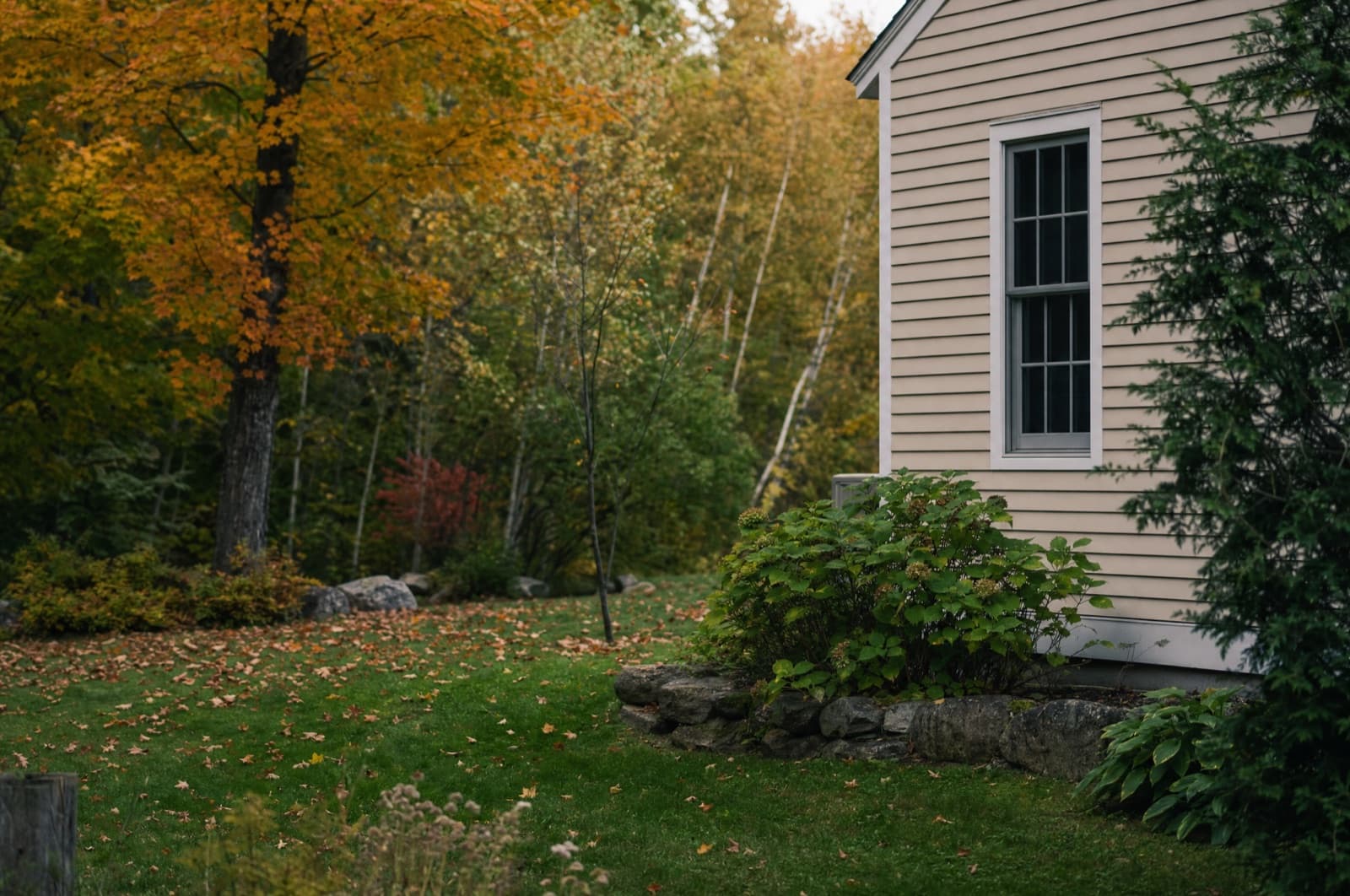
September in a New Hampshire yard
Daniel Brady · NH-Licensed Pesticide Applicator · License #782664
Reviewed by Daniel Brady

What Pests Are Actually Active in September in New Hampshire?

BusyGenuinely eventful. Several species reach peak at once.
September carries six species at genuine peak, the same count as August, but the list underneath has almost completely turned over. Eight species that were part of summer's cast — ants, birds, cockroaches, mites, raccoons, rats, squirrels and ticks — are winding down at once, while a short, pointed list of three (crickets, flies, spiders) is turning up. None of the three are new arrivals from outside; they are the overture to October's invasion, not the invasion itself, and September is the honest month to seal the building before that arrives.

September at a glance

  • Species at peak: 6
  • Turned up: 3 newly active
  • Turned down: 3 winding down
  • The floor: 8 here year-round
  • Oct 19-29

    When Manchester's first hard freeze normally lands — September is the window to seal a building before the frost-driven ingress

    NOAA/NWS

  • 2 human cases, 1 death

    New Hampshire's 2024 EEE outbreak — its fatal case was reported in late August, and mosquitoes are still biting in September

    NH DHHS

  • 7 batches

    EEE-positive mosquito batches confirmed statewide in the 2024 season

    NH DHHS

Where in the year

You are here · September

A pest year has a shape. This strip is the whole of it — the season you’re in, the months on either side, and the one you’re reading now.

The New Hampshire pest year
FallYou are here · Sep
This monthSame seasonOther months6 at peak this month
The changelog

What changed in September

Not a list of seven pests re-served every month. A release log: what turned up, what wound down, what’s always here, and what isn’t here at all — 6 species at peak this month.

Turned up

newly active — more than last month

3

Cooling nights drive field crickets and house crickets indoors, and camel crickets move in from damp foundation perimeters at the same time.

Do this · Reduce moisture and clutter near the foundation, where camel crickets stage before entry. This is a genuine prevention window, not a treatment month.

fliesPeak

Cluster flies aggregate on sunny south- and west-facing walls and push into voids and attics — the fall ingress that began building in late August is now in full swing.

Nothing worth doing this month.

September is peak spider visibility indoors — not an influx from outdoors. Sexually mature males that have lived inside all along leave their usual hiding spots and wander in search of females, which is why they suddenly seem to be everywhere at once.

Nothing worth doing this month.

Turned down

winding down — you can stop worrying

3
antsDeclining

Cooling begins, and colonies forage heavily to build reserves before winter rather than expanding further.

Nothing worth doing this month.

cockroachesDeclining

Outdoor-associated cockroach activity eases as nights cool; species that spend part of the year outdoors begin moving toward structures.

Nothing worth doing this month.

mitesBuilding

The fall clover-mite generation emerges as temperatures fall below roughly 85°F, while the summer's chigger population begins declining — one mite population handing off to another, net down from August's peak.

Nothing worth doing this month.

The floor

here every month — not this month’s news

8

These are in and around New Hampshire homes every month of the year, September included. They are not September news, and any calendar that lists them as September's pests is padding a list. We know, because ours did.

  • birds

    Roosting and nesting-adjacent nuisance in and around structures runs year-round; post-breeding flocks building in size this month is a detail, not a new problem.

  • fleas

    Fleas ride the host. Indoor pets keep the life cycle running through every month of the year, and September's early-fall peak is an outdoor detail layered on top of that.

  • mice

    House mice are a structural presence once indoors, not a seasonal one. Pre-frost foraging and scouting in September is about entry timing, not about whether one is already inside.

  • moths

    Pantry and clothes moths breed on stored food and fabric inside a heated home, a climate that does not change from month to month.

  • opossum

    Opossums remain active in every month of the year; building fat reserves before cold arrives is a seasonal detail, not a shutdown.

  • rats

    Norway rats established indoors persist through every season. Cooling nights beginning to drive outdoor rats toward structures is a detail about the outdoor population.

  • squirrels

    Attic and structure denning pressure from squirrels runs through the entire year; intensive scatter-caching starting in September shifts the activity, not the year-round presence.

  • ticks

    Adult blacklegged ticks quest on any day above freezing. Frost slows them; it does not stop them, which is why they never fully leave this calendar.

Not here

our own old page said otherwise

1
  • Black Rat

    Our old claim: Our own legacy September page listed the Black Rat — and so did the other eleven months, usually first.

    The black rat (also called the roof or ship rat, Rattus rattus) is not established in New Hampshire. Its documented US range is warm and coastal — the lower East Coast, the Gulf States, the Pacific Coast and Hawaii — and in cooler regions it was displaced by the larger, more cold-tolerant Norway rat. We are saying not established rather than never recorded: isolated cargo introductions are documented elsewhere in the country, and we could not verify an occurrence count for this state. The honest claim is that there is no established population here. September makes the retraction especially worth stating, because this is the month cooling nights start pushing outdoor rats toward warm structures — so the odds of actually seeing a rat climb now, and every one of those sightings is a Norway rat testing a building ahead of the cold, not the warm-climate roof rat the old page kept listing.

    Internet Center for Wildlife Damage Management — roof rat range (icwdm.org)

    What you actually have: The Norway rat (Rattus norvegicus). If you have a rat in New Hampshire, that is the one, and cooling nights are already driving it toward structures this month.

The bottom line
Busy, but turned over — the last month before the reset

The spiders you suddenly notice in September aren't invading from outside. They're males that have lived in your house all along, now wandering to find mates.

The calendar behind the calendar

Seasonal anchors

The sourced New Hampshire dates and thresholds that actually move the pest year — frost, moratoria, surveillance windows.

  1. 01

    Manchester's first hard freeze normally lands around October 19-29, and September is the month that precedes it.

    September is the correct window to seal gaps and entry points before the frost-driven ingress surge, not after it. Waiting until October means sealing a building that already has guests.

    NOAA/NWS — Manchester, NH first hard freeze climatology (weather.gov/gyx/climate_f6)

  2. 02

    September sits at the tail of NH DHHS's June–October arboviral surveillance season, and late summer into early fall is historically the highest-risk stretch for Eastern Equine Encephalitis (EEE) transmission to people — the 2024 outbreak illustrates it, with New Hampshire's fatal EEE case (an adult from Hampstead — one of 2 human cases that year, 1 fatal, with a Kensington case who survived; the state's first human cases in ten years) reported in late August alongside one infected horse and seven EEE-positive mosquito batches.

    The mosquitoes carrying EEE and West Nile are still biting in September, before the first frost ends the season — so this is one of the last months where personal protection and clearing standing water are a genuine health measure, not just a nuisance one.

    NH DHHS — mosquito-borne illnesses (dhhs.nh.gov); NH DHHS 2024 EEE case announcement (Aug 2024)

The full picture

September, in plain terms

01

Same peak count as August, an almost entirely different list

September holds six species at peak, identical to August's count, but the cast has turned over. Eight species that carried summer — ants, birds, cockroaches, mites, raccoons, rats, squirrels, ticks — are winding down at the same time, while only three (crickets, flies, spiders) are turning up. That is the honest shape of a transitional month: the number stays flat while almost everything underneath it changes direction at once.

02

The spiders aren't arriving. They're just moving.

September's most counterintuitive entry is spiders. The sudden indoor sightings are not an outdoor population escaping the cold — they are sexually mature males that were already living in the house, now actively wandering in search of females. Crickets and flies are a genuine fall arrival, driven by cooling nights and the start of overwintering-insect entry; spiders are a visibility change in a population that never left. This is also the month the real fall-invader playbook — sealing gaps, entry points, and timing — starts to matter; that full playbook lives on our fall invaders page rather than being rebuilt here.

The short version

Key takeaways

  • 01Six species are at peak, matching August's count, but the underlying list has almost entirely turned over.
  • 02Eight summer species are winding down at once — the broadest simultaneous step-down of the year so far.
  • 03The September spider surge is visibility, not migration: resident males wandering to find mates, not an outdoor population coming in from the cold.
  • 04Crickets and cluster flies are the real fall arrivals this month, both driven by cooling nights ahead of October's frost.
  • 05September is the correct month to seal gaps and entry points — before the frost-driven ingress surge, not after it.
  • 06Mosquitoes are still biting: late summer into early fall is the peak EEE risk window, and NH's fatal 2024 EEE case (Hampstead) was reported in late August, so personal protection still matters until the first frost.

Sealing up before the fall invaders arrive?

September, ahead of the October frost, is the real prevention window. We serve southern and central New Hampshire from Manchester.

Common questions

Follow-up questions

The other half of this calendar

Already know what you’re dealing with?

This page is month-first — it answers “what changed in September?” Every species named here also has a species-first page in the timing guide: the same sourced facts, the full year, one species at a time. If you already know what you’re dealing with, that’s the faster route.

  • NH-licensed applicator · #782664
  • Same-day service
  • Family-owned since 2017

Sources & references

  1. NOAA/NWS — Manchester, NH first hard freeze climatology

    Manchester's first hard frost normally lands ~Oct 19-29 — the anchor September's sealing window is keyed to

    govverified 2026-07-17
  2. University of Missouri Extension — Crickets

    Field and house crickets moving indoors in response to cooling fall temperatures

    extensionverified 2026-07-17
  3. UNH Cooperative Extension — Cluster Flies fact sheet

    Cluster fly fall aggregation on sunny walls and entry into structures ahead of frost

    extensionverified 2026-07-17
  4. Internet Center for Wildlife Damage Management — roof rats

    Roof rat (Rattus rattus) US range is the lower East Coast, Gulf States, Pacific Coast and Hawaii; most of the interior is free of roof rats

    extensionverified 2026-07-17
  5. NH DHHS — mosquito-borne illnesses (EEE / West Nile)

    NH arboviral surveillance season and 2024 EEE outbreak — 2 human cases and 1 death (fatal Hampstead case late Aug, Kensington case survived, first in 10 years), one horse, seven positive mosquito batches; late summer/early fall as peak EEE risk

    govverified 2026-07-17

Editorial disclaimer: This content is provided for informational purposes only and does not constitute pest control or medical advice. Every property is unique — consult a licensed professional for guidance specific to your situation. Anchor Pest Services is licensed in New Hampshire (#782664).

Written & reviewed by

Verified

Daniel Brady

NH-Licensed Pesticide Applicator · License #782664 (NHDAMF, RSA 430)

Daniel Brady is the New Hampshire–licensed applicator behind Anchor Pest Services, a family-owned pest control company serving the Manchester area since 2017.

Verify license

Last updated Jul 2026

The window before October

Seal the building before the frost-driven surge

September is the month exclusion actually gets ahead of the problem, not behind it. Same-day service available across southern and central NH.

  • Family-owned in Manchester since 2017
  • NH commercial applicator #782664, category F1
  • We will tell you when the answer is to do nothing

NH License #782664 · No obligation · We answer in person