
Skip to content
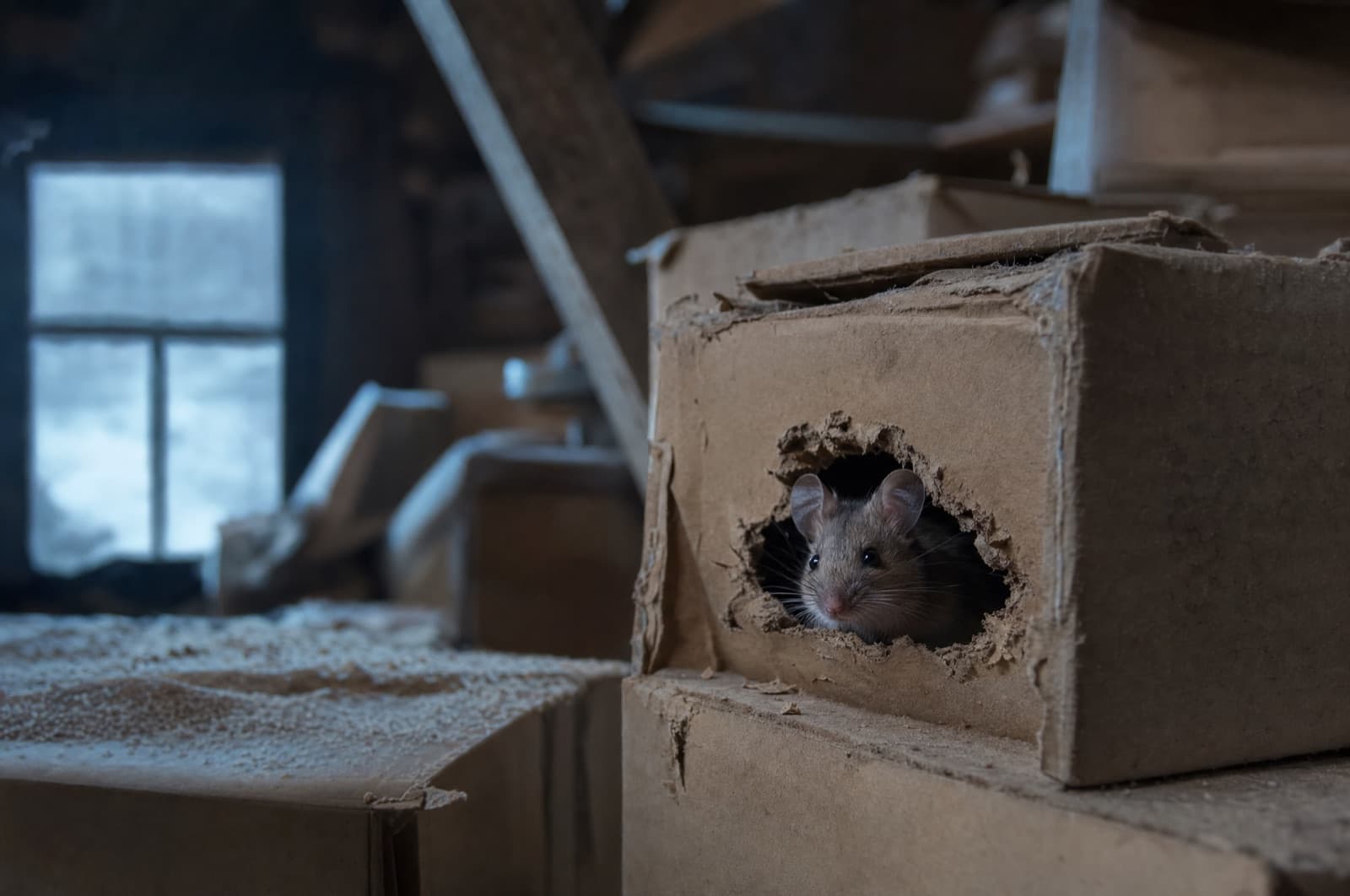
A house mouse in a gnawed cardboard storage box in a cold New Hampshire attic
Daniel Brady · NH-Licensed Pesticide Applicator · License #782664
Reviewed by Daniel Brady

What should I look for in homes to catch winter pest activity early?

Catches it early
Catch winter pest activity early by inspecting the entry-and-shelter zones before and during the first cold snap: foundation gaps, utility penetrations, door sweeps, attics, basements or crawl spaces, and pantry or garage storage.Look for fresh droppings, new gnaw marks, grease trails, nesting shreds, and listen at night for scratching. Mice enter through gaps as small as 1/4 inch and rats through 1/2 inch, so early detection here is really early exclusion -- catching the open gap before anything has moved in.

At a glance

  • The verdict: Catches it early
The honest answer

The short of it

The verdict
Catches it early

The first-frost weeks are when early signs are worth the most -- checking entry points and storage zones before and during the first cold snap catches activity early.

What you would actually see

The signs — and the honest limit

How much warning you get
Catches it early
  • New droppings or gnaw marks in storage and pantry areas

    First weeks

    Fresh droppings are dark and glossy; old ones are gray and crumbly, so a freshness check tells you whether this is new activity worth acting on now, before it spreads further into stored goods.

    Easily confused with

    Old droppings left from a prior season or a previous owner, which read as gray and crumbly rather than fresh and glossy.

  • Grease or rub marks forming on new runways

    First weeks

    A newly forming grease trail along a baseboard or corner indicates a travel path that's just becoming established -- catching it here, before the trail is heavily worn, means the population using it is likely still small.

    Easily confused with

    Ordinary dirt, scuff marks from foot traffic, or staining from HVAC vents and pipes.

  • Gaps at utility penetrations, worn weatherstripping, or unscreened vents

    First weeks

    This is pre-sign evidence -- the entry point itself, before any rodent has necessarily used it. Mice need only about 1/4 inch and rats about 1/2 inch to get through, so finding and sealing these gaps during the first cold weeks is early exclusion, not just early detection.

    Easily confused with

    Cosmetic cracks in siding or trim that don't fully penetrate to the interior and aren't a functional entry point.

  • Nesting shreds of paper, insulation, or fabric in quiet corners

    Already established

    Shredded material gathered in an out-of-the-way spot indicates nest-building has started, which typically follows initial entry by a matter of days to a couple of weeks.

    Easily confused with

    Normal attic or storage debris, or material disturbed during unrelated maintenance work.

What you cannot see
3
  • You can inspect surfaces and openings you can physically reach; you cannot see inside wall cavities, under slabs, or into inaccessible soffits and voids.
  • Early inspection reduces risk meaningfully, but it does not guarantee nothing has gotten in through a gap you missed or one that opened up after your last check.
  • You cannot confirm from a visual walk-through alone whether a sealed gap actually stopped an already-present rodent versus simply closing an unused opening -- that distinction sometimes only becomes clear over the following weeks.
How often to actually look
In Manchester, do a thorough walk-through in early October, when frost risk first begins (around Oct 4), and a lighter recheck right after the first hard frost, typically Oct 19 to 29. Add a weekly glance at the pantry and basement through the rest of the winter.
In depth

The full picture

01

Why the first-frost weeks are the highest-value window

Rodents seek winter shelter inside buildings following the first sustained cold spell each fall, which means the weeks immediately before and during that cold snap are when a home is most attractive to an animal deciding where to spend the winter, and also the window where an inspection catches the fewest established problems and the most open opportunities. Checking entry points and storage zones during this window is true early detection, not a generic "do this sometime" recommendation.

The entry-gap numbers matter here specifically because they turn "look for pests" into "look for these openings": mice need only about 1/4 inch, roughly the width of a pencil, and rats need about 1/2 inch, roughly the size of a nickel to a half-dollar. Finding and sealing a gap that size before the cold snap is functionally the same as preventing the infestation rather than detecting it after the fact.

02

The zones worth checking, and why each one matters

Foundation gaps and utility penetrations are where the entry actually happens, so they come first on any early-detection checklist. Door sweeps and worn weatherstripping are the next most common gap, since these wear down gradually and often go unnoticed until a cold draft or a gnaw mark calls attention to them.

Attics, basements, and crawl spaces are the shelter zones once an animal is inside, and pantry or garage storage areas are where food and nesting material concentrate. Checking all four categories, rather than just one, covers both the entry side and the harborage side of the same problem.

03

The honest limit of an early checklist

It would be easy to read a thorough walk-through as a guarantee, and that's not accurate. You can inspect the surfaces and openings you can reach, but you cannot see inside wall cavities, under a slab, or into every inaccessible soffit void -- so early inspection reduces risk substantially without eliminating it entirely. Admitting that limit up front is what makes the rest of this checklist trustworthy rather than a sales pitch dressed as a safety guarantee.

Key takeaways
5 points
  • The first-frost weeks -- roughly early October through late October in Manchester -- are the highest-value window for an early-detection walk-through.
  • Mice need only about 1/4 inch and rats about 1/2 inch to enter -- checking entry points is really early exclusion, not just detection.
  • Fresh droppings (dark, glossy) versus old ones (gray, crumbly) tell you whether sign in storage areas is new activity worth acting on now.
  • A newly forming grease trail, caught early, usually means the population using it is still small.
  • You cannot see inside wall cavities or under a slab -- an early checklist reduces risk, it does not guarantee nothing got in.
New Hampshire context

Timing the early check to Manchester's frost calendar

Frost risk in Manchester begins around October 4 and becomes nearly certain by the time of the first hard frost, typically October 19 to 29 (NOAA). Doing the thorough walk-through in early October, ahead of that window, catches entry gaps before the cold snap that triggers indoor migration actually arrives -- which is the entire point of calling this "early."

A lighter recheck right after the first hard frost catches anything that moved in during the transition, and a weekly glance at the pantry and basement through the rest of the winter keeps the early-detection habit going rather than treating it as a one-time task.

  • NH-licensed #782664

    Southern New Hampshire

  • Family-owned

    Since 2017

  • Honest routing

    Even when it isn’t us

We serve these communities

ManchesterNashuaConcordDerryBedfordSalemHudsonAmherst

Found an entry gap you can't reach or aren't sure how to seal?

Most gaps are a homeowner job with steel wool and caulk. A few -- larger structural openings, hard-to-reach rooflines -- are worth a professional look.

Follow-up questions

Frequently asked

Sources & citations(4)
  1. CDC — How to Seal Up to Prevent Rodents

    Entry gap sizes -- mice ~1/4 inch, rats ~1/2 inch -- and sealing as prevention

    govverified 2026-07-16
  2. NOAA-derived Frost Date Data (Garden.org) — Manchester, New Hampshire

    Manchester frost risk beginning ~Oct 4, first hard frost ~Oct 19-29

    govverified 2026-07-16
  3. UC Statewide IPM Program — House Mouse

    Sign-based detection: droppings, gnaw marks, tracks

    extensionverified 2026-07-16
  4. UNH Extension — Wildlife-Safe Alternatives to Harmful Rodent Poisons

    NH-specific IPM and exclusion-first guidance

    extensionverified 2026-07-16

Written & reviewed by

Verified

Daniel Brady

NH-Licensed Pesticide Applicator · License #782664 (NHDAMF, RSA 430)

Daniel Brady is the New Hampshire–licensed applicator behind Anchor Pest Services, a family-owned pest control company serving the Manchester area since 2017.

Verify license

Last updated Jul 2026

Honest pest help for New Hampshire homes

Check It Yourself First. We're Here for What You Can't Reach.

The early-detection checklist above is something you can realistically run yourself in an afternoon. Where Anchor Pest Services helps is confirming an entry point you can't reach, or a signs pattern that suggests activity is already established rather than just starting. Family-owned since 2017, NH license #782664, serving Manchester, Nashua, Concord and nearby towns.

  • Honest advice — most of this checklist is honestly DIY
  • NH-licensed applicators (#782664) — free inspection, same-day service
  • Rodent inspection and exclusion across southern and central New Hampshire

NH License #782664 · No obligation · We answer in person