
Skip to content
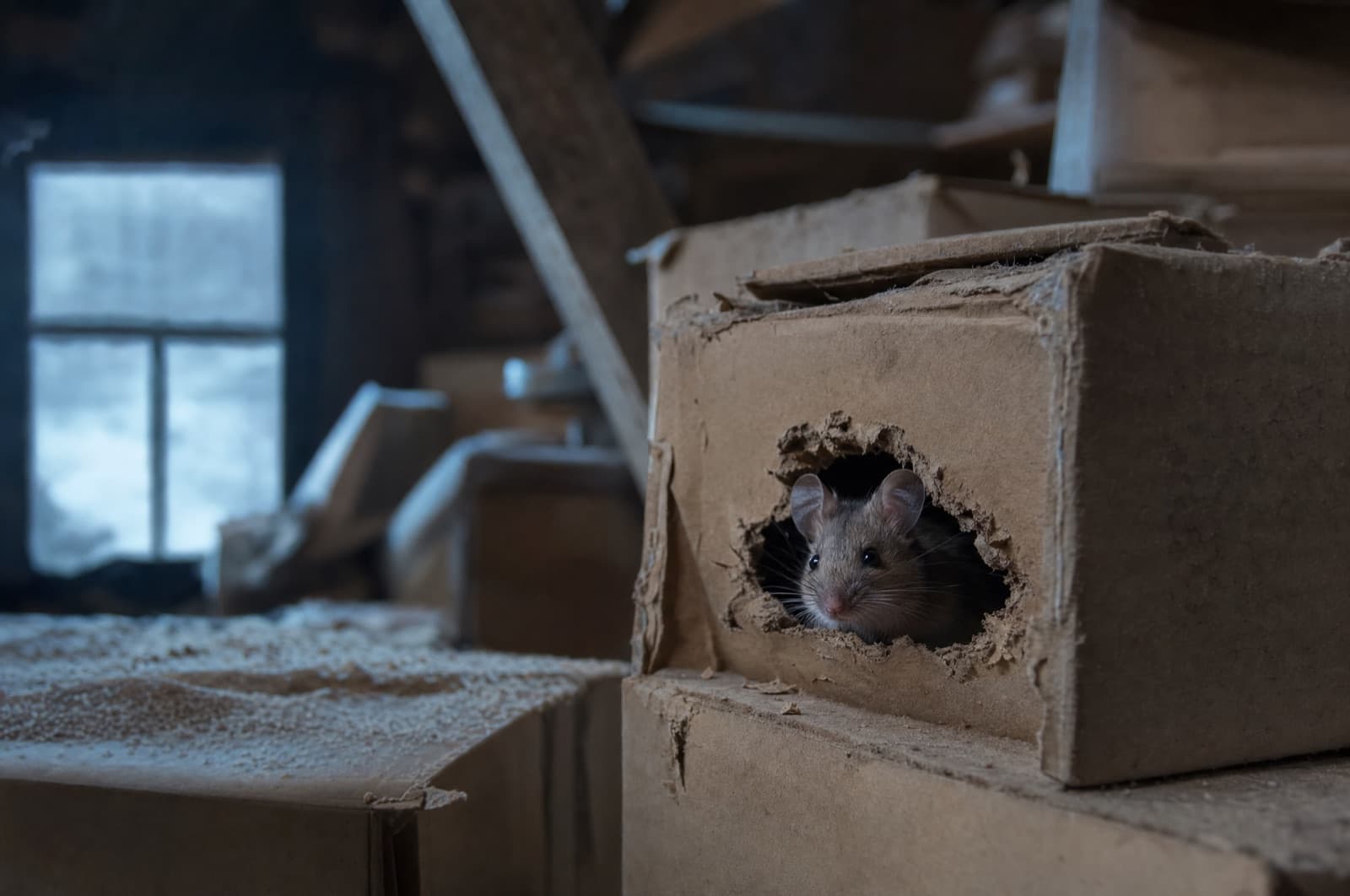
A house mouse in a gnawed cardboard storage box in a cold New Hampshire attic
Daniel Brady · NH-Licensed Pesticide Applicator · License #782664
Reviewed by Daniel Brady

Why do pantry pests sometimes show up in winter instead of summer?

Yes — it rides in with the food, not the weather
Yes, and the reason has little to do with the season itself.Pantry pests such as the Indian meal moth typically enter a home already inside a package of flour, cereal, grain, birdseed or pet food, not through a door or window, so it's the purchase — not the temperature — that starts the infestation. In a heated home they develop year-round regardless of season, and increased holiday baking and pantry turnover in winter is often what finally makes an infestation that has been there for weeks visible for the first time.

At a glance

  • The verdict: Yes — it rides in with the food, not the weather
The honest answer

The short of it

The verdict
Yes — it rides in with the food, not the weather

Pantry pests like the Indian meal moth usually arrive already inside a bag of grain or flour; winter baking and pantry turnover are what make an existing infestation visible.

What actually happens

The busted assumption

Yes

What people assume

"Pantry bugs are a summer thing, so if I'm seeing them in January, something must have gotten in from outside." That's backwards. No outdoor entry is required at all — this is a stored-product infestation that arrived with a grocery purchase and has simply been developing indoors, unnoticed, until winter cooking habits brought it into view.

What actually happens

University of Maryland Extension explains that the Indian meal moth "can be brought into the home in packages contaminated with eggs that escaped detection in milling or packaging," after which it spreads from package to package in the pantry. UC IPM notes some life stages can survive for weeks without feeding, which is why reinfestation continues until the source item is found and removed or the food is sealed away. None of this depends on outdoor temperature — a heated pantry sustains development through every season, per Colorado State University Extension.

What it means for you
Check open bags of flour, cereal, grain, birdseed and dried pet food for webbing, small holes or larvae, and discard the specific infested item rather than the whole pantry. Store susceptible dry goods in sealed glass or metal containers going forward — extension guidance is consistent that this is the only reliable long-term fix — or freeze a suspect item for several days to kill eggs and larvae. Pheromone traps are useful for confirming an infestation is present, not for solving one.
In depth

The full picture

01

Where pantry pests actually come from

The instinct is to look for an entry point — a gap, a screen, a door left open. For pantry pests, that instinct is usually wrong. University of Maryland Extension is direct about the Indian meal moth, the most common offender: it "can be brought into the home in packages contaminated with eggs that escaped detection in milling or packaging." The insect rides in inside the product itself, at a scale too small to notice at the grocery store, and once it's in your pantry it spreads to nearby packages.

This matters because it reframes the whole question. A pantry pest problem isn't a breach in your house's defenses the way a mouse or a stink bug is — it's closer to a produce or grain quality issue that happened to reach your kitchen. That's also why sealing gaps and checking weatherstripping, useful advice for almost everything else in this hub, does essentially nothing here.

02

Why winter specifically is when you notice them

If the insect doesn't care about outdoor temperature, why does the problem seem to surface in winter? Two ordinary habits line up to explain it. First, a heated home provides consistent warmth for development in every season — Colorado State University Extension notes heated buildings sustain Indian meal moth activity year-round, so there's no seasonal die-off to reset the clock the way there is outdoors. Second, winter is when most households do more baking, more holiday cooking and more digging through the back of the pantry for ingredients that have been sitting untouched since summer — exactly the conditions under which an established infestation gets discovered.

So the honest mechanism isn't "cold weather drives pantry pests indoors" — that's the rodent story, and it doesn't apply here. It's "a slow-building, already-present infestation gets noticed when you finally open the bag it's been living in."

03

What to actually do about it

Once you spot webbing, small moths, or larvae in a dry good, the fix is straightforward and doesn't require a service visit. Find the specific infested package — check flour, cereal, rice, dried fruit, nuts, birdseed and dry pet food, since UC IPM notes it can spread from package to package once established — and discard it. Wipe down the shelf where it was stored, since eggs and larvae can be present in spilled crumbs. Going forward, store anything susceptible in sealed glass or metal containers rather than the original paper or thin-plastic packaging; NPIC guidance treats this as the reliable long-term prevention. If you want to salvage a suspect item rather than discard it, freezing it for several days is a documented way to kill eggs and larvae before you use it. Pheromone traps can confirm activity is present, but they monitor a problem — they don't solve one.

Key takeaways
5 points
  • Pantry pests like the Indian meal moth usually arrive inside a package from the store, not through a gap in the house.
  • A heated pantry sustains development year-round — there's no seasonal reset the way there is for outdoor insects.
  • Winter baking and pantry turnover are what typically make an already-present infestation visible, not new cold-weather entry.
  • Sealing entry points, the fix for most of this hub's pests, does essentially nothing for pantry pests.
  • Discard the specific infested item, store susceptible goods in sealed glass or metal, and use pheromone traps to monitor, not to treat.
New Hampshire context

The New Hampshire timing that makes this counterintuitive

New Hampshire's outdoor insect calendar is what makes pantry pests feel out of season. Once the first hard frost lands around Manchester on October 19 to 29 in a typical year (NOAA), the outdoor bugs that people associate with warm weather go dormant or die back -- so the reasonable assumption becomes "it's cold out, there shouldn't be bugs indoors either." For pantry pests, that assumption is exactly wrong.

Inside a heated New Hampshire home, the pantry never sees that frost. An Indian meal moth infestation that rode in with a summer grocery run keeps developing straight through the winter with no seasonal reset, while the same holiday baking and back-of-the-pantry digging that peaks in December and January is what finally brings it into view. So the winter timing isn't the bugs arriving with the cold -- it's a warm indoor population becoming visible right as the outdoor world goes quiet.

  • NH-licensed #782664

    Southern New Hampshire

  • Family-owned

    Since 2017

  • Honest routing

    Even when it isn’t us

We serve these communities

ManchesterNashuaConcordDerryBedfordSalemHudsonAmherst

This one's a pantry problem, not a perimeter one.

Find the infested package, switch to sealed glass or metal storage, and this resolves without a service call. If rodents are also active in the pantry, that part is squarely ours.

Follow-up questions

Frequently asked

Sources & citations(4)
  1. University of Maryland Extension — Indian Meal Moth

    Indian meal moth arrives already inside contaminated packaging; spreads package to package

    extensionverified 2026-07-16
  2. UC Statewide IPM Program — Pantry Pests (Pest Note 7452)

    Life stages surviving weeks without food; reinfestation continues until source item removed or food sealed

    extensionverified 2026-07-16
  3. Colorado State University Extension — Moths in the Home

    Heated buildings sustain Indian meal moth development regardless of outdoor season

    extensionverified 2026-07-16
  4. NPIC — Pantry Moths

    Identification, pheromone traps as monitoring tools, storage prevention guidance

    npicverified 2026-07-16

Written & reviewed by

Verified

Daniel Brady

NH-Licensed Pesticide Applicator · License #782664 (NHDAMF, RSA 430)

Daniel Brady is the New Hampshire–licensed applicator behind Anchor Pest Services, a family-owned pest control company serving the Manchester area since 2017.

Verify license

Last updated Jul 2026

Honest pest help for New Hampshire homes

We Won't Sell You a Spray for a Storage Problem.

Pantry moths are a find-and-discard job, not a treatment job. Anchor Pest Services is genuinely useful when the issue is rodents finding their way into a New Hampshire kitchen or pantry over winter. Family-owned since 2017, NH license #782664, serving Manchester, Nashua, Concord and nearby towns.

  • Honest advice — we'll tell you when it's a storage fix, not a service call
  • NH-licensed applicators (#782664) — free inspection, same-day service
  • Rodent exclusion and winter pest control across southern and central New Hampshire

NH License #782664 · No obligation · We answer in person