
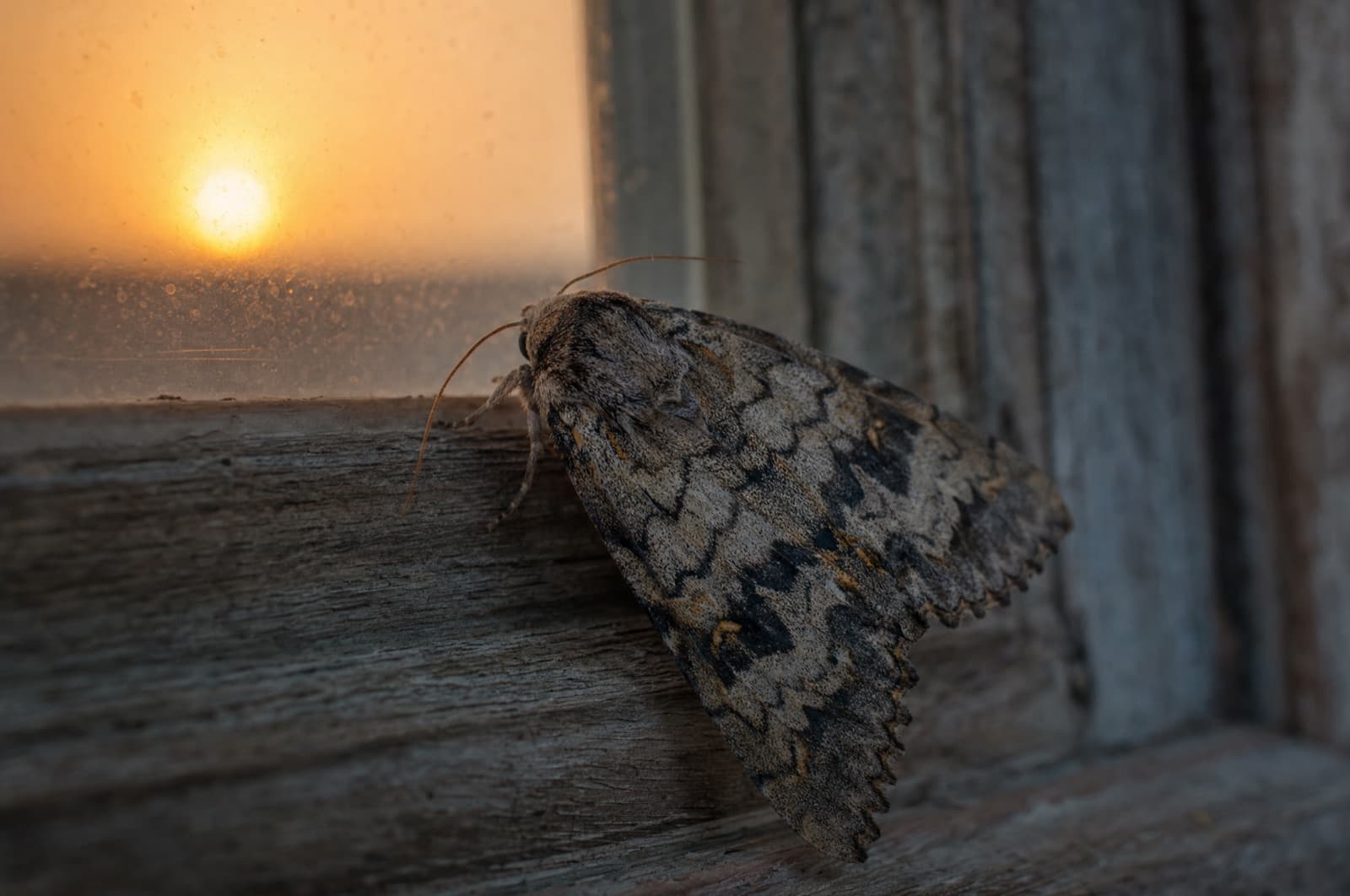
Where Do Moths Go in the Winter? NH Moth Timing Guide
At a glance
- Indoor moth cycle: Egg to adult in ~30–50 days (warm)Pantry moths breed year-round in heated homes with no dormant season.
- Clothes moth larvae: Inactive below 40°FCold storage protects wool from active feeding.
- Winter moth flight: Mid-late Nov–JanAdult males emerge from soil pupae, usually before Thanksgiving.
- Winter moth eggs: 150–350 per female, laid on barkEggs overwinter outdoors and hatch in early spring, defoliating oaks and maples.
Indoor moth cycle
Egg to adult in ~30–50 days (warm)
Pantry moths breed year-round in heated homes with no dormant season.
Clothes moth larvae
Inactive below 40°F
Cold storage protects wool from active feeding.
Winter moth flight
Mid-late Nov–Jan
Adult males emerge from soil pupae, usually before Thanksgiving.
Winter moth eggs
150–350 per female, laid on bark
Eggs overwinter outdoors and hatch in early spring, defoliating oaks and maples.
The short of it
The moth truly inside your house in winter is a pantry (Indian meal) or clothes moth breeding year-round in food or wool — the 'winter moth' lives outdoors.
When are they active — the whole year at a glance
Indoor pantry and clothes moths run on a heated-home clock with no real winter pause, while the unrelated outdoor winter moth follows the opposite pattern — flying only in late fall and overwintering as eggs on bark.
Best window to act · Act immediately upon seeing adult moths or webbing — this is source-driven, not seasonal. Find and discard infested food for pantry moths, or clean and cold-store wool for clothes moths, and use pheromone traps to monitor ongoing activity.
Indoor pantry and clothes moths have no frost-driven season — heated homes remove the seasonal cue, so their calendar is set by the food or textile source, not the weather. The outdoor winter moth follows its own separate, tree-based schedule (late-fall flight, spring caterpillars).
Winter behavior
The honest answer to 'where do moths go in winter' depends entirely on which moth you mean — and for the ones actually in your house, the answer is 'nowhere, they never left.'
Active all winter
Pantry and clothes moths don't overwinter in the outdoor sense — they live and breed continuously indoors year-round in heated New Hampshire homes, in pantry food or in wool and fur. The outdoor winter moth is the opposite: it spends winter as eggs on tree bark, with adults emerging from soil in late fall to mate, lay eggs, and die; none of them shelter indoors.
Move in
Pantry moths typically arrive already inside infested groceries, while clothes moths arrive on infested textiles or secondhand goods — either can happen at any time of year.
Active all winter
Pantry and clothes moths don't overwinter in the outdoor sense — they live and breed continuously indoors year-round in heated New Hampshire homes, in pantry food or in wool and fur. The outdoor winter moth is the opposite: it spends winter as eggs on tree bark, with adults emerging from soil in late fall to mate, lay eggs, and die; none of them shelter indoors.
Spring exit
There is no seasonal exit for indoor moths; effective control means removing the food or textile source directly rather than waiting for a change in season.
A year in the life
Indoor moths run on a near-constant cycle in New Hampshire homes, while the outdoor winter moth follows a completely separate, tree-based calendar.
- 01
Spring
Pantry and clothes moths continue their indoor breeding cycles uninterrupted. Outdoors, winter-moth eggs laid the previous December hatch and tiny caterpillars begin defoliating buds and leaves — a landscape and tree-health issue, not a household one.
- 02
Summer
Peak pantry-moth breeding season, since warm indoor temperatures shorten the egg-to-adult cycle to just a few weeks and infestations can grow quickly if unaddressed. The outdoor winter moth is dormant this whole season as pupae resting in the soil.
- 03
Fall
Indoor pantry and clothes moths persist without any real change. Outdoors, adult winter moths emerge from the soil in late November — often before Thanksgiving — and males flutter conspicuously around porch and holiday lights.
- 04
Winter
Indoor moths keep breeding in heated New Hampshire homes with no seasonal slowdown. Outdoors, winter-moth adults finish mating and laying eggs on bark by January, then die, leaving only dormant eggs to overwinter until spring.
Moths in southern New Hampshire homes
In Manchester, Nashua, and Concord, the moths homeowners actually find indoors in winter are pantry and clothes moths, both of which thrive in the stable warmth of a heated New England home regardless of what's happening outside. The outdoor winter moth, first a significant concern in coastal Massachusetts, has since spread into New Hampshire and is a genuine tree-health issue for oaks, maples, and fruit trees — but it is a landscaping and tree-care matter, handled with dormant oil and spring monitoring, not a pest-control call about the house itself.
Key local data
Winter moth reached coastal New Hampshire after spreading north from the Boston area, and the introduced parasitoid fly Cyzenis albicans — released across New England beginning in 2004 — is now established widely enough that NH winter-moth populations no longer cause noticeable defoliation (UMass Extension; Elkinton et al. biological-control program). Indoor pantry and clothes moths are unaffected by any of this — they breed year-round in heated homes regardless of the outdoor season.
We serve these communities
- NH-licensed applicator · #782664
- Same-day service
- Family-owned since 2017
Service Area Map
Southern New Hampshire
Timing your treatment
Because indoor pantry and clothes moth activity is driven by a food or textile source rather than the calendar, the right time to act is the moment you see adults or larvae, not a particular season.
General Pest Control
Free inspection and same-day service across southern New Hampshire. NH-licensed #782664.
Learn more about this pestFrequently asked
Sources & references
- Penn State Extension — Indian Meal Moth
year-round indoor breeding, ~30–50-day life cycle
- Penn State Extension — Clothes Moth
larvae feeding on wool/fur, year-round indoor presence
- Rutgers NJAES — Clothes Moths FS1182
larvae inactive below 40°F
- UMass Extension — Winter Moth
mid-late November flight timing, eggs laid on bark, NH range
- Elkinton et al. — Successful biological control of winter moth in the northeastern United States (PubMed 33749016)
Cyzenis albicans releases from 2004, NH populations no longer causing noticeable defoliation
- UMass Extension — Insect & Mite Guide: Operophtera brumata
150–350 eggs per female, defoliation impact
- Mass Audubon — Winter Moths
egg overwintering, caterpillar host trees
- UC IPM — Clothes Moths and Carpet Beetles
pantry vs. clothes moth identification
Editorial disclaimer: This content is provided for informational purposes only and does not constitute pest control advice. Every property is unique — consult a licensed professional for guidance specific to your situation. Anchor Pest Services is licensed in New Hampshire (#782664).
Written & reviewed by
VerifiedDaniel Brady
NH-Licensed Pesticide Applicator · License #782664 (NHDAMF, RSA 430)
Daniel Brady is the New Hampshire–licensed applicator behind Anchor Pest Services, a family-owned pest control company serving the Manchester area since 2017.
Last updated Jul 2026
Anchor Pest Services
Whatever the season — we handle the timing for you.
Same-day service across Southern New Hampshire. NH-licensed #782664, family-owned since 2017. We track the local calendar so you don't have to guess the right window.
- NH-licensed applicator
- Same-day service
- Pet & family-conscious
NH License #782664 · No obligation · We answer in person
Your next step
- What to do next
Clothes Moths in New Hampshire: Holes in Wool & How to Stop Them
Read the answer - Related guide
When Are Asian Lady Beetles Active? NH Ladybug Timing
Read the answer - Related guide
When Are Spiders Most Active in the House? NH Spider Guide
Read the answer - Related guide
When Do Crickets Come Inside? NH Cricket Timing Guide
Read the answer - Also relevant
Indian Meal Moths in New Hampshire: Find the Source & Stop Them
Read the answer - Also relevant
Clothes Moths in New Hampshire: Holes in Wool & How to Stop Them
Read the answer