
Skip to content
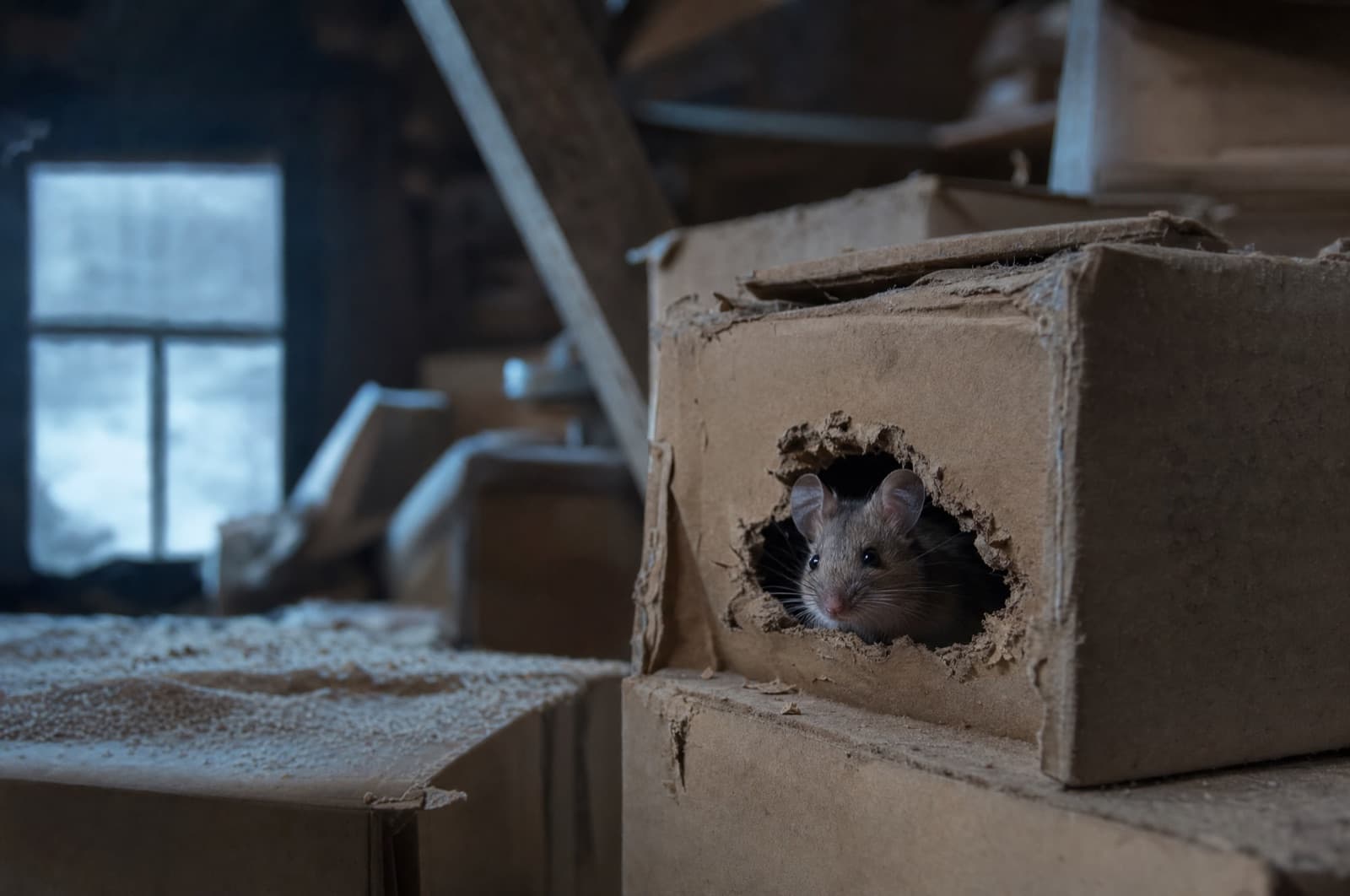
A house mouse in a gnawed cardboard storage box in a cold New Hampshire attic
Daniel Brady · NH-Licensed Pesticide Applicator · License #782664
Reviewed by Daniel Brady

Why do spiders show up in attics and basements during winter?

It depends on the spider — most were already there
It depends on the species, but for the common house spiders you're most likely to find — American house spiders and long-bodied cellar spiders — the honest answer is that they're indoor residents that stay active in heated homes all year.They gather in attics and basements because those spaces are dark, quiet, and hold the small insects they eat, not because the cold drove them inside. You notice them more in winter mainly because that's when you're digging through stored boxes and disturbing spaces you otherwise ignore.

At a glance

  • The verdict: It depends on the spider — most were already there
The honest answer

The short of it

The verdict
It depends on the spider — most were already there

Most house spiders you find in winter didn't just come in from the cold. They've lived indoors year-round; winter just makes you notice them in the quiet, undisturbed corners.

What actually happens

The busted assumption

It depends

What people assume

"Spiders flooded in because of the cold snap." For the species most commonly found indoors in a New Hampshire winter, that's not what happened. Most were already living in the house; you're noticing them now because winter is when people go into attics for decorations or into basements to check on the furnace, disturbing spiders that were otherwise quietly established.

What actually happens

Common house spiders congregate in quiet, undisturbed areas of a home — closets, garages, basements, attics — largely because those spaces offer both shelter and a reliable supply of the small insects they prey on. This is a year-round pattern for indoor-established species, not a winter-specific migration. Reducing clutter and the insect populations that feed spiders makes these spaces measurably less attractive to them, which is the actual lever homeowners have, rather than trying to seal spiders out the way you would rodents.

What it means for you
Declutter, reduce the insect population they're feeding on, and knock down webs in undisturbed corners — that addresses the actual attraction (prey and shelter), not a cold-weather invasion that isn't really happening. Most house spiders are harmless and are, if anything, doing you a favor by eating other insects. Reserve real concern for a confirmed medically significant species, which is uncommon in this region and worth a specific identification rather than a general spider scare.

Established from: University of Kentucky Entomology

In depth

The full picture

01

The distinction that matters: resident vs. wandering species

Not every spider found indoors got there the same way. Some species truly are outdoor spiders that occasionally wander in seeking shelter as temperatures drop. But the spiders homeowners most commonly report finding in attics and basements — the American house spider and the long-bodied cellar spider, among others — are indoor-established species. They complete their life cycle indoors, are active in heated structures year-round, and don't disappear or hibernate the way an outdoor insect might.

For those species, "why do they show up in winter" is slightly the wrong question. They didn't show up — they were there in September too. What changes in winter is how often you go into the spaces where they concentrate.

02

Why attics and basements specifically

Spiders gather where two things overlap: a quiet, undisturbed environment and a reliable food supply. Attics and basements offer both. They're low-traffic year-round, they hold clutter and stored items that create structure for webs, and they typically host the small flies, moths, and other insects spiders feed on — some of which are themselves winter overwinterers, which means spider prey is often concentrated in exactly these spaces during the cold months too.

That overlap of quiet and prey is the actual draw, not temperature. A basement isn't warmer than the rest of the house in any way that would specifically attract a spider, and an attic in a New Hampshire winter is often colder than the living space below it — so "seeking warmth" doesn't hold up as the mechanism for most of what people find there.

03

Why winter is when you notice, even if nothing changed

The honest driver of "more spiders in winter" is often behavioral, on the homeowner's side rather than the spider's. Winter is when people go into the attic for holiday decorations, check on stored items, or head into the basement more often to deal with the furnace or a leak — all activities that disturb spaces spiders have quietly occupied undisturbed for months. Digging through a box that's sat untouched since spring is exactly when you find the web and the spider that built it.

That reframes the fix: this isn't a seasonal invasion to seal against the way you would rodents or overwintering insects arriving from outside. It's about reducing what makes an indoor space attractive to a resident population — less clutter, less insect prey, fewer undisturbed corners — which you can do at any time of year, not just before a frost date.

Key takeaways
5 points
  • Most house spiders found indoors in winter were already living there year-round; they didn't just invade from the cold.
  • Attics and basements attract them because they're quiet and hold insect prey, not because they're warm.
  • You notice spiders more in winter mainly because that's when you disturb stored boxes and undisturbed corners.
  • Decluttering and reducing insect prey are the real levers — not sealing exterior gaps the way you would for rodents.
  • Most common house spiders are harmless and help by eating other indoor insects; reserve concern for a confirmed medically significant species.
New Hampshire context

What this looks like in a New Hampshire attic or basement

New Hampshire attics run cold in winter — often colder than the living space below, since they're separated from heated rooms by insulation and typically ventilated to the outside. That undercuts the idea that spiders are drawn there for warmth; if anything, a basement near the furnace is milder than an unheated attic, and both host resident spider populations regardless.

What's genuinely seasonal here is human behavior: Manchester-area homeowners are more likely to be in the attic in November and December retrieving holiday decorations, or in the basement more often once heating season starts. That's when long-undisturbed webs and their occupants get found — not because the spiders arrived with the cold, but because the boxes finally got moved.

  • NH-licensed #782664

    Southern New Hampshire

  • Family-owned

    Since 2017

  • Honest routing

    Even when it isn’t us

We serve these communities

ManchesterNashuaConcordDerryBedfordSalemHudsonAmherst

Most attic spiders are residents, not invaders.

Decluttering and web cleanup is yours to do any time of year. If you're seeing something that looks medically concerning, that's worth an honest identification call.

Follow-up questions

Frequently asked

Sources & citations(2)
  1. University of Kentucky Entomology — Eliminating Spiders Around Homes and Buildings (EF623)

    Spiders congregate in quiet, undisturbed areas near prey; decluttering and prey reduction as the control lever

    extensionverified 2026-07-16
  2. NOAA — Manchester, NH freeze climatology

    Manchester winter seasonal context

    govverified 2026-07-16

Written & reviewed by

Verified

Daniel Brady

NH-Licensed Pesticide Applicator · License #782664 (NHDAMF, RSA 430)

Daniel Brady is the New Hampshire–licensed applicator behind Anchor Pest Services, a family-owned pest control company serving the Manchester area since 2017.

Verify license

Last updated Jul 2026

Honest pest help for New Hampshire homes

We Won't Sell You an Exterior Spider Barrier That Doesn't Fit the Problem.

Most attic and basement spiders are already indoor residents, so an outdoor perimeter treatment misses the point. We'll tell you when decluttering and web removal is the real fix, and we're here for an honest identification if something looks different from a common house spider. Family-owned since 2017, NH license #782664, serving Manchester, Nashua, Concord and nearby towns.

  • Honest advice — most attic spiders don't need a treatment plan
  • NH-licensed applicators (#782664) — free inspection, same-day service
  • Spider identification and inspection across southern and central New Hampshire

NH License #782664 · No obligation · We answer in person