
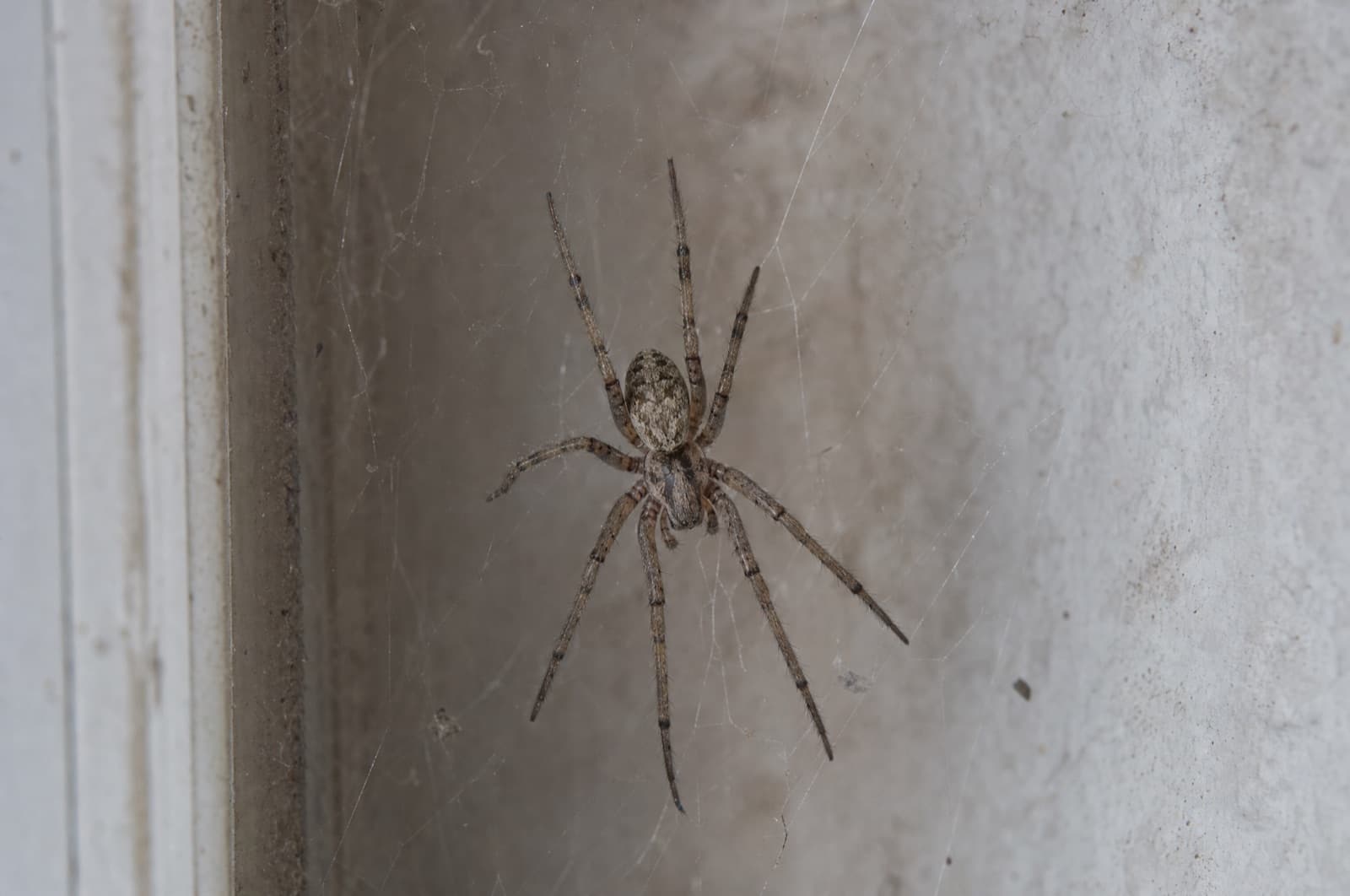
When Are Spiders Most Active in the House? NH Spider Guide
At a glance
- Peak sightings: Late Aug–OctMature males roaming to find mates drive the sighting surge, not falling temperatures.
- 'Came in from the cold' myth: ~95% were always indoorsFewer than 5% of indoor spiders were ever outside, per arachnology research.
- Attracted to warmth?: No — spiders are cold-bloodedSome species tolerate freezing to roughly −5°C; indoor wanderers often die rather than thrive.
- NH danger level: Practically noneOnly the rare northern black widow is medically significant; the brown recluse is not native to NH.
Peak sightings
Late Aug–Oct
Mature males roaming to find mates drive the sighting surge, not falling temperatures.
'Came in from the cold' myth
~95% were always indoors
Fewer than 5% of indoor spiders were ever outside, per arachnology research.
Attracted to warmth?
No — spiders are cold-blooded
Some species tolerate freezing to roughly −5°C; indoor wanderers often die rather than thrive.
NH danger level
Practically none
Only the rare northern black widow is medically significant; the brown recluse is not native to NH.
The short of it
You see the most spiders indoors in September–October because mature MALES are roaming to find mates — it's a mating surge, not a cold-weather invasion.
When are they active — the whole year at a glance
Spider activity in New Hampshire builds gradually through the growing season and peaks visibly in fall, driven by mating behavior rather than cold-weather migration indoors.
Best window to act · Rarely any need for chemicals — spiders are beneficial predators. To reduce September–October sightings, declutter, vacuum corners and egg sacs, seal cracks around windows, doors, and utilities, switch exterior lights to warm/yellow LEDs to attract fewer insects, and move firewood or leaf piles off the foundation.
Peak reflects the fall mating roam, not cold-driven entry; the ~Oct 19 Manchester frost roughly ends outdoor wandering activity (NOAA 1991–2020 Climate Normals).
Winter behavior
The honest answer to 'do spiders come inside in winter' is that the ones you see indoors were mostly already there — spiders don't overwinter by migrating into houses.
Active all winter
True house spiders — including the common house spider and cellar spiders — live indoors year-round and don't 'invade' seasonally at all, hiding in basements, crawlspaces, wall and floor voids, and behind furniture; females and young stay concealed while males roam in fall. Outdoor New Hampshire spiders overwinter outdoors, either as eggs in protected sacs or as dormant juveniles and adults under bark and leaf litter; the few that wander inside usually die or fail to breed.
Move in
House spiders mostly don't 'enter' at all — populations establish via egg sacs carried in on furniture or materials, not by walking in from outside.
Active all winter
True house spiders — including the common house spider and cellar spiders — live indoors year-round and don't 'invade' seasonally at all, hiding in basements, crawlspaces, wall and floor voids, and behind furniture; females and young stay concealed while males roam in fall. Outdoor New Hampshire spiders overwinter outdoors, either as eggs in protected sacs or as dormant juveniles and adults under bark and leaf litter; the few that wander inside usually die or fail to breed.
Spring exit
There is no seasonal exit; egg sacs hatch and spiderlings disperse in spring, continuing the indoor population without any outdoor migration.
A year in the life
Spider visibility in a New Hampshire home follows the rhythm of mating and prey availability far more than it follows the thermometer.
- 01
Spring
Egg sacs hatch and spiderlings disperse, and indoor webs are rebuilt as insect prey becomes available again. Sightings are moderate during this period and generally unremarkable to homeowners.
- 02
Summer
Populations grow steadily, feeding on abundant insects, and hot, humid New Hampshire summers support strong activity — but spiders largely stay out of sight during this stretch.
- 03
Fall
The visible peak. From late August through October, mature males abandon their webs and roam day and night searching for mates, which is why you suddenly notice them crossing floors and walls — a mating surge that is self-limiting, since most males die by November.
- 04
Winter
Indoor house spiders stay hidden and largely inactive through the cold months, while outdoor species overwinter as eggs or dormant individuals. This is the season with the lowest overall spider sightings.
Spiders in southern New Hampshire
Manchester, Nashua, and Concord homeowners report the same September and October spider surge every year, and it consistently traces back to mature males of common species — wolf spiders, house spiders, and others — roaming in search of mates rather than any change in outdoor temperature. New Hampshire's spider diversity includes fewer than about 50 commonly encountered species, drawn mostly from harmless crab, jumping, orb-weaver, and wolf spider families. The only medically significant species is the rare northern black widow, with just a handful of confirmed sightings statewide, while the brown recluse is not native and shows up, if at all, only as an occasional hitchhiker.
Key local data
The visible fall spider-roaming period runs from late August through October and largely winds down around Manchester's first frost (~Oct 19, 50% probability — NOAA 1991–2020 Climate Normals), though the behavior itself is driven by mating activity rather than the cold.
We serve these communities
- NH-licensed applicator · #782664
- Same-day service
- Family-owned since 2017
Service Area Map
Southern New Hampshire
Timing your treatment
Because spiders are beneficial predators and NH's dangerous species are essentially absent, the honest guidance is that most homeowners don't need to act at all — but a few steps can reduce fall sightings.
Spider Pest Control
Free inspection and same-day spider service across southern New Hampshire. NH-licensed #782664.
Learn more about this pestFrequently asked
Sources & references
- Burke Museum — Myth: Spiders Come Indoors in the Fall to Escape the Cold
fall mating-roam peak, ~5% indoor-origin myth debunk, cold-blooded biology
- Union Leader (Forest Journal) — The Fascinating and Not-That-Scary Lives of Spiders
NH spider diversity, danger level, recluse misidentification
- Colonial Pest — Do We Have Dangerous Spiders in New England?
rare black widow presence, no established recluse
- Modern Pest — Dangerous Spiders in New England
regional spider-danger corroboration
- A-Z Animals — Why Fall Is Prime Time for Spider Love
September–October mating peak timing
- IFLScience — A Busy Spider Season Is Brewing
fall roaming-behavior corroboration
- Garden.org — Manchester, NH Frost Dates
~Oct 19 Manchester first-frost anchor (NOAA 1991–2020)
Editorial disclaimer: This content is provided for informational purposes only and does not constitute pest control advice. Every property is unique — consult a licensed professional for guidance specific to your situation. Anchor Pest Services is licensed in New Hampshire (#782664).
Written & reviewed by
VerifiedDaniel Brady
NH-Licensed Pesticide Applicator · License #782664 (NHDAMF, RSA 430)
Daniel Brady is the New Hampshire–licensed applicator behind Anchor Pest Services, a family-owned pest control company serving the Manchester area since 2017.
Last updated Jul 2026
Anchor Pest Services
Whatever the season — we handle the timing for you.
Same-day service across Southern New Hampshire. NH-licensed #782664, family-owned since 2017. We track the local calendar so you don't have to guess the right window.
- NH-licensed applicator
- Same-day service
- Pet & family-conscious
NH License #782664 · No obligation · We answer in person
Your next step
- Book a NH pro
Spider Control in New Hampshire
Spider sightings peak in fall. We treat hiding spots and seal the gaps they use.
Book now - Next step
How to Use Ortho Home Defense Ant, Roach & Spider Killer
Read the answer - Related guide
When Do Crickets Come Inside? NH Cricket Timing Guide
Read the answer - Related guide
When Are Asian Lady Beetles Active? NH Ladybug Timing
Read the answer - Related guide
Where Do Moths Go in the Winter? NH Moth Timing Guide
Read the answer - Also relevant
Wolf Spider in New Hampshire: ID, Bite & Is It a Recluse
Read the answer