
Skip to content
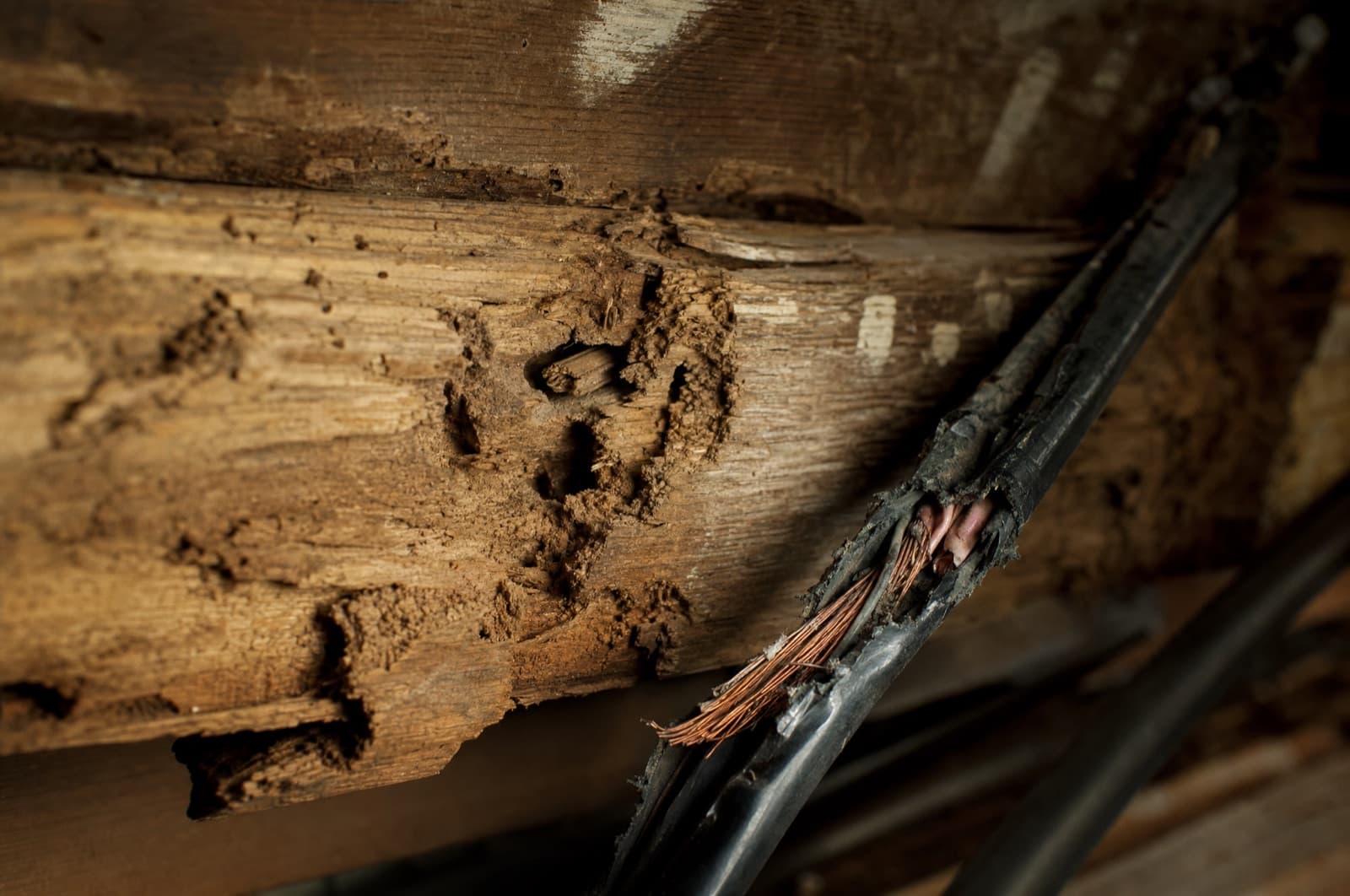
Pest damage evidence — a gnawed structural beam and a chewed electrical wire
Daniel Brady · NH-Licensed Pesticide Applicator · License #782664
Reviewed by Daniel Brady

Can pest damage start small and get worse?

Compounds slowly — for genuine structural pests, on a scale of years
It depends entirely on which pest and which kind of damage. Subterranean termite and carpenter-ant activity genuinely compounds — a colony grows and consumes more wood over time — but the honest timescale is months to years, not the 'your house could collapse next week' urgency that pest marketing implies. A large category of pest damage is static and does not worsen on its own at all: a finished carpenter-bee gallery, a dead wasp nest, an old cobweb, or a cosmetic dropping stain. Treating every pest sighting as an emergency escalation is the overstatement this page corrects.

At a glance

  • Hype: Overstated
  • Evidence: Well documented
  • Who fixes it: Pest pro first
  • 10 years or more

    Time subterranean termite damage typically takes to become severe — real but far slower than 'collapse tomorrow'

    Penn State Extension — Eastern Subterranean Termites

The honest answer

The short of it

The verdict
Compounds slowly — for genuine structural pests, on a scale of years

For real structural pests like termites and carpenter ants, yes — damage compounds on a scale of years, not weeks. But a large share of what people worry about, a dead nest or a cosmetic stain, is static and never gets worse at all.

The correction

What they claim vs. what the evidence supports

One shared severity track, two markers. The span between them is the hype delta — named out loud.

The claim — the idea that any small pest problem inevitably snowballs into catastrophic damage

That any pest problem, left alone even briefly, escalates rapidly into severe structural damage — 'small problem today, collapsed house tomorrow' urgency framing common in pest-marketing and AI-generated fear copy.

Where the claim comes from: Pest-company marketing copy and viral home-maintenance content that compresses a genuinely slow structural process into an urgent, imminent threat.

Severity, 0–100
Hype says90
55Evidence says
Hype delta35point gapWell documented
The evidence

For genuine structural pests, the compounding is real but slow. Subterranean termites 'do not cause significant damage over a period of days or weeks' (University of Missouri Extension), and it 'usually takes termites a number of years to cause extensive damage... usually 10 years or more' (Penn State Extension). Carpenter ants follow a similar, slower logic tied to an existing moisture problem. Meanwhile, a large share of pest 'damage' — a dead nest, a finished gallery, a cosmetic stain — is static and does not compound at all.

The gap

The direction is right for genuine structural pests, but the clock is wrong — extensive structural loss from total neglect is a years-to-decades outcome, not a next-month threat. And for a meaningful share of pest damage, there is no clock running at all.

The compounding clock

Does it get worse if you ignore it?

Over time
Compounds slowly

Real structural compounding takes years — and a lot of what people worry about isn't compounding at all.

The timeline
6 stages
  1. DaysReversible

    Nothing measurable. A new termite or carpenter-ant presence produces no detectable structural change in this window.

  2. WeeksReversible

    Still no significant damage — University of Missouri Extension is explicit that subterranean termites 'do not cause significant damage over a period of days or weeks.'

  3. MonthsReversible

    A mature colony feeds continuously and localized gallery damage begins to establish in earnest.

  4. One seasonReversible

    Damage becomes measurable but is usually still localized to the area of activity, especially where a moisture source (for carpenter ants) hasn't been corrected.

  5. YearsReversible

    Penn State Extension: it 'usually takes termites a number of years to cause extensive damage... usually 10 years or more.' At this stage, repair moves from a patch to a genuine contractor-scale structural project.

  6. DecadesReversible

    Extensive structural loss is the realistic ceiling of total, sustained neglect — reparable, but now a major undertaking rather than a routine repair.

What stops the clock
Eliminating the colony (pest_pro_first) and correcting the underlying condition — the moisture source for carpenter ants, the soil-to-wood contact for termites. A dead nest or a finished, sealed carpenter-bee gallery is already static and needs nothing to 'stop' because nothing is progressing.
Repair scope

Who actually fixes this

Scope, not dollars — the honest answer to “how expensive is it,” routed to the right trade.

Who fixes it
Pest pro first
Effort
A trade visit

Whether the damage compounds or is already static, the pest has to be correctly identified and resolved before any repair decision makes sense — treating a static dead nest as an emergency wastes effort, and ignoring an active colony wastes years.

The right order
  1. 1
    Identify whether the pest and damage are actively compounding or already static
  2. 2
    Resolve any active colony and correct the underlying condition (moisture, entry point)
  3. 3
    Route the structural repair to a licensed contractor once the pest side is confirmed resolved
Route by symptom
  • Licensed contractorYears of unaddressed termite or carpenter-ant activity have produced genuine structural loss requiring framing repair
  • You — a DIY patchThe damage is a finished carpenter-bee gallery or similar static, cosmetic issue that simply needs sealing, not structural repair
Do not
  • Don't assume every pest sighting is on an urgent collapse timeline — the genuine structural clock runs in years, not weeks
  • Don't assume every pest 'damage' is compounding — a dead nest, an old cobweb, or a finished gallery is static and needs no urgent action
Where we help — and where we don't

Anchor resolves the pest — termites, carpenter ants, rodents, wasps in walls — and corrects the conditions that let it compound. We do not perform the structural rebuild a years-long neglected case might require; that's a licensed contractor's work, and we'll say so plainly.

In depth

The full picture

01

What genuinely compounds — and how slowly

Some pest damage is real compounding damage, and it's worth naming honestly rather than downplaying. Subterranean termite colonies feed continuously once established, and carpenter ants expand galleries in wood that's already moisture-damaged. Left entirely alone, both genuinely get worse over time. But the timescale is the part marketing consistently compresses: University of Missouri Extension states plainly that termites 'do not cause significant damage over a period of days or weeks,' and Penn State Extension puts the timeline for extensive damage at 'a number of years... usually 10 years or more.' That's a real, documented compounding process — just a much slower one than 'small problem today, collapsed house tomorrow' implies.

02

What genuinely does NOT compound

The other half of an honest answer is naming what stays exactly as bad as it started. A dead wasp or hornet nest never gets worse — nothing is alive inside it to expand anything. A finished, sealed carpenter-bee gallery from a prior season doesn't grow on its own unless the bees return and reuse it. An old cobweb is cosmetic on day one and cosmetic a year later. A dropping stain that's already there doesn't spread further once the animal causing it is gone. Treating every one of these as an active, worsening threat is a version of the same overstatement this page corrects — just aimed at the wrong direction.

03

Why the confusion happens

Pest marketing has a structural incentive to compress timelines, because urgency sells faster than an honest 'this takes years' answer. But collapsing every pest into one universal 'it always gets worse, call now' narrative erases exactly the distinction a homeowner needs to make good decisions: which problems are on a real, slow clock that benefits from early resolution, and which ones are already finished business that need identification, not panic. Both mistakes cost homeowners money — the first from unnecessary urgency, the second from ignoring an active termite colony because it seemed similarly harmless.

04

How this cluster's other pages fit together

This page is deliberately a synthesis, not a new investigation — the per-pest damage grading lives elsewhere in this hub. Subterranean termites and carpenter ants are graded structural and genuinely compound (see the wood-and-structure cluster). Bed bugs, cobwebs, and a dead nest are graded none, cosmetic, or static, and this page's honest answer is that they simply don't escalate the way the compounding pests do. Reading this page's verdict as 'yes, all pest damage gets worse' would misrepresent exactly the split it's built to make plain.

Key takeaways
5 points
  • Genuine structural compounding is real for termites and carpenter ants — but the honest clock is years, not weeks.
  • A meaningful share of pest 'damage' is static and never gets worse: a dead nest, a finished gallery, an old cobweb, a cosmetic stain.
  • University of Missouri Extension: termites 'do not cause significant damage over a period of days or weeks.'
  • Penn State Extension: extensive termite damage typically takes 'a number of years... usually 10 years or more.'
  • The fix for a compounding pest is resolving the colony and its underlying condition; the fix for a static one is simply confirming it's actually inactive.

Not sure if it's compounding or already static? Get it identified.

Anchor tells you honestly whether a problem is on an active clock or already finished business.

Follow-up questions

Frequently asked

Sources & citations(3)
  1. University of Missouri Extension — Subterranean Termites (G7420)

    Termites do not cause significant damage over days or weeks — the honest short-term timeline

    extensionverified 2026-07-16
  2. Penn State Extension — Eastern Subterranean Termites

    Extensive termite damage typically takes a number of years, usually 10 or more

    extensionverified 2026-07-16
  3. UNH Cooperative Extension — Carpenter Ants Fact Sheet

    Carpenter ant activity as a slower, moisture-linked structural process

    extensionverified 2026-07-16

Written & reviewed by

Verified

Daniel Brady

NH-Licensed Pesticide Applicator · License #782664 (NHDAMF, RSA 430)

Daniel Brady is the New Hampshire–licensed applicator behind Anchor Pest Services, a family-owned pest control company serving the Manchester area since 2017.

Verify license

Last updated Jul 2026

Honest pest help for New Hampshire homes

Real Urgency Where It's Earned. None Where It Isn't.

Anchor resolves genuinely compounding structural pests — termites, carpenter ants, rodents — and tells you plainly when what you're looking at is already static and doesn't need emergency treatment. Family-owned since 2017, NH license #782664, serving Manchester, Nashua, Concord and nearby towns.

  • Honest urgency — no manufactured emergencies
  • NH-licensed applicators (#782664) — free inspection, same-day service
  • Structural pest resolution across southern and central New Hampshire

NH License #782664 · No obligation · We answer in person