
Skip to content
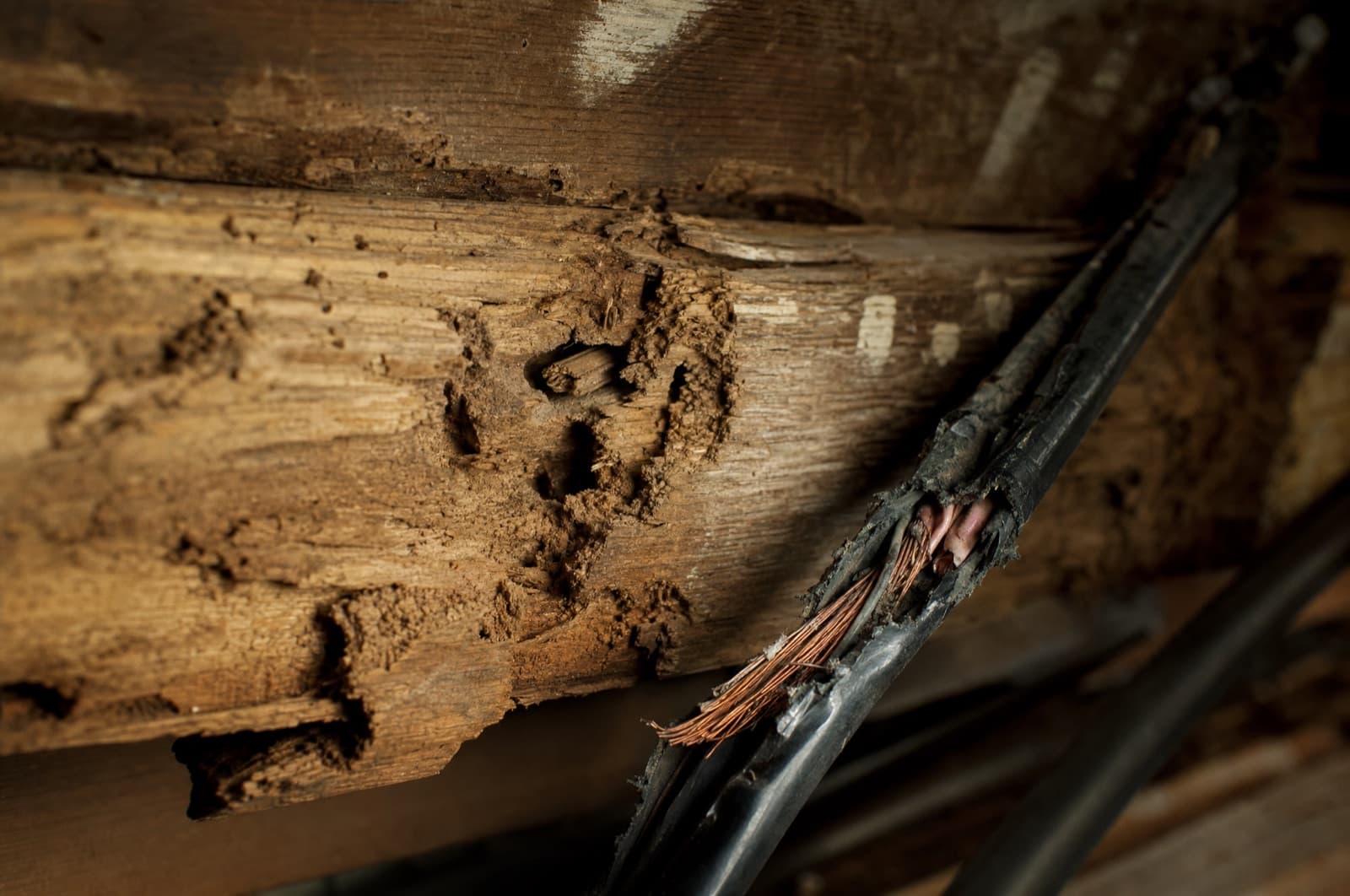
Pest damage evidence — a gnawed structural beam and a chewed electrical wire
Daniel Brady · NH-Licensed Pesticide Applicator · License #782664
Reviewed by Daniel Brady

Do seasonal pests cause different types of damage?

Ranked ledger — the season changes the pest and the damage class
Yes. New Hampshire pest damage follows a strong seasonal pattern. Spring and summer bring wood-destroying activity — termite swarms, carpenter ants working in already-damp wood, carpenter bees drilling into fascia — plus wasp and yellowjacket nest-building. Fall drives rodents indoors and brings overwintering nuisance invaders as temperatures fall toward Manchester's first hard frost, historically around October 19 to 29 (NOAA). Winter concentrates rodent gnawing and its associated wiring risk. The damage class shifts with the calendar, but the genuinely structural share of that seasonal pressure is smaller than the fall 'invasion' headlines suggest.

At a glance

  • Who fixes it: Pest pro first
The honest answer

The short of it

The verdict
Ranked ledger — the season changes the pest and the damage class

Yes — New Hampshire's calendar drives real shifts in which pest is active and what class of damage it causes, but most seasonal pressure is functional or nuisance, not structural.

Repair scope

Who actually fixes this

Scope, not dollars — the honest answer to “how expensive is it,” routed to the right trade.

Who fixes it
Pest pro first
Effort
A trade visit

Whichever season's pest is active, correctly identifying and resolving it comes before any repair — a termite swarm, a rodent entry point, and a wasp nest in a wall void all need the pest side handled by a professional first.

The right order
  1. 1
    Match the season to the likely pest — don't assume every fall insect cluster or every winter noise is the same kind of problem
  2. 2
    Resolve the active pest with a licensed professional where the damage class is structural or functional
  3. 3
    Route any resulting repair to the relevant trade — a contractor for structural wood, an electrician for wiring — separately from the pest treatment
Route by symptom
  • You — wipe it upThe seasonal pest is a fall nuisance invader (cluster flies, boxelder bugs, ladybugs) with no property-damage component at all
  • You — a DIY patchThe damage is a carpenter-bee hole or similar cosmetic seasonal issue that just needs sealing
Do not
  • Don't treat every seasonal insect surge as equally damaging — a fall cluster-fly cluster and a spring termite swarm are not the same category of event
  • Don't wait until the season's damage is obvious — spring is the window to check for termite/ant/bee signs, and fall is the window to seal rodent entry points before the cold drives them in
Where we help — and where we don't

Anchor handles the seasonal pests that genuinely matter for structure and function — termites, carpenter ants, rodent exclusion, wasp and yellowjacket nests in walls. We won't tell you a fall cluster-fly swarm needs the same response; it doesn't.

The ledger

The ranked damage ledger

The damage class New Hampshire homeowners should expect from the pests most active in each season, ranked by seasonal timing paired with structural or health consequence.

Ranked by
Seasonal timing paired with evidence-backed structural or functional consequence — spring wood-destroying and moisture-linked pests first, then summer stinging insects, then the fall/winter rodent migration, with harmless fall nuisance invaders ranked last and named as such, never by which season simply produces the most visible insect activity.
RankPestClassWhat it wrecksWho fixes itEvidence
01

Subterranean termites (spring swarm)

Spring swarmers are the visible seasonal cue, but the underlying damage is year-round and slow, not confined to the season you happen to see wings indoors.

StructuralFraming, sills, and subfloor — slow, cellulose-based structural consumptionPest pro firstWell documented
02

Rodents — mice and rats (fall/winter)

Cold-season indoor migration is real and well documented; gnawing on energized wiring is a genuine ignition mechanism, though the specific 'percentage of house fires' figure attached to it is not (see the gnawing cluster's fire-claim audit).

FunctionalWiring insulation, foam and batt insulation, plastic supply linesLicensed electricianWell documented
03

Carpenter ants (spring/summer)

Moisture-linked, per UNH Extension — carpenter ants excavate wood that already has a water problem; the ant is usually a symptom, not the root cause.

StructuralDamp, already-compromised framing — localized galleries, not consumption of sound woodPest pro firstWell documented
04

Carpenter bees (spring)

A single season's drilling rarely compromises lumber; the honest risk is multi-year reuse and expansion of the same gallery if left unsealed, per university extension guidance.

CosmeticFascia boards, deck rails, and untreated trimYou — a DIY patchPlausible, under-documented
05

Wasps and yellowjackets (summer/fall)

Only an active nest is a functional concern; once the colony dies off for the season, the abandoned nest is static and does not need urgent removal for damage reasons.

FunctionalWall voids and eaves where an active nest is builtPest pro firstWell documented
06

Overwintering nuisances — cluster flies, boxelder bugs, ladybugs (fall)

The fall 'invasion' framing implies damage that simply doesn't exist here; these are a seasonal annoyance, not a property-damage event.

NoneNothing — a nuisance presence only, seeking shelter for winterYou — wipe it upWell documented
What people get wrong
People read fall cluster-fly and ladybug swarms as a damage event because the volume of insects feels alarming — it isn't one; they cause nothing at all. The genuinely consequential seasonal shifts are the spring wood-destroying activity (termites, carpenter ants, carpenter bees) and the fall rodent migration indoors, which is where the real structural and functional risk actually concentrates.
In depth

The full picture

01

New Hampshire's pest calendar, honestly mapped

Spring is when subterranean termites swarm, giving homeowners their most visible seasonal cue even though the underlying colony has likely been active year-round. It's also when carpenter ants become noticeable in wood that already has a moisture problem, and when carpenter bees begin drilling into exposed fascia and deck lumber. Summer carries that wood-destroying activity forward and adds wasp and yellowjacket nest-building in wall voids and eaves. As temperatures fall toward Manchester's first hard frost — historically around October 19 to 29, per NOAA — mice and rats push indoors, and gnawing complaints on wiring and insulation follow within weeks. Winter concentrates that rodent activity, since the animals are now established indoors for the season.

02

Why the damage class shifts, not just the pest

It's not only which pest is active that changes seasonally — it's the class of damage. Spring and summer's dominant risk is structural: termites and carpenter ants working on wood, slowly. Fall and winter's dominant risk is functional: rodents gnawing wiring, insulation, and plastic supply lines. That's a meaningful distinction for how urgently and how a homeowner should respond in each season, and collapsing all seasonal pest activity into one undifferentiated 'watch out for pests' warning misses exactly the useful, actionable pattern.

03

The fall 'invasion' that isn't actually damage

Fall also brings the seasonal appearance of cluster flies, boxelder bugs, and ladybugs gathering on sun-warmed exterior walls before slipping indoors to overwinter. This is the pest event most likely to get mislabeled as damage simply because of sheer numbers — but these are nuisance invaders with no property-damage mechanism at all. The honest ranking in this ledger puts them last, not because they're rare, but because 'annoying' and 'damaging' are different categories, and this cluster of pests belongs firmly in the first one.

Key takeaways
5 points
  • NH pest pressure is genuinely seasonal, and the damage CLASS shifts with the calendar, not just the species.
  • Spring/summer brings the structural risk — termite swarms, moisture-linked carpenter ants, carpenter bee drilling, and wasp nest-building.
  • Fall/winter brings the functional risk — rodents moving indoors and gnawing wiring, insulation, and plastic supply lines.
  • Fall's cluster-fly and ladybug 'invasions' are the most over-read seasonal event — they cause zero property damage.
  • Manchester's first hard frost, historically ~October 19-29 (NOAA), is the practical marker for when rodent-focused fall prevention matters most.
New Hampshire context

Timing your seasonal pest checks to New Hampshire's calendar

A useful rhythm follows the same seasonal logic this ledger documents: check foundations and sills each spring during termite swarm season, watch fascia and deck lumber for carpenter-bee drilling through early summer, and seal likely rodent entry points before Manchester's first hard frost, historically landing around October 19 to 29 (NOAA). That single seasonal shift — the pre-frost window — is the highest-leverage moment for preventing the fall rodent migration from establishing indoors.

  • NH-licensed #782664

    Southern New Hampshire

  • Family-owned

    Since 2017

  • Honest routing

    Even when it isn’t us

We serve these communities

ManchesterNashuaConcordDerryBedfordSalemHudsonAmherstAuburnGoffstownHooksettLitchfieldLoudonMilfordBristol

Service Area Map

Southern New Hampshire

BristolPop. 3,200LoudonPop. 5,500ConcordPop. 43,900HooksettPop. 14,800GoffstownPop. 18,000AuburnPop. 5,700ManchesterPop. 115,600BedfordPop. 23,300LitchfieldPop. 8,500AmherstPop. 11,300DerryPop. 34,500MilfordPop. 15,700HudsonPop. 25,600NashuaPop. 91,100SalemPop. 30,000HQCityHover for info

Get ahead of the season's actual risk.

Anchor times its structural and rodent-exclusion work to New Hampshire's real pest calendar, not a generic schedule.

Follow-up questions

Frequently asked

Sources & citations(4)
  1. University of Missouri Extension — Subterranean Termites (G7420)

    Termite swarm seasonality and year-round colony activity

    extensionverified 2026-07-16
  2. UNH Cooperative Extension — Carpenter Ants Fact Sheet

    Moisture-linked carpenter ant activity and NH seasonal pattern

    extensionverified 2026-07-16
  3. NFPA Research — Home Fires Caused by Electrical Failure or Malfunction (R. Campbell, 2019)

    Arcing is the leading factor in home electrical-failure fires — the primary-source basis for the rodent-gnawed-wiring ignition mechanism (and for the absence of any rodent factor in fire-cause data)

    fireverified 2026-07-16
  4. University of Maryland Extension — Carpenter Bees

    Seasonal drilling and multi-year gallery reuse/expansion

    extensionverified 2026-07-16

Written & reviewed by

Verified

Daniel Brady

NH-Licensed Pesticide Applicator · License #782664 (NHDAMF, RSA 430)

Daniel Brady is the New Hampshire–licensed applicator behind Anchor Pest Services, a family-owned pest control company serving the Manchester area since 2017.

Verify license

Last updated Jul 2026

Honest pest help for New Hampshire homes

We Match the Season to the Real Risk.

Anchor's seasonal focus follows the evidence — spring termite and carpenter-ant checks, pre-frost rodent exclusion — not a one-size-fits-all calendar. Family-owned since 2017, NH license #782664, serving Manchester, Nashua, Concord and nearby towns.

  • Honest seasonal ranking — no manufactured fall panic
  • NH-licensed applicators (#782664) — free inspection, same-day service
  • Seasonal structural and rodent-exclusion service across southern and central New Hampshire

NH License #782664 · No obligation · We answer in person