
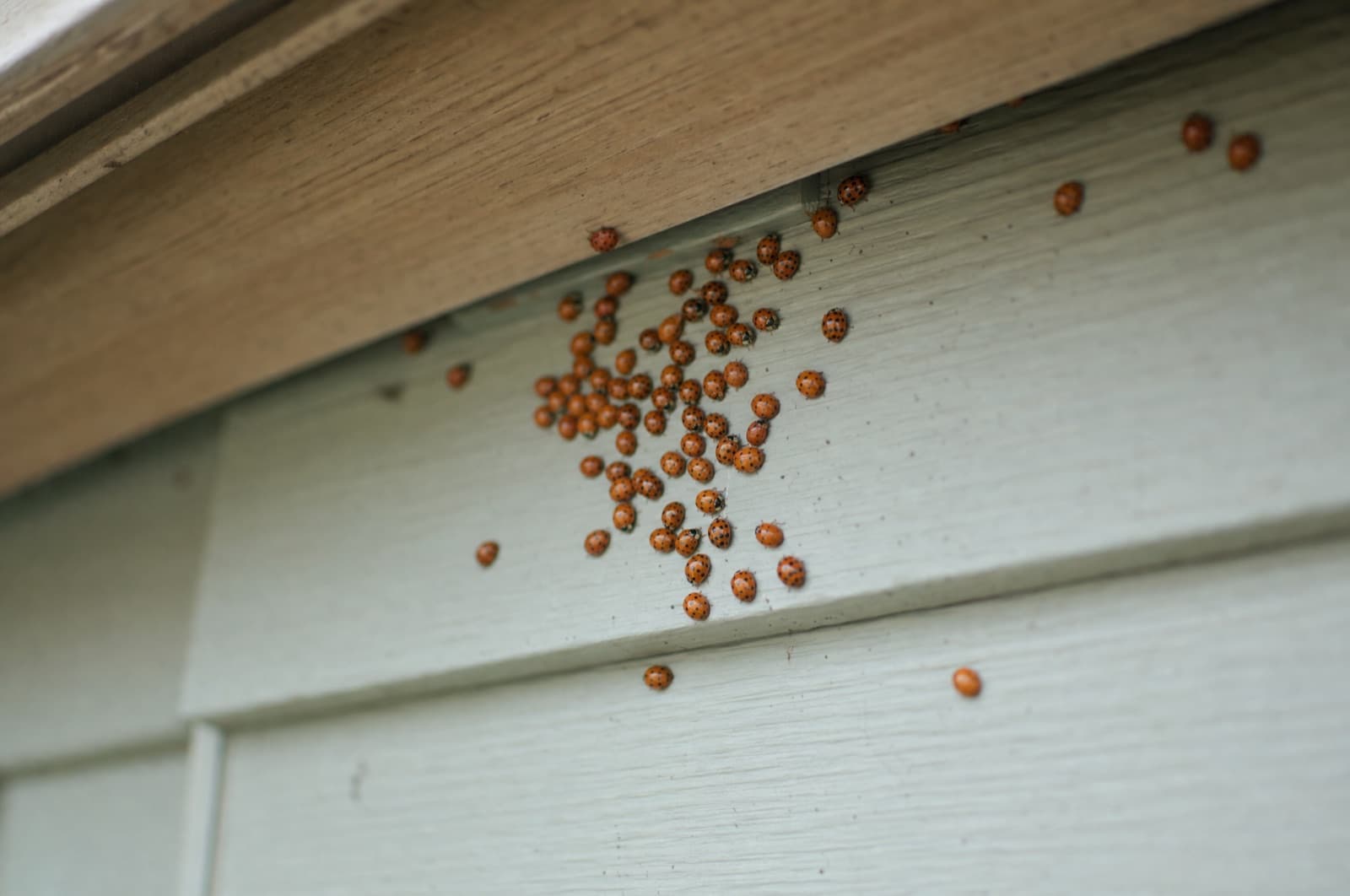
Can They Damage My House?
At a glance
- The short answer: No — essentially none, structurally
- How to tell: Behaviour, not colour — see The Split
- Where removal lives: We route it out — this hub owns identity
One animal, one honest answer
The verdict on Can they damage my house?
They don't chew wiring, infest fabric, or damage wood — the one real material effect is a cosmetic yellow stain from reflex bleeding, and that's a surface issue, not a structural one.
Native ladybug vs. the Asian lady beetle
Two names, one animal. Both columns always render — and they always converge on the same resolution. The tell is behaviour, not colour.
The native ladybug
(the one you're picturing)
- Overwinters outdoors, so it isn't a candidate for any indoor damage claim at all
- Shares the same non-wood-feeding, non-fabric-feeding biology as every coccinellid
The Asian lady beetle
(Harmonia axyridis)
- Shelters in wall voids and attics but does not feed, breed, or chew building materials while overwintering there
- Colour runs pale yellow-orange to deep red to fully black — colour alone is a weak tell, not a diagnosis, and irrelevant to whether it can damage a structure
Whichever name you use, the structural-damage answer is the same: essentially none. The only real material effect either name's beetle can leave behind is a cosmetic stain.
What's actually going on
No structural damage — wiring, wood, and fabric claims don't hold up
Harmonia axyridis is fundamentally an outdoor insect that shelters indoors for the winter, and extension entomology sources are consistent that it cannot attack a house's structure, furniture, or fabrics. Iowa State University Extension states plainly that the species cannot attack the house structure, furniture, or fabrics; University of Minnesota Extension is equally direct that they do not infest wood, destroy fabrics, eat food, or damage other property; and UNH Cooperative Extension confirms they are not dangerous to the structure of the home. That covers the three specific claims that used to circulate as separate worries — wiring, fabric, and general home damage — and all three fail for the same underlying reason: the beetle doesn't feed indoors at all. It enters diapause with an empty gut and lives off a pre-built fat reserve (see do-they-breed-indoors and what-they-do-all-winter for that mechanism), which leaves nothing to chew and no reason to.
The one real effect: a cosmetic stain, not a structural one
Honesty cuts both ways here. The reflex-bleed fluid the beetle releases when disturbed is genuinely capable of staining light-coloured paint, wallpaper, upholstery, and rugs — that part of the old claims is accurate and this page isn't going to wave it away to make the verdict tidier. It's a surface, cosmetic issue, not a structural one, and it's already covered in full at the-smell-and-the-yellow-stain, which is where the mechanism belongs rather than being rebuilt here. There is also a secondary, indirect concern worth naming honestly: large accumulations of dead beetles left in a wall void can become a food source for scavenging dermestid (carpet) beetles, per Colorado State University Extension — a reason crushing and leaving them is counterproductive, not a structural claim about the lady beetle itself. The way to keep those accumulations small in a New Hampshire home is timing: UNH Cooperative Extension notes the beetles are most numerous on the sunny side of buildings on mild days from mid-September through early November and recommends sealing cracks and crevices before mid-September, which keeps the fall wave out of the wall void before it can build up in the first place. For the full materials-science grading of pest damage claims generally, /faq-pest-damage-and-risks owns that depth; this page states the verdict without rebuilding that instrument.
Key takeaways
No structural damage — extension entomology sources are consistent that these beetles cannot attack wiring, wood, or the structure of a home.
No fabric infestation either — they do not destroy fabrics, and there's no indoor feeding or breeding to cause the kind of damage carpet beetles or clothes moths do.
The one real material effect is cosmetic: reflex-bleed fluid can stain light-coloured paint, upholstery, or rugs if beetles are disturbed.
This page replaces 3 of our own legacy pages that asked about wiring, fabric, and general home damage as if they were separate risks.
These questions all land here
We asked this more than once, under more than one name, and printed more than one answer. There was only ever one — so here's what this page replaces.
Our old site asked about wiring damage, fabric infestation, and general home damage as three separate worries, split again across two species names. All three collapse to the same honest verdict: essentially none, structurally.
Looking to get rid of them?
This hub answers what it is — not how to remove it. Most people who land here actually want one of these next steps, so we hand you straight to the hub that owns it.
No structural risk — still an unwelcome guest.
Cosmetic staining and a fall wall full of beetles are still worth addressing, even without a structural threat behind them.
Frequently asked
Sources & further reading(5)
- [1]Iowa State University Extension — "Ladybug, Multicolored Asian Lady Beetle"
The species cannot attack the house structure, furniture, or fabrics
extensionverified 2026-07-17 - [2]University of Minnesota Extension — "Multicolored Asian Lady Beetles"
They do not infest wood, destroy fabrics, eat food, or damage other property
extensionverified 2026-07-17 - [3]UNH Cooperative Extension — "How Can I Get Rid of Asian Ladybugs in My House?"
Not dangerous to the structure of the home
extensionverified 2026-07-17 - [4]Colorado State University Extension — "Dermestid Beetles: Carpet Beetles"
Dermestid beetles feed on accumulations of dead insects behind walls and around windows
extensionverified 2026-07-17 - [5]UNH Cooperative Extension — Multicolored Asian Ladybug fact sheet
Beetles most numerous on sunny building sides mid-September through early November; seal cracks before mid-September
extensionverified 2026-07-17
Written & reviewed by
VerifiedDaniel Brady
NH-Licensed Pesticide Applicator · License #782664 (NHDAMF, RSA 430)
Daniel Brady is the New Hampshire–licensed applicator behind Anchor Pest Services, a family-owned pest control company serving the Manchester area since 2017.
Last updated July 2026
Honest damage claims for New Hampshire homes
Three Damage Myths, One Honest Verdict
No wiring damage, no fabric infestation, no structural risk — the one real effect is a cosmetic stain, and we're not going to inflate that into something scarier. Family-owned since 2017, NH license #782664, based at 700 Harvey Rd in Manchester.
- NH-licensed applicators (#782664) — free inspection, same-day service
- We consolidated 3 of our own pages rather than treat wiring, fabric, and general damage as separate risks
- Family-owned, Manchester NH, since 2017
NH License #782664 · No obligation · We answer in person
Your next step
- Fall guide
Fall Pest Control in New Hampshire
What matters before frost: the fall invader window, mice at the foundation, and what to seal first.
Read the answer - What to do next
Will lady beetles damage furniture or wood?
Read the answer - What to do next
When Are Asian Lady Beetles Active? NH Ladybug Timing
Read the answer - What to do next
What damage can fall invaders do indoors?
Read the answer - Also relevant
Asian Lady Beetle in New Hampshire: Honest ID & What to Do
Read the answer - Related guide
Why Do They Smell, and What Is the Yellow Stain?
Read the answer