
Skip to content
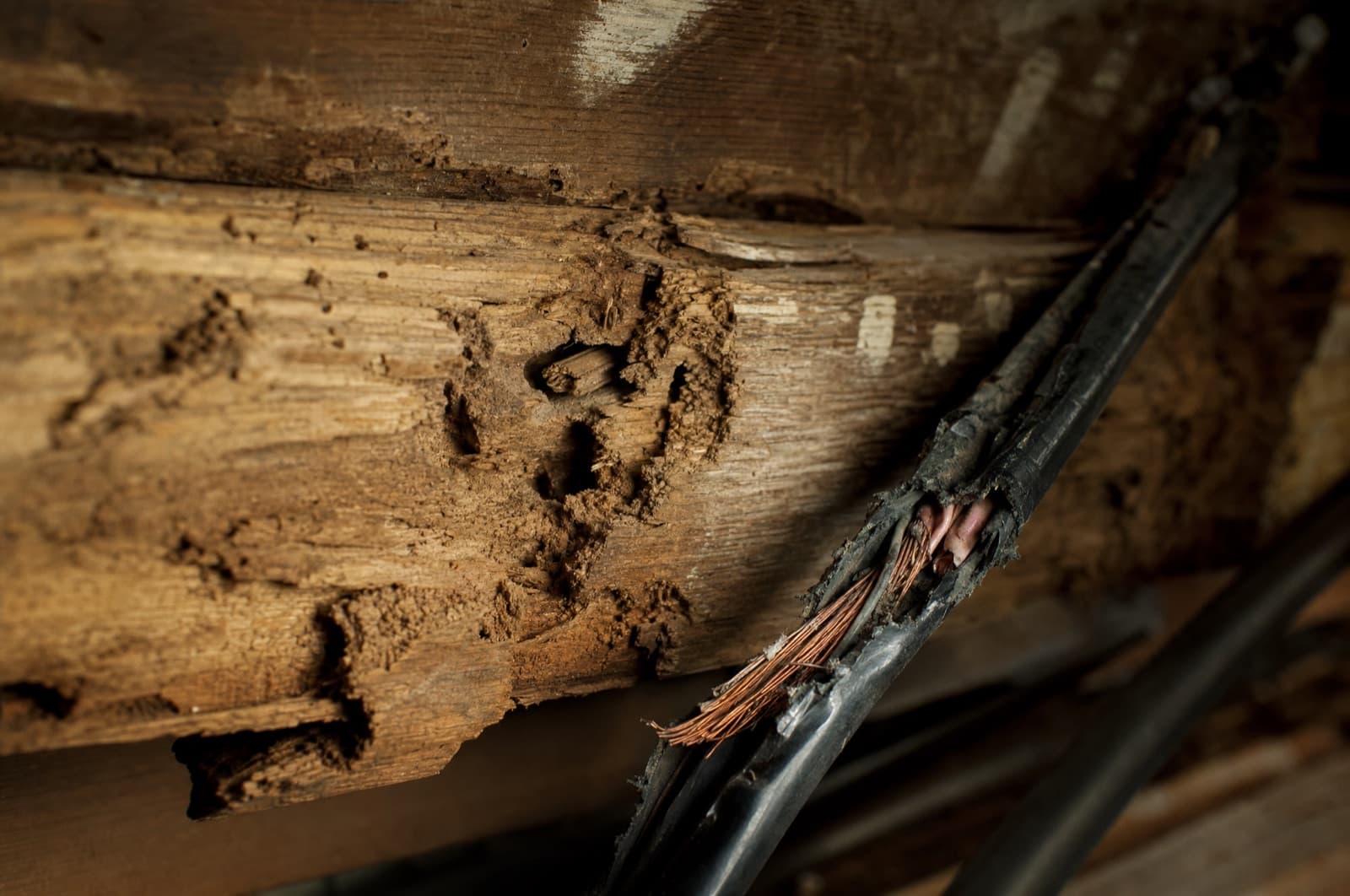
Pest damage evidence — a gnawed structural beam and a chewed electrical wire
Daniel Brady · NH-Licensed Pesticide Applicator · License #782664
Reviewed by Daniel Brady

Can termites or ants damage fences or sheds?

Structural damage — real, for ground-contact wood
Yes. Subterranean termites readily attack wooden fence posts, shed sill plates, and landscape timbers that stay in contact with soil, and carpenter ants nest in the damp, decaying bases of the same structures. Outbuildings are often at higher risk than the house itself, because untreated, ground-contact wood stays consistently moist in a way above-ground lumber doesn't. Pressure-treated wood, composite materials, and metal posts are far more resistant, and the process is slow either way — this is a years-long, material-dependent risk, not a fast or universal one.

At a glance

  • Can it?: Yes
  • How common: Occasional
  • Hype: About right
  • Evidence: Well documented
The honest answer

The short of it

The verdict
Structural damage — real, for ground-contact wood

Yes — fence posts, shed sills, and landscape timbers touching soil are genuinely vulnerable to both subterranean termites and carpenter ants, and this is one of the cluster's fairly-rated fears, not an overstated one.

The correction

What they claim vs. what the evidence supports

One shared severity track, two markers. The span between them is the hype delta — named out loud.

The claim — termites or carpenter ants damaging wooden fences and sheds

That any wooden fence or shed is essentially doomed to be eaten through by termites or ants within a season or two, regardless of the wood used or how the structure is built.

Where the claim comes from: General pest-control marketing and home-maintenance blogs treating all outdoor wood structures as equally and immediately vulnerable.

Severity, 0–100
Hype says65
55Evidence says
The hype is fairWell documented
The evidence

Ground-contact fence posts, shed sill plates, and landscape timbers genuinely are a preferred target for both pests — untreated wood touching soil stays consistently damp, and that's exactly the condition subterranean termites and carpenter ants both need. This is a fair, evidence-backed concern rather than a scare tactic. But it's gated by material and moisture: pressure-treated wood, composite, and metal posts resist both pests far better, and painted, above-ground wood that never contacts soil is rarely touched.

The gap

The claim and the evidence line up closely here — ground-contact wood in fences and sheds really is a preferred target for both pests. The only correction worth making is that it's slow and material-dependent, not a universal, fast-acting threat to every outdoor wood structure regardless of what it's built from.

Damage assessment

What is actually harmed

Damage verdict
Structural damage — real, for ground-contact wood
StructuralCan it?Yes
The specimen
Pest
Eastern subterranean termites and carpenter ants
What is in question
Ground-contact fence posts, shed sill plates, and landscape timbers
How common
Occasional
Evidence
Well documented
Mechanism

Subterranean termites build mud tubes up from the soil directly into a post or sill and feed on the cellulose as they tunnel; carpenter ants excavate galleries in the same wood once continuous ground moisture has softened it. Both pests are drawn to the same underlying condition — untreated wood in constant soil contact stays damp far longer than any above-ground board, supplying the moisture termites need and the softened wood carpenter ants prefer to nest in.

Actually at risk4
  • Untreated wood fence posts set directly into soil
  • Shed sill plates and floor framing resting on or near ground contact
  • Landscape timbers and wooden retaining-wall members
  • Wooden steps or ramps with a buried or soil-adjacent support
Not at risk — despite the myth3
  • Pressure-treated fence posts and sills — far more resistant to both pests
  • Composite or metal fence posts and shed framing — not a food or nesting source for either pest
  • Above-ground, painted or sealed fence boards and siding that never contact soil
Worst realistic case
A fence line or shed sill structurally failing after years of unaddressed ground-contact moisture and feeding — a real outcome on untreated wood, but a multi-year one, not a fast or universal outcome.

Assessed from: Connecticut Agricultural Experiment Station termite fact sheet; UNH Cooperative Extension Carpenter Ants fact sheet

The compounding clock

Does it get worse if you ignore it?

Over time
Compounds slowly

Compounds slowly — years, and only where untreated wood stays in continuous contact with soil moisture.

The timeline
3 stages
  1. MonthsReversible

    Termites or carpenter ants establish activity at the ground-contact point; there's no visible external sign yet.

  2. YearsReversible

    Internal feeding or excavation progresses; a post may develop a hollow core, or mud tubes may appear at its base. Still reversible with treatment and post or sill replacement.

  3. DecadesReversible

    The rare untreated endpoint: repeated years of ground moisture and feeding leave a fence line or shed sill structurally unsound. Still repairable, but now a rebuild rather than a swap.

What stops the clock
Break the wood-to-soil contact — concrete post bases, pressure-treated lumber, or composite material — and resolve any active colony. Moisture and direct soil contact are the shared driver behind both pests, so removing one removes most of the risk.
Repair scope

Who actually fixes this

Scope, not dollars — the honest answer to “how expensive is it,” routed to the right trade.

Who fixes it
Pest pro first
Effort
A project

If termites or carpenter ants are actively present, the colony needs to be resolved before a post or sill is replaced — otherwise the replacement wood is simply colonized the same way the original was.

The right order
  1. 1
    Resolve any active termite or carpenter-ant colony (Anchor's lane)
  2. 2
    Break future wood-to-soil contact with concrete post bases, pressure-treated lumber, or composite materials
  3. 3
    Replace or repair the compromised post, sill, or timber
Route by symptom
  • You — a DIY patchDamage is limited to a single fence post with no active colony present — swapping in a pressure-treated or concrete-set post is a straightforward homeowner project
  • Licensed contractorA shed's sill plate or floor framing is compromised — that's a structural repair beyond a simple post swap
Do not
  • Don't replace a post or sill while an active colony is present nearby — it will find the new wood if the moisture and soil contact haven't changed
  • Don't assume pressure-treated or composite replacements need the same vigilance as bare wood — they largely remove the risk going forward
Where we help — and where we don't

Anchor resolves the termite or carpenter-ant activity — that's our lane. Replacing a single fence post is often a homeowner task; a compromised shed sill or floor framing is a licensed contractor's job, and we'll tell you plainly which one you're looking at.

In depth

The full picture

01

Why fences and sheds are often more exposed than the house itself

A house's framing typically sits on a foundation with some separation from grade, and modern construction generally uses pressure-treated wood anywhere it meets concrete or soil. Fences and sheds are frequently built with none of that separation — a wooden post set directly into a hole in the ground, or a shed built on skids or a sill plate resting close to grade, puts untreated wood into the single condition that both subterranean termites and carpenter ants are looking for: continuous moisture.

That's why outbuildings and fence lines are often the first place these pests show up on a property, even before the house itself, and why they deserve the same seriousness as a structural concern about the house.

02

Same driver, two different mechanisms

Subterranean termites work up from the soil, building mud tubes to bridge from ground to wood and then tunneling into the post or sill to feed on its cellulose. Carpenter ants take a different route to the same result: they don't eat wood at all, but they excavate galleries to nest in wood once constant moisture has softened it enough to be worth the effort. In both cases, the wood itself isn't the primary draw — the moisture is. A fence post that's dry at the base, even if it's untreated lumber, is a far less attractive target than one sitting in a perpetually damp post hole.

03

What genuinely resists both pests

The materials that hold up are specific and unglamorous: pressure-treated lumber rated for ground contact, composite decking and fencing materials, and metal posts or brackets that keep wood from ever touching soil directly. A concrete post base that elevates the wood above grade does more to prevent this problem than any pest treatment applied after the fact, because it removes the moisture condition both pests are actually responding to.

04

The honest timescale

None of this happens quickly. Termite feeding through a post or sill, and carpenter-ant gallery excavation in the same wood, both play out over years rather than a single season. The realistic worst case — a fence line or shed floor that's structurally failed — is the outcome of years of unaddressed ground contact and moisture, not a single bad summer. That gives a homeowner real time to catch and correct the problem, provided the ground-contact points get checked periodically rather than ignored until something visibly gives way.

Key takeaways
5 points
  • Yes — ground-contact fence posts, shed sills, and landscape timbers are genuine targets for both termites and carpenter ants.
  • This is one of the cluster's fairly-rated fears; the claim and the evidence are closely matched here.
  • The shared driver is moisture from constant soil contact, not the wood species or the structure's age.
  • Pressure-treated wood, composite materials, and metal posts largely remove the risk going forward.
  • The damage takes years to become structurally meaningful — there's real time to catch it with periodic checks.
New Hampshire context

What this looks like on New Hampshire properties

Southern and central New Hampshire's wet springs, heavy snow load, and clay-heavy soils in many towns keep untreated ground-contact wood damp for longer stretches of the year than a well-drained site would. Older fence lines built with untreated posts, and sheds set on skids resting close to grade, are the classic local pattern — often installed before pressure-treated lumber and composite materials were standard practice. Checking the base of fence posts and a shed's sill plate for softness, hollow sound, or mud tubing after the spring thaw is a practical seasonal habit for this climate.

  • NH-licensed #782664

    Southern New Hampshire

  • Family-owned

    Since 2017

  • Honest routing

    Even when it isn’t us

We serve these communities

ManchesterNashuaConcordDerryBedfordSalemHudsonAmherstAuburnGoffstownHooksettLitchfieldLoudonMilfordBristol

Service Area Map

Southern New Hampshire

BristolPop. 3,200LoudonPop. 5,500ConcordPop. 43,900HooksettPop. 14,800GoffstownPop. 18,000AuburnPop. 5,700ManchesterPop. 115,600BedfordPop. 23,300LitchfieldPop. 8,500AmherstPop. 11,300DerryPop. 34,500MilfordPop. 15,700HudsonPop. 25,600NashuaPop. 91,100SalemPop. 30,000HQCityHover for info

Fence or shed showing mud tubes or soft wood? Get it checked before it spreads.

Anchor treats termite and carpenter-ant activity in outbuildings and fence lines across southern and central New Hampshire.

Follow-up questions

Frequently asked

Sources & citations(3)
  1. Connecticut Agricultural Experiment Station — Eastern Subterranean Termite fact sheet

    Susceptible ground-contact timbers; mud tube construction; termite biology

    govverified 2026-07-16
  2. UNH Cooperative Extension — Carpenter Ants fact sheet

    Carpenter ants nesting in fence posts, stumps, and other damp ground-contact wood

    extensionverified 2026-07-16
  3. University of Maryland Extension — Carpenter Ants

    Moisture-driven nest-site selection in outdoor structural wood

    extensionverified 2026-07-16

Written & reviewed by

Verified

Daniel Brady

NH-Licensed Pesticide Applicator · License #782664 (NHDAMF, RSA 430)

Daniel Brady is the New Hampshire–licensed applicator behind Anchor Pest Services, a family-owned pest control company serving the Manchester area since 2017.

Verify license

Last updated Jul 2026

Honest pest help for New Hampshire homes

We Handle the Colony. You (or a Handyman) Handle the Post.

Ground-contact fence posts and shed sills are a genuine target for termites and carpenter ants — this is one fear the evidence backs up. Anchor Pest Services resolves the colony; replacing a post or sill with pressure-treated or composite material is typically a homeowner or contractor task once the pest is gone. Family-owned since 2017, NH license #782664, serving Manchester, Nashua, Concord and nearby towns.

  • Honest advice — we tell you when the fear is fairly rated, not just when it isn't
  • NH-licensed applicators (#782664) — free inspection, same-day service
  • Termite and carpenter ant treatment across southern and central New Hampshire

NH License #782664 · No obligation · We answer in person