
Skip to content
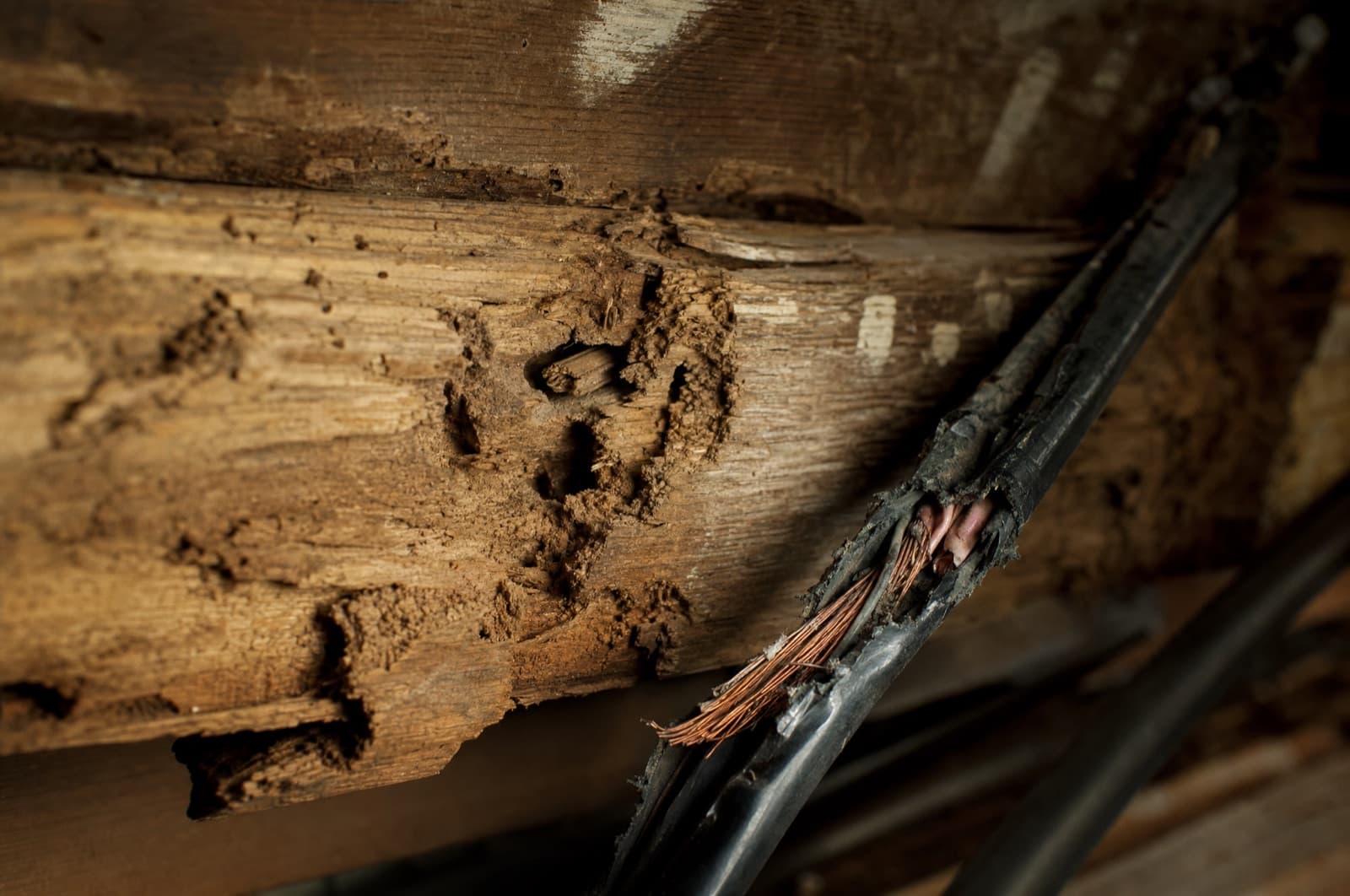
Pest damage evidence — a gnawed structural beam and a chewed electrical wire
Daniel Brady · NH-Licensed Pesticide Applicator · License #782664
Reviewed by Daniel Brady

What damage do carpenter ants cause?

A ranked ledger — the moisture problem outranks the ants
Carpenter ants excavate smooth nest galleries in wood — they do not eat it the way termites do — and UNH Cooperative Extension ranks them, alongside termites, among New Hampshire's most troublesome structural pests. But the damage they cause is secondary to a real cause: they overwhelmingly colonize wood that's already softened by a chronic moisture or decay problem. The honestly ranked picture puts that moisture defect first, the ant galleries it enables second, and cosmetic signs like frass and satellite nests well below both — and the whole process compounds over years, not weeks.

At a glance

  • Who fixes it: Pest pro first
The honest answer

The short of it

The verdict
A ranked ledger — the moisture problem outranks the ants

Carpenter ants excavate nest galleries in wood they do not eat, and they overwhelmingly colonize wood that's already softened by moisture — so the honest damage ledger ranks the water problem above the ant that signals it.

Repair scope

Who actually fixes this

Scope, not dollars — the honest answer to “how expensive is it,” routed to the right trade.

Who fixes it
Pest pro first
Effort
A trade visit

An active carpenter-ant colony needs to be resolved before any wood repair is worth doing, but the ranking above makes clear the moisture source deserves equal priority — treating the ants without finding the leak just invites the next colony.

The right order
  1. 1
    Resolve the active carpenter-ant colony
  2. 2
    Identify and fix the moisture source feeding the problem — a plumber, roofer, or grading fix depending on where the water is coming from
  3. 3
    Have a licensed contractor assess and repair any wood that's been structurally weakened
Route by symptom
  • PlumberA leaking supply line, drain, or fixture is the moisture source
  • RooferA roof leak, failed flashing, or ice-dam intrusion is feeding the damp wood
  • Licensed contractorA structural member has been significantly weakened and needs replacement
Do not
  • Don't treat only the visible ants and skip investigating for a moisture source — the same wood will attract the next colony
  • Don't patch or replace wood while a colony is still active inside it
Where we help — and where we don't

Resolving the carpenter-ant colony is core Anchor work. We do not fix the underlying moisture source or replace structural wood ourselves — those route to a plumber, roofer, or licensed contractor, and we'll tell you which one applies.

The ledger

The ranked damage ledger

The damage classes carpenter ants and the conditions around them actually produce in a New Hampshire home, ranked by structural consequence

Ranked by
Evidence-backed structural consequence to the building — never dollar cost or how alarming a sign looks
RankPestClassWhat it wrecksWho fixes itEvidence
01

Moisture and decay fungi (the enabling defect)

This is the true root cause the ants are signaling — fixing the leak or grading issue matters as much as treating the colony

StructuralRots load-bearing wood over time and is the reason the wood becomes attractive to carpenter ants in the first placePlumberWell documented
02

Carpenter-ant galleries in already-compromised wood

Real, but slow — University of Maryland Extension notes nest sites rarely exceed a few square feet

StructuralWeakens already-wet timbers — sills, joists, window and door frames — as galleries expand over yearsPest pro firstWell documented
03

Satellite nests in insulation and wall voids

More nuisance than structural threat on its own

NegligibleDisplaced or compressed insulation and minor void debris near a satellite colonyPest pro firstPlausible, under-documented
04

Frass and foraging trails

A useful diagnostic sign that a colony is present — not damage in itself

CosmeticAppearance only — small piles of coarse, pencil-shaving-like debris at exit pointsYou — wipe it upWell documented
What people get wrong
Most homeowners expect carpenter ants to 'eat' the house the way they imagine termites do, and rank the ants themselves as the entire problem. The honest ranking inverts that: the moisture or decay problem that made the wood attractive belongs at the top of the list, with the ant galleries as a real but secondary consequence, and cosmetic signs like frass sitting well below both as diagnostic clues rather than damage.
In depth

The full picture

01

The ranking most people expect is backwards

Ask most homeowners what carpenter ants damage, and the mental picture is an army of ants eating through a house's frame the way termites are imagined to. That's not how carpenter ants work, and it's not the honest ranking of what actually gets damaged. UNH Cooperative Extension does place carpenter ants alongside termites among New Hampshire's most troublesome structural pests — that classification is earned — but the mechanism and the real driver behind it are different enough to change how the risk should be ranked.

02

What the ledger actually ranks first, and why

Carpenter ants excavate wood to create nest space; they cannot digest cellulose and gain no nutrition from the wood itself, unlike termites. More importantly, they overwhelmingly select wood that's already damp or decaying from an existing moisture problem — a roof leak, failed window flashing, a slow plumbing drip, or poor grading. That's why this ledger ranks the moisture and decay defect first: it's the actual root cause, and the carpenter ants are a symptom pointing at it, not the origin of the problem.

The ant galleries themselves rank second, and genuinely so — University of Maryland Extension notes that tunneling 'may cause serious structural damage if it occurs in key timbers,' though 'nest sites rarely exceed a few square feet.' That's a real, bounded threat, not a house-eating one, and it develops over years rather than weeks.

03

The lower-ranked signs: satellite nests and frass

Below the structural rows, satellite nests in insulation or wall voids are more nuisance than threat — they may displace some insulation but rarely represent meaningful structural loss on their own. Frass, the coarse, pencil-shaving-like debris carpenter ants push out of their galleries, ranks lowest of all: it's appearance only, and its real value is as a diagnostic clue that tells you where a colony is working, not as damage in itself. Treating frass discovery with the same urgency as a compromised sill misreads what the evidence actually supports.

Key takeaways
5 points
  • The honest ranking puts the moisture or decay problem first — it's the reason the wood became attractive to carpenter ants at all.
  • Carpenter-ant galleries in already-wet wood rank second: real and structural, but slow, and typically confined to a few square feet per nest.
  • Satellite nests in insulation and voids are more nuisance than structural threat.
  • Frass is a diagnostic sign, not damage in itself, and ranks lowest on the ledger.
  • Resolving the ants without fixing the moisture source leaves the wood attractive to the next colony.
New Hampshire context

What this looks like in New Hampshire homes

New England's freeze-thaw winters routinely produce the kind of chronic moisture defects carpenter ants favor — ice-dam water intrusion at rooflines, condensation in poorly vented crawlspaces, and window flashing that fails after repeated freeze cycles. UNH Extension's ranking of carpenter ants as a top structural concern in the state reflects how often that specific combination — older housing stock plus New England moisture — shows up across Manchester, Nashua, and Concord inspections.

  • NH-licensed #782664

    Southern New Hampshire

  • Family-owned

    Since 2017

  • Honest routing

    Even when it isn’t us

We serve these communities

ManchesterNashuaConcordDerryBedfordSalemHudsonAmherstAuburnGoffstownHooksettLitchfieldLoudonMilfordBristol

Service Area Map

Southern New Hampshire

BristolPop. 3,200LoudonPop. 5,500ConcordPop. 43,900HooksettPop. 14,800GoffstownPop. 18,000AuburnPop. 5,700ManchesterPop. 115,600BedfordPop. 23,300LitchfieldPop. 8,500AmherstPop. 11,300DerryPop. 34,500MilfordPop. 15,700HudsonPop. 25,600NashuaPop. 91,100SalemPop. 30,000HQCityHover for info

Carpenter ants ranked as a top structural pest in NH? Let's find the moisture behind it.

Anchor resolves the colony and helps you identify the likely moisture source driving it.

Follow-up questions

Frequently asked

Sources & citations(3)
  1. UNH Cooperative Extension — Carpenter Ants fact sheet

    Carpenter ants ranked with termites among NH's most troublesome structural pests; excavation vs. eating distinction

    extensionverified 2026-07-16
  2. University of Maryland Extension — Carpenter Ants

    Tunneling may cause serious structural damage in key timbers; nest sites rarely exceed a few square feet

    extensionverified 2026-07-16
  3. University of Minnesota Extension — Carpenter ants

    Damage accumulates slowly, often taking years

    extensionverified 2026-07-16

Written & reviewed by

Verified

Daniel Brady

NH-Licensed Pesticide Applicator · License #782664 (NHDAMF, RSA 430)

Daniel Brady is the New Hampshire–licensed applicator behind Anchor Pest Services, a family-owned pest control company serving the Manchester area since 2017.

Verify license

Last updated Jul 2026

Honest pest help for New Hampshire homes

We Rank the Real Problem First: The Moisture, Then the Ants.

Carpenter ants are a genuine structural pest, but they're colonizing wood that's already wet — not eating sound lumber out of nowhere. Anchor Pest Services resolves the colony and helps identify the likely moisture source; the leak repair itself routes to a plumber, roofer, or contractor. Family-owned since 2017, NH license #782664, serving Manchester, Nashua, Concord and nearby towns.

  • Honest advice — we rank the moisture problem above the ants, not below
  • NH-licensed applicators (#782664) — free inspection, same-day service
  • Carpenter ant and structural pest control across southern and central New Hampshire

NH License #782664 · No obligation · We answer in person