
Skip to content
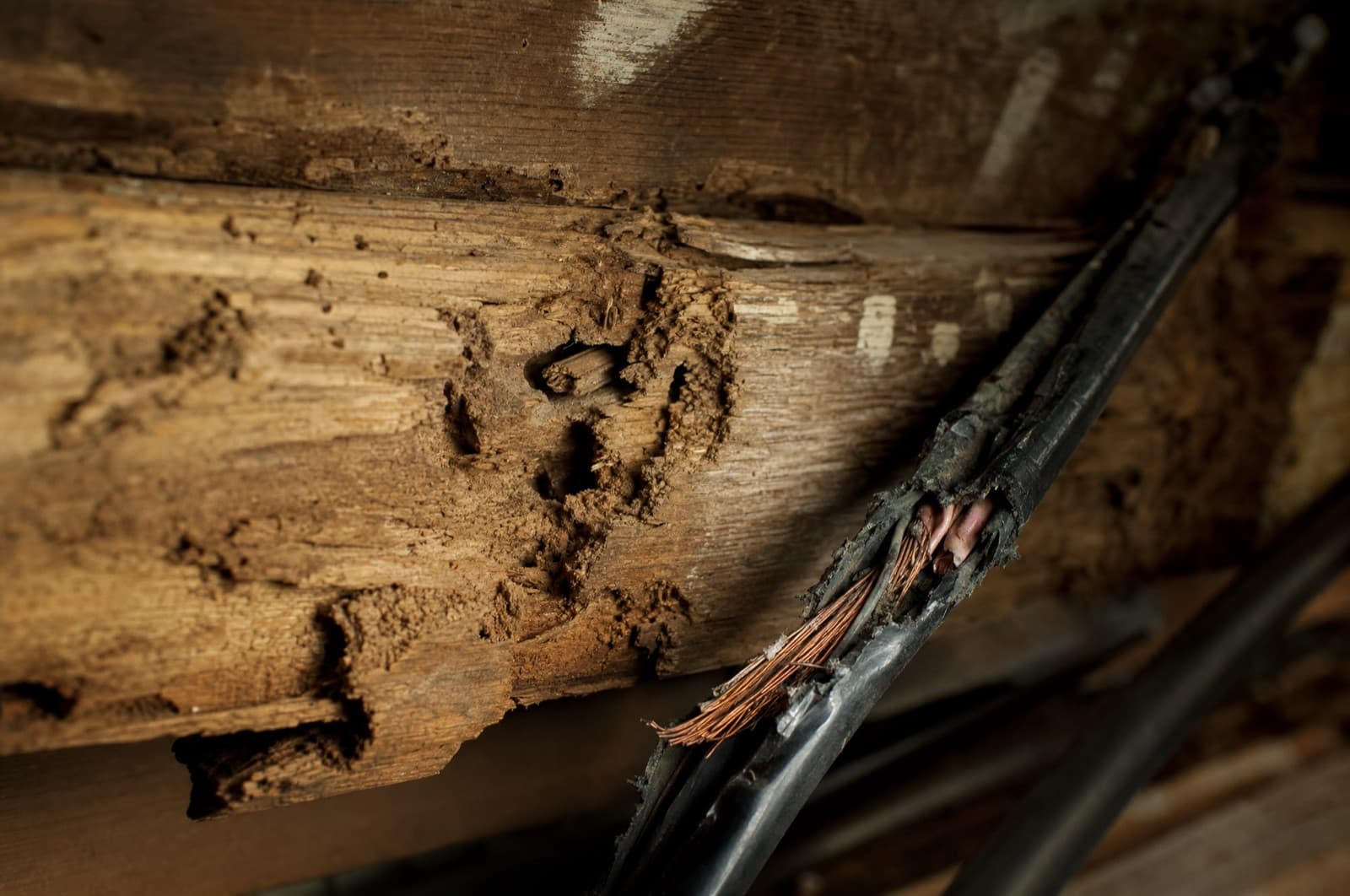
Pest damage evidence — a gnawed structural beam and a chewed electrical wire
Daniel Brady · NH-Licensed Pesticide Applicator · License #782664
Reviewed by Daniel Brady

Can yellowjackets build nests inside walls?

Functional — a genuine wall-void issue, earned
Yes, and this is a real concern rather than an exaggerated one. Yellowjackets — German yellowjackets in particular — readily establish colonies inside existing wall voids, attics, drop ceilings, and even cinder block cavities, entering through small gaps in siding, soffits, or utility penetrations. A colony can grow substantially through a single season, and because workers may thin the interior drywall facing to expand their space, or chew through wallboard to escape if the entrance is sealed while they're still alive, a wall-void colony genuinely warrants professional attention rather than a wait-and-see approach.

At a glance

  • Can it?: Yes
  • How common: Occasional
  • Hype: About right
  • Evidence: Well documented
The honest answer

The short of it

The verdict
Functional — a genuine wall-void issue, earned

Yes, yellowjackets readily nest inside wall voids, attics, and similar cavities, entering through small exterior gaps — and this is one of the honest exceptions in this hub where a professional call is genuinely warranted, not oversold.

The correction

What they claim vs. what the evidence supports

One shared severity track, two markers. The span between them is the hype delta — named out loud.

The claim — yellowjackets establishing a colony inside a wall void

That a yellowjacket colony inside a wall poses a serious, urgent risk to the home and its occupants that needs immediate professional attention.

Where the claim comes from: Pest-control marketing copy and wildlife-removal blogs describing wall-void colonies as a home emergency.

Severity, 0–100
Hype says68
57Evidence says
The hype is fairWell documented
The evidence

The wall-void concern is largely legitimate. A colony can grow considerably through a season, thin the interior drywall facing as it expands, and workers can chew through wallboard to escape if the void's entrance is sealed while the colony is still alive. The one place the claim overstates is implying structural risk to framing — the real exposure is localized drywall and occupant safety, not the building's frame.

The gap

This is one of the pages in this hub where the internet's urgency is close to justified. The only correction worth making is precision: it's a drywall and sting-risk issue confined to the one wall cavity involved, not a threat to the home's structural framing.

Damage assessment

What is actually harmed

Damage verdict
Functional — a genuine wall-void issue, earned
FunctionalCan it?Yes
The specimen
Pest
Yellowjackets, especially German yellowjackets
What is in question
Interior drywall facing at the wall-void cavity a colony occupies
How common
Occasional
Evidence
Well documented
Mechanism

A yellowjacket colony enters an existing gap — around a utility penetration, a soffit vent, a siding seam — and establishes inside the void behind it, which can be a wall cavity, an attic space, a drop ceiling, or even a cinder-block cavity. As the colony grows through the season, workers may use or thin the interior paper facing of the drywall to expand their nesting space, and in a well-developed colony that thinning can progress until only the paint layer separates the nest from the room. If that void's entrance is then sealed while the colony remains alive, trapped workers will chew toward the nearest light and warmth to escape, which is frequently into the living space rather than back outside.

Actually at risk3
  • The interior drywall face directly behind an active wall-void colony
  • Occupant safety — sting exposure, particularly if the colony breaches into a room
  • Small existing gaps around utility penetrations, vents, and soffits, which a colony may slightly enlarge to move in and out
Not at risk — despite the myth3
  • Wall framing, studs, and structural sheathing — the mechanism never reaches load-bearing lumber
  • Masonry and exterior siding material itself
  • Any wall void the colony isn't actively nesting inside — the risk is confined to that one cavity, not the whole house
Worst realistic case
An active colony breaches through thinned drywall into a living space, or secondary scavenging beetles infest a dead nest left in the void afterward — both real outcomes, but both confined to the specific cavity involved.

Assessed from: PCT Online (Evicting Yellowjackets); Colonial Pest Control wall-void yellowjacket guidance; Cats Eye Pest Control yellowjackets-in-walls

The compounding clock

Does it get worse if you ignore it?

Over time
Self-limiting — it ends

Compounds through one season, then ends completely at the first hard frost — New England colonies are never reused.

The timeline
3 stages
  1. WeeksReversible

    A colony establishes inside a wall void through a small existing gap and begins expanding. Activity is often first noticed as consistent traffic at one small opening rather than a visible nest.

  2. MonthsReversible

    The colony grows substantially through the season and may thin the interior drywall facing as it expands its nesting space — this is when interior thinning becomes most likely to be noticeable.

  3. One seasonReversible

    The colony collapses entirely at the first hard frost, historically mid-to-late October around Manchester per NOAA. Workers die off, and the void is permanently abandoned.

What stops the clock
A pest professional can resolve an active wall-void colony before frost, especially if drywall thinning or a high-traffic location makes waiting risky. Otherwise, the first hard frost ends the colony on its own, and the nest is never reoccupied the following year.
Repair scope

Who actually fixes this

Scope, not dollars — the honest answer to “how expensive is it,” routed to the right trade.

Who fixes it
Pest pro first
Effort
A trade visit

A wall-void colony must be professionally treated and confirmed dead before the entrance is sealed or the wall is opened — sealing a live colony's only exit drives workers to chew toward the nearest light and warmth, which is often into the room.

The right order
  1. 1
    Have the colony professionally treated — this typically means dusting the entrance rather than sealing it while wasps are still active
  2. 2
    Confirm the colony is dead before sealing the entry point
  3. 3
    Patch or repaint the drywall face if it was thinned, and seal the original entry gap to prevent reuse
Route by symptom
  • Licensed contractorThe drywall was thinned or breached enough to need patching or replacement
  • RooferThe entry gap is at a soffit, vent, or roofline detail that needs proper exterior sealing after the colony is gone
Do not
  • Don't seal the void entrance while the colony is still alive — trapped workers will chew toward light and warmth, often into your living space
  • Don't spray an over-the-counter aerosol into the opening — it agitates the colony without reliably reaching it and can push workers deeper into the wall
Where we help — and where we don't

Yellowjacket nests in wall voids are squarely Anchor's work. We do not patch the drywall or perform the exterior sealing repair ourselves — that's a homeowner or contractor task once the colony is confirmed resolved.

In depth

The full picture

01

Yes — and this is one of the earned concerns in this hub

Unlike an exterior paper nest glued to your siding, a yellowjacket colony inside a wall void is a genuine issue worth taking seriously. German yellowjackets in particular readily colonize existing gaps in wall cavities, attics, drop ceilings, and even cinder-block voids, entering through small openings around utility penetrations, soffit vents, or siding seams that most homeowners would never notice on their own.

02

What actually happens inside the wall

Once established, a colony can grow substantially over a single season. As it expands, workers may use or thin the interior paper facing of the drywall to enlarge their nesting space from the inside — in a well-developed colony, that thinning can progress until only the paint layer separates the nest from the room. This is the specific, documented mechanism behind the wall-void concern, and it's real.

The risk compounds sharply if the void's only entrance gets sealed while the colony is still active. Trapped workers, unable to reach their usual exit, will chew toward the nearest source of light and warmth — which is frequently the interior of the house rather than back outside. That's the single most important practical warning in this entire topic: never seal a suspected wall-void entrance without confirming the colony is already dead.

03

Where the honest correction still applies

The one place this claim needs precision is the word 'structural.' A wall-void colony is a genuine drywall and occupant-safety issue confined to the specific cavity the colony occupies — it does not reach wall framing, studs, or sheathing, and it doesn't threaten the building's structure the way termites or moisture-driven carpenter ants can. And like every social-wasp colony in New England, it's on a clock that ends completely at the first hard frost regardless of what anyone does; the honest reason to act sooner is the drywall thinning and sting risk building through the season, not a spreading structural threat.

Key takeaways
5 points
  • Yes — yellowjackets, especially German yellowjackets, readily nest inside wall voids, attics, and similar cavities.
  • A growing colony can genuinely thin interior drywall as it expands its nesting space.
  • Never seal a wall-void entrance while the colony is alive — trapped workers will chew toward light and warmth, often into the room.
  • The risk stays confined to drywall and occupant safety — it never reaches wall framing or structural sheathing.
  • Like all New England yellowjacket colonies, it ends completely at the first hard frost and is never reoccupied.
New Hampshire context

What this looks like in New Hampshire homes

Southern and central New Hampshire homes with gaps around utility penetrations, older siding, or unsealed soffit vents are the classic entry points for a yellowjacket colony to establish inside a wall void, and activity typically becomes noticeable from midsummer onward as the colony grows. The timeline still ends the same way every year: the colony collapses with the season's first hard frost, historically mid-to-late October around Manchester per NOAA, and the void is not reoccupied afterward.

  • NH-licensed #782664

    Southern New Hampshire

  • Family-owned

    Since 2017

  • Honest routing

    Even when it isn’t us

We serve these communities

ManchesterNashuaConcordDerryBedfordSalemHudsonAmherstAuburnGoffstownHooksettLitchfieldLoudonMilfordBristol

Service Area Map

Southern New Hampshire

BristolPop. 3,200LoudonPop. 5,500ConcordPop. 43,900HooksettPop. 14,800GoffstownPop. 18,000AuburnPop. 5,700ManchesterPop. 115,600BedfordPop. 23,300LitchfieldPop. 8,500AmherstPop. 11,300DerryPop. 34,500MilfordPop. 15,700HudsonPop. 25,600NashuaPop. 91,100SalemPop. 30,000HQCityHover for info

Hearing buzzing inside a wall? Don't seal it up yourself.

Anchor resolves wall-void yellowjacket colonies the right way — treatment first, sealing only after the colony is confirmed dead.

Follow-up questions

Frequently asked

Sources & citations(3)
  1. Ask Extension (University of Maryland HGIC) — yellowjacket nests in wall voids

    Wall-void yellowjacket nest handling and the risk of sealing a live entrance

    extensionverified 2026-07-16
  2. eXtension Ask an Expert — Yellowjacket Nests in Structures

    Yellowjacket colonies thinning interior drywall facing as a wall-void colony expands

    extensionverified 2026-07-16
  3. UNH Cooperative Extension — Controlling Wasps, Bees and Hornets

    New Hampshire yellowjacket seasonal biology and frost-driven colony collapse

    extensionverified 2026-07-16

Written & reviewed by

Verified

Daniel Brady

NH-Licensed Pesticide Applicator · License #782664 (NHDAMF, RSA 430)

Daniel Brady is the New Hampshire–licensed applicator behind Anchor Pest Services, a family-owned pest control company serving the Manchester area since 2017.

Verify license

Last updated Jul 2026

Honest pest help for New Hampshire homes

A Wall-Void Colony Is One of the Few Genuine Emergencies Here.

Yellowjackets nesting inside a wall void is a real issue worth acting on — it can thin drywall and, if sealed incorrectly, push wasps into your living space. Anchor Pest Services treats the colony properly before anything is sealed; the drywall patch afterward is a homeowner or contractor task. Family-owned since 2017, NH license #782664, serving Manchester, Nashua, Concord and nearby towns.

  • Honest advice — we tell you when a concern is genuinely urgent, not just when it isn't
  • NH-licensed applicators (#782664) — free inspection, same-day service
  • Wasp and yellowjacket nest removal, including wall-void colonies, across southern and central New Hampshire

NH License #782664 · No obligation · We answer in person