
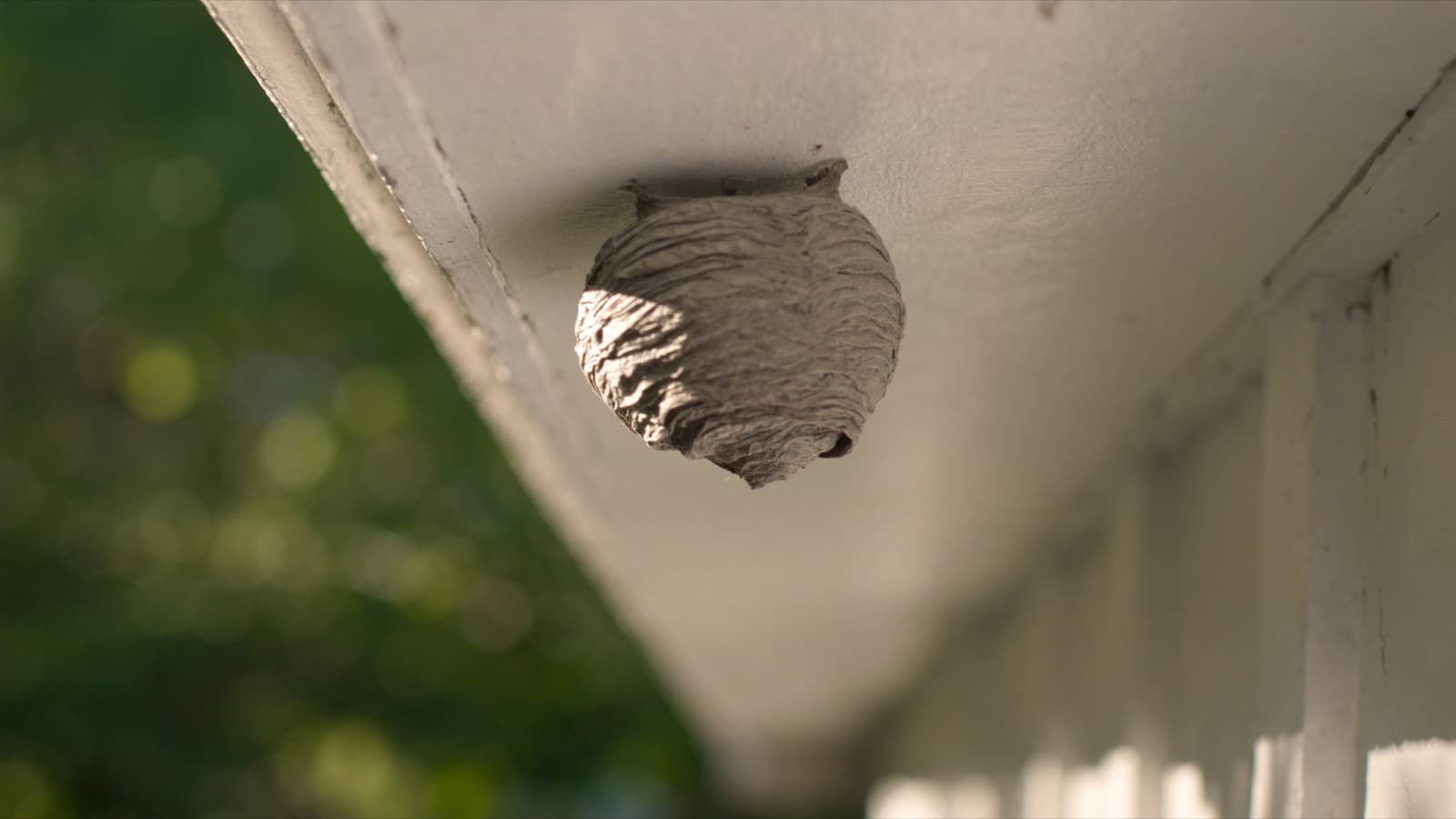
How Big Can Hornet Nests Get Before They Become a Serious Threat?
At a Glance
- The call: European hornet colonies can reach 200 to 1,000 workers at peak, and related yellowjacket colonies can run several thousand — but any actively defended nest is a professional-level risk regardless of exact size.
The short of it
European hornet colonies can reach 200 to 1,000 workers at peak, and related yellowjacket colonies can run several thousand — but any actively defended nest is a professional-level risk regardless of exact size.
The full picture
What the numbers actually look like
Penn State Extension describes European hornet colonies peaking in mid-September at roughly 200 to 400 workers, with large nests holding as many as 1,000. That's meaningfully smaller than some yellowjacket colonies: Cornell IPM notes the eastern yellowjacket (Vespula maculifrons), common across the Northeast including New Hampshire, can build colonies of roughly 2,000 to 3,000 workers, and separate figures describe nests exceeding 10,000 cells at peak size. In southern New Hampshire those peaks arrive in late summer and early fall, in the weeks before Manchester's first sustained hard freeze — the local average first 32°F freeze is near October 19 — so a September nest is closer to its maximum than the same nest would be earlier in the year. Bald-faced hornets, the other large aerial-nesting species covered on this hub, generally run smaller than yellowjacket colonies but still number in the hundreds of workers by late summer.
Why size isn't the only threat measure
A colony's danger comes from a combination of population, how aggressively it's defended, and how concealed or accessible the nest is — not from worker count alone. A large but genuinely out-of-the-way nest, high in a tree with no foot traffic nearby, can pose less real risk day to day than a much smaller nest built right beside a door or walkway. What size does reliably predict is how much worse a mistake gets: more workers means more simultaneous stings if a nest is disturbed, which is why extension guidance treats any sizeable, actively defended colony as a serious hazard well before it hits its seasonal maximum.
What this means for the decision in front of you
If you can estimate rough colony size — heavy, steady traffic in and out of one point is a reasonable proxy — that's useful context, but it shouldn't be the only factor in deciding whether to attempt removal yourself. Species, nest location (aerial, wall-void, or underground), and season all factor into the DIY-viability calls on /top-diy-methods, and any of the larger, socially defended species covered here — yellowjacket, bald-faced hornet, European hornet — are rated as a professional job there regardless of the exact worker count.
The honest line — European hornet colonies can reach 200 to 1,000 workers at peak, and related yellowjacket colonies can run several thousand — but any actively defended nest is a professional-level risk regardless of exact size.
Key takeaways
- European hornet colonies peak around 200 to 400 workers, with large nests reaching up to about 1,000.
- Eastern yellowjacket colonies can be considerably larger, with some nests exceeding 3,000 workers or 10,000 cells.
- Danger comes from population, defensiveness, and concealment together, not worker count alone.
- A smaller nest in a high-traffic spot can pose more real risk than a larger nest that's genuinely out of the way.
- Yellowjacket, bald-faced hornet, and European hornet nests are all rated professional-job species on /top-diy-methods regardless of exact size.
Where to go next
Identification, sting treatment, per-species DIY viability, and nest-reuse facts each live on the hub that owns them. We route, we don't rebuild.
DIY viability by species
The router's source of truth — which nests are DIY-able.
Go thereIdentify the species
Tell the wasps, hornets, and lookalikes apart.
Go thereSting & allergy treatment
What to do about a sting or a reaction.
Go thereNest reuse & winter
The colony dies at frost; the nest is never reused.
Go there
Not sure how large the nest on your property is?
Anchor can assess the colony's size and species and give you an honest read on the right next step.
Frequently asked questions
Sources(2)
- [1]Penn State Extension — European Hornet
European hornet peak colony size (200-400 workers, up to 1,000 in large nests)
extensionverified 2026-07-17 - [2]Cornell IPM — Yellowjackets and baldfaced hornets
Eastern yellowjacket (Vespula maculifrons) common in the Northeast; colonies reaching roughly 2,000–3,000 workers
extensionverified 2026-07-17
Written & reviewed by
VerifiedDaniel Brady
NH-Licensed Pesticide Applicator · License #782664 (NHDAMF, RSA 430)
Daniel Brady is the New Hampshire–licensed applicator behind Anchor Pest Services, a family-owned pest control company serving the Manchester area since 2017.
Last updated 2026-07-17

Size is one factor among several
Get an honest read before deciding anything
A licensed technician can weigh size, species, and location together rather than guessing from a distance.
- Family-owned since 2017
- NH License #782664, category F1 (RSA 430, NHDAMF)
- Member, NEPMA
Your next step
- Next step
Can wasp nests damage siding or drywall?
Read the answer - What to do next
How to Get Rid of European Hornets
Read the answer - Related guide
Is It Dangerous to Remove a Hornet Nest Without Professional Help?
Read the answer - Also relevant
Hornet Nest vs Wasp Nest — Telling Them Apart in New Hampshire
Read the answer - Also relevant
European Hornet — Quick ID for New Hampshire Homeowners
Read the answer