
Skip to content
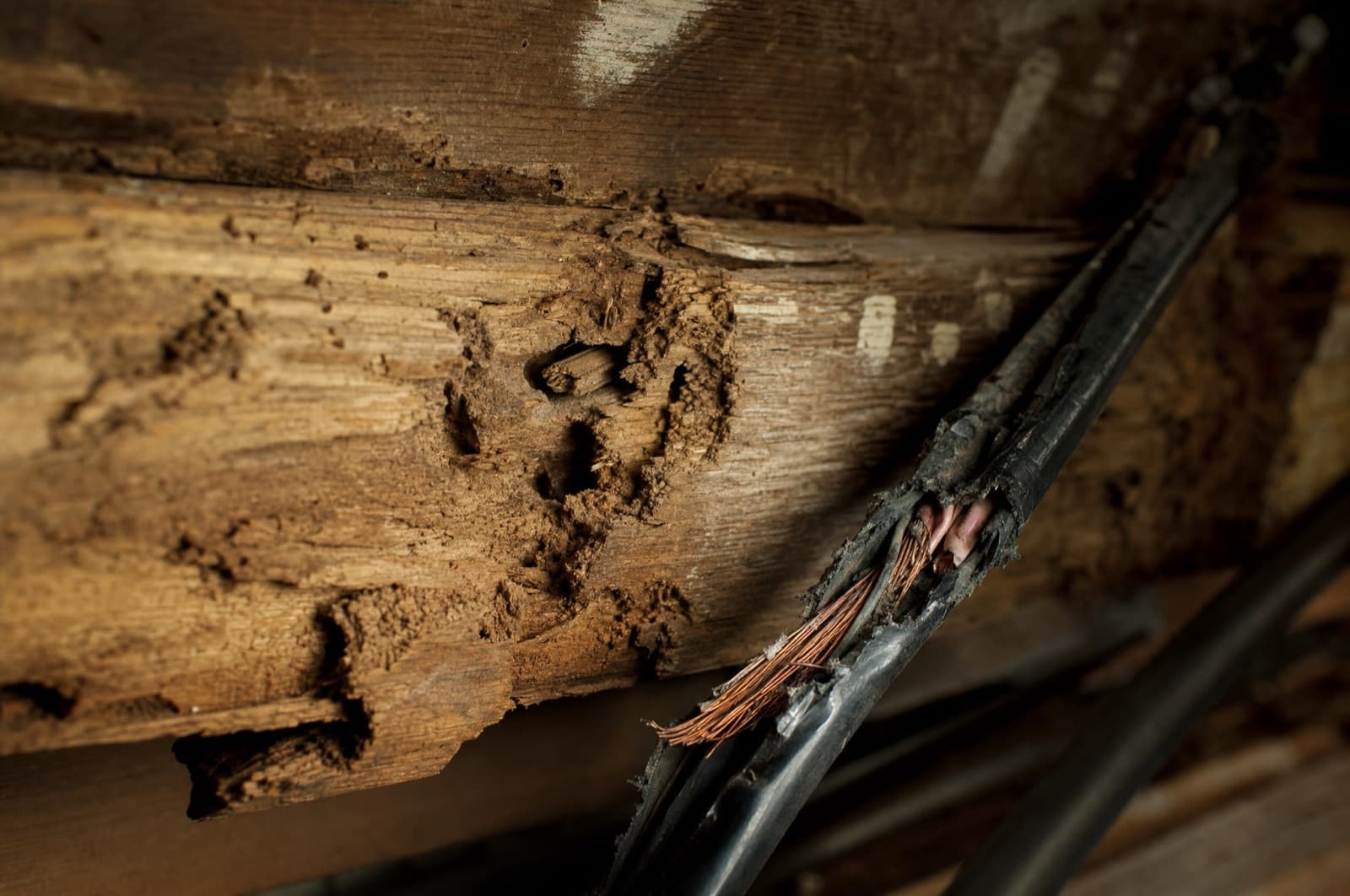
Pest damage evidence — a gnawed structural beam and a chewed electrical wire
Daniel Brady · NH-Licensed Pesticide Applicator · License #782664
Reviewed by Daniel Brady

Do hornets damage homes or just sting?

Cosmetic at most — the real issue is stings, not structure
Mostly just sting, when it comes to property. Bald-faced hornets — technically a yellowjacket, not a true hornet — scrape surface wood fiber to build a large, football-sized paper nest, then glue it to a branch, eave, or wall. That mechanism removes only a microscopic layer of surface fiber and never reaches structural depth in any wood, and no source documents hornets degrading siding of any kind. The property-damage framing you see in marketing is simply the wrong word for what's happening. The genuine, well-earned concern is aggressive, repeated stinging when a nest sits near a doorway or walkway — a health question this hub routes to the wasp and yellowjacket sting-risk pages.

At a glance

  • Can it?: Rarely
  • How common: Routine
  • Hype: Overstated
  • Evidence: Well documented
The honest answer

The short of it

The verdict
Cosmetic at most — the real issue is stings, not structure

Essentially just sting. Bald-faced hornets build inert paper nests from surface wood fiber and don't bore, eat, or weaken wood or siding — the genuine risk is aggressive multi-sting defense near a nest, which this hub routes out to the sting-risk pages.

The correction

What they claim vs. what the evidence supports

One shared severity track, two markers. The span between them is the hype delta — named out loud.

The claim — bald-faced hornet nests attached to homes

That a hornet nest on your property is actively damaging your home — eating into siding or wood — and needs urgent professional intervention for the sake of the building, not just the people near it.

Where the claim comes from: Pest-control marketing copy that uses 'hornet damage' language for any visible nest to drive urgency, regardless of what a hornet nest is actually made of.

Severity, 0–100
Hype says60
22Evidence says
Hype delta38point gapWell documented
The evidence

Bald-faced hornets (Dolichovespula maculata) scrape only surface wood fiber to make paper pulp and glue an aerial nest to a branch, eave, or wall — the same inert-paper mechanism used by other social wasps. No source documents hornets boring, eating, or degrading wood or siding. The genuine, well-documented risk is aggressive multi-sting defense of a nest near a doorway or walkway, which is a health question, not a property one.

The gap

The 'damage' framing is simply the wrong word for what a hornet does to your house — essentially nothing. The word that belongs here is 'sting,' and that risk is real and worth taking seriously; it just isn't a property question.

Damage assessment

What is actually harmed

Damage verdict
Cosmetic at most — the real issue is stings, not structure
CosmeticCan it?Rarely
The specimen
Pest
Bald-faced hornets (Dolichovespula maculata) — an aerial paper-nesting yellowjacket, despite the common name
What is in question
Painted or bare wood siding, fascia, eaves, and tree branches where nests are attached
How common
Routine
Evidence
Well documented
Mechanism

Hornets scrape weathered surface wood fibers with their mandibles, mix them with saliva, and layer the resulting pulp into a football-sized, gray papery envelope, typically more than three feet off the ground. The scraping removes only a microscopic layer of surface fiber — nowhere near structural depth in any wood — and the finished nest is glued on top of the surface, not grown into it or chemically bonded to it.

Actually at risk2
  • Cosmetic surface scrape marks on bare, unpainted, weathered wood where hornets harvested fiber
  • A faint discoloration where a nest has been attached to siding or fascia for a season
Not at risk — despite the myth3
  • Siding material of any kind — vinyl, wood, fiber-cement, or aluminum — no source documents hornets degrading any of it
  • Structural framing, fascia integrity, or roof decking
  • Painted or sealed wood surfaces, which hornets rarely bother scraping in the first place
Worst realistic case
A large, established nest near a frequently used doorway or walkway, producing repeated defensive stings when disturbed — a genuine hazard, but a health one, not a property one. The property side never exceeds a faint cosmetic mark.

Assessed from: NC State Extension bald-faced hornets; Iowa State Extension bald-faced hornets; Illinois Extension baldfaced hornet

The compounding clock

Does it get worse if you ignore it?

Over time
Self-limiting — it ends

Self-limiting — the colony, and any surface scraping, ends at the first hard frost, and New England hornets never reuse an old nest.

The timeline
3 stages
  1. WeeksReversible

    A small colony builds and forages; the nest is still modest, and any surface scraping is minor.

  2. MonthsReversible

    Population peaks in late summer to early fall; the nest can reach the size of a football, and defensive-sting risk is highest near the entrance.

  3. One seasonReversible

    The colony collapses at the first hard frost, historically mid-to-late October around Manchester (NOAA); only new queens survive to start fresh nests elsewhere the following year.

What stops the clock
The first hard frost ends the colony on its own; a pest professional can resolve a nest sooner if it's near high-traffic areas. Either way, the abandoned nest is never reoccupied.
Repair scope

Who actually fixes this

Scope, not dollars — the honest answer to “how expensive is it,” routed to the right trade.

Who fixes it
Pest pro first
Effort
A trade visit

A nest near a doorway, walkway, or play area needs to be professionally resolved because of sting risk, not property risk — but it's still the right call to remove it when it sits in a high-traffic spot.

Route by symptom
  • Nobody — nothing to repairThe nest is high, isolated, and away from foot traffic — Iowa State Extension notes nests away from human activity can be left undisturbed
Do not
  • Don't disturb or spray a nest yourself if it's near a doorway — multiple defensive stings are a real risk, and this is a job for a professional with the right equipment
Where we help — and where we don't

Anchor removes hazardous hornet nests near doors and walkways — that's genuine pest work. There's no siding or structural repair to route anywhere afterward, because there's nothing to repair; sting and allergy questions belong on /wasp-species and /yellowjackets, not here.

In depth

The full picture

01

What a hornet nest is actually made of

'Bald-faced hornet' is a common name for a species that is technically a yellowjacket (Dolichovespula maculata), and it builds the same kind of nest most social wasps do: chewed wood fiber mixed with saliva, layered into a papery, multi-tiered envelope, usually enclosed and gray or tan in color. NC State Extension describes the finished nest as reaching the size of a football or larger by late summer, hanging from a tree branch, eave, or wall. It's an impressive structure, and it's entirely paper — there is no wood-eating or excavating mechanism anywhere in how it's built.

02

Why 'hornet damage' isn't a property story

The scraping that produces nest material removes only the thinnest layer of weathered surface fiber from unfinished wood — fence boards, dead branches, unpainted trim. That's cosmetically visible as faint gray scrape marks in the wood grain, but it never approaches structural depth, and painted or sealed surfaces are rarely touched at all because there's little loose fiber for the hornet to harvest. No extension entomology source documents hornets degrading vinyl, fiber-cement, or aluminum siding, or weakening any wood component of a house. The 'hornets are damaging your home' framing simply applies the wrong word to a pest whose entire property interaction is gluing a paper nest to a surface.

03

The real risk: where the nest is, not what it's made of

The genuine, well-documented concern with bald-faced hornets is entirely about location and defense, not construction material. Colonies are notably aggressive when a nest is disturbed, and because their stinger is smooth rather than barbed, a single hornet can sting repeatedly. A nest three feet up near a doorway, mailbox, or walkway is a real hazard for anyone who regularly passes by; a nest high in a tree at the back of a property, away from foot traffic, is not — and Iowa State Extension specifically advises that nests away from human activity can be left alone rather than treated. That distinction, not the nest's construction, is what should drive the decision to remove one.

04

Self-limiting either way

Whether a nest is removed or simply left alone in an isolated spot, the outcome converges by late fall. The colony collapses at the first hard frost — historically mid-to-late October around Manchester, per NOAA — and only newly mated queens survive winter to start entirely new nests elsewhere the following spring. Northeast hornets and yellowjackets do not reuse old nests, so a nest left up over winter poses no reinfestation risk and, being inert paper by then, no property risk either.

Key takeaways
5 points
  • Bald-faced hornets are technically a yellowjacket species, and their nest is dried, chewed wood-fiber paper glued to a surface.
  • The nest-building mechanism scrapes only surface fiber — it never reaches structural depth in wood and doesn't touch siding material at all.
  • The genuine, earned concern is aggressive multi-sting defense near a nest, not property damage.
  • Location decides whether removal is warranted: a nest away from foot traffic can be left alone.
  • The colony is self-limiting — it dies at the first hard frost and the nest is never reused.
New Hampshire context

What this looks like in New Hampshire homes

Bald-faced hornet nests become noticeable across southern and central New Hampshire from midsummer through early fall, as the colony grows toward its peak size before the season ends. Most calls Anchor sees involve a nest that's ended up too close to a door, deck, or walkway rather than any concern about the building itself. As with the rest of this cluster, the season resolves the same way every year: the colony collapses at the first hard frost, historically around October 19 to 29 near Manchester (NOAA), and the nest is not reoccupied.

  • NH-licensed #782664

    Southern New Hampshire

  • Family-owned

    Since 2017

  • Honest routing

    Even when it isn’t us

We serve these communities

ManchesterNashuaConcordDerryBedfordSalemHudsonAmherstAuburnGoffstownHooksettLitchfieldLoudonMilfordBristol

Service Area Map

Southern New Hampshire

BristolPop. 3,200LoudonPop. 5,500ConcordPop. 43,900HooksettPop. 14,800GoffstownPop. 18,000AuburnPop. 5,700ManchesterPop. 115,600BedfordPop. 23,300LitchfieldPop. 8,500AmherstPop. 11,300DerryPop. 34,500MilfordPop. 15,700HudsonPop. 25,600NashuaPop. 91,100SalemPop. 30,000HQCityHover for info

Nest near a doorway? That's the real risk — not your siding.

Anchor removes hazardous hornet nests near entrances and walkways safely; a nest tucked away in a tree usually doesn't need us at all.

Follow-up questions

Frequently asked

Sources & citations(3)
  1. NC State Extension — Bald-faced Hornets

    Paper nest construction and material; colony size and seasonal collapse at frost

    extensionverified 2026-07-16
  2. Iowa State Extension — Bald-faced Hornets

    Guidance that isolated nests away from human activity can be left undisturbed

    extensionverified 2026-07-16
  3. Illinois Extension — Baldfaced Hornet: Dangerous Bug or Beneficial Insect?

    Bald-faced hornet biology, aggressive nest defense, and smooth-stinger multi-sting capability

    extensionverified 2026-07-16

Written & reviewed by

Verified

Daniel Brady

NH-Licensed Pesticide Applicator · License #782664 (NHDAMF, RSA 430)

Daniel Brady is the New Hampshire–licensed applicator behind Anchor Pest Services, a family-owned pest control company serving the Manchester area since 2017.

Verify license

Last updated Jul 2026

Honest pest help for New Hampshire homes

The Nest Isn't Eating Your House. Where It Is, Is What Matters.

A hornet nest is inert paper and does no damage to siding, wood, or framing of any kind. The genuine concern is a nest near a door, deck, or walkway where stings become likely — and that's exactly what Anchor Pest Services safely removes. Family-owned since 2017, NH license #782664, serving Manchester, Nashua, Concord and nearby towns.

  • Honest advice — we'll tell you when an isolated nest doesn't need removal at all
  • NH-licensed applicators (#782664) — free inspection, same-day service
  • Hornet, wasp, and yellowjacket nest removal across southern and central New Hampshire

NH License #782664 · No obligation · We answer in person