
Skip to content
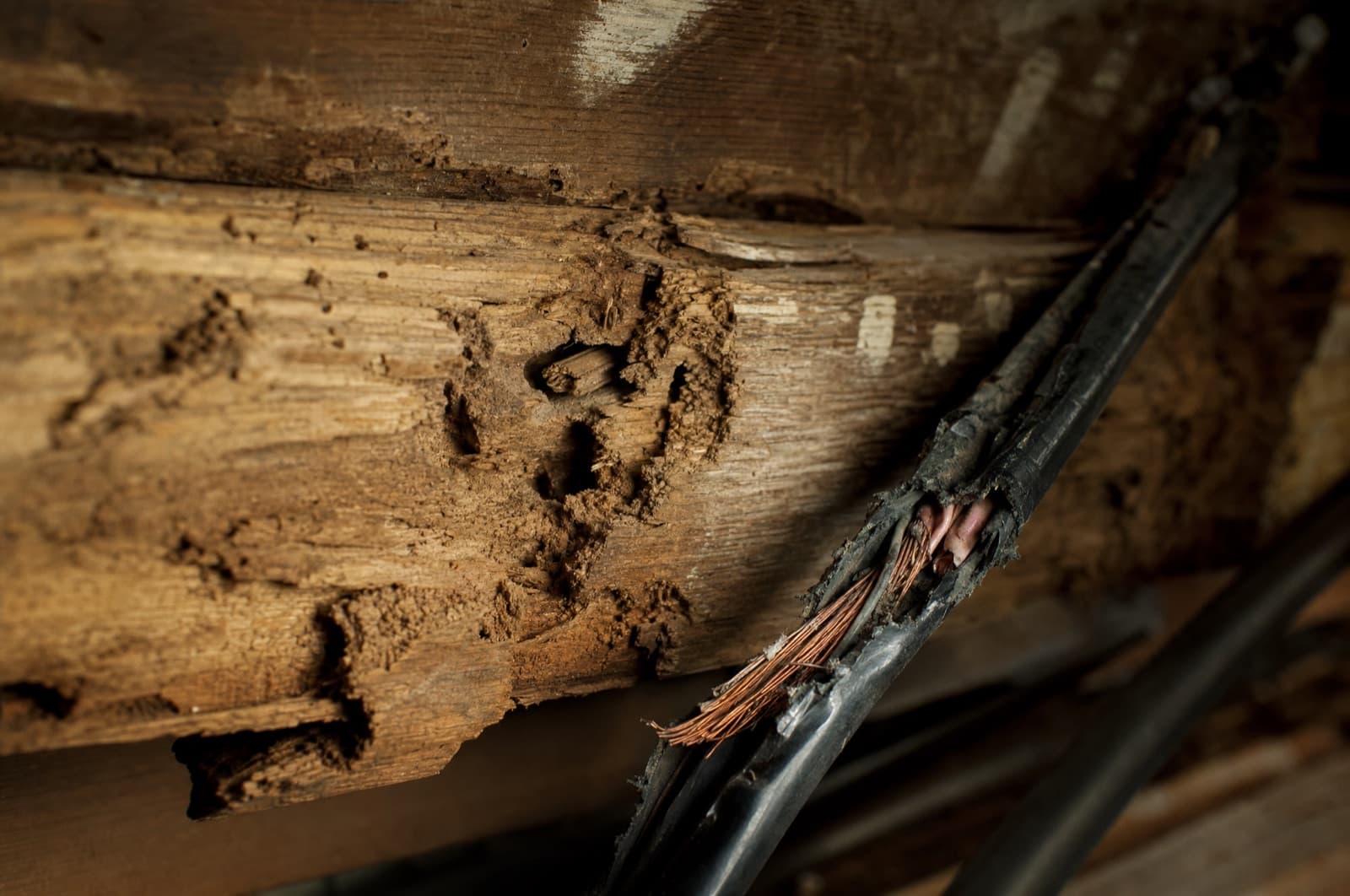
Pest damage evidence — a gnawed structural beam and a chewed electrical wire
Daniel Brady · NH-Licensed Pesticide Applicator · License #782664
Reviewed by Daniel Brady

Do pavement ants damage driveways or patios?

Cosmetic — the slab itself is not being harmed
No, not in any structural sense. Pavement ants (Tetramorium immigrans) nest in the soil and sand beneath slabs and in expansion joints and cracks that already exist from ordinary freeze-thaw cycles and settling — they cannot chew or dissolve concrete, asphalt, brick, or stone. What you see is small volcano-shaped piles of excavated sand at joints, plus foraging trails indoors. The slab is not being damaged; the ants are only occupying voids that were already there.

At a glance

  • Can it?: No
  • How common: Routine
  • Hype: Wildly overstated
  • Evidence: Debunked
The honest answer

The short of it

The verdict
Cosmetic — the slab itself is not being harmed

No — pavement ants don't crack, dissolve, or undermine concrete. They occupy joints and cracks that already exist and push excavated sand to the surface.

The correction

What they claim vs. what the evidence supports

One shared severity track, two markers. The span between them is the hype delta — named out loud.

The claim — pavement ants undermining and cracking driveways or patios

That colonies of tens of thousands of pavement ants tunnel under slabs, hollow out voids, and cause "differential settlement," cracked beams, tilted floors, and jammed doors — framing the ants as a slow-motion foundation threat.

Where the claim comes from: Pest-control marketing and home-repair content-farm blogs that borrow foundation-failure language and attach it to an ordinary nuisance ant.

Severity, 0–100
Hype says70
12Evidence says
Hype delta58point gapDebunked
The evidence

Pavement ants remove loose sand and soil from joints and from under pavers — they neither nest in nor eat wood or masonry, and multiple university extension sources state plainly that they are not known to cause structural damage. At most, over many years, a very large colony under an already poorly-bedded paver surface can contribute to minor settling or unevenness of individual pavers. There is no evidence they damage sound poured concrete.

The gap

The mechanism — moving sand out of joints — is real. The catastrophe — structural failure of the slab — is invented. Pavement ants follow pre-existing cracks and gaps; they don't create the weakness, and the concrete underneath is not being consumed.

Correction
The claim
Pavement ants undermine foundations and cause structural failure of driveways and patios — tunneling under slabs until they crack, settle, or tilt.
Why it is wrong
Pavement ants neither nest in nor eat wood or masonry — their entire activity is relocating loose sand and soil that was already sitting in a pre-existing crack, joint, or void. Multiple university extension sources state plainly that pavement ants are not known to cause structural damage.
What is true instead
Pavement ants are a nuisance that excavates sand to the surface and forages indoors through the same cracks. The cracks and joints they exploit come from ordinary freeze-thaw cycling and settling, which predates and causes the ant activity — not the reverse.
Source
Penn State Extension, 'Pavement Ant'; NC State Extension, 'Pavement Ant'
Damage assessment

What is actually harmed

Damage verdict
Cosmetic — the slab itself is not being harmed
CosmeticCan it?No
The specimen
Pest
Pavement ants (Tetramorium immigrans, formerly T. caespitum)
What is in question
Driveways, patios, walkways, and the sand/soil base beneath them
How common
Routine
Evidence
Well documented
Mechanism

Pavement ants excavate and relocate sand and soil from beneath and between slabs, pavers, and expansion joints, depositing it in small volcano-shaped mounds at the surface. They nest in voids and cracks that already exist from ordinary freeze-thaw movement, joint gaps, or settling — they do not chew, dissolve, or otherwise consume concrete, asphalt, brick, or stone.

Actually at risk3
  • Joint sand between pavers, which gets excavated and needs periodic refilling
  • The cosmetic appearance of a driveway or patio — recurring sand mounds at cracks and joints
  • Over many years, the level of an already loosely-bedded paver surface, in a large and long-established colony
Not at risk — despite the myth4
  • Poured concrete integrity — pavement ants cannot chew or dissolve cured concrete
  • Asphalt integrity
  • Your home's foundation or footings
  • Rebar or any embedded structural reinforcement
Worst realistic case
A few wobbly or slightly settled pavers on a patio that was already poorly bedded, plus recurring sand piles at joints and ants foraging indoors through the same cracks. The slab itself never fails because of pavement ants.

Assessed from: Penn State Extension; NC State Extension; Virginia Cooperative Extension ENTO-467; Utah State University Extension

The compounding clock

Does it get worse if you ignore it?

Over time
Static — never worsens

Static — the sand piles come back, but the slab does not degrade.

Now
Ever

Pavement ants act on voids and cracks that already exist rather than creating or enlarging them. Sweeping away the sand doesn't stop the ants from re-excavating, but the concrete is not being consumed or weakened by that activity — it's the same slab in year ten that it was in year one, mound or no mound.

What stops the clock
Sealing joints and cracks with masonry caulk and baiting the colony reduces the mounding and indoor foraging, but nothing about the slab itself is worsening in the meantime, so there's no urgency driven by structural risk.
Repair scope

Who actually fixes this

Scope, not dollars — the honest answer to “how expensive is it,” routed to the right trade.

Who fixes it
You — a DIY patch
Effort
An afternoon

There is no repair the slab itself needs. The genuine task is cosmetic maintenance — sweeping sand, caulking joints, and baiting the colony if ants are foraging indoors — all homeowner-grade work.

The right order
  1. 1
    Sweep or hose off surface sand piles
  2. 2
    Caulk visible joints and cracks with masonry sealant to reduce future mounding
  3. 3
    Apply a granular or protein-based ant bait near the mounds if ants are also foraging indoors
Route by symptom
  • Pest pro firstAnts are foraging indoors through the same cracks — perimeter ant control and baiting genuinely resolves that, and it's worth doing before any cosmetic joint repair
  • You — wipe it upYou just want the visible sand mounds gone for appearance's sake — no bait or caulk required
Do not
  • Don't pour boiling water, bleach, or gasoline into joints — extension sources discourage this as ineffective against the deep queen and as genuinely damaging to the surrounding material
  • Don't assume settling or cracking you notice elsewhere on the same driveway is ant-caused — that's freeze-thaw and normal aging, not insect damage
Where we help — and where we don't

Perimeter ant control and baiting is genuinely Anchor's lane, especially if pavement ants are also trailing indoors. But the driveway or patio itself needs no repair, and we'll say that plainly rather than sell you a hardscape fix it doesn't need.

In depth

The full picture

01

What pavement ants are actually doing under your driveway

Pavement ants (Tetramorium immigrans) are one of the most common ants around New Hampshire hardscape, and their name describes their habit precisely: they nest in the soil and sand beneath slabs, pavers, and sidewalks, and along expansion joints and cracks. As they excavate their nest chambers, they carry sand and soil up to the surface and deposit it in small, volcano-shaped mounds — usually right at a joint or crack edge.

That excavation is the entire mechanism. There is no chewing of masonry, no dissolving of concrete, no acid secretion that eats into a slab. The ants are moving material that was already loose in a space that already existed — the joint or crack was there first, and the ants simply found it.

02

Why the 'undermining your foundation' claim doesn't hold up

Multiple university extension sources are direct on this point: pavement ants are not known to cause structural damage, because they neither nest in nor eat wood or masonry — their entire activity is relocating soil. Penn State, NC State, and Virginia Cooperative Extension all describe pavement ants as a nuisance and indoor-foraging pest, not a structural one.

The "undermining your foundation" version of this claim seems to borrow language from genuine foundation-settlement problems and attach it to an ant that happens to nest near concrete. But causation runs the other way: pre-existing cracks, joints, and settling from freeze-thaw cycles create the voids pavement ants move into — the ants are a consequence of those gaps, not the cause of them.

03

What this actually looks like over time

In the worst realistic case — a large, long-established colony under an already poorly-bedded paver patio — the ongoing excavation can, over many years, contribute to minor settling or unevenness in individual pavers. That's a real, if slow and modest, effect on loosely-set pavers specifically. It is not evidence of damage to sound poured concrete or asphalt, and it never approaches cracked beams, tilted floors, or the other foundation-failure language sometimes attached to this claim.

The honest ceiling here is cosmetic: recurring sand mounds, some joint sand that needs periodic refilling, and ants that may find their way indoors along the same route. None of that requires structural repair.

04

What to actually do about it

If the mounds bother you, sweeping or hosing them away and caulking the joints reduces the visible nuisance, though the ants may simply re-excavate elsewhere along the same crack network. If pavement ants are also showing up inside your home — a common pattern, since the same cracks and joints that let them nest also let them forage indoors along your foundation — that's the point where professional perimeter treatment and baiting genuinely helps, because it addresses the colony rather than just the surface symptom.

What you should not do is treat this as a slab-repair problem. There's nothing wrong with your concrete that pavement ants caused, and no caulk, bait, or treatment changes the structural integrity of a driveway or patio that was already sound.

Key takeaways
5 points
  • No — pavement ants do not crack, dissolve, or undermine concrete, asphalt, brick, or stone.
  • They nest in cracks and joints that already exist from freeze-thaw and settling, and push excavated sand to the surface.
  • The honest ceiling is cosmetic: sand mounds and, in extreme long-term cases, minor unevenness in loosely-bedded pavers — never slab failure.
  • There is no slab repair to make. Sweeping, caulking, and baiting (if ants forage indoors) are the entire honest fix.
  • Perimeter ant control is genuinely worth it if ants are trailing indoors — the driveway itself needs no such treatment.
New Hampshire context

Freeze-thaw, not ants, is what actually stresses NH hardscape

Southern and central New Hampshire's freeze-thaw cycle is the real driver of the cracks and joint gaps pavement ants exploit — water gets into small cracks, freezes, expands, and widens them over successive winters, well before any ant colony moves in. As the ground cools toward Manchester's first hard frost (historically around October 19 to 29, per NOAA), pavement ant colonies typically become less active at the surface, and mounding slows for the season.

If you're re-sealing joints or having a driveway repaired for cracking, that work addresses the actual cause — winter freeze-thaw and normal aging — regardless of whether ants happen to be nesting there. Treat the ants as a separate, cosmetic issue from any real hardscape repair.

  • NH-licensed #782664

    Southern New Hampshire

  • Family-owned

    Since 2017

  • Honest routing

    Even when it isn’t us

We serve these communities

ManchesterNashuaConcordDerryBedfordSalemHudsonAmherstAuburnGoffstownHooksettLitchfieldLoudonMilfordBristol

Service Area Map

Southern New Hampshire

BristolPop. 3,200LoudonPop. 5,500ConcordPop. 43,900HooksettPop. 14,800GoffstownPop. 18,000AuburnPop. 5,700ManchesterPop. 115,600BedfordPop. 23,300LitchfieldPop. 8,500AmherstPop. 11,300DerryPop. 34,500MilfordPop. 15,700HudsonPop. 25,600NashuaPop. 91,100SalemPop. 30,000HQCityHover for info

Pavement ants indoors? That part is genuinely Anchor's job.

Your driveway doesn't need repair — but if the same ants are trailing into your kitchen or bathroom, perimeter treatment stops it at the source.

Follow-up questions

Frequently asked

Sources & citations(4)
  1. Penn State Extension — Pavement Ant

    Pavement ant biology and confirmation of no structural damage

    extensionverified 2026-07-16
  2. NC State Extension — Pavement Ant

    Pavement ant biology and nesting behavior

    extensionverified 2026-07-16
  3. Virginia Cooperative Extension ENTO-467 — Pavement Ant

    Nesting in cracks and joints; sealing advice

    extensionverified 2026-07-16
  4. Utah State University Extension — Pavement Ants

    Taxonomy and nesting behavior of Tetramorium immigrans

    extensionverified 2026-07-16

Written & reviewed by

Verified

Daniel Brady

NH-Licensed Pesticide Applicator · License #782664 (NHDAMF, RSA 430)

Daniel Brady is the New Hampshire–licensed applicator behind Anchor Pest Services, a family-owned pest control company serving the Manchester area since 2017.

Verify license

Last updated Jul 2026

Honest pest help for New Hampshire homes

Your Driveway Is Fine. If the Ants Are Indoors, We'll Handle That.

Pavement ants don't damage concrete, asphalt, brick, or your foundation — the sand mounds are cosmetic, full stop. What Anchor Pest Services does is perimeter ant control when the same colony is foraging inside your home. Family-owned since 2017, NH license #782664, serving Manchester, Nashua, Concord and nearby towns.

  • Honest advice — we won't sell you a hardscape repair you don't need
  • NH-licensed applicators (#782664) — free inspection, same-day service
  • Perimeter ant control across southern and central New Hampshire

NH License #782664 · No obligation · We answer in person