
Skip to content
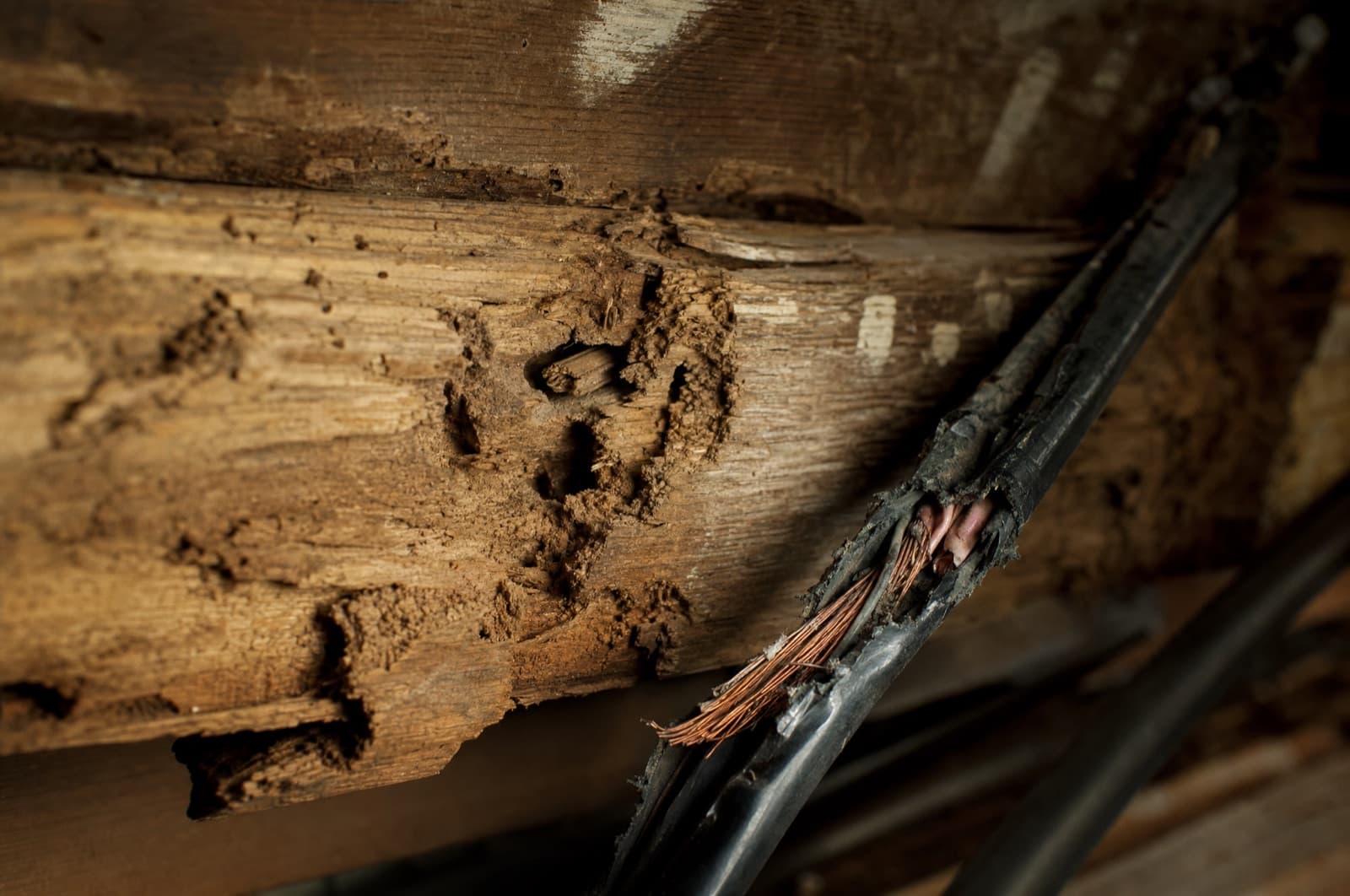
Pest damage evidence — a gnawed structural beam and a chewed electrical wire
Daniel Brady · NH-Licensed Pesticide Applicator · License #782664
Reviewed by Daniel Brady

Do pests damage HVAC or ventilation systems?

Functional damage — real, but the whole-system-failure framing is overstated
Yes. Rodents travel through duct runs and HVAC chases, nest inside them, gnaw flexible duct insulation and low-voltage thermostat or control wiring, and leave droppings and urine that circulate through the airstream whenever the system runs. Cockroaches also occasionally harbor in warm motor housings. The efficiency loss and indoor-air contamination this causes are genuine and worth addressing. What isn't well supported is the "your entire system is destroyed, replace it all" framing some contractors use — the sheet-metal duct body and the compressor itself are not gnawable, and the honest fix is usually a section repair plus cleaning, not a full system replacement.

At a glance

  • Can it?: Yes, but
  • How common: Occasional
  • Hype: Overstated
  • Evidence: Plausible, under-documented
The honest answer

The short of it

The verdict
Functional damage — real, but the whole-system-failure framing is overstated

Yes — rodents use ductwork as a travel corridor, nest in it, gnaw duct insulation and low-voltage control wiring, and leave droppings that circulate through the airstream. That's real functional and air-quality damage. "Your whole HVAC system is destroyed" is not what the evidence supports.

The correction

What they claim vs. what the evidence supports

One shared severity track, two markers. The span between them is the hype delta — named out loud.

The claim — rodents (and occasionally roaches) damaging or contaminating HVAC and ventilation systems

That rodent activity in ductwork means the entire HVAC system is compromised and typically needs full replacement, with dramatic framing around energy waste and air quality collapse.

Where the claim comes from: HVAC-contractor sales copy and pest-control blog posts, which have an incentive to describe duct contamination as a whole-system problem rather than a localized, repairable one.

Severity, 0–100
Hype says65
45Evidence says
Hype delta20point gapPlausible, under-documented
The evidence

The underlying mechanisms are physically sound and well established: rodents use ducts and chases as travel routes, nest inside flex duct where insulation is available to shred, gnaw exposed low-voltage control wiring, and leave droppings that get aerosolized when the system runs. What's not independently measured is the magnitude often claimed — how much efficiency is actually lost, or how contaminated a system becomes — which mostly traces to HVAC and pest-industry trade sources rather than published measurement. The honest position is that the mechanism is real and worth fixing, but the scale of "your system is destroyed" is a sales framing, not a documented finding.

The gap

Ducts really are rodent highways, and the contamination and localized damage are genuine. The 'replace the whole system' scale most often attached to that fact usually is not.

Damage assessment

What is actually harmed

Damage verdict
Functional damage — real, but the whole-system-failure framing is overstated
FunctionalCan it?Yes, but
The specimen
Pest
House mice and rats (primary — travel corridors and nesting); German cockroaches occasionally (warm motor housings)
What is in question
Flexible duct insulation, low-voltage control and thermostat wiring, and indoor air quality via the airstream
How common
Occasional
Evidence
Plausible, under-documented
Mechanism

Rodents exploit duct chases and plenum spaces as sheltered, warm travel corridors between floors and rooms, and will nest inside accessible sections of flexible duct where the insulating wrap offers shreddable nesting material. Obligate gnawing (a rodent's incisors grow continuously and must be worn down) targets the duct's exposed insulation and any accessible low-voltage wiring for thermostats or dampers. Droppings and urine left inside ductwork get pulled into the airstream every time the blower runs, distributing contamination throughout the house rather than leaving it in one place. Cockroaches, separately, are drawn to the warmth of motor housings and blower compartments and can foul contacts there.

Actually at risk4
  • Flexible duct insulation and the vapor wrap on accessible duct runs
  • Low-voltage control and thermostat wiring within a rodent's reach
  • Indoor air quality, via droppings and urine aerosolized through the airstream
  • Blower and motor housings roaches can harbor and foul
Not at risk — despite the myth3
  • The rigid sheet-metal duct body itself — rodents cannot gnaw through metal ductwork
  • The compressor, condenser, and other major mechanical HVAC components
  • The claim that a rodent presence automatically requires whole-system replacement — that scale is not independently documented
Worst realistic case
A contaminated duct run needing professional cleaning and a section of insulation or control wiring replaced or repaired. A genuine repair job for an HVAC contractor, but not evidence the entire system needs to be torn out.

Assessed from: ICWDM / UNL Extension (rodent gnawing of wiring and insulation); CDC hantavirus guidance (airborne-droppings caution); general HVAC-trade observation on duct contamination, flagged as trade rather than measured

The compounding clock

Does it get worse if you ignore it?

Over time
Compounds slowly

It compounds slowly while rodents remain active in the ductwork, and goes static once they're excluded and the system is cleaned.

The timeline
3 stages
  1. WeeksReversible

    Rodents establish a travel route through duct chases, with exploratory gnawing at accessible insulation seams or low-voltage wiring near a register or thermostat run.

  2. MonthsReversible

    A nest is established inside a duct section, with progressive insulation loss at that point and droppings accumulating that begin circulating through the airstream when the blower runs.

  3. One seasonReversible

    Contamination has spread through multiple duct runs the system regularly circulates air through, and a control wire may have been damaged enough to cause an intermittent thermostat or damper fault.

What stops the clock
Excluding the rodents so no new nesting or gnawing occurs, then having an HVAC contractor clean the affected ductwork and repair or replace any damaged insulation or control wiring. Contamination does not resolve on its own even after the rodents are gone.
Repair scope

Who actually fixes this

Scope, not dollars — the honest answer to “how expensive is it,” routed to the right trade.

Who fixes it
HVAC contractor
Effort
A trade visit

Ductwork, duct insulation, and system control wiring belong to the HVAC system, not the pest problem — once the rodents are excluded, an HVAC contractor is the right professional to assess and repair what's actually damaged.

The right order
  1. 1
    Anchor: exclude and remove the rodents so no new gnawing or nesting occurs in the ductwork
  2. 2
    HVAC contractor: inspect ductwork for damaged insulation, chewed control wiring, and contamination, and repair or replace what's affected
  3. 3
    Remediation service: handle heavy droppings contamination inside ductwork if present, rather than a standard duct cleaning alone
Route by symptom
  • Qualified remediationDroppings have accumulated heavily inside ductwork or in the areas ducts pass through
Do not
  • Don't run the HVAC system with known rodent contamination in the ducts before it's addressed — you're circulating that contamination through the whole house
  • Don't accept a full system replacement recommendation without a second opinion when the actual finding is localized duct contamination or a repairable wiring issue
  • Don't attempt to clean ductwork yourself if droppings are present — dry disturbance can aerosolize contaminants (CDC hantavirus guidance)
Where we help — and where we don't

Anchor excludes the rodents from the property and the spaces ductwork passes through — that's genuinely our lane. We do not clean, repair, or replace ductwork, insulation, or HVAC control wiring; that's an HVAC contractor's job, and we'll tell you so rather than quote you for it.

In depth

The full picture

01

Why ductwork is a rodent highway

Duct chases and the space around HVAC plenums run through walls, floors, and attics in a way that gives rodents exactly what they look for when moving through a structure: a warm, sheltered, largely undisturbed route between levels. Where flexible duct with an insulating wrap is accessible, it also offers shreddable material for nesting, and the same obligate gnawing behind every page in this hub — a rodent's incisors grow continuously and must be worn down — targets both the insulation and any accessible low-voltage wiring for thermostats or motorized dampers along the way.

02

The part that's genuinely serious: air quality

The most important honest point on this page is that duct-borne rodent contamination isn't just a wiring or insulation problem — it's an air-quality one. Droppings and urine left inside ductwork don't stay put; they get pulled into the airstream and distributed through registers every time the blower runs, which is a materially different exposure pathway than a dropping sitting in an attic corner. CDC guidance on rodent-borne hazards is explicit that droppings should never be dry-swept or vacuumed because that aerosolizes contaminants, and duct contamination is exactly the scenario where that guidance matters most, since the system is designed to move air (and whatever's suspended in it) throughout the house.

03

What the evidence does NOT support: the whole-system-failure story

Where this claim gets oversold is in the leap from "rodents were in my ductwork" to "my HVAC system is destroyed." The rigid sheet-metal duct body, the furnace or air handler cabinet, and the compressor and condenser are not gnawable — none of a rodent's targets are the parts of an HVAC system that actually cost the most to replace. Every specific claim about how much efficiency is lost or how contaminated a system becomes traces back to HVAC-industry and pest-industry trade sources rather than independent measurement, which is a meaningful gap. The honest, evidence-supported answer is that a rodent-affected system usually needs a section of insulation or wiring repaired and the ductwork professionally cleaned — a real job, but a bounded one, not a system-replacement event.

Key takeaways
5 points
  • Yes — rodents travel through and nest in ductwork, gnawing duct insulation and low-voltage control wiring, which is a genuine functional and air-quality problem.
  • The air-quality angle is arguably the most serious part: droppings inside ductwork get circulated through the whole house whenever the blower runs.
  • The rigid duct body, furnace/air handler cabinet, and compressor are not at risk — rodents cannot gnaw metal ductwork or major mechanical components.
  • "Your whole HVAC system is destroyed" is not supported by the evidence; the realistic fix is a section repair plus professional cleaning.
  • Anchor excludes the rodents; an HVAC contractor repairs and cleans the system itself.
New Hampshire context

HVAC and ductwork risk in New Hampshire homes

Forced-air heating is common across southern and central New Hampshire, and basement and attic duct runs are exactly where rodents travel as they push indoors ahead of Manchester's first hard frost, historically around October 19 to 29. Homes with older, uninsulated or exposed flex-duct runs in unfinished basements or attics are the most common local pattern for this kind of damage — an annual HVAC service visit is a reasonable moment to also ask about signs of rodent activity in and around the ductwork.

  • NH-licensed #782664

    Southern New Hampshire

  • Family-owned

    Since 2017

  • Honest routing

    Even when it isn’t us

We serve these communities

ManchesterNashuaConcordDerryBedfordSalemHudsonAmherstAuburnGoffstownHooksettLitchfieldLoudonMilfordBristol

Service Area Map

Southern New Hampshire

BristolPop. 3,200LoudonPop. 5,500ConcordPop. 43,900HooksettPop. 14,800GoffstownPop. 18,000AuburnPop. 5,700ManchesterPop. 115,600BedfordPop. 23,300LitchfieldPop. 8,500AmherstPop. 11,300DerryPop. 34,500MilfordPop. 15,700HudsonPop. 25,600NashuaPop. 91,100SalemPop. 30,000HQCityHover for info

Hearing scratching in your ductwork or vents?

Anchor excludes the rodents from your home and the spaces your ductwork passes through — then an HVAC contractor handles the rest.

Follow-up questions

Frequently asked

Sources & citations(3)
  1. Internet Center for Wildlife Damage Management — House Mouse Damage Identification

    Rodent gnawing damage to wiring and insulation, including duct and HVAC-adjacent materials

    extensionverified 2026-07-16
  2. CDC — Hantavirus Prevention

    Do-not-dry-sweep guidance for rodent droppings; risk of aerosolizing contaminants when disturbed

    govverified 2026-07-16
  3. UNH Cooperative Extension — Rodent Control

    New Hampshire seasonal rodent pressure and structural travel routes including ductwork and chases

    extensionverified 2026-07-16

Written & reviewed by

Verified

Daniel Brady

NH-Licensed Pesticide Applicator · License #782664 (NHDAMF, RSA 430)

Daniel Brady is the New Hampshire–licensed applicator behind Anchor Pest Services, a family-owned pest control company serving the Manchester area since 2017.

Verify license

Last updated Jul 2026

Honest pest help for New Hampshire homes

We Stop the Rodents. An HVAC Contractor Cleans the System.

We won't tell you a pest treatment cleans or repairs your ductwork — that's an HVAC contractor's job. What Anchor Pest Services does is exclude the rodents from the property so nothing keeps nesting in or traveling through your ducts. Family-owned since 2017, NH license #782664, serving Manchester, Nashua, Concord and nearby towns.

  • Honest advice — we route ductwork repair and cleaning to a licensed HVAC contractor
  • NH-licensed applicators (#782664) — free inspection, same-day service
  • Rodent exclusion across southern and central New Hampshire

NH License #782664 · No obligation · We answer in person