
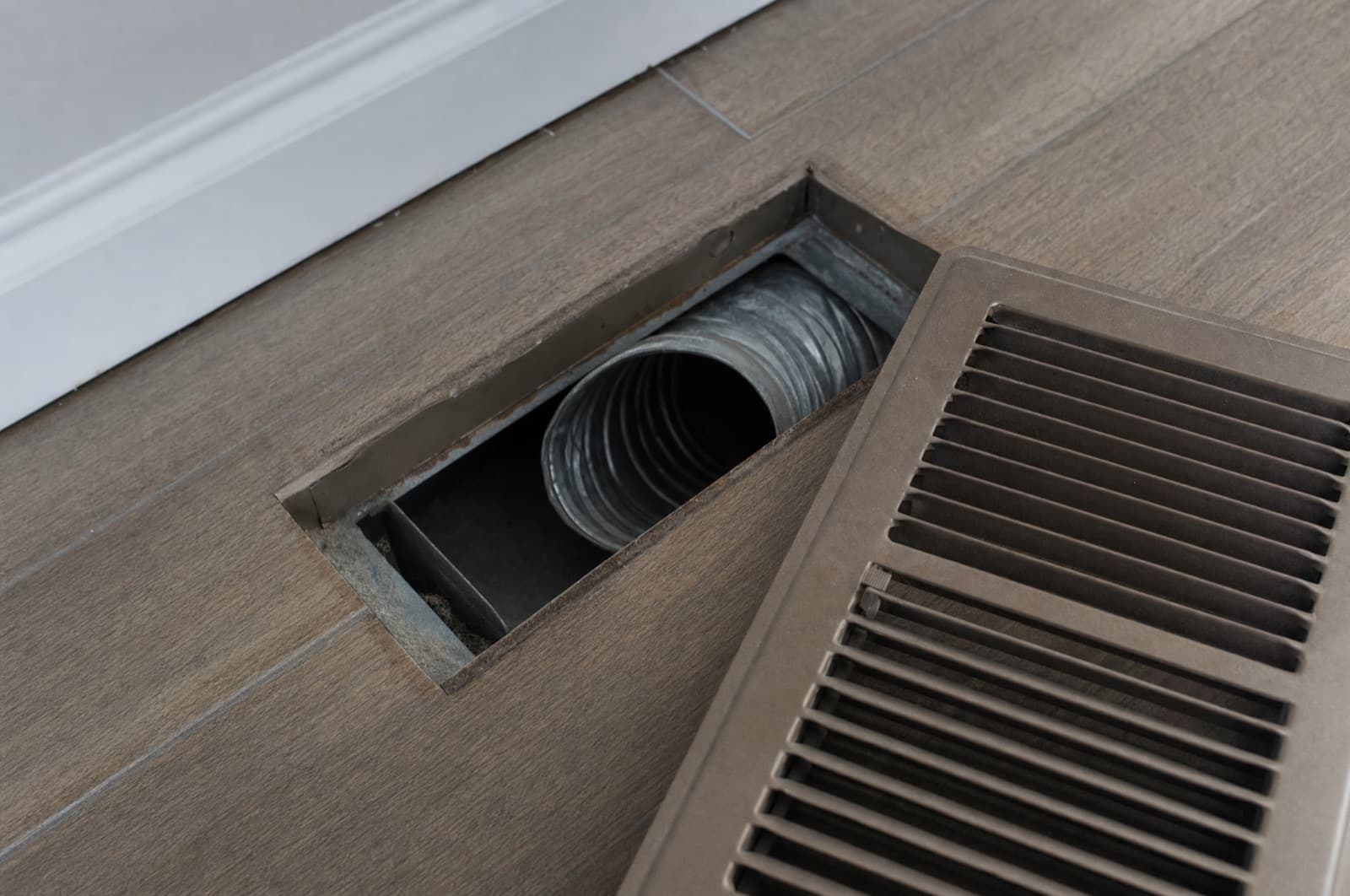
Why Do My Vents Smell Bad? Common Causes and How to Fix Them
A bad smell from your vents is most often burning dust at the first heating-season startup — a dry, dusty, slightly hot smell that shows up the first few times the furnace runs each fall and clears within a few hours, and it's normal. A putrid smell that rises and falls with the blower, especially strongest at floor vents over a week or more, usually means a dead rodent or bird in the ductwork or a return chase. A musty smell that appears right as the blower kicks on points to mold or standing moisture in the coil, drip pan, or ducts. The one smell that is never normal is an acrid, burning-plastic, or fishy odor that gets stronger the longer the system runs — that can mean an overheating blower motor or failing electrical component, and it means shut the system off and call a technician now, not wait it out.
A smell that arrives through the vents and gets stronger — or only appears — when the furnace or AC runs points to something inside the system itself: on the shared air path, or in the ductwork that carries it to every room. Because the blower spreads whatever is in there through the whole house, an HVAC-borne smell is one of the hardest to localize by nose alone, and it's also where a genuinely benign cause (dust burning off at first startup) and a genuinely dangerous one (an overheating blower motor) can smell deceptively similar at first whiff.
At a Glance
- Diagnosing: HVAC vents / ductwork
- Top cause: HVAC
- Safety: A real hazard may apply — read the red band below
Burning dust at first heating-season startup (benign) or a dead rodent in the ductwork (persistent, putrid) are the two most common causes — an acrid, worsening burning-plastic smell is the one that needs immediate attention.
Ranked causes — and how to tell them apart
Like a doctor's differential: the candidate causes for this smell, ranked most-likely first, each with the tell-tale sign that distinguishes it and who actually fixes it.
- Most likelyHVAC
Burning dust at first heating-season startup
How to tell it's this
A dry, dusty, slightly hot smell only the first few times the furnace runs each fall, fading within minutes to a couple of hours; it does not return once the system has run a few cycles.
Who fixes itYou can handle itNormal — dust burning off the heat exchanger and burners. Change the filter; call an HVAC tech only if it persists past a few cycles.
- Most likelyPest
Dead animal in the ductwork or a return chase
How to tell it's this
A putrid, rotting smell that gets noticeably stronger when the blower runs and fades when it's off, usually strongest at floor-level vents, building over one to three weeks.
Who fixes itPest → AnchorLocate and remove the carcass and nesting; an HVAC tech opens sealed ducting or a coil a pest tech can't reach.
- PossibleMold / Moisture
Mold or moisture in the coil, drip pan, or ducts
How to tell it's this
A musty, damp smell strongest right when the blower first kicks on, especially after the AC has been running through a humid stretch; visible growth may show at the return grille.
Who fixes itHVAC techDuct/coil cleaning plus fixing the moisture source; mold remediation if it's widespread beyond the unit itself.
- PossibleElectrical
Overheating blower motor or electrical component
How to tell it's this
An acrid burning-plastic or fishy odor that gets stronger, not weaker, the longer the system runs, and may recur mid-season rather than only at first startup; can pair with a tripped breaker.
Who fixes itHVAC techTurn the system off and call an HVAC technician or licensed electrician now — this is not startup dust.
- Less likelyGas
Gas or carbon-monoxide context at a fuel-fired furnace
How to tell it's this
A rotten-egg/sulfur smell near the furnace is a possible gas leak; CO itself has no smell — a sounding CO alarm or flu-like symptoms that ease when you leave the house are the only warnings.
Who fixes itGas utilityRotten-egg smell: leave and call the utility. CO alarm: get outside and call 911; have the furnace inspected before restarting.
What each clue points to
Notice one of these and you can narrow the differential fast.
- HVAC
If you notice: Dusty, slightly hot smell the first time the heat runs each fall, gone within an hour
Normal burning-off of dust on the heat exchanger and burners at first startup — not a hazard.
- Electrical
If you notice: Burning-plastic or fishy smell that gets worse the longer the system runs
An overheating blower motor, capacitor, or wiring — power off and call a technician now.
- Mold / Moisture
If you notice: Musty smell strongest right when the blower first starts
Mold or standing moisture in the coil, drip pan, or ductwork.
- Pest
If you notice: Putrid, rotting smell that rises and falls with airflow over several days
A dead animal in the ductwork or a return chase, carried room-to-room by the blower.
- Gas
If you notice: Rotten-egg smell near the furnace itself
A possible natural-gas leak — treat as an emergency, leave, and call the utility.
How Anchor finds and fixes it
When the differential points to a dead animal in the ductwork, here's how a technician narrows it down without tearing out duct runs blind:
Confirm the airflow pattern
Verify the odor gets stronger with the blower on and fades when it's off, and note which vents it's strongest at — that localizes it to a specific run or return.
Inspect duct boots, chases, and the cabinet
Check accessible duct boots, return chases, and the air handler cabinet itself, since carcasses often land in the lowest point of a run.
Remove the carcass and nesting with PPE
Extract the animal and any contaminated nesting material by hand, following CDC guidance to never dry-sweep or vacuum rodent waste.
Enzymatic cleanup of the duct interior
Apply an enzyme-based cleaner that breaks down the odor compounds soaked into the duct interior, rather than a masking spray that only covers it temporarily.
Seal the entry point
Find and close the gap the animal used to get into the ductwork or the space around it, so it doesn't happen again next season.
Once the carcass and nesting are out and the duct interior is treated, residual odor typically clears within days to about two weeks of normal system operation; a carcass sealed inside a coil or an inaccessible duct run needs an HVAC technician to open before a pest tech can finish the job.
Smell only shows up when the system runs?
Anchor's NH technicians trace it to the exact duct run or return, remove what's causing it, and treat the interior so it doesn't just come back. Free inspection, same-day service.
Who to call for the other causes
The honest routing: when the smell points somewhere other than a pest, here's the right trade and the conservative next step.
- HVAC tech
The smell is burning plastic or fishy and gets stronger the longer the system runs
Turn the system off at the thermostat and breaker if safe, and call an HVAC technician or licensed electrician before running it again.
- Mold remediation
The smell is musty and traces to the coil, drip pan, or ducts
An HVAC tech cleans the coil/ducts and corrects the moisture source; call a mold remediation pro if growth extends beyond the unit.
Why this shows up every fall in New Hampshire
New Hampshire's long heating season means the first cold-snap furnace startup is nearly universal every October or November, which is exactly when the harmless burning-dust smell shows up across the region — and exactly when fuel appliances start running hardest for the winter, making it the right moment to confirm CO alarms are working on every level of the house. Humid NH summers followed by heavy AC use also set up the coil and duct moisture that announces itself as a musty smell once the heat comes back on.
NH-licensed applicator #782664 (NHDAMF, RSA 430) · NEPMA member · family-owned since 2017.
Frequently asked
Sources(5)
- [1]U.S. Fire Administration — Appliance and Electrical Fire Safety
Burning odor as an electrical-fire warning sign; annual electrical-fire statistics
gov - [2]CDC — Carbon Monoxide Poisoning: Fact Sheets
CO is odorless/colorless; detector reliance near fuel-burning appliances
gov - [3]EPA — A Brief Guide to Mold, Moisture, and Your Home
Mold health effects and moisture control in HVAC coils/ducts
gov - [4]CPSC — Carbon Monoxide Information Center
CO alarm placement recommendations, every level of the home
gov - [5]Liberty Utilities NH — Smell Gas? Act Fast
Leave and call the utility/911 for a suspected natural-gas smell
utility
Written & reviewed by
VerifiedDaniel Brady
NH-Licensed Pesticide Applicator · License #782664 (NHDAMF, RSA 430)
Daniel Brady is the New Hampshire–licensed applicator behind Anchor Pest Services, a family-owned pest control company serving the Manchester area since 2017.
Last updated 2026-07-14
Odor-Source Diagnosis & Removal
Find the Source in Your Ductwork, Not Just the Symptom
A vent smell means something is inside your system — Anchor Pest Services locates it, removes it, and treats the duct interior with enzymatic cleanup rather than a masking spray, across southern and central New Hampshire. Family-owned since 2017, NH license #782664.
- Airflow-based source localization
- CDC-aligned cleanup + enzymatic odor removal
- Honest routing to HVAC/electrician when it's not a pest issue
NH License #782664 · No obligation · We answer in person
Your next step
- Book a NH pro
Rodent Control in New Hampshire
Mice and rats move indoors every fall. We trap, seal entry points and keep them out.
Book now - Book a NH pro
Pest Control Services
Licensed, family-owned pest control across southern NH.
Book now - Related guide
What Is That Smell in My Walls or Ceiling?
Read the answer - Related guide
Why Does My Attic Smell Bad? Common Causes and What to Do
Read the answer - Related guide
Dead Animal Smell in Your House: How to Find It and Get Rid of It
Read the answer - Related guide
What Is That Smell in My Basement? Common Causes and Fixes
Read the answer