
Skip to content
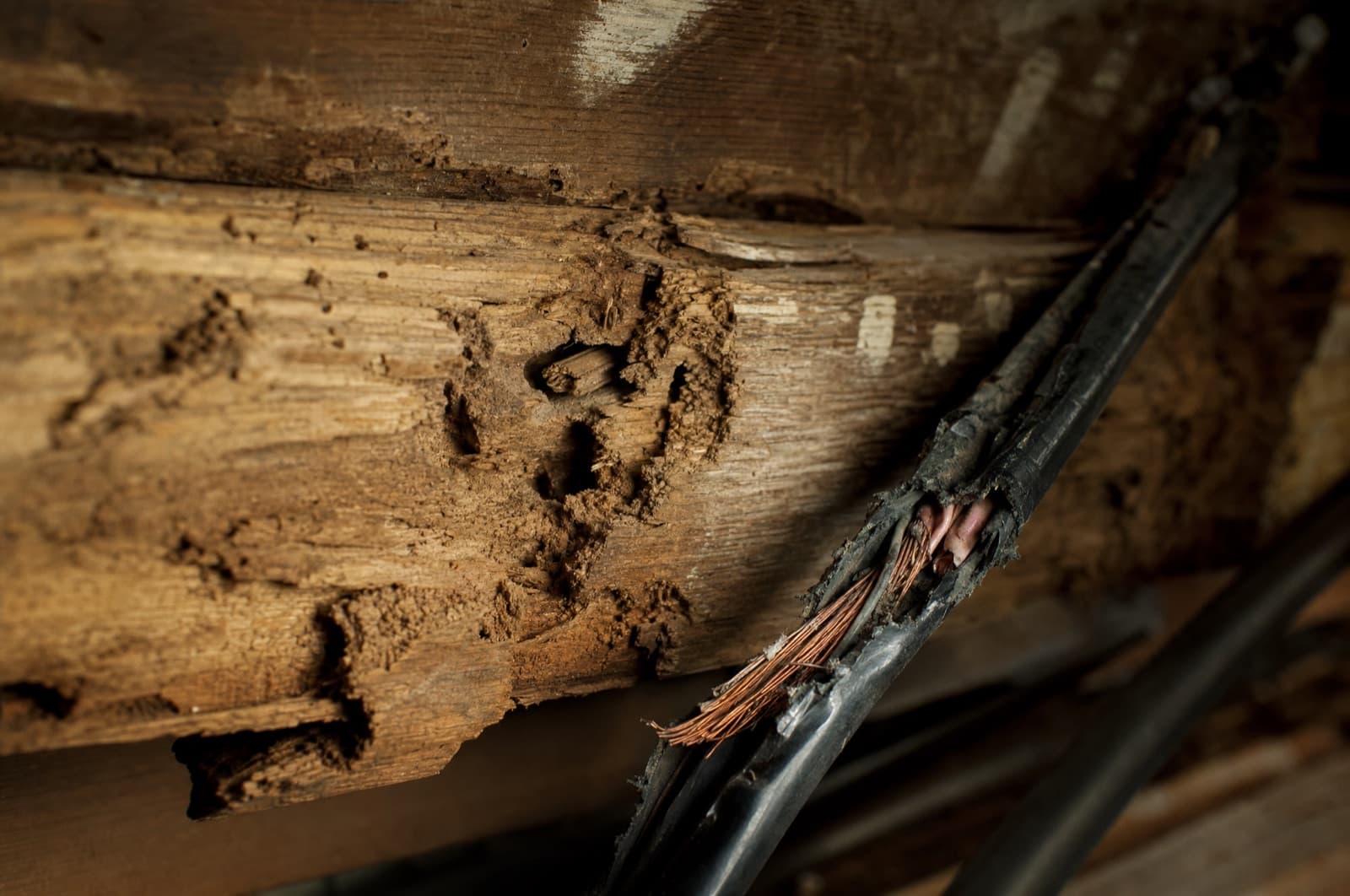
Pest damage evidence — a gnawed structural beam and a chewed electrical wire
Daniel Brady · NH-Licensed Pesticide Applicator · License #782664
Reviewed by Daniel Brady

Do pests ruin insulation efficiency?

Functional damage — real but localized; the whole-attic collapse story is unmeasured
Yes, but locally and specifically: wherever rodents nest, they compress and shred fiberglass or cellulose insulation, and since loft — the fluffy trapped-air layer — is what gives insulation its R-value, compaction in those spots genuinely reduces performance. They also contaminate insulation with urine and droppings. What the evidence doesn't support is the dramatic "your R-value is destroyed, replace the whole attic" framing common in insulation-contractor marketing — no independent study measures that scale of loss. The honest, evidence-based reason to remove heavily soiled insulation is contamination and odor, not a precisely quantified efficiency collapse.

At a glance

  • Can it?: Yes, but
  • How common: Occasional
  • Hype: Overstated
  • Evidence: Plausible, under-documented
The honest answer

The short of it

The verdict
Functional damage — real but localized; the whole-attic collapse story is unmeasured

Yes, in the areas rodents nest: they compress and shred fiberglass or cellulose, and loft is what gives insulation its R-value, so local performance genuinely suffers. The sweeping claim that your whole attic's R-value is 'destroyed' isn't backed by independent measurement.

The correction

What they claim vs. what the evidence supports

One shared severity track, two markers. The span between them is the hype delta — named out loud.

The claim — rodents in an attic or wall cavity ruining insulation's thermal efficiency

That rodent activity in an attic destroys the insulation's R-value across the board, driving dramatic home heating and cooling energy losses and requiring full replacement of the entire attic's insulation.

Where the claim comes from: Insulation-contractor marketing and pest-control blog copy, both of which have an incentive to frame the damage at whole-system scale rather than as a localized, contained issue.

Severity, 0–100
Hype says70
40Evidence says
Hype delta30point gapPlausible, under-documented
The evidence

The mechanism is physically sound and localized: compressing or shredding fiberglass or cellulose collapses the trapped-air pockets (loft) that give the material its insulating value, and this happens specifically where rodents nest and travel, not uniformly across an attic. Urine and droppings additionally saturate and contaminate the fibers in those same areas. What's missing from the record is independent, measured data on how much whole-system efficiency is actually lost — every specific percentage or dramatic energy-cost claim traces back to insulation-contractor and pest-industry marketing rather than a published measurement.

The gap

Compaction really does cut performance where rodents nest — that part is physically sound. But the specific numbers attached to it are sales copy, not measurement, and contamination — not a precisely quantified thermodynamic collapse — is the honest, evidence-based reason to replace heavily soiled insulation.

Damage assessment

What is actually harmed

Damage verdict
Functional damage — real but localized; the whole-attic collapse story is unmeasured
FunctionalCan it?Yes, but
The specimen
Pest
House mice, Norway rats, and roof rats (squirrels in attics contribute similarly)
What is in question
Fiberglass batt and blown cellulose insulation in attics and wall cavities
How common
Occasional
Evidence
Plausible, under-documented
Mechanism

Fiberglass and cellulose insulation get their R-value from loft — a layer of trapped, still air held in place by the fluffed-up fiber structure. Rodents nesting in insulation compress it underfoot and shred it for nesting material, both of which collapse that trapped-air structure locally. Urine and droppings then saturate the compressed fibers, which both reduces performance further in that spot and creates the odor and contamination that drives most real-world removal decisions. None of this is uniform: it concentrates specifically along travel routes and around nest sites, not across the entire insulated area.

Actually at risk3
  • Fiberglass batt or blown cellulose insulation loft and cleanliness specifically in nested or heavily traveled areas
  • The material's local R-value performance where compression and contamination have occurred
  • Indoor air quality, if disturbed droppings in insulation are dry-swept or vacuumed rather than wet-cleaned
Not at risk — despite the myth3
  • Insulation in parts of the attic or wall cavity rodents never reach or travel through
  • The building's structural framing, sheathing, or roof deck — insulation compaction has no bearing on structural integrity
  • The specific claim of whole-attic R-value "destruction" — no independent measurement supports that scale of loss
Worst realistic case
A contaminated section of attic insulation that needs professional removal and replacement after the rodents are excluded — a real, sometimes sizable job, but localized to where the rodents actually were, not the entire attic by default.

Assessed from: ICWDM / UNL Extension (rodent nesting damage to insulation); CDC hantavirus guidance (droppings-handling precaution); R-value-loss claims flagged as insulation-industry marketing rather than independent measurement

The compounding clock

Does it get worse if you ignore it?

Over time
Compounds slowly

It compounds slowly while rodents remain active in the insulation, and goes static once they're excluded — performance doesn't recover on its own, but it doesn't keep declining either.

The timeline
3 stages
  1. WeeksReversible

    Rodents establish a travel route or nest site within accessible insulation, with localized compression and the first contamination from droppings and urine.

  2. MonthsReversible

    The nested area expands somewhat as the population grows, with more insulation compressed and soiled along established routes and around the nest itself.

  3. One seasonReversible

    The affected section has settled into its compacted, contaminated state. Performance in that specific area is reduced and the material likely needs professional removal, but the damage has not spread to insulation outside the rodents' actual travel and nesting footprint.

What stops the clock
Excluding the rodents so no new compaction or contamination occurs. Once they're gone, the affected insulation doesn't recover its lost loft on its own, but it also doesn't continue losing performance — replacement or professional cleaning at that point is a contained, one-time job rather than an ongoing decline.
Repair scope

Who actually fixes this

Scope, not dollars — the honest answer to “how expensive is it,” routed to the right trade.

Who fixes it
Qualified remediation
Effort
A project

Heavily soiled insulation is a contamination and cleanup problem first, which calls for qualified remediation rather than a straightforward insulation swap, particularly given the hantavirus precaution around disturbed rodent droppings.

The right order
  1. 1
    Anchor: exclude and remove the rodents so no further compaction or contamination occurs
  2. 2
    Remediation service or insulation contractor: assess the affected area, safely remove contaminated insulation, and replace it
  3. 3
    Homeowner: do not disturb visibly soiled insulation yourself before it's assessed
Route by symptom
  • Licensed contractorThe nesting has been extensive enough to also affect vapor barriers or require broader attic work beyond insulation alone
Do not
  • Don't dry-sweep or vacuum soiled insulation yourself — wet-clean per CDC guidance or use a remediation service for anything beyond a very light case
  • Don't accept a whole-attic replacement recommendation without confirming the actual extent of the affected area first
  • Don't replace compressed or soiled insulation while rodents are still active in the space — it will be compacted and contaminated again
Where we help — and where we don't

Anchor excludes the rodents — the step that stops the problem from continuing to grow. We do not remove or replace insulation, and heavy contamination genuinely calls for a remediation professional rather than a standard insulation swap; we'll tell you that directly rather than take on work outside our lane.

In depth

The full picture

01

How loft actually works, and how rodents collapse it

Fiberglass and cellulose insulation don't insulate because of the material itself so much as because of the air trapped inside their fluffed-up structure — that trapped-air layer is called loft, and it's the physical basis for the material's R-value rating. When a rodent nests in insulation, it compresses that structure underfoot and shreds fibers to build a nest, both of which collapse the trapped-air pockets in that specific spot. This is straightforward building science, not a stretch, and it means the loss of performance is real wherever it happens — the honest question is how much of the attic that actually covers.

02

Why the dramatic version of this claim doesn't hold up

The leap from "rodents nested in my attic" to "my entire attic's R-value is destroyed" is where this claim goes further than the evidence supports. Compaction and contamination are localized to where rodents actually travel and nest — a rodent doesn't uniformly flatten an entire attic's worth of insulation, and most attics have far more square footage than any nesting population actually occupies. Every specific number attached to whole-system efficiency loss in insulation-contractor and pest-control marketing traces back to sales copy rather than an independently published measurement, which is a meaningful gap for a claim repeated this confidently.

03

The real, evidence-based reason to remove soiled insulation

The honest driver behind replacing rodent-affected insulation isn't a precisely quantified thermodynamic collapse — it's contamination. Urine and droppings saturate compressed fibers, creating both an odor problem and a genuine health consideration: CDC guidance is explicit that rodent droppings should never be dry-swept or vacuumed, since that risks aerosolizing hantavirus, and heavily soiled insulation falls squarely into that same caution. Removing and replacing that material is a sound decision — just for the reason of cleanliness and safety rather than a specific, measured R-value percentage.

Key takeaways
5 points
  • Yes, locally — rodents compress and contaminate insulation where they nest, and that genuinely reduces its R-value in those specific spots.
  • No independent measurement supports the dramatic 'your whole attic's R-value is destroyed' framing common in marketing.
  • The honest, evidence-based reason to remove heavily soiled insulation is contamination and odor, not a precisely quantified efficiency collapse.
  • The damage is confined to areas rodents actually traveled or nested in — it doesn't spread across an entire attic uniformly.
  • This compounds slowly while rodents are active and goes static once they're excluded — the affected insulation doesn't recover on its own, but it doesn't keep declining either.
New Hampshire context

Attic insulation and rodent pressure in New Hampshire homes

New Hampshire's cold-season indoor migration of mice and rats, which accelerates as temperatures fall toward Manchester's first hard frost, historically around October 19 to 29, makes attic insulation one of the most common nesting sites in the region. Homes with older, less-sealed attic access points or unfinished knee-wall spaces see this pattern most often. A fall attic check — before rodents move in for the season — is a more useful prevention step locally than any insulation product claim.

  • NH-licensed #782664

    Southern New Hampshire

  • Family-owned

    Since 2017

  • Honest routing

    Even when it isn’t us

We serve these communities

ManchesterNashuaConcordDerryBedfordSalemHudsonAmherstAuburnGoffstownHooksettLitchfieldLoudonMilfordBristol

Service Area Map

Southern New Hampshire

BristolPop. 3,200LoudonPop. 5,500ConcordPop. 43,900HooksettPop. 14,800GoffstownPop. 18,000AuburnPop. 5,700ManchesterPop. 115,600BedfordPop. 23,300LitchfieldPop. 8,500AmherstPop. 11,300DerryPop. 34,500MilfordPop. 15,700HudsonPop. 25,600NashuaPop. 91,100SalemPop. 30,000HQCityHover for info

Signs of rodents nesting in your attic insulation?

Anchor excludes the rodents first — then a remediation or insulation professional handles the affected material.

Follow-up questions

Frequently asked

Sources & citations(3)
  1. Internet Center for Wildlife Damage Management — House Mouse Damage Identification

    Rodent nesting damage to insulation, including compaction and contamination

    extensionverified 2026-07-16
  2. CDC — Hantavirus Prevention

    Do-not-dry-sweep guidance for rodent droppings, including in insulation

    govverified 2026-07-16
  3. UNL Nebraska Wildlife Damage Handbook — Rodents in Structures

    Rodent damage to insulation and building materials generally

    extensionverified 2026-07-16

Written & reviewed by

Verified

Daniel Brady

NH-Licensed Pesticide Applicator · License #782664 (NHDAMF, RSA 430)

Daniel Brady is the New Hampshire–licensed applicator behind Anchor Pest Services, a family-owned pest control company serving the Manchester area since 2017.

Verify license

Last updated Jul 2026

Honest pest help for New Hampshire homes

We Stop the Nesting. A Remediation Pro Handles the Insulation.

We won't tell you a pest treatment restores your insulation's R-value — that's a remediation or insulation contractor's job. What Anchor Pest Services does is exclude the rodents so the affected area stops growing, and we'll route you honestly from there. Family-owned since 2017, NH license #782664, serving Manchester, Nashua, Concord and nearby towns.

  • Honest advice — we route insulation removal and replacement to the right professional
  • NH-licensed applicators (#782664) — free inspection, same-day service
  • Rodent exclusion across southern and central New Hampshire

NH License #782664 · No obligation · We answer in person