
Skip to content
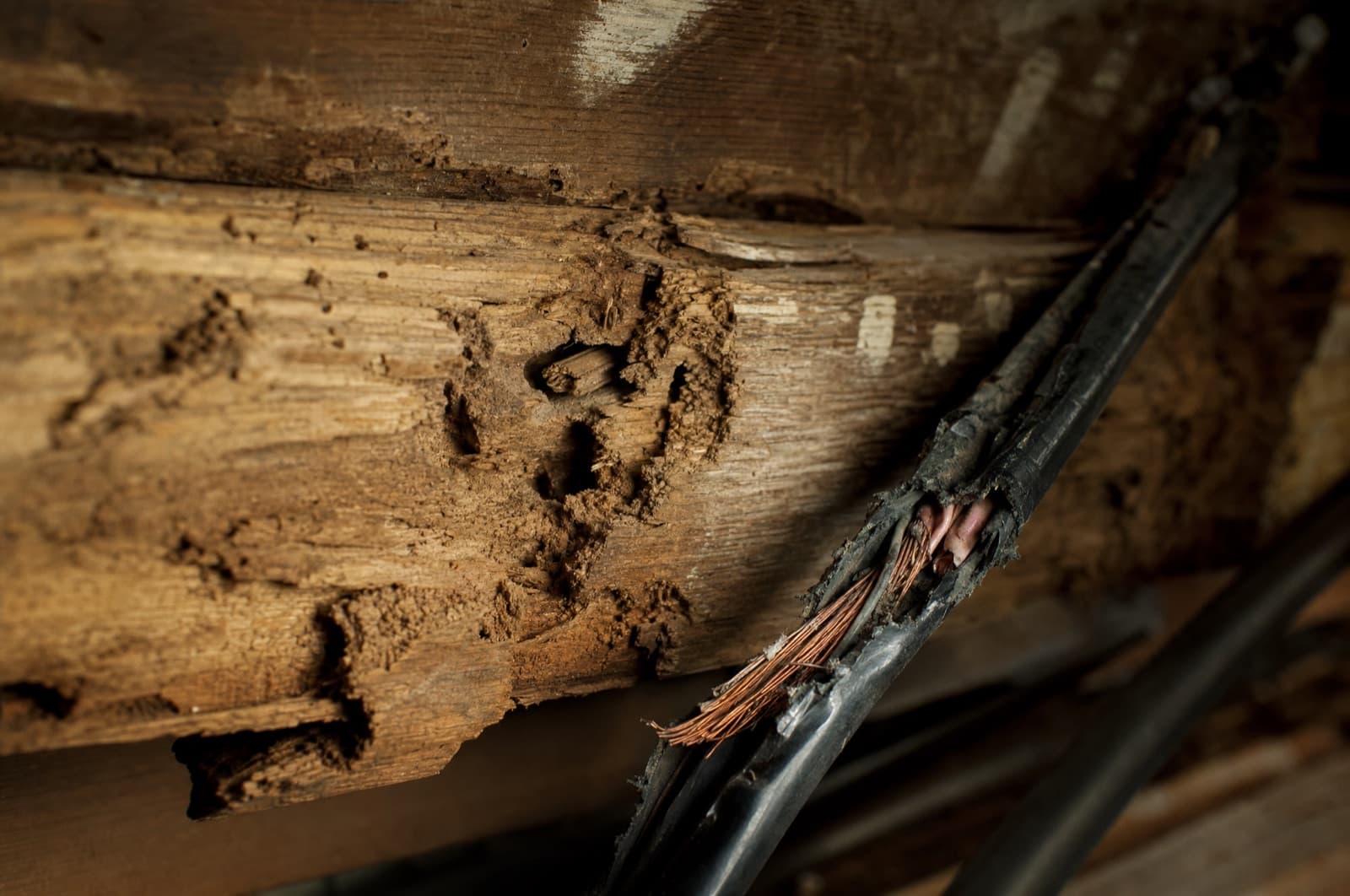
Pest damage evidence — a gnawed structural beam and a chewed electrical wire
Daniel Brady · NH-Licensed Pesticide Applicator · License #782664
Reviewed by Daniel Brady

Do pests in walls affect indoor air quality?

Functional effect — real, but specific
Yes, but in specific and documented ways rather than a generic sense. A dead animal decomposing inside a wall void releases strong odor compounds for days to weeks as it breaks down. Rodent and cockroach droppings, urine, and shed body parts are EPA-recognized indoor biological contaminants that trigger allergy and asthma symptoms, especially in children. Where bat or bird guano has accumulated in a void, it carries a real histoplasmosis risk. What isn't supported is the vague claim that pests in your walls make your air broadly 'toxic' — the genuine effects have names, and naming the right one tells you exactly what to do.

At a glance

  • Can it?: Yes, but
  • How common: Occasional
  • Hype: Overstated
  • Evidence: Well documented
The honest answer

The short of it

The verdict
Functional effect — real, but specific

Yes, pests in walls can affect indoor air quality — through named, documented mechanisms like cockroach and rodent allergens, decomposition odor, and guano-linked histoplasmosis, not a vague, undefined 'toxic air.'

The correction

What they claim vs. what the evidence supports

One shared severity track, two markers. The span between them is the hype delta — named out loud.

The claim — pests inside wall cavities degrading indoor air quality

That pests living in your walls contaminate your air and make the whole household sick — a vague 'toxic air' framing used by pest-control and air-quality-vendor marketing to sell broad, whole-house treatment.

Where the claim comes from: Pest-control and indoor-air-quality vendor blogs that lean on undefined 'contamination' language rather than naming a specific, documented mechanism.

Severity, 0–100
Hype says70
45Evidence says
Hype delta25point gapWell documented
The evidence

EPA lists pest droppings and body parts among recognized indoor biological contaminants tied to allergy and asthma triggers, cockroach allergen (Bla g 1 and Bla g 2) chief among them. A dead animal decomposing in an inaccessible wall void produces real, if temporary, odor as it breaks down. Bat or bird guano accumulation is a documented histoplasmosis substrate. But an ordinary, undiscovered insect presence in a wall — the kind most homes have somewhere — has minimal measurable air-quality effect on its own.

The gap

The mechanisms are real, but they have names — dead-animal odor, cockroach and rodent allergen, guano-borne fungus — not a mysterious, ambient poison. Name the specific one, and you know exactly what to do about it.

Damage assessment

What is actually harmed

Damage verdict
Functional effect — real, but specific
FunctionalCan it?Yes, but
The specimen
Pest
Rodents and cockroaches routinely, plus bats or birds where guano accumulates in wall voids
What is in question
Indoor air quality — allergen load, odor, and, where guano is present, fungal-spore exposure
How common
Occasional
Evidence
Well documented
Mechanism

Rodent and cockroach droppings, urine, shed skin, and body parts dry out and break into airborne particles when disturbed, and EPA identifies both as documented asthma and allergy triggers. A dead animal decomposing inside an inaccessible wall void releases decomposition-related odor compounds for days to weeks as the carcass breaks down, then fades as decomposition completes. Where bat or bird guano accumulates in a wall or attic void, it becomes a substrate for the fungus that causes histoplasmosis, a lung infection. None of these mechanisms require a large or obvious infestation — a persistent, low-level one is enough to matter for a sensitive occupant.

Actually at risk3
  • Indoor air comfort — odor from an active infestation or a decomposing carcass in a void
  • Allergy and asthma symptoms in sensitive occupants, especially children, from cockroach and rodent allergen exposure
  • A genuine histoplasmosis exposure where bat or bird guano has accumulated in a void
Not at risk — despite the myth3
  • The wall structure itself — none of these air-quality effects weaken framing, drywall, or insulation
  • Whole-house air rendered generally 'toxic' by an ordinary, undiscovered insect presence in a wall void
  • Most occupants of a home without allergy or asthma sensitivity and without a guano accumulation — routine, low-level pest presence isn't a measurable health event for them
Worst realistic case
A dead rodent decomposing in an inaccessible wall void producing weeks of strong odor, or a heavy, undiscovered guano accumulation that becomes a genuine histoplasmosis exposure hazard requiring professional cleanup — real, specific problems, not a generalized toxic-air event.

Assessed from: EPA — Biological Contaminants and Indoor Air Quality; EPA — Asthma Triggers: Gain Control; CDC (NIOSH) — Histoplasma in the Environment

The compounding clock

Does it get worse if you ignore it?

Over time
Compounds

It compounds while the pest source keeps depositing — and stops within days of resolving it.

The timeline
3 stages
  1. DaysReversible

    A recently deceased animal in a void begins releasing decomposition odor, which can be sharp and noticeable even before the source is located.

  2. WeeksReversible

    An active rodent or cockroach population keeps depositing droppings, urine, and shed skin, building a growing allergen load in nearby indoor air. A single dead-animal odor, by contrast, typically fades on its own within this window as the carcass dries out.

  3. MonthsReversible

    Undiscovered bat or bird guano in a void keeps building toward the accumulation scale that CDC associates with real histoplasmosis exposure risk if disturbed.

What stops the clock
Finding and removing the pest source — including any carcass — then cleaning the affected area. A dead-animal odor also resolves on its own as decomposition completes even without intervention, though the residue still needs cleaning afterward.
Repair scope

Who actually fixes this

Scope, not dollars — the honest answer to “how expensive is it,” routed to the right trade.

Who fixes it
Pest pro first
Effort
A trade visit

The air-quality effect doesn't stop until the pest source is found and removed — a live infestation just keeps depositing more allergen, and an undiscovered carcass keeps producing odor. Resolving the pest is the genuine first step, and it's squarely Anchor's lane.

The right order
  1. 1
    Locate and remove the pest source, including any carcass, inside the wall void
  2. 2
    Clean the affected area — vacuum droppings with a sealed-filter vacuum and wipe down surfaces
  3. 3
    Open the wall only if necessary to reach a carcass or heavy contamination, and only with the appropriate trade
Route by symptom
  • Licensed contractorA wall must be opened to reach an inaccessible carcass or heavy contamination
  • Qualified remediationGuano accumulation is heavy or long-standing
  • HVAC contractorDucts, rather than a wall void, are implicated in odor or allergen spread
Do not
  • Don't dry-sweep or vacuum a heavy droppings or guano accumulation without care — it aerosolizes allergens and, for guano, fungal spores
  • Don't assume a strong odor means your air is broadly 'toxic' — find the specific, named source instead of guessing
Where we help — and where we don't

Anchor genuinely handles the rodent or cockroach exclusion and removal that stops new contamination from being deposited. Anchor does not do HVAC work, structural wall-opening, or large-scale guano decontamination — those route to the right trade, and we'll say so rather than quote you for them.

Health risk

The health angle

Cockroach allergen (Bla g 1 and Bla g 2) and rodent allergen — both EPA-recognized asthma triggers, especially significant for children — plus histoplasmosis from accumulated bat or bird guano, and hantavirus, a rare but serious illness carried by deer mice, a species present in New Hampshire.

Caution
Who is at risk
  • Children and anyone with asthma or allergies, who are especially sensitive to cockroach and rodent allergen
  • Anyone disturbing a heavy, long-standing bat or bird guano accumulation
  • Anyone cleaning up rodent droppings or nesting material without care, given the rare but real hantavirus risk from deer mice
Precautions
  • Don't dry-sweep or vacuum droppings, nesting material, or guano — dampen first to avoid aerosolizing particles
  • Reduce clutter and clean regularly in areas with known pest activity to limit allergen buildup
  • Route any large or long-standing guano accumulation to a qualified remediation professional rather than DIY cleanup
Do not
  • Don't dry-sweep or vacuum heavy droppings or guano without dampening first
  • Don't attempt large-scale guano cleanup yourself
When to seek care

See a doctor if you or a family member develops new or worsening asthma or allergy symptoms in a home with known wall-void pest activity, or flu-like respiratory symptoms after disturbing droppings or a guano accumulation.

Health guidance from: EPA — Asthma Triggers: Gain Control; CDC (NIOSH) — Histoplasma in the Environment

In depth

The full picture

01

Yes, but name the mechanism, not the fear

The honest answer to this question resists a simple yes or no because 'indoor air quality' isn't one thing — it's a bundle of specific, separately documented effects. EPA formally recognizes pest droppings and body parts as indoor biological contaminants, and treats them the same way it treats other named allergen sources: something you address by identifying and removing the source, not by vaguely 'purifying the air.' The mistake most marketing copy makes is skipping straight from 'pests in your walls' to 'toxic air' without naming which of the real mechanisms is actually at work.

02

The two most common documented drivers: allergens and decomposition odor

The first driver is allergen load. EPA identifies cockroach allergen — specifically Bla g 1 and Bla g 2 — and rodent allergen as recognized asthma and allergy triggers, meaning droppings, shed skin, saliva, and body parts from an active infestation can measurably affect sensitive occupants, children in particular. This is a real, well-documented effect, and it scales with how active and how long-standing the infestation is.

The second driver is decomposition. A rodent or other small animal that dies inside an inaccessible wall void breaks down over days to weeks, releasing strong-smelling volatile compounds as it does. The smell is unmistakable and genuinely unpleasant, but it is also self-limiting — it peaks and then fades as decomposition completes, even though locating and removing the carcass (and cleaning the residue) is still the right move rather than waiting it out.

03

The guano exception — a real, separate risk

Where bat or bird guano has accumulated in a wall void or nearby attic space, the picture changes. CDC identifies dried bird and bat droppings as a substrate for the fungus that causes histoplasmosis, a lung infection, and specifically flags large or long-standing accumulations as something that should be handled by qualified remediation professionals rather than disturbed by a homeowner. This is the one mechanism on this page with real severity behind it, and it's precisely why heavy guano gets routed differently than an ordinary rodent or roach presence.

04

What this does NOT mean — the wall itself, and the 'toxic air' myth

None of these mechanisms weaken the wall's structure, and none of them render an entire home's air generally hazardous from a garden-variety, undiscovered pest presence. Most homes have some low-level insect activity in a wall void somewhere without any measurable health effect on the occupants. The honest correction is narrow but useful: if you're worried about air quality and pests in your walls, the productive question is 'which specific mechanism applies here' — allergen load, decomposition odor, or guano — not 'is my air poisoned,' which isn't a mechanism at all.

Key takeaways
5 points
  • Yes, pests in walls can affect indoor air quality — but through specific, named mechanisms, not a vague 'toxic air' effect.
  • Cockroach allergen (Bla g 1 and Bla g 2) and rodent allergen are EPA-recognized asthma and allergy triggers, especially for children.
  • A dead animal in a wall void produces real but self-limiting decomposition odor over days to weeks.
  • Bat or bird guano accumulation is the one genuinely serious risk here — a documented histoplasmosis substrate that routes to qualified remediation.
  • None of these effects weaken the wall itself, and an ordinary, undiscovered pest presence doesn't make a whole home's air hazardous.
New Hampshire context

What this looks like in a New Hampshire home

As overnight temperatures drop toward Manchester's first hard frost — historically around October 19 to 29, per NOAA — mice and other rodents push into walls and attics for warmth, which is when southern and central New Hampshire homeowners most often notice a new odor or a spike in allergy symptoms tied to a wall void. Deer mice, a species present in New Hampshire, are also the primary U.S. carrier of hantavirus, a rare but serious illness, which is a further reason droppings and nesting material from any rodent should be wet-cleaned rather than dry-swept, never vacuumed dry, and routed to professional cleanup when contamination is heavy.

  • NH-licensed #782664

    Southern New Hampshire

  • Family-owned

    Since 2017

  • Honest routing

    Even when it isn’t us

We serve these communities

ManchesterNashuaConcordDerryBedfordSalemHudsonAmherstAuburnGoffstownHooksettLitchfieldLoudonMilfordBristol

Service Area Map

Southern New Hampshire

BristolPop. 3,200LoudonPop. 5,500ConcordPop. 43,900HooksettPop. 14,800GoffstownPop. 18,000AuburnPop. 5,700ManchesterPop. 115,600BedfordPop. 23,300LitchfieldPop. 8,500AmherstPop. 11,300DerryPop. 34,500MilfordPop. 15,700HudsonPop. 25,600NashuaPop. 91,100SalemPop. 30,000HQCityHover for info

Odor or allergy symptoms tied to a wall? Anchor finds the source.

We resolve the rodent or roach activity causing it. HVAC work, structural openings, and guano cleanup route to the right trade.

Follow-up questions

Frequently asked

Sources & citations(4)
  1. EPA — Biological Contaminants and Indoor Air Quality

    Pests and their droppings/body parts as recognized indoor biological contaminants tied to asthma and allergy

    govverified 2026-07-16
  2. EPA — Asthma Triggers: Gain Control

    Cockroach allergen (Bla g 1/Bla g 2) and rodent allergen as documented asthma triggers, especially in children

    govverified 2026-07-16
  3. CDC (NIOSH) — Histoplasma in the Environment

    Bird and bat droppings as a histoplasmosis substrate; large accumulations routed to professional cleanup

    govverified 2026-07-16
  4. CDC — About Hantavirus

    Deer mice as the primary U.S. hantavirus carrier; wet-cleaning guidance for rodent droppings and nesting material

    govverified 2026-07-16

Written & reviewed by

Verified

Daniel Brady

NH-Licensed Pesticide Applicator · License #782664 (NHDAMF, RSA 430)

Daniel Brady is the New Hampshire–licensed applicator behind Anchor Pest Services, a family-owned pest control company serving the Manchester area since 2017.

Verify license

Last updated Jul 2026

Honest pest help for New Hampshire homes

We Find the Source. We'll Tell You Who Handles the Rest.

Air-quality effects from pests in walls have specific causes, and Anchor resolves the rodent or cockroach activity behind most of them. We don't do HVAC work, structural wall-opening, or large-scale guano decontamination, and we'll route you to the right specialist for any of those. Family-owned since 2017, NH license #782664, serving Manchester, Nashua, Concord and nearby towns.

  • Honest advice — we name the specific mechanism instead of a vague 'toxic air' scare
  • NH-licensed applicators (#782664) — free inspection, same-day service
  • Rodent and cockroach exclusion across southern and central New Hampshire

NH License #782664 · No obligation · We answer in person