
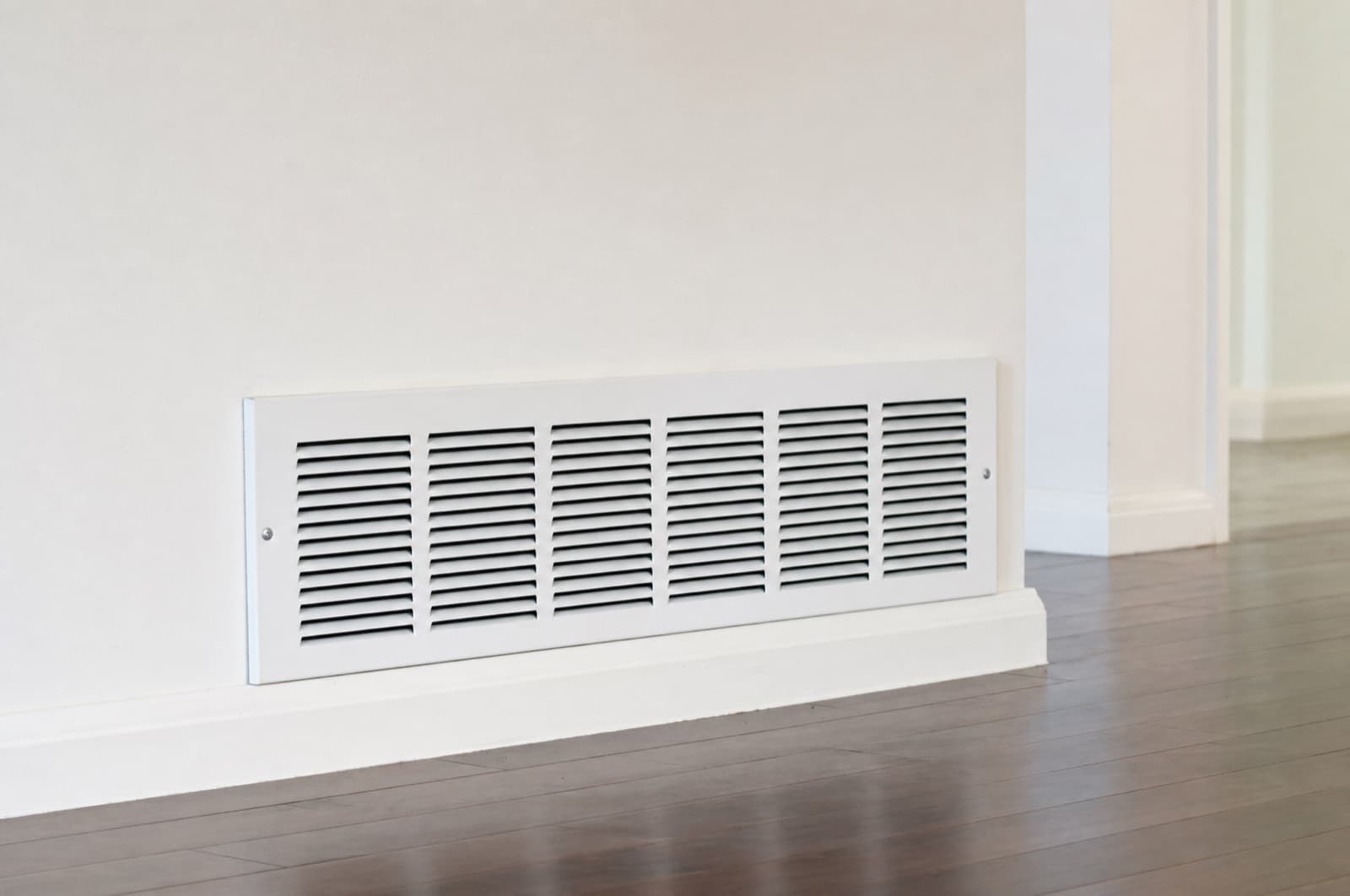
Dead Animal Smell in Your House: How to Find It and Get Rid of It
A pungent, sickly-sweet-then-rotting smell concentrated in one spot is almost always a dead rodent decomposing in a wall void, ceiling, crawl space, or duct. The smell builds over a few days, peaks around days 3–10, then fades over a few weeks as the carcass dries — that time pattern is the reliable tell that it's decay and not a plumbing or moisture problem. Locate it by finding where the odor is strongest and watching for clusters of large, slow blow flies at a window or wall; a single mouse often clears in about ten days, while a rat or squirrel near a warm pipe can smell for weeks. If the odor blasts through the house when the furnace or AC runs, the carcass is in the ductwork. One caution: a rotten-EGG smell is not decay — treat that as possible sewer gas or a natural-gas leak, not a dead animal.
That unmistakable, sickly-sweet rotting smell that suddenly appears in one room almost always means one thing: a mouse, rat, squirrel, or other small animal has died somewhere you can't see. In homes across Manchester, Nashua, and Concord, the most common spots are inside wall cavities, beneath subfloor insulation, in attic rafter bays, and in HVAC duct chases — and pinning down exactly where is what decides how fast you're rid of it.
At a Glance
- Diagnosing: Dead-animal / decay smell
- Top cause: Pest
A dead rodent decomposing in a wall void, ceiling, crawl space, or HVAC duct.
Ranked causes — and how to tell them apart
Like a doctor's differential: the candidate causes for this smell, ranked most-likely first, each with the tell-tale sign that distinguishes it and who actually fixes it.
- Most likelyPest
Dead rodent in a wall, ceiling, or crawl space
How to tell it's this
The smell localizes to one stud bay or corner; large, slow blow flies often appear in a closed room within days; the spot may feel faintly warm.
Who fixes itPest → AnchorLocate, open the void at the confirmed spot, remove, and clean up.
- Most likelyHVAC
Dead animal in the HVAC ductwork or a return chase
How to tell it's this
The odor blasts through the whole house (or a car cabin) whenever the blower runs, and is strongest at floor-level vents.
Who fixes itPest → AnchorA pro removes the carcass and nesting; an HVAC tech is needed if it's sealed inside ducting or the coil.
- PossiblePest
Larger wildlife (squirrel, raccoon) in the attic, wall, or under a deck
How to tell it's this
A much stronger odor that lasts weeks, not days; you may have heard scratching or scrabbling beforehand.
Who fixes itPest → AnchorRemoval plus wildlife exclusion so it doesn't recur.
- PossiblePlumbing / Sewer
Sewer gas mistaken for decay
How to tell it's this
A rotten-egg/sulfur note (not sweet decay), worst near a seldom-used drain, that comes and goes with the weather.
Who fixes itPlumberOften a dry P-trap — refill it with a quart of water; if it persists, call a plumber.
- Less likelyDecay / Food
Rotting food, garbage, or a disposal
How to tell it's this
The smell traces to the kitchen, fridge, or trash rather than a wall, and clears when you remove the source.
Who fixes itYou can handle itCheck the fridge, disposal, and hidden trash before opening any walls.
What each clue points to
Notice one of these and you can narrow the differential fast.
- Pest
If you notice: Concentrated in one specific spot
A decay odor clearly strongest at one corner, stud bay, or ceiling area — the more localized it is, the closer the carcass.
- Pest
If you notice: Builds, peaks, then slowly fades over days-to-weeks
The natural decomposition curve of a dead animal. Moisture and plumbing smells don't follow this time pattern, which makes it a reliable tell.
- HVAC
If you notice: Odor surges when the furnace, AC, or car fan turns on
A carcass in the ductwork, a return chase, or a cabin-air blower housing — the airflow is carrying the smell.
- Pest
If you notice: Clusters of big, slow black flies at a window or wall
Blow flies have found the carcass and maggots have hatched — the source is close to where they gather.
How Anchor finds and fixes it
The goal is to find the animal precisely before opening anything, so nothing is damaged unnecessarily. Here's how a technician works it:
Localize before cutting
Map the smell along baseboards and stud bays, follow blow-fly activity, and confirm with a thermal camera (a carcass and its insect activity often read as a temperature anomaly) and a borescope through a small hole — so the exact spot is known before any wall is opened.
Open the void and remove the source
Make a controlled cut at the confirmed spot, low and large enough to reach left and right, then remove the carcass and any contaminated nesting material.
Disinfect and enzymatic cleanup
Following CDC rodent-cleanup practice, don't vacuum or sweep dry material — dampen droppings and urine with an EPA-registered disinfectant or a diluted bleach solution, let it soak, then wipe and bag it, and use enzyme-based cleaners to break down odor compounds on porous surfaces.
Replace what holds the smell
Insulation, drywall, and carpet padding soak up odor and often can't be cleaned — heavily soiled material gets replaced, then the opening is sealed and patched.
Exclude so it doesn't happen again
Find and seal the entry points that let the animal in, so the next one doesn't die in the same wall or duct chase.
Once the source is out and the area is cleaned, a single-mouse odor usually clears within about ten days; absorbent materials left in place are the usual reason a smell lingers longer.
Can't find what died — or don't want to open the wall?
Anchor's NH technicians pinpoint the source with thermal + borescope tools, remove it, and clean up. Free inspection, same-day service.
Who to call for the other causes
The honest routing: when the smell points somewhere other than a pest, here's the right trade and the conservative next step.
- Plumber
The smell is a rotten-egg/sulfur note near a drain, not sweet decay
Refill the drain's P-trap with a quart of water first; if it persists, it's a plumbing job, not a pest job.
- HVAC tech
The carcass is sealed inside a coil or duct run you can't reach
An HVAC technician can open and clean sealed ducting or the coil that a pest tech can't access.
Why this peaks in fall and winter in NH
In New Hampshire, house mice, deer mice, and Norway rats push indoors as nights drop below about 45°F — typically September into October, peaking December through February. Older Manchester, Nashua, and Concord homes with fieldstone foundations and balloon-framed walls let rodents travel from basement to attic, so wall-void and duct deaths cluster in the heating season.
NH-licensed applicator #782664 (NHDAMF, RSA 430) · NEPMA member · family-owned since 2017.
Frequently asked
Sources(3)
- [1]CDC — Clean Up and Prevent Rodent Infestations (safe cleanup, no dry vacuuming/sweeping)
Disinfect-before-cleanup protocol; do not vacuum/sweep dry rodent waste
gov - [2]CDC — About Hantavirus (avoid stirring up dry droppings/nests)
Health rationale for damp-cleaning rodent contamination
gov - [3]EPA — Enzyme/biological odor removal and mold-and-moisture basics
Porous materials that hold odor may need replacement rather than cleaning
gov
Written & reviewed by
VerifiedDaniel Brady
NH-Licensed Pesticide Applicator · License #782664 (NHDAMF, RSA 430)
Daniel Brady is the New Hampshire–licensed applicator behind Anchor Pest Services, a family-owned pest control company serving the Manchester area since 2017.
Last updated 2026-07-14
Odor-Source Diagnosis & Removal
Find It, Remove It, and Keep It From Coming Back
A dead-animal smell means a source you can't see — and often an entry point that will let the next one in. Anchor Pest Services locates and removes the source, cleans the area, and seals the way in, across southern and central New Hampshire. Family-owned since 2017, NH license #782664.
- Thermal + borescope source location (minimal cutting)
- CDC-aligned cleanup + enzymatic odor removal
- Entry-point sealing so it doesn't recur
NH License #782664 · No obligation · We answer in person
Your next step
- Related guide
What Is That Smell in My Walls or Ceiling?
Read the answer - Related guide
Why Do My Vents Smell Bad? Common Causes and How to Fix Them
Read the answer - Related guide
Why Does It Smell After Pest Treatment? What's Normal and What's Not
Read the answer - Related guide
Why Does My Attic Smell Bad? Common Causes and What to Do
Read the answer - Related guide
What Is That Smell Outside My Home? Yard, Porch & Outdoor Odors Explained
Read the answer - Related guide
Do pests in walls affect indoor air quality?
Read the answer