
Skip to content
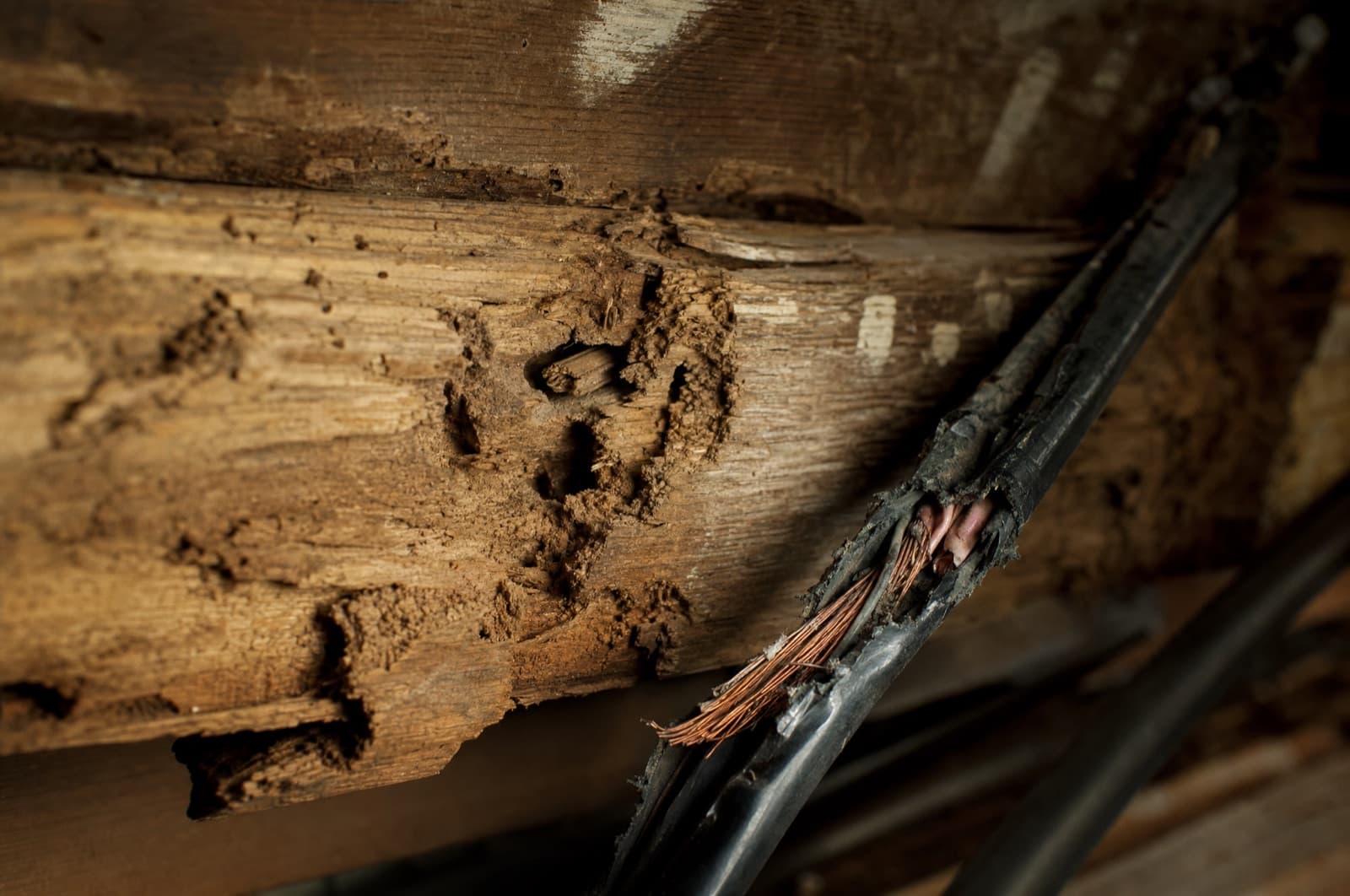
Pest damage evidence — a gnawed structural beam and a chewed electrical wire
Daniel Brady · NH-Licensed Pesticide Applicator · License #782664
Reviewed by Daniel Brady

Do rodents chew through drywall or insulation?

Functional damage — real, but not structural
Yes. Mice and rats gnaw entry holes through drywall and shred and compact fiberglass or cellulose insulation to build nests. A drywall hole is a cosmetic patch job — it does not weaken the wall's framing. Nested insulation loses loft where it's compressed, which reduces its effectiveness locally, and urine and droppings contaminate it; that contamination, not a measured collapse in whole-attic R-value, is the honest reason heavily soiled insulation gets removed. New damage stops once the rodents are excluded.

At a glance

  • Can it?: Yes
  • How common: Routine
  • Hype: Overstated
  • Evidence: Plausible, under-documented
The honest answer

The short of it

The verdict
Functional damage — real, but not structural

Yes — mice and rats gnaw drywall and shred insulation to nest, but a chewed hole is cosmetic and doesn't weaken a stud; the real reason to replace soiled insulation is contamination, not a measured loss of R-value.

The correction

What they claim vs. what the evidence supports

One shared severity track, two markers. The span between them is the hype delta — named out loud.

The claim — rodents chewing drywall and destroying attic or wall insulation

Insulation-contractor marketing and pest blogs commonly imply rodents can collapse an entire attic's R-value and that any nesting activity means wholesale insulation replacement is mandatory.

Where the claim comes from: Insulation-contractor sales copy and pest blogs that use dramatic energy-loss framing to justify a full-attic replacement.

Severity, 0–100
Hype says70
42Evidence says
Hype delta28point gapPlausible, under-documented
The evidence

Localized loft loss and contamination are real and well documented — rodents do compress and shred insulation where they nest and do soil it with urine and droppings. But no independent, peer-reviewed measurement establishes the magnitude of whole-attic R-value loss from typical rodent activity; every specific percentage claim traces back to contractor marketing rather than measurement. The evidence-based reason to remove heavily soiled insulation is contamination and odor control, not a quantified thermal-performance collapse.

The gap

They really do compress and contaminate insulation where they nest — that part is earned. But "your R-value is destroyed, replace the whole attic" is a sales line, not a measurement; the honest reason to pull soiled insulation is what's in it, not a number nobody has actually measured.

Damage assessment

What is actually harmed

Damage verdict
Functional damage — real, but not structural
FunctionalCan it?Yes
The specimen
Pest
House mice, Norway rats, and roof rats
What is in question
Drywall (wall and ceiling surfaces) and fiberglass or cellulose insulation
How common
Routine
Evidence
Plausible, under-documented
Mechanism

Rodents gnaw through drywall's paper facing and gypsum core to open or enlarge a travel route between wall cavities, and they shred and compact loose-fill or batt insulation to build nests, collapsing the trapped air pockets that give insulation its R-value. Urine and droppings then saturate the fibers in and around nesting sites.

Actually at risk4
  • Drywall surface at gnaw and entry points (a cosmetic hole, not a structural breach)
  • Insulation loft and R-value in the specific areas rodents nest and travel
  • Insulation cleanliness — urine and droppings contaminate the fibers
  • Indoor air quality where disturbed droppings become airborne
Not at risk — despite the myth4
  • Wall studs and structural framing — a gnawed hole doesn't weaken a stud
  • Ceiling joists and roof trusses
  • Insulation outside the areas rodents actually nest or travel
  • The building's structural integrity in any measurable way
Worst realistic case
A contaminated section of attic or wall insulation that needs professional removal and sanitizing, plus a handful of drywall patches — a genuine repair project, not a structural failure.

Assessed from: ICWDM / Purdue Extension (structural gnawing); UNL Extension G1105 (damage patterns); CDC hantavirus guidance (contamination handling)

The compounding clock

Does it get worse if you ignore it?

Over time
Compounds slowly

It compounds slowly while rodents remain — and goes flat the day they're excluded and the area is cleaned.

The timeline
3 stages
  1. DaysReversible

    Gnawing opens or enlarges a travel hole through drywall; nesting begins compressing insulation in one localized spot.

  2. WeeksReversible

    Nesting activity spreads to a few more spots along established runways; urine and droppings accumulate in the nested insulation.

  3. MonthsReversible

    Contamination has spread across a meaningful section of the attic or wall cavity, and drywall may show several holes; the building itself remains structurally unaffected.

What stops the clock
Exclusion — sealing every entry point with steel, mortar, or adequate-gauge hardware cloth and removing the rodents. Once they're gone, the contaminated area can be cleaned or replaced and nothing new develops.
Repair scope

Who actually fixes this

Scope, not dollars — the honest answer to “how expensive is it,” routed to the right trade.

Who fixes it
Pest pro first
Effort
An afternoon

Patching drywall or swapping insulation while rodents are still active just gives them a fresh target. Exclusion has to come first.

The right order
  1. 1
    Anchor: exclude and remove the rodents, sealing entries with materials they can't breach
  2. 2
    Wet-clean (never dry-sweep or vacuum) light droppings per CDC guidance, or call in remediation for heavy contamination
  3. 3
    Patch drywall yourself or with a contractor; bring in an insulation contractor if a section needs professional replacement
Route by symptom
  • You — a DIY patchThe damage is a single small drywall hole with no significant nesting behind it
  • Qualified remediationInsulation is heavily soiled with urine and droppings across a large area
  • Licensed contractorA large section of attic or wall insulation needs professional replacement
Do not
  • Don't dry-sweep or vacuum rodent droppings — CDC guidance calls for wet-cleaning to avoid airborne exposure
  • Don't patch drywall or replace insulation while rodents are still actively nesting nearby
Where we help — and where we don't

Anchor excludes the rodents and seals the entries — that's the step that keeps the repair from happening twice. We do not do insulation replacement or large-scale contamination cleanup; that's remediation or an insulation contractor's work.

Health risk

The health angle

Hantavirus Pulmonary Syndrome, from inhaling aerosolized deer-mouse urine or droppings — rare but serious

Caution
Who is at risk
  • Anyone disturbing dry rodent droppings or nesting material in an enclosed space like an attic or crawlspace
Precautions
  • Never dry-sweep or vacuum droppings — wet them down first per CDC guidance
  • Ventilate the space for at least 30 minutes before entering
  • Wear gloves when handling contaminated material or insulation
Do not
  • Don't dry-sweep or vacuum droppings
  • Don't handle heavy contamination without ventilating the space first
When to seek care

See a doctor promptly if flu-like symptoms develop within weeks of cleaning a rodent-infested space, and mention the exposure. For general exposure questions, contact the Northern New England Poison Center at 1-800-222-1222.

Health guidance from: CDC — About Hantavirus / Hantavirus Prevention

In depth

The full picture

01

What actually gets chewed — and what doesn't

Mice and rats gnaw through drywall for the same reason they gnaw through anything: an accessible edge along a travel route, whether that's an existing gap around a pipe penetration or a soft spot they can start on. The paper facing and gypsum core offer no resistance, so an entry hole can appear quickly once rodents are active in a wall or ceiling cavity.

What that hole does not do is touch the wall's actual framing. The studs, plates, and structural members behind drywall are wood, not gypsum, and a rodent's gnawing at a drywall surface has no bearing on the wall's structural capacity. This is cosmetic damage to a finish surface, not a structural event.

02

Insulation: contamination is the real story, not a mystery R-value number

Where rodents nest, they shred and compact fiberglass or cellulose insulation, and compaction genuinely does reduce a material's R-value, since insulating performance comes from trapped air pockets that compression collapses. That mechanism is physically sound and not in dispute.

What is in dispute is the specific magnitude insulation-contractor marketing likes to quote — claims of dramatic whole-attic energy loss or mandatory full-attic replacement don't trace to any independent measurement in the literature we could verify; they trace to sales copy. The honest, evidence-based reason to remove heavily soiled insulation is what's actually in it — urine and droppings — not a precisely quantified thermal-performance collapse nobody has actually measured in typical homes.

03

The health angle: don't sweep, wet-clean

Deer mice can carry Sin Nombre hantavirus, and the CDC is unambiguous that dry-sweeping or vacuuming rodent droppings can aerosolize the virus and is the exposure route to avoid. The correct approach is ventilating the space, then wetting droppings and nesting material down before removal, following CDC guidance, or handing heavy contamination to a qualified remediation service.

This is the health dimension of rodent gnawing that gets far less attention than the fire or structural framing — and it's the one with the clearest documented mechanism of the whole cluster.

04

Functional damage, not structural

Putting it together: a gnawed drywall hole is cosmetic, nested and soiled insulation is functional (it loses local performance and needs cleaning or replacement), and neither one touches the building's structural integrity. The pests that genuinely threaten structure — subterranean termites, powderpost beetles — work by an entirely different mechanism on entirely different materials. Rodent gnawing through drywall and insulation is real, worth fixing, and honestly smaller in scope than the legacy "your house is falling apart" framing suggests.

Key takeaways
5 points
  • Yes, rodents gnaw drywall and shred insulation to nest — it's routine wherever they're established.
  • A chewed drywall hole is cosmetic; it doesn't weaken a stud or the wall's framing.
  • Insulation loses loft and gets contaminated where rodents nest — but "your R-value is destroyed" claims are marketing, not measurement.
  • Never dry-sweep rodent droppings — wet-clean per CDC guidance to avoid hantavirus exposure.
  • Exclude the rodents first; only then patch drywall or replace insulation.
New Hampshire context

What this looks like in New Hampshire attics

Southern and central New Hampshire's older housing stock commonly has fiberglass batt insulation in attics that were finished decades apart from the rest of the house, with soffit vents, rim joists, and knee-wall gaps that widen with age. As overnight temperatures drop toward Manchester's first hard frost — historically around October 19 to 29 — mice and rats push indoors and gravitate to exactly those attic and knee-wall spaces, where drywall gnawing and insulation nesting typically show up first.

  • NH-licensed #782664

    Southern New Hampshire

  • Family-owned

    Since 2017

  • Honest routing

    Even when it isn’t us

We serve these communities

ManchesterNashuaConcordDerryBedfordSalemHudsonAmherstAuburnGoffstownHooksettLitchfieldLoudonMilfordBristol

Service Area Map

Southern New Hampshire

BristolPop. 3,200LoudonPop. 5,500ConcordPop. 43,900HooksettPop. 14,800GoffstownPop. 18,000AuburnPop. 5,700ManchesterPop. 115,600BedfordPop. 23,300LitchfieldPop. 8,500AmherstPop. 11,300DerryPop. 34,500MilfordPop. 15,700HudsonPop. 25,600NashuaPop. 91,100SalemPop. 30,000HQCityHover for info

Rodents chewing your drywall or nesting in your insulation? Stop the source first.

Anchor handles exclusion and removal — the step that keeps every drywall patch and insulation cleanup from happening twice.

Follow-up questions

Frequently asked

Sources & citations(5)
  1. Internet Center for Wildlife Damage Management — House Mouse Damage Identification

    Rodent gnawing and nesting damage to drywall and insulation

    extensionverified 2026-07-16
  2. University of Nebraska–Lincoln Extension — Controlling House Mice (G1105)

    Rodent damage patterns to structures and insulation

    extensionverified 2026-07-16
  3. CDC — About Hantavirus

    Deer mouse Sin Nombre hantavirus and disease severity

    govverified 2026-07-16
  4. CDC — Hantavirus Prevention

    Wet-clean, do-not-dry-sweep guidance for contaminated material

    govverified 2026-07-16
  5. NFPA — Animals Fact Sheet

    Context: NFPA's genuine animal-related home-fire figure, relevant to this cluster's wiring-fire correction

    fireverified 2026-07-16

Written & reviewed by

Verified

Daniel Brady

NH-Licensed Pesticide Applicator · License #782664 (NHDAMF, RSA 430)

Daniel Brady is the New Hampshire–licensed applicator behind Anchor Pest Services, a family-owned pest control company serving the Manchester area since 2017.

Verify license

Last updated Jul 2026

Honest pest help for New Hampshire homes

We Stop the Rodents. You Won't Get an Insulation Upsell.

A heavily soiled attic is a remediation or insulation contractor's job, and a drywall patch is homeowner-grade — we won't quote you for either. What Anchor Pest Services does is remove the rodents and seal every entry with steel, mortar, and mesh they can't breach. Family-owned since 2017, NH license #782664, serving Manchester, Nashua, Concord and nearby towns.

  • Honest advice — we route you to the right fix, even when it isn't us
  • NH-licensed applicators (#782664) — free inspection, same-day service
  • Rodent exclusion across southern and central New Hampshire

NH License #782664 · No obligation · We answer in person