
Skip to content
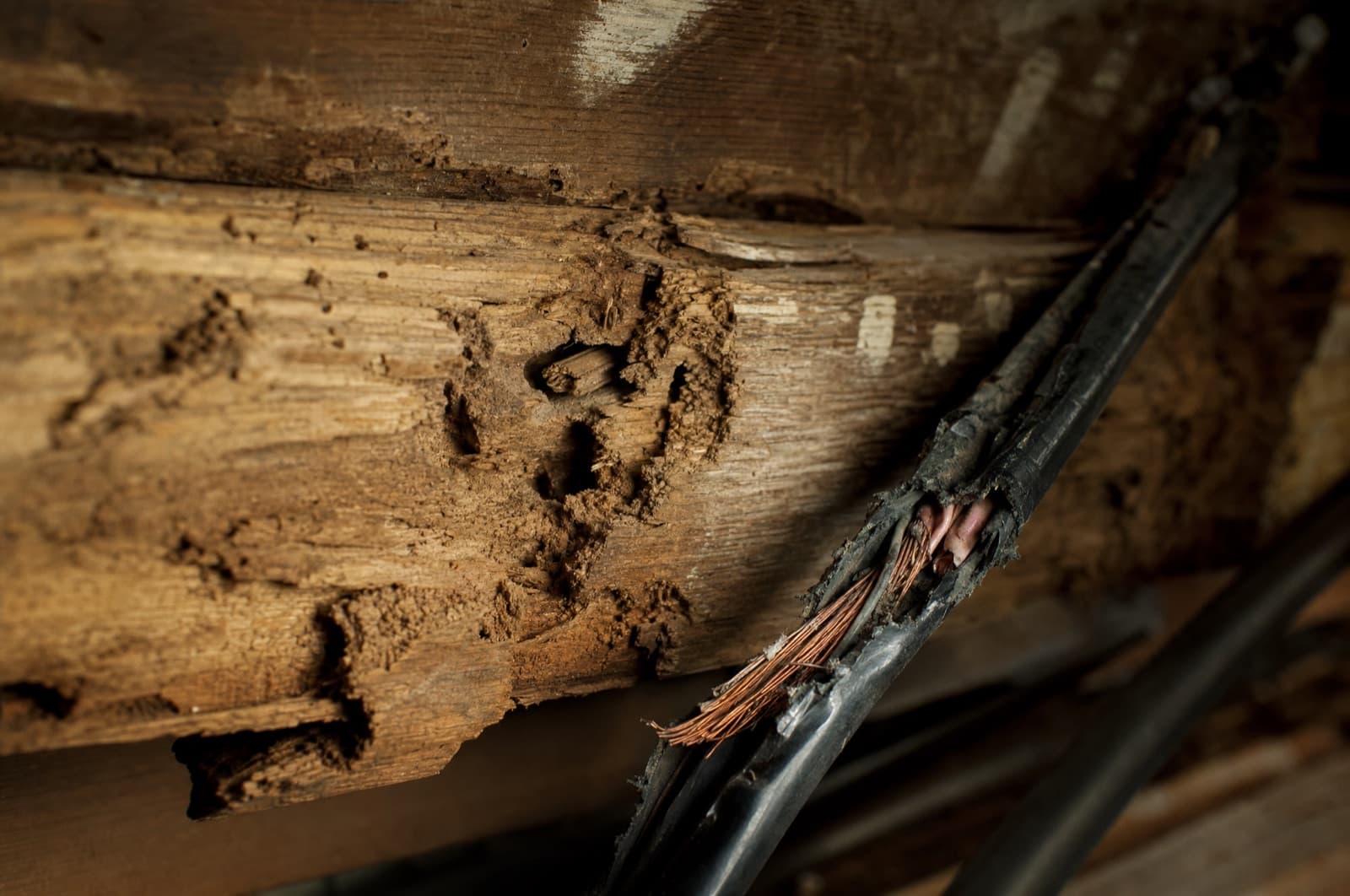
Pest damage evidence — a gnawed structural beam and a chewed electrical wire
Daniel Brady · NH-Licensed Pesticide Applicator · License #782664
Reviewed by Daniel Brady

Why do squirrels damage attics and insulation?

Functional damage — real, driven by denning, not malice
Squirrels enter attics chiefly to den and raise young, timed to their two annual breeding peaks — roughly February through May and August through October — because an attic offers exactly what a tree cavity would: warmth, dryness, darkness, and safety from predators. Once inside, a nesting female shreds fiberglass or cellulose insulation for bedding and contaminates it with urine and droppings, while the obligate, continuous growth of a squirrel's incisors drives it to gnaw wood, ductwork, and wiring regardless of hunger. The result is real functional damage — degraded insulation and exposed wiring — not structural collapse, and it stops once the squirrels are excluded.

At a glance

  • Can it?: Yes
  • How common: Routine
  • Hype: Overstated
  • Evidence: Well documented
The honest answer

The short of it

The verdict
Functional damage — real, driven by denning, not malice

Squirrels get into attics to den and raise young, because an attic mimics the warm, dry, predator-free tree cavity they'd use in the wild. Once inside, they shred insulation for bedding and gnaw wood, ductwork, and wiring as obligate tooth maintenance — real functional damage, not structural ruin or a certain house fire.

The correction

What they claim vs. what the evidence supports

One shared severity track, two markers. The span between them is the hype delta — named out loud.

The claim — why squirrels get into attics and tear up insulation and wiring

That any squirrel in an attic means imminent structural ruin and a near-certain electrical fire — a framing common in wildlife-removal and insulation-replacement marketing designed to create urgency.

Where the claim comes from: Wildlife-removal and insulation-contractor marketing blogs.

Severity, 0–100
Hype says75
50Evidence says
Hype delta25point gapWell documented
The evidence

Insulation loss (R-value and contamination) and gnawed wiring are real, routine, and well documented wherever a squirrel actively nests in an attic. But squirrels do not consume or structurally weaken the frame, and fire remains the rare tail outcome of chewed, energized wire rather than the routine result of squirrel presence.

The gap

The mess and the wire risk are real and worth fixing — but 'structural ruin and certain fire' overshoots what the evidence supports. The honest story is a maternity den shredding insulation for bedding, not a demolition crew.

Damage assessment

What is actually harmed

Damage verdict
Functional damage — real, driven by denning, not malice
FunctionalCan it?Yes
The specimen
Pest
Eastern gray squirrels (and red squirrels) denning in attics
What is in question
Attic insulation, wiring insulation, ductwork, and stored goods
How common
Routine
Evidence
Well documented
Mechanism

Squirrels enter attics chiefly to den and raise young, timed to their two annual breeding peaks — roughly February through May and August through October — because an attic mimics the elevated, predator-free tree cavity they'd use in the wild: warm, dry, and safe. Once inside, a nesting female tears up fiberglass or cellulose insulation for bedding, and successive litters mean the activity compounds across a season. Alongside nesting, a squirrel's incisors grow continuously and must be worn down regardless of hunger, so it also gnaws wood, ductwork, and any wiring within reach as obligate maintenance, not malice. Where that gnawing strips insulation off an energized conductor, the exposed wire touching wood or insulation is a recognized ignition pathway — real, but the rare tail outcome rather than the routine result of a squirrel simply being present (see our page on squirrels chewing roof vents and wires for the full breakdown of that mechanism and the invented fire statistic often attached to it).

Actually at risk4
  • Insulation R-value and cleanliness — shredded for bedding and contaminated with urine and droppings
  • Wiring insulation throughout the occupied attic
  • Ductwork and any stored items kept in the attic
  • Entry points themselves — soffits, vents, and roofline gaps widen with repeated use
Not at risk — despite the myth3
  • The structural frame — rafters, joists, and sheathing are not consumed or weakened by squirrel activity
  • Masonry and concrete
  • Copper pipe, steel hardware cloth, and other materials squirrels cannot chew through
Worst realistic case
A season's worth of shredded, urine-contaminated insulation needing replacement, plus chewed wiring an electrician has to inspect and repair — a real and sometimes extensive cleanup, not a structural collapse or a routine house fire.

Assessed from: Alabama Cooperative Extension — Eastern Gray Squirrels: Managing and Preventing Attic Damage; extension.org Pests in the Home

Repair scope

Who actually fixes this

Scope, not dollars — the honest answer to “how expensive is it,” routed to the right trade.

Who fixes it
Pest pro first
Effort
A project

Nothing about the attic stays fixed while squirrels are still denning there — a nesting female will simply re-enter and re-shred replacement insulation. Exclusion, timed so no young are trapped inside, is the genuine first step, and it's squarely Anchor's lane.

The right order
  1. 1
    Confirm no dependent young are present, then exclude the squirrels and seal entry points with steel mesh or metal they cannot chew through
  2. 2
    Have a licensed electrician inspect any wiring that runs through the affected attic space
  3. 3
    Replace contaminated or shredded insulation once the attic is confirmed clear
Route by symptom
  • Licensed electricianAny wiring in the attic shows chew marks or a circuit behaves oddly
  • Qualified remediationInsulation is heavily contaminated with urine and droppings and needs professional removal
Do not
  • Don't seal an entry point without confirming no young are trapped inside
  • Don't replace insulation or wiring while squirrels are still active — they'll shred and gnaw the new material too
  • Don't inspect a suspected chewed, energized wire yourself — that's an electrician's call
Where we help — and where we don't

Anchor genuinely does squirrel exclusion and gnawing-damage prevention, timed appropriately around breeding season. We do not do the electrical repair or the insulation replacement itself, and we'll say so rather than quote you for either.

In depth

The full picture

01

Why an attic, specifically

Squirrels don't choose an attic at random. In the wild, gray and red squirrels den in elevated tree cavities because that height and enclosure offers protection from predators, weather, and temperature swings. A house attic is, functionally, a much larger and more comfortable version of the same thing — dry, dark, insulated, and out of reach of most predators. Entry activity tracks the species' two annual breeding peaks closely, roughly February through May and August through October, when females in particular are actively seeking a safe place to raise a litter and will work harder to get in than at other times of year.

02

What nesting actually does to insulation

Once a female squirrel establishes a den, she tears up fiberglass batt or blown-in cellulose insulation to build a soft nest for her litter, which compresses and displaces the material from the areas she's working. Urine and droppings soak into and contaminate the insulation around the nest site, and because squirrels can raise more than one litter in a season, the disturbed area tends to grow rather than stay confined to a single spot. The result is a measurable loss of insulation performance in the affected area plus a contamination problem that, at meaningful scale, is a cleanup and replacement job rather than a simple fluff-and-reset.

03

The gnawing is separate from the nesting — and it reaches wiring

Independent of any nest-building, squirrels are rodents, and a rodent's incisors are rootless and grow continuously throughout its life. Wearing them down is a biological necessity, not a response to hunger, which is why gnawing continues even in an attic with no food source at all. Wood framing edges, ductwork, and any wiring within reach are all convenient, gnawable targets. Where that gnawing strips insulation off an energized wire, the exposed conductor touching wood or insulation is a real, recognized ignition pathway — a mechanism worth taking seriously and worth having an electrician check. It's also worth being precise: that risk is the rare tail outcome of chewed wiring, not the routine result of a squirrel being in the attic, and the specific statistic often attached to rodent-caused house fires does not hold up against fire-authority data — we cover that debunk in full on our page about squirrels chewing roof vents and wires.

04

Functional, not structural — and what stops it

It's worth being precise about the category of problem this is. Shredded insulation and gnawed wiring are functional damage: they break a system that's supposed to work, whether that's thermal performance or electrical safety. They are not structural damage — squirrels are not weakening your rafters, joists, or roof sheathing by nesting or gnawing in an attic. The behavior, and the damage that follows it, stops on a predictable timeline: once the squirrels are excluded and any young are confirmed clear, no new insulation gets shredded and no new wire gets exposed. Everything after that — an electrician's inspection, insulation replacement — is a repair, not a race against an ongoing clock.

Key takeaways
5 points
  • Squirrels enter attics chiefly to den and raise young, timed to two annual breeding peaks — roughly February–May and August–October.
  • An attic replicates a tree cavity: warm, dry, dark, and safe from predators — that's the entire draw.
  • Nesting females shred insulation for bedding and contaminate it with urine and droppings.
  • Gnawing is separate obligate tooth wear that can reach wiring — a real but rare-tail-outcome fire risk, not a routine one.
  • The damage is functional, not structural, and stops once squirrels are excluded and confirmed clear of young.
New Hampshire context

Squirrel pressure in New Hampshire attics

Gray squirrel activity in southern and central New Hampshire attics tracks the species' two annual breeding peaks closely, and homes with roofline gaps, unscreened gable vents, or overhanging tree limbs near the roof see the most entries. Checking vent condition and listening for scratching or activity in the attic ahead of each breeding peak — late winter and again in late summer — catches most entries before a full season of shredding and gnawing accumulates.

  • NH-licensed #782664

    Southern New Hampshire

  • Family-owned

    Since 2017

  • Honest routing

    Even when it isn’t us

We serve these communities

ManchesterNashuaConcordDerryBedfordSalemHudsonAmherstAuburnGoffstownHooksettLitchfieldLoudonMilfordBristol

Service Area Map

Southern New Hampshire

BristolPop. 3,200LoudonPop. 5,500ConcordPop. 43,900HooksettPop. 14,800GoffstownPop. 18,000AuburnPop. 5,700ManchesterPop. 115,600BedfordPop. 23,300LitchfieldPop. 8,500AmherstPop. 11,300DerryPop. 34,500MilfordPop. 15,700HudsonPop. 25,600NashuaPop. 91,100SalemPop. 30,000HQCityHover for info

Squirrels denning in your attic? Stop the nesting, not just the mess.

Anchor handles exclusion timed around breeding season — an electrician and insulation contractor handle the rest.

Follow-up questions

Frequently asked

Sources & citations(4)
  1. Alabama Cooperative Extension — Eastern Gray Squirrels: Managing and Preventing Attic Damage

    Squirrel attic denning and breeding-season timing; insulation and gnawing damage mechanism

    extensionverified 2026-07-16
  2. extension.org Pests in the Home — Squirrels in the Attic

    Squirrel attic behavior and exclusion practice

    extensionverified 2026-07-16
  3. U.S. Consumer Product Safety Commission — Preventing Home Fires: Arc-Fault Circuit Interrupters

    Arc-fault ignition framework for damaged or exposed household wiring

    govverified 2026-07-16
  4. NFPA — Home Fires Caused by Electrical Failure or Malfunction (Campbell, 2019)

    Arcing is the leading factor in home electrical-failure fires; no rodent factor identified in fire-cause data

    fireverified 2026-07-16

Written & reviewed by

Verified

Daniel Brady

NH-Licensed Pesticide Applicator · License #782664 (NHDAMF, RSA 430)

Daniel Brady is the New Hampshire–licensed applicator behind Anchor Pest Services, a family-owned pest control company serving the Manchester area since 2017.

Verify license

Last updated Jul 2026

Honest pest help for New Hampshire homes

We Stop the Denning. We'll Tell You Who Fixes the Rest.

Squirrels den in attics to raise young, and the damage stops once they're excluded. Anchor Pest Services handles exclusion and sealing, timed so no young are trapped inside — an electrician for chewed wiring and an insulation contractor for contaminated material are separate, honest referrals. Family-owned since 2017, NH license #782664, serving Manchester, Nashua, Concord and nearby towns.

  • Honest advice — we explain the denning behavior, not just sell against the mess
  • NH-licensed applicators (#782664) — free inspection, same-day service
  • Squirrel and rodent exclusion across southern and central New Hampshire

NH License #782664 · No obligation · We answer in person