
Skip to content
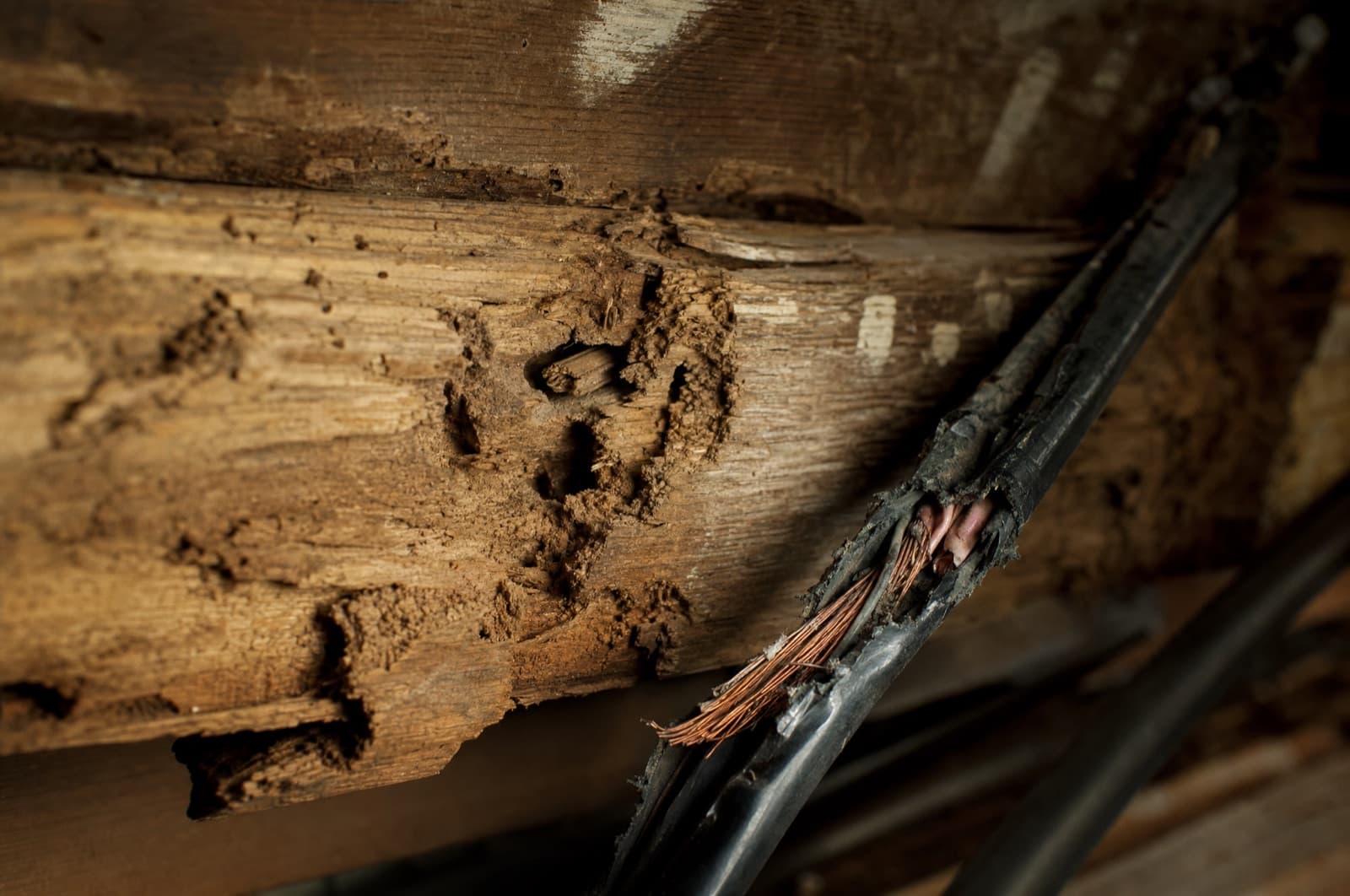
Pest damage evidence — a gnawed structural beam and a chewed electrical wire
Daniel Brady · NH-Licensed Pesticide Applicator · License #782664
Reviewed by Daniel Brady

Do powderpost beetles ruin hardwood floors?

Structural — a genuine hardwood threat, typically overstated in degree
Yes, and this is a genuinely earned fear rather than an overstated one. Lyctid, or 'true,' powderpost beetles attack the starch-rich sapwood of large-pored hardwoods like oak, ash, and hickory — exactly what most hardwood flooring is made from — tunneling internally and reducing wood to fine, flour-like frass. But the typical case is narrower than 'ruin' implies: severe, floor-failing damage requires many generations reinfesting the same boards over years, light infestations often dwindle away on their own, and lyctids rarely infest wood older than about five years.

At a glance

  • Can it?: Yes, but
  • How common: Occasional
  • Hype: Overstated
  • Evidence: Well documented
The honest answer

The short of it

The verdict
Structural — a genuine hardwood threat, typically overstated in degree

Yes, lyctid powderpost beetles genuinely attack hardwood flooring, cabinetry, and trim — a real, earned structural fear — but most infestations are light, localized, and often dwindle on their own with moisture control.

The correction

What they claim vs. what the evidence supports

One shared severity track, two markers. The span between them is the hype delta — named out loud.

The claim — powderpost beetles infesting hardwood flooring

That any sign of powderpost beetle activity means your hardwood floors will be destroyed and need full replacement.

Where the claim comes from: Pest-control marketing copy and home-inspection blogs that treat any exit hole as evidence of an active, worsening infestation requiring immediate full remediation.

Severity, 0–100
Hype says80
55Evidence says
Hype delta25point gapWell documented
The evidence

The mechanism is real and can become serious in heavy, moisture-favorable, multi-generation infestations — Mississippi State Extension calls powderpost beetles second only to termites as destroyers of seasoned wood. But most residential cases are lighter than that: light infestations often 'dwindle away over time' on their own, especially once moisture is controlled, and a 'monitor and dry the wood' approach is frequently the right call rather than full board replacement.

The gap

Powderpost beetles are a real hardwood threat, not a manufactured one — but 'ruin' describes the rare, heavy, multi-generation case, not the typical light infestation most homeowners actually find, which is far more often a monitor-and-dry situation than a full-floor replacement.

Damage assessment

What is actually harmed

Damage verdict
Structural — a genuine hardwood threat, typically overstated in degree
StructuralCan it?Yes, but
The specimen
Pest
Lyctid ('true') powderpost beetles
What is in question
Hardwood flooring, molding, cabinetry, furniture, and bamboo made from large-pored hardwoods
How common
Occasional
Evidence
Well documented
Mechanism

Larvae tunnel through and feed on the starch-rich sapwood of large-pored hardwoods, reducing the interior to talc-fine frass while leaving the surface largely intact until adults chew round exit holes to emerge. Damage is typically invisible until those exit holes and accompanying frass appear, by which point at least one generation has already completed development inside the wood. Lyctids specifically require large-pored hardwoods — oak, ash, and hickory among them — and depend on the wood's original starch content, which declines as wood ages; this is why lyctids rarely infest wood older than roughly five years.

Actually at risk4
  • Oak, ash, hickory, and other large-pored hardwood flooring
  • Hardwood molding, trim, and cabinetry
  • Hardwood furniture and bamboo items
  • Any large-pored hardwood installed within the past several years, where residual starch content is still high
Not at risk — despite the myth4
  • Softwood framing lumber — lyctids do not attack conifers like pine, spruce, or fir
  • Finished or sealed wood surfaces, where females cannot access the wood pores to lay eggs
  • Heartwood, as opposed to the starch-rich sapwood layer lyctids specifically target
  • Hardwood older than about five years, since residual starch content has typically declined below what larvae need
Worst realistic case
A heavy, multi-generation infestation in persistently damp hardwood flooring, where repeated reinfestation over years has weakened boards enough that they no longer reliably support furniture weight — a genuine repair case, but the outcome of years of moisture and neglect, not a single season's activity.

Assessed from: Mississippi State University Extension (powderpost beetles and hardwood floors); University of Kentucky Entomology Ef616; NC State Extension powderpost beetles and wood-inhabiting fungi

The compounding clock

Does it get worse if you ignore it?

Over time
Compounds slowly

Moisture-gated and slow — the risk rises with dampness and falls as wood ages and dries.

The timeline
3 stages
  1. One seasonReversible

    A single generation of larvae develops inside the wood, invisible from the surface, before adults emerge through small round exit holes and leave behind fine frass.

  2. YearsReversible

    If moisture stays elevated and the wood remains unsealed, subsequent generations can reinfest the same boards, gradually deepening the internal damage across multiple life cycles.

  3. DecadesReversible

    In a persistently damp, undetected, multi-generation case, boards can be weakened enough to require structural replacement — the rare worst case, not the typical outcome.

What stops the clock
Drying the wood and controlling the moisture source, combined with sealing existing exit holes to prevent reinfestation and finishing bare hardwood so females can't lay eggs in exposed pores. Many light infestations dwindle on their own once these conditions are addressed, without any wood replacement at all.
Repair scope

Who actually fixes this

Scope, not dollars — the honest answer to “how expensive is it,” routed to the right trade.

Who fixes it
Pest pro first
Effort
A trade visit

An active, spreading infestation should be professionally assessed and treated before deciding whether any board needs replacement — treating first avoids replacing wood that a lighter infestation might have resolved on its own with drying and sealing.

The right order
  1. 1
    Have an active infestation professionally assessed to distinguish a light, self-resolving case from a heavy, ongoing one
  2. 2
    Address the underlying moisture that's making the wood attractive to reinfestation
  3. 3
    Seal exit holes on light cases, or bring in a flooring contractor to assess and replace boards on heavy, structurally compromised cases
Route by symptom
  • You — wipe it upFrass appears but activity has stopped and the case is light — sealing exit holes and monitoring is often sufficient
  • Licensed contractorBoards are structurally weakened after a heavy, multi-generation infestation and need replacement or refinishing
Do not
  • Don't refinish or replace flooring before confirming the infestation is inactive — new boards over an active infestation simply become the next target
  • Don't assume every exit hole means an urgent, worsening problem — many light infestations are already dwindling on their own
Where we help — and where we don't

Anchor can assess and treat an active powderpost beetle infestation. Floor refinishing or board replacement is a flooring contractor's job, and we'll say so rather than quote you for it.

In depth

The full picture

01

Yes — this is a genuinely earned hardwood concern

Powderpost beetles deserve to be taken seriously, and this is one of the pages in this hub where the internet's severity rating is close to accurate rather than inflated. Lyctid, or 'true,' powderpost beetles specifically target the starch-rich sapwood of large-pored hardwoods — oak, ash, and hickory chief among them, which happen to be exactly the species most hardwood flooring, trim, and cabinetry are made from. Mississippi State University Extension ranks powderpost beetles as second only to termites among destroyers of seasoned wood, and that's not marketing exaggeration.

02

What the damage actually looks like

Larvae tunnel and feed inside the wood, reducing sapwood to fine, flour-like frass as they go, all invisible from the surface. Damage only becomes apparent once adults chew round exit holes to emerge and leave frass behind — by which point at least one full generation has already completed development inside the wood. That's a genuinely unsettling discovery, and it's the moment most homeowners first learn they have a problem.

03

Where 'ruin' overstates the typical case

The honest correction is about degree, not existence. Severe, floor-compromising damage requires many generations reinfesting the same boards over a period of years, almost always in wood that stays persistently damp. Mississippi State Extension is direct that light infestations often 'dwindle away over time' on their own, and recommends moisture control and monitoring — not automatic full-floor replacement — as frequently the right first response.

Two other honest limits matter here. Lyctids cannot lay eggs in finished or sealed wood, since females need exposed pores to reach; and they rarely infest hardwood older than about five years, because the starch content larvae depend on declines as wood ages. Put together, the realistic picture is a real but bounded threat: earned concern for bare, damp, relatively new hardwood, and a far more modest risk for finished, older, or well-maintained flooring.

Key takeaways
5 points
  • Yes — powderpost beetles genuinely attack hardwood flooring, and this fear is earned, not manufactured.
  • The mechanism is real: larvae tunnel sapwood into fine frass, visible only once adults emerge through exit holes.
  • 'Ruin' describes the rare, heavy, multi-generation case; most light infestations dwindle on their own with moisture control.
  • Finished or sealed hardwood, and hardwood older than about five years, is much less vulnerable.
  • Moisture control, drying, and sealing exit holes resolve many cases without any board replacement.
New Hampshire context

What this looks like in New Hampshire homes

Southern and central New Hampshire's humid summers and older housing stock with original hardwood flooring create favorable conditions for powderpost beetle activity, particularly in homes with unfinished hardwood in basements, crawlspaces, or additions where moisture tends to run higher. A relatively young hardwood installation — within the last several years — carries the most residual starch and is the most attractive target; well-sealed, older hardwood floors across Manchester, Nashua, and Concord are considerably lower risk.

  • NH-licensed #782664

    Southern New Hampshire

  • Family-owned

    Since 2017

  • Honest routing

    Even when it isn’t us

We serve these communities

ManchesterNashuaConcordDerryBedfordSalemHudsonAmherstAuburnGoffstownHooksettLitchfieldLoudonMilfordBristol

Service Area Map

Southern New Hampshire

BristolPop. 3,200LoudonPop. 5,500ConcordPop. 43,900HooksettPop. 14,800GoffstownPop. 18,000AuburnPop. 5,700ManchesterPop. 115,600BedfordPop. 23,300LitchfieldPop. 8,500AmherstPop. 11,300DerryPop. 34,500MilfordPop. 15,700HudsonPop. 25,600NashuaPop. 91,100SalemPop. 30,000HQCityHover for info

Frass on your hardwood floor? Find out if it's active before you refinish.

Anchor assesses and treats active powderpost beetle infestations so you don't replace flooring a light case would have resolved on its own.

Follow-up questions

Frequently asked

Sources & citations(4)
  1. Mississippi State University Extension — Powderpost Beetles and Hardwood Floors

    Powderpost beetles second only to termites as destroyers of seasoned wood; 'ruin' overstates the light-infestation typical case

    extensionverified 2026-07-16
  2. University of Kentucky Entomology — Powderpost Beetles (Ef616)

    Lyctids target large-pored hardwoods and rarely infest wood older than about five years

    extensionverified 2026-07-16
  3. NC State Extension — Powderpost Beetles and Wood-Inhabiting Fungi

    Mechanism of larval feeding, frass, and exit holes; moisture as the key driver of reinfestation

    extensionverified 2026-07-16
  4. Mississippi State University Extension — Powder Post Beetles (Bug's Eye View, Vol. 6 No. 6)

    Light infestations often dwindle away over time; moisture threshold and self-limiting cases

    extensionverified 2026-07-16

Written & reviewed by

Verified

Daniel Brady

NH-Licensed Pesticide Applicator · License #782664 (NHDAMF, RSA 430)

Daniel Brady is the New Hampshire–licensed applicator behind Anchor Pest Services, a family-owned pest control company serving the Manchester area since 2017.

Verify license

Last updated Jul 2026

Honest pest help for New Hampshire homes

We Confirm Whether It's Active Before You Spend on Flooring.

Powderpost beetles are a real hardwood threat — this fear is earned. But most infestations are lighter than 'ruin' implies, and moisture control alone resolves many cases. Anchor Pest Services assesses and treats active infestations; flooring refinishing or replacement routes to a flooring contractor. Family-owned since 2017, NH license #782664, serving Manchester, Nashua, Concord and nearby towns.

  • Honest advice — we tell you when a light infestation doesn't need full floor replacement
  • NH-licensed applicators (#782664) — free inspection, same-day service
  • Wood-destroying insect assessment and treatment across southern and central New Hampshire

NH License #782664 · No obligation · We answer in person