
Skip to content
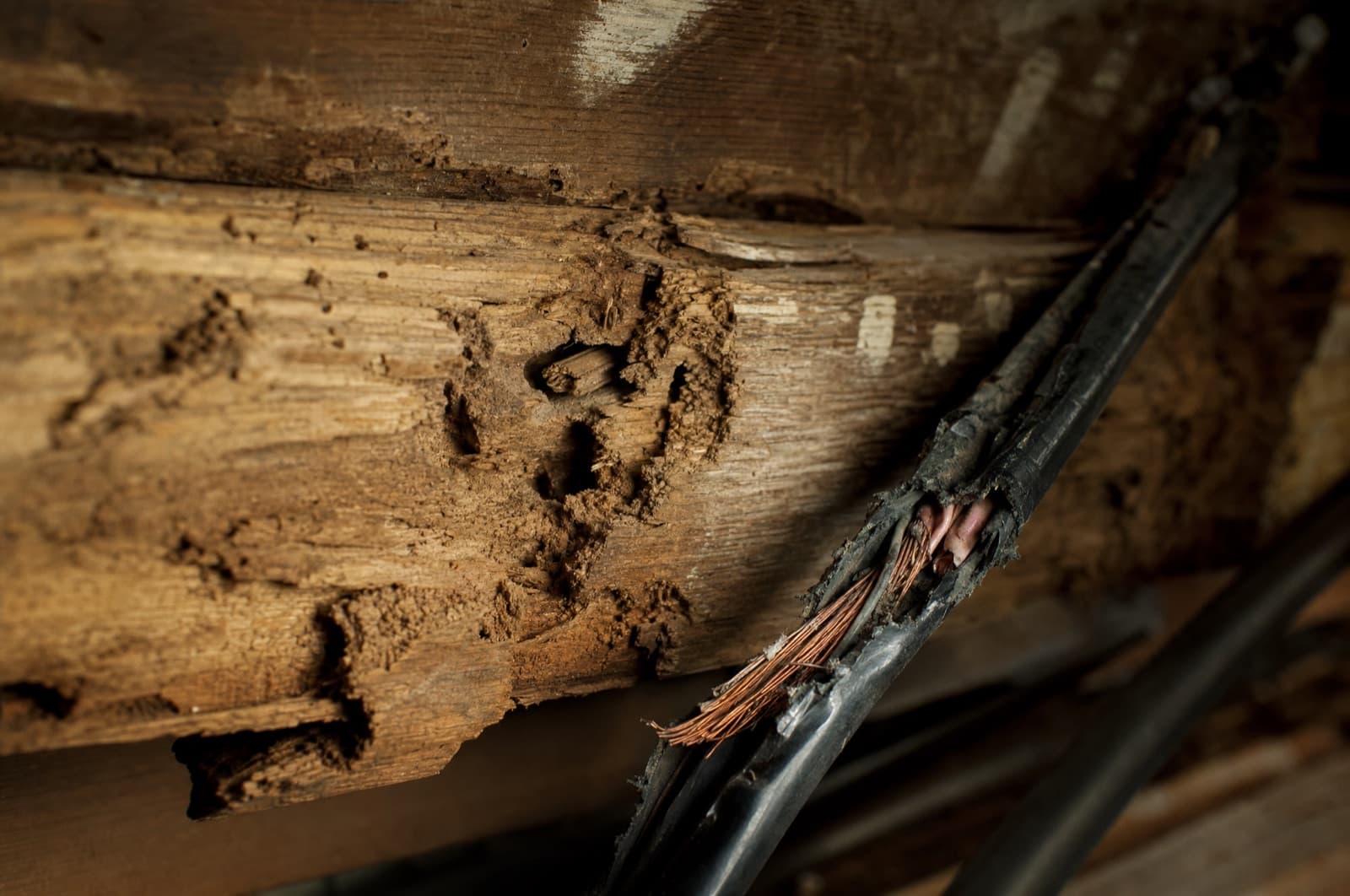
Pest damage evidence — a gnawed structural beam and a chewed electrical wire
Daniel Brady · NH-Licensed Pesticide Applicator · License #782664
Reviewed by Daniel Brady

How can regular inspections prevent pest damage?

Partial — genuinely useful, with a hard physical limit
Regular inspection works by catching accessible early signs — mud tubes, frass, gnaw marks, droppings, accessible moisture — before a pest problem compounds into a larger repair. This is the core of integrated pest management: monitor, identify, act early, and correct the conducive conditions (moisture, entry points, harborage) that let a problem establish. But inspection is limited by what's physically visible. It cannot see inside a closed wall cavity, under a concrete slab, or behind finished drywall, and termite-infested wood can look completely normal from the outside. A realistic seasonal inspection rhythm catches meaningfully more than no inspection at all — it just isn't a guarantee.

At a glance

  • Hype: About right
  • Evidence: Well documented
The honest answer

The short of it

The verdict
Partial — genuinely useful, with a hard physical limit

Regular inspection is the core of effective pest prevention and catches a lot early — but it cannot see inside walls, under a slab, or behind finishes, so 'inspections catch everything' is false.

The correction

What they claim vs. what the evidence supports

One shared severity track, two markers. The span between them is the hype delta — named out loud.

The claim — the claim that regular inspections catch every pest problem before it causes damage

That a diligent inspection schedule guarantees no pest damage will develop unnoticed, effectively promising complete protection.

Where the claim comes from: Pest-company service marketing that frames a routine inspection as a comprehensive safeguard rather than one useful, partial tool.

Severity, 0–100
Hype says70
58Evidence says
The hype is fairWell documented
The evidence

Inspection genuinely limits repair scope by catching surface signs early, and EPA/CDC identify inspection and monitoring as core, effective IPM practices. But it is physically bounded: University of Missouri Extension notes termite-infested wood 'can look perfectly normal on the outside, even when riddled with termite galleries on the inside.' Anything inside a wall cavity, under a slab, or behind finished surfaces is simply not visible to any inspection.

The gap

This isn't a debunk — inspection genuinely helps, and the evidence backs that. The correction is narrower: 'catches things early' is true; 'catches everything' is not, and the difference matters when a homeowner decides how much confidence to place in a clean-looking inspection.

Prevention

Early signals — and the honest limits

How much warning you get
Partial warning
SignWhat it meansHow earlyConfusable with
Mud tubes on foundation or sillSubterranean termites traveling between soil and wood while staying hidden from open air — the most reliable inspection-visible termite indicator.Already establishedDried mud splashed by rain, old paint drips, or mud-dauber wasp marks.
Frass near exposed woodFine, sawdust-like material pushed from small holes, indicating carpenter ant, beetle, or carpenter-bee activity nearby.First weeksConstruction dust from a recent repair, or ordinary sawdust from DIY woodworking.
Active swarmers indoorsWinged termite or ant reproductives seen indoors mean a mature colony has already reached reproductive age nearby.Already establishedCluster flies or ordinary winged ant swarmers, which carry no property-damage implication.
Gnaw marks and droppingsFresh rodent gnaw marks and droppings along baseboards or in storage areas indicate an active rodent presence, typically within weeks of an incursion.First weeksOld droppings from a prior owner's already-resolved problem, or settling and HVAC-duct noise mistaken for rodent activity.
Accessible moisture at framing or sillsDamp or water-stained wood signals the conducive condition that draws carpenter ants and accelerates termite risk — the root cause behind much of this cluster's structural pest activity.First weeksAn ordinary plumbing or roof leak with no pest activity behind it at all.
An inspection can see5
  • Mud tubes and exit holes on an accessible foundation exterior
  • Surface frass and gnaw marks on exposed wood and trim
  • Droppings in open basements, attics, and cabinets
  • Active swarmers near windows and sills
  • Moisture at accessible framing, sills, and crawlspace wood
It cannot see5
  • Activity inside a closed wall cavity
  • Anything beneath a poured concrete slab
  • Conditions behind finished drywall, paneling, or built-in cabinetry
  • The interior of a sealed soffit or fully insulated, inaccessible attic pocket
  • Whether a sound-looking timber is actually riddled with galleries inside — termite damage 'can look perfectly normal on the outside' (MU Extension)
Honest cadence
IPM-style seasonal monitoring is the realistic rhythm, not constant vigilance: a spring exterior and sill check during termite swarm season, a fall attic and basement check before rodents move indoors ahead of Manchester's first hard frost — historically around October 19 to 29 per NOAA — and a professional inspection whenever a confirmed sign appears, or at a sensible recurring interval for homes with a known history.
In depth

The full picture

01

Inspection is the core of IPM, and the evidence backs that

Regular inspection sits at the center of integrated pest management, the approach both the EPA and CDC recognize as the effective, cost-efficient foundation of pest prevention: monitor conditions, identify what's actually present, and act before a problem compounds. This isn't a marketing claim — it's the standard, evidence-based framework used across professional pest management, precisely because catching a mud tube, a frass pile, or fresh droppings early keeps a problem in the 'resolve the pest' lane rather than letting it grow into a larger structural or functional repair.

02

What inspection is genuinely good at

A thorough inspection reliably finds surface-level, accessible signs: mud tubes on a foundation, frass near exposed wood, active swarmers near a window, rodent droppings and gnaw marks in open spaces, and moisture at accessible framing. Each of these, caught early, meaningfully limits how much repair scope accumulates before anyone notices — which is the entire practical value of inspecting on a regular schedule rather than only when something already looks obviously wrong.

03

The honest limit — and why it matters more than it sounds

This is the part that separates a credible inspection claim from an oversold one. An inspector, however experienced, cannot see inside a closed wall cavity, under a poured concrete slab, or behind finished drywall and cabinetry. University of Missouri Extension states the sharpest version of this limit for termites directly: infested wood 'can look perfectly normal on the outside, even when riddled with termite galleries on the inside.' Moisture meters and careful probing narrow this blind spot, but they don't eliminate it. Any service that implies a clean inspection guarantees no hidden damage is promising something a physical inspection simply cannot deliver.

04

A realistic inspection rhythm for New Hampshire

Given both what inspection can and can't do, the useful pattern is seasonal, not constant. Walk the exterior and sills each spring during termite swarm season. Check the attic and basement again each fall, ahead of Manchester's first hard frost — historically around October 19 to 29, per NOAA — before rodents establish indoors for the winter. Bring in a professional inspection whenever a confirmed sign appears, since correct identification at that point genuinely limits how far a compounding problem goes. That rhythm won't catch a hidden wall-cavity problem before it's advanced, but it substantially narrows how long any visible problem goes unnoticed.

Key takeaways
5 points
  • Regular inspection is core, evidence-backed IPM practice (EPA, CDC) — not a marketing add-on.
  • It reliably catches accessible surface signs: mud tubes, frass, swarmers, droppings, gnaw marks, accessible moisture.
  • It cannot see inside wall cavities, under slabs, or behind finished surfaces — termite-damaged wood can look sound from the outside.
  • A seasonal rhythm — spring exterior/sill check, fall attic/basement check before the first hard frost — is realistic and useful.
  • Catching a sign early keeps a repair in the pest-resolution lane; missing a hidden one lets it advance to a larger repair scope.
New Hampshire context

Seasonal inspection timing for New Hampshire

Spring termite swarm season is the practical window for a foundation and sill walk-through, since swarmers and mud tubes are most likely to be visible then. Fall, ahead of Manchester's first hard frost — historically around October 19 to 29, per NOAA — is the window that matters most for catching rodent entry before the cold drives them indoors. Both checks are realistic for a homeowner to do personally, with a professional inspection reserved for whenever a confirmed sign actually appears.

  • NH-licensed #782664

    Southern New Hampshire

  • Family-owned

    Since 2017

  • Honest routing

    Even when it isn’t us

We serve these communities

ManchesterNashuaConcordDerryBedfordSalemHudsonAmherstAuburnGoffstownHooksettLitchfieldLoudonMilfordBristol

Service Area Map

Southern New Hampshire

BristolPop. 3,200LoudonPop. 5,500ConcordPop. 43,900HooksettPop. 14,800GoffstownPop. 18,000AuburnPop. 5,700ManchesterPop. 115,600BedfordPop. 23,300LitchfieldPop. 8,500AmherstPop. 11,300DerryPop. 34,500MilfordPop. 15,700HudsonPop. 25,600NashuaPop. 91,100SalemPop. 30,000HQCityHover for info

A seasonal inspection catches more than waiting does.

Anchor's inspections find what's genuinely accessible — and we'll tell you honestly what they can't see.

Follow-up questions

Frequently asked

Sources & citations(4)
  1. EPA — Integrated Pest Management Principles

    Inspection and monitoring as core, effective and cost-efficient IPM practice

    govverified 2026-07-16
  2. CDC — What Is Integrated Pest Management

    IPM framework: monitor, identify, act on thresholds, correct conducive conditions

    govverified 2026-07-16
  3. University of Missouri Extension — Subterranean Termites (G7420)

    Termite-infested wood can look normal on the outside while riddled with galleries inside

    extensionverified 2026-07-16
  4. UNH Cooperative Extension — Carpenter Ants Fact Sheet

    Moisture as the conducive condition inspection should identify early

    extensionverified 2026-07-16

Written & reviewed by

Verified

Daniel Brady

NH-Licensed Pesticide Applicator · License #782664 (NHDAMF, RSA 430)

Daniel Brady is the New Hampshire–licensed applicator behind Anchor Pest Services, a family-owned pest control company serving the Manchester area since 2017.

Verify license

Last updated Jul 2026

Honest pest help for New Hampshire homes

A Real Inspection, With Real Limits Stated Plainly.

Anchor's inspections follow IPM practice — monitor, identify, correct the conducive condition — and we'll tell you plainly what a visual inspection cannot see, rather than promising a guarantee no inspection can deliver. Family-owned since 2017, NH license #782664, serving Manchester, Nashua, Concord and nearby towns.

  • Honest limits — we say what an inspection can't see
  • NH-licensed applicators (#782664) — free inspection, same-day service
  • Seasonal inspection and IPM-based service across southern and central New Hampshire

NH License #782664 · No obligation · We answer in person