
Skip to content
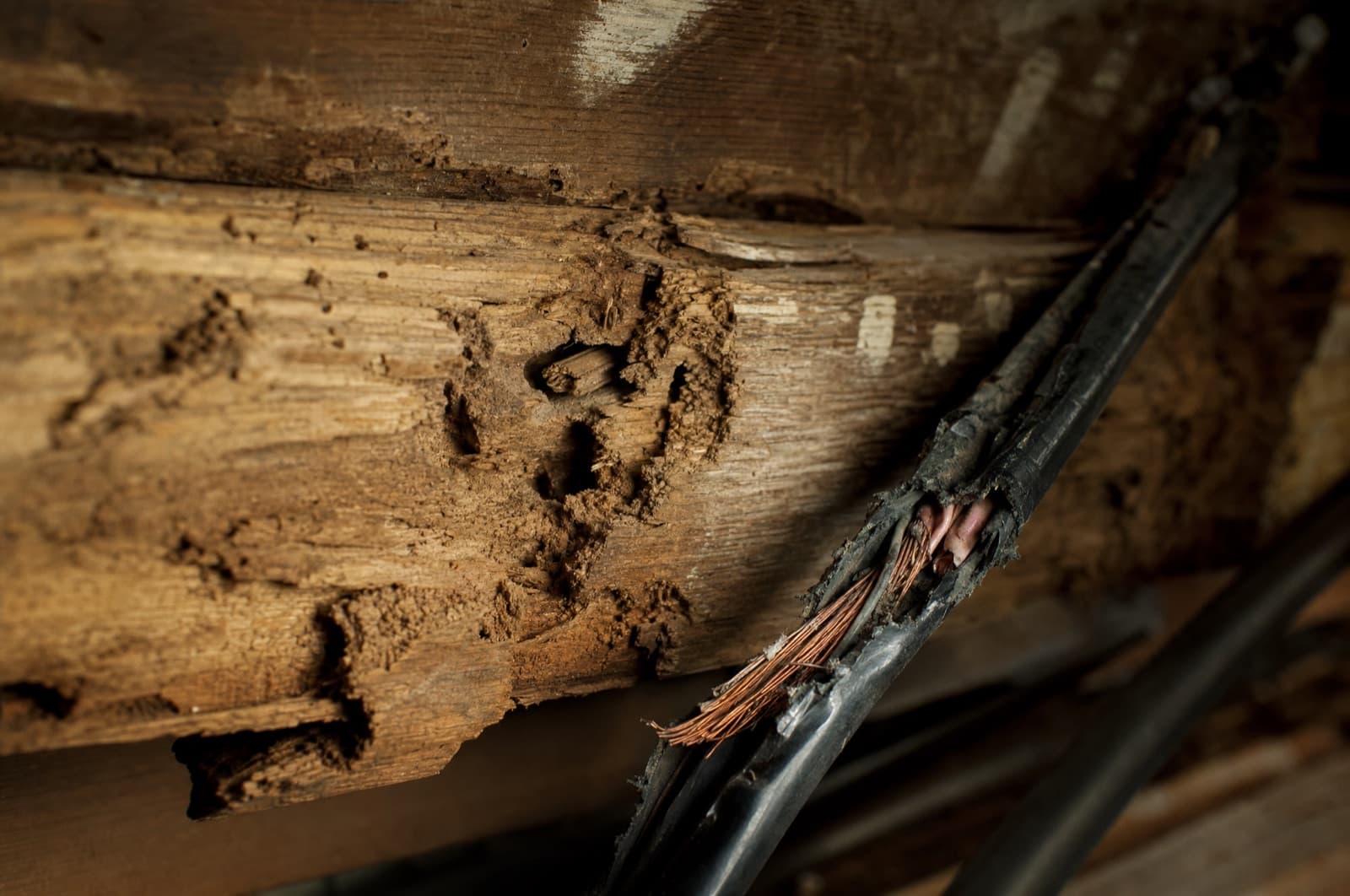
Pest damage evidence — a gnawed structural beam and a chewed electrical wire
Daniel Brady · NH-Licensed Pesticide Applicator · License #782664
Reviewed by Daniel Brady

Why do rats gnaw constantly on objects?

Functional damage — the compulsion is real, the "anything" claim isn't
Rats gnaw constantly because their four incisors grow continuously throughout their lives; without daily wear they would overgrow into a painful, eventually fatal jaw misalignment. New neuroscience research shows this is also a dopamine-rewarded behavior — gnawing activates a reward circuit in the brain, not just a mechanical necessity. So a rat in your home will gnaw wood, plastic, wire, and soft metal whether or not it's hungry, targeting whatever offers an accessible edge. What it will not do is gnaw through solid steel, cured concrete, or glass — those genuinely stop it.

At a glance

  • Can it?: Yes
  • How common: Routine
  • Hype: Overstated
  • Evidence: Well documented
  • 5.5 Mohs

    Hardness of rat incisor enamel — harder than iron or copper, but needs an edge to get purchase

    Rat Behavior and Biology

The honest answer

The short of it

The verdict
Functional damage — the compulsion is real, the "anything" claim isn't

Rats gnaw constantly because their incisors grow for life and must be worn down, and because gnawing is a dopamine-rewarded behavior, but the popular claim that they gnaw through solid steel and concrete is bravado, not biology.

The correction

What they claim vs. what the evidence supports

One shared severity track, two markers. The span between them is the hype delta — named out loud.

The claim — rats gnawing "through anything, even concrete and steel"

Popular accounts of rat behavior often claim rats can gnaw through virtually anything, including solid concrete and steel, framing them as an unstoppable force capable of breaching any barrier.

Where the claim comes from: Viral wildlife-behavior posts and pest-company marketing copy that favor an unstoppable-rodent narrative.

Severity, 0–100
Hype says65
45Evidence says
Hype delta20point gapWell documented
The evidence

Rats gnaw persistently and can breach wood, plastic, wire insulation, soft metals, and weak or already-cracked mortar and concrete — that part is well documented. But their paired incisors curve slightly inward, which makes it genuinely difficult to gnaw into a flat, hard, edgeless surface; solid steel, cured concrete, glass, and ceramic tile stop them because there's nothing for the incisors to catch on, not because rats lack the will to try.

The gap

The compulsion to gnaw is completely real. The "through solid steel and concrete" bravado is not — rats exploit existing cracks, weak spots, and edges rather than defeating hard, uniform materials outright.

Damage assessment

What is actually harmed

Damage verdict
Functional damage — the compulsion is real, the "anything" claim isn't
FunctionalCan it?Yes
The specimen
Pest
Norway rats and roof rats
What is in question
Wood, plastic, wire and cable insulation, soft metals, and weak or already-compromised mortar or concrete
How common
Routine
Evidence
Well documented
Mechanism

A rat's incisors are rootless and grow throughout its life, so gnawing is obligate wear rather than a response to hunger, and recent research shows it is additionally reinforced by a dopamine-reward circuit in the brain, making it a motivated behavior rather than a passive reflex. The enamel doing the cutting is iron-rich and roughly 5.5 on the Mohs hardness scale, genuinely harder than iron or copper, but the incisors' slight inward curve means a rat needs an edge, seam, or already-weak spot to get purchase; a flat, hard, uniform surface defeats the mechanism regardless of hardness.

Actually at risk5
  • Wood framing and trim at existing gaps or edges
  • Wire and cable insulation
  • Plastic conduit, bins, and pipe
  • Soft metals such as aluminum flashing and lead
  • Weak, cracked, or already-deteriorated mortar and concrete at joints
Not at risk — despite the myth4
  • Solid, cured concrete and masonry in good condition
  • Structural steel
  • Glass and ceramic tile
  • Galvanized or stainless hardware cloth of adequate gauge
Worst realistic case
An enlarged entry point plus whatever system it exposes behind it, such as a chewed wire run or a supply line — a real repair, not a breached foundation.

Assessed from: Colorado State University (dentition, malocclusion); Neuron DOI 10.1016/j.neuron.2026.01.021 (dopamine-rewarded gnawing); ICWDM (inward-curve nuance, exclusion materials); ratbehavior.org (incisor hardness)

Repair scope

Who actually fixes this

Scope, not dollars — the honest answer to “how expensive is it,” routed to the right trade.

Who fixes it
Pest pro first
Effort
An afternoon

The gnawing doesn't stop until the rats are excluded — repairing or replacing whatever they've damaged before that just supplies fresh material.

The right order
  1. 1
    Anchor: exclude and remove the rats, sealing entries with steel, mortar, or adequate-gauge hardware cloth
  2. 2
    Relevant trade for the damaged system: electrician for wire, plumber for pipe, contractor for framing or trim
Route by symptom
  • You — a DIY patchThe damage is a simple gnawed gap that just needs re-sealing with a rat-proof material
Do not
  • Don't reseal an entry point with foam, plastic, or wood alone — rats gnaw straight back through all three
  • Don't assume a weak or cracked section of concrete or mortar is safe from rats just because "concrete stops them" — only sound, uncracked material genuinely does
Where we help — and where we don't

Anchor handles the exclusion and removal — the step that actually stops the gnawing. We don't repair the specific system a rat has damaged; that goes to whichever trade owns it.

In depth

The full picture

01

Teeth built to never stop growing

Rat incisors are hypselodont, meaning they're rootless and grow continuously for the animal's entire life. Without regular wear, they would overgrow, curve into the mouth or jaw, and cause malocclusion, a painful misalignment that eventually prevents normal eating and leads to starvation. Gnawing is the maintenance that prevents this — not a response to hunger, and not something a well-fed rat in a stocked pantry has any less need to do.

02

It also feels good — the neuroscience

Research published in Neuron identified a touch-guided neural circuit that rewards gnawing with a dopamine release in the brain's reward center. Disrupting that circuit didn't just reduce gnawing, it abolished it and produced severe malocclusion, while activating the circuit triggered the reward response directly. That finding reframes gnawing from a purely mechanical necessity into a motivated behavior the animal is actively driven to perform — which helps explain why rats gnaw so persistently, at so many objects, well beyond what strict dental maintenance alone would require.

03

What actually stops a rat — and why hardness alone isn't the answer

Rat incisor enamel is genuinely hard, at roughly 5.5 on the Mohs scale, which is harder than iron or copper. But hardness is only half the story. Extension research on rodent exclusion notes that the paired incisors of rats and mice curve slightly inward, which makes it difficult for them to gnaw into a flat, hard surface — they need an edge or a rough spot to bite into. Given one, they can gnaw into most comparably hard materials quickly. Denied one, even a genuinely gnawable material can go untouched.

This is why the honest list of what stops a rat is short and unglamorous: solid steel, cured concrete and masonry in good condition, glass, ceramic tile, and galvanized or stainless hardware cloth of adequate gauge. It's also why a weak, already-cracked section of concrete or mortar is not actually safe — the crack itself becomes the edge a rat needs.

04

Functional damage, real compulsion, honest limits

Putting the mechanism and the material list together: the compulsion behind constant gnawing is completely real and biologically driven, and it explains why rats target wood, plastic, wire, and soft metal without regard to whether anything edible is involved. What it does not support is the bravado version of the claim — that a rat can defeat solid steel or intact, cured concrete through sheer persistence. The damage that does happen is functional: a real repair to whatever system got exposed, not a structural collapse.

Key takeaways
5 points
  • Rats gnaw constantly because their incisors grow for life and unworn teeth become a fatal problem.
  • Gnawing is also dopamine-rewarded — rats are motivated to do it, not just mechanically compelled to.
  • They can breach wood, plastic, wire, soft metal, and weak or cracked masonry.
  • They cannot breach solid steel, cured concrete in good condition, glass, or adequate-gauge hardware cloth — their incisors' inward curve needs an edge to work with.
  • Exclusion, not a battle of material hardness, is what actually stops the damage.
New Hampshire context

Rats in New Hampshire homes and yards

Norway rats in southern and central New Hampshire are commonly drawn to foundations near compost piles, bird feeders, and waste storage areas, and pressure rises as overnight temperatures drop toward Manchester's first hard frost, historically around October 19 to 29, pushing rats to seek shelter and gnaw new entry points into foundations, sheds, and garages.

  • NH-licensed #782664

    Southern New Hampshire

  • Family-owned

    Since 2017

  • Honest routing

    Even when it isn’t us

We serve these communities

ManchesterNashuaConcordDerryBedfordSalemHudsonAmherstAuburnGoffstownHooksettLitchfieldLoudonMilfordBristol

Service Area Map

Southern New Hampshire

BristolPop. 3,200LoudonPop. 5,500ConcordPop. 43,900HooksettPop. 14,800GoffstownPop. 18,000AuburnPop. 5,700ManchesterPop. 115,600BedfordPop. 23,300LitchfieldPop. 8,500AmherstPop. 11,300DerryPop. 34,500MilfordPop. 15,700HudsonPop. 25,600NashuaPop. 91,100SalemPop. 30,000HQCityHover for info

Rats gnawing around your home? Exclusion stops it — not a battle of materials.

Anchor excludes and removes rats using materials they genuinely cannot breach.

Follow-up questions

Frequently asked

Sources & citations(5)
  1. Colorado State University — Dental Anatomy of Rodents

    Rootless, continuously growing incisors and malocclusion

    academicverified 2026-07-16
  2. Duan & Emrick et al. — A Touch-Guided Neural Circuit Regulates Motivated Gnawing to Maintain Dental Alignment (Neuron)

    Gnawing is a dopamine-rewarded, motivated behavior, not a passive mechanical reflex

    academicverified 2026-07-16
  3. Internet Center for Wildlife Damage Management — Rodent Exclusion Methods

    The inward curve of rodent incisors and the materials that genuinely resist gnawing

    extensionverified 2026-07-16
  4. Rat Behavior and Biology — Rat Teeth

    Incisor enamel hardness (~5.5 Mohs), harder than iron and copper

    academicverified 2026-07-16
  5. NFPA — Animals Fact Sheet

    Context: NFPA's genuine animal-related home-fire figure, relevant to this cluster's wiring-fire correction

    fireverified 2026-07-16

Written & reviewed by

Verified

Daniel Brady

NH-Licensed Pesticide Applicator · License #782664 (NHDAMF, RSA 430)

Daniel Brady is the New Hampshire–licensed applicator behind Anchor Pest Services, a family-owned pest control company serving the Manchester area since 2017.

Verify license

Last updated Jul 2026

Honest pest help for New Hampshire homes

We Stop the Gnawing at the Source.

Rats don't stop gnawing on their own, and no material short of steel, mortar, or proper hardware cloth reliably stops them either. What Anchor Pest Services does is exclude and remove the rats and seal every entry with materials that actually work. Family-owned since 2017, NH license #782664, serving Manchester, Nashua, Concord and nearby towns.

  • Honest advice — we use materials that genuinely resist gnawing, not foam or plastic
  • NH-licensed applicators (#782664) — free inspection, same-day service
  • Rat exclusion and removal across southern and central New Hampshire

NH License #782664 · No obligation · We answer in person