
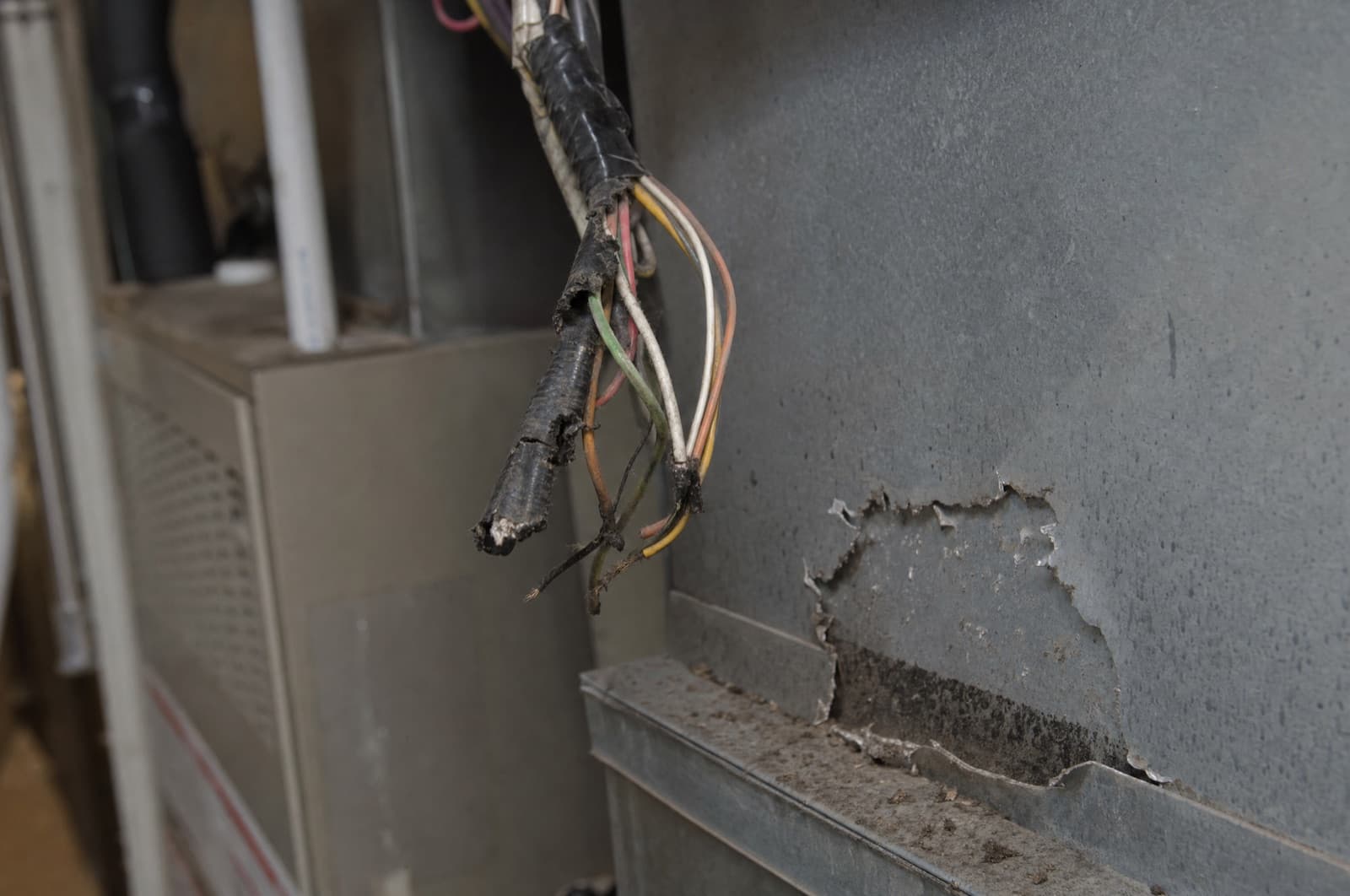
Can Pests Damage Heating Equipment?
Yes — beyond wiring, rodents, squirrels, and birds nest in blower housings, chew fuel and condensate lines and gaskets, foul burners with nesting debris, and corrode components with urine and droppings.
This is a maintenance, repair, and contamination issue worth scheduling promptly. It becomes urgent only if fuel-line damage, a gas odor, or a carbon monoxide alarm is involved.
At a glance
- The mechanism: Damages the system
- Who fixes it: An HVAC technician
- The rest lives at: How do professionals remove rat infestations?
Yes — beyond wiring, rodents, squirrels, and birds nest in blower housings, chew fuel and condensate lines and gaskets, foul burners with nesting debris, and corrode components with urine and droppings.
This is a maintenance, repair, and contamination issue worth scheduling promptly. It becomes urgent only if fuel-line damage, a gas odor, or a carbon monoxide alarm is involved.
Heat doesn't spawn pests — it changes what you notice
The season and the building set the stage before the thermostat ever comes on. Here's the honest chain of events, spelled out.
What's really happening
A warmth-seeking animal enters heating equipment or its surrounding cabinet, usually looking for shelter rather than targeting the equipment itself. Once inside, it nests, gnaws, and soils components, and that combination of mechanical damage, chewed materials, and corrosive contamination from urine and droppings degrades or disables the unit over time.
Source:Alabama Cooperative Extension— Eastern Gray Squirrels: Managing Attic Damage — squirrels gnaw wiring, cache food, and cause health concerns with feces and urine once inside a structure
Is this an HVAC problem or a pest problem?
Who actually fixes it
An HVAC technician
An HVAC technician needs to assess and repair whatever the animal actually damaged inside the equipment — fuel lines, gaskets, burners, or blower components — while a pest professional handles removing the animal and excluding re-entry.
Fuel-line damage, a gas odor, or a carbon monoxide alarm — evacuate, call the gas utility or 911, and bring in licensed professionals before the equipment is used again.
This hub owns the heating-system angle
General winter behavior, rodent control, and equipment-damage severity live in siblings that already earn them. Here's exactly where.
This hub owns the heating-equipment-damage angle — what happens when a rodent, squirrel, or bird gets into the equipment itself. Wildlife and rodent removal is owned by our mice & rats FAQ, and the broader attic/insulation damage picture lives on our pest damage & risks FAQ.
How this calibrates for NH
New Hampshire homes, including older farmhouses with settling foundations that give rodents easy entry points, typically run heat from roughly October into April, so equipment sitting in basements, attics, and crawl spaces is exposed to the fall rodent influx for most of the year it's actually needed.
NH-licensed applicator #782664 (NHDAMF, RSA 430) · NEPMA member · family-owned since 2017.
Frequently asked
Sources(3)
- [1]Alabama Cooperative Extension
Eastern Gray Squirrels: Managing Attic Damage — gnawing on wiring/structure, feces and urine health concerns
- [2]CDC
Controlling Wild Rodent Infestations — contamination from droppings and urine
- [3]UNH Cooperative Extension
Mouse entry timing in New Hampshire homes, September–October
Written & reviewed by
VerifiedDaniel Brady
NH-Licensed Pesticide Applicator · License #782664 (NHDAMF, RSA 430)
Daniel Brady is the New Hampshire–licensed applicator behind Anchor Pest Services, a family-owned pest control company serving the Manchester area since 2017.
Anchor Pest Services
Have a different pest question?
This one may be an HVAC call, not a pest job — but if you're facing something that is, we serve Southern New Hampshire with a free inspection and same-day service.
- NH-licensed applicator
- Same-day service
- Pet & family-conscious
NH License #782664 · No obligation · We answer in person