
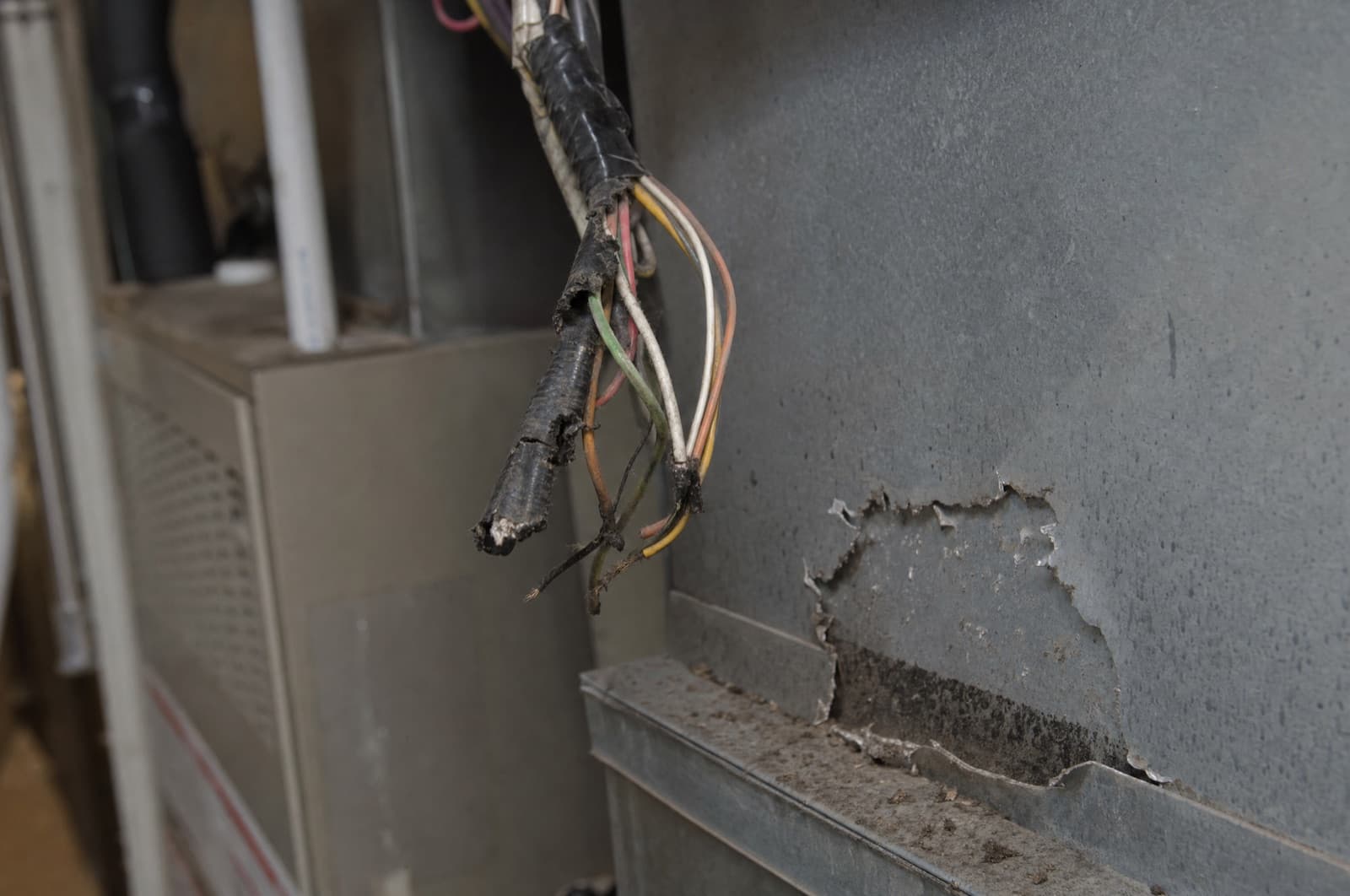
Can Pests Cause Heating System Malfunctions?
Yes — rodents gnaw control wiring, thermostat wires, and low-voltage conductors, and nest inside blower compartments, which causes shorts, intermittent failures, tripped breakers, and no-heat calls.
This is a genuine repair issue, not a rare fluke — continuously growing incisors make gnawing compulsive for rodents, so equipment cavities near warmth are a predictable target. It becomes a safety issue only if the stripped wiring is energized line-voltage, not low-voltage control wiring.
At a glance
- The mechanism: Damages the system
- Who fixes it: A licensed pest pro
- The rest lives at: Do pests damage HVAC or ventilation systems?
Yes — rodents gnaw control wiring, thermostat wires, and low-voltage conductors, and nest inside blower compartments, which causes shorts, intermittent failures, tripped breakers, and no-heat calls.
This is a genuine repair issue, not a rare fluke — continuously growing incisors make gnawing compulsive for rodents, so equipment cavities near warmth are a predictable target. It becomes a safety issue only if the stripped wiring is energized line-voltage, not low-voltage control wiring.
Heat doesn't spawn pests — it changes what you notice
The season and the building set the stage before the thermostat ever comes on. Here's the honest chain of events, spelled out.
What's really happening
A mouse, rat, or squirrel enters an equipment cabinet or the wall cavity near a furnace or boiler, most often while seeking warmth and shelter. Its incisors grow continuously and must be worn down, so it gnaws — insulation on wiring is a convenient target. A severed or shorted conductor then disrupts the control circuit, which is what produces the malfunction, tripped breaker, or no-heat call.
Source:NFPA— Non-Home Electrical Fires report (Campbell, 2019) — arc faults from mechanical damage and defective/worn insulation as documented ignition factors
Is this an HVAC problem or a pest problem?
Who actually fixes it
A licensed pest pro
Stopping the rodents and excluding re-entry addresses the cause; an HVAC technician then diagnoses and repairs whatever the gnawing actually damaged, since the two jobs require different licenses and tools.
Suspected damage to line-voltage wiring, or any burning smell or scorching near the equipment — call a licensed electrician and an HVAC technician before the system is re-energized.
This hub owns the heating-system angle
General winter behavior, rodent control, and equipment-damage severity live in siblings that already earn them. Here's exactly where.
This hub owns the heating-equipment malfunction angle — why rodents near a furnace or boiler cause it to fail. The full damage-severity picture lives on our pest damage & risks FAQ, and rodent control itself is owned by our mice & rats FAQ.
How this calibrates for NH
In New Hampshire, mice typically move indoors September through October and activity peaks December through February — the same stretch furnaces and boilers run hardest — so malfunction calls tied to rodent gnawing cluster in the coldest months rather than spreading evenly across the year.
NH-licensed applicator #782664 (NHDAMF, RSA 430) · NEPMA member · family-owned since 2017.
Frequently asked
Sources(3)
- [1]NFPA
Non-Home Electrical Fires report (Campbell, June 2019) — arc-fault ignition factors from mechanical damage/worn insulation
- [2]UNH Cooperative Extension
Mouse entry and winter activity timing in New Hampshire homes
- [3]USPTO-cited peer-reviewed literature
Cogelia, LaVoie & Glahn — rodent biting pressure and chewing action on wire/cable sheath, 25th International Wire and Cable Symposium
Written & reviewed by
VerifiedDaniel Brady
NH-Licensed Pesticide Applicator · License #782664 (NHDAMF, RSA 430)
Daniel Brady is the New Hampshire–licensed applicator behind Anchor Pest Services, a family-owned pest control company serving the Manchester area since 2017.
Anchor Pest Services
Worth a professional pest inspection?
We've protected Southern New Hampshire homes since 2017. Free inspection, same-day service — we tell you what's actually there before we treat anything.
- NH-licensed applicator
- Same-day service
- Pet & family-conscious
NH License #782664 · No obligation · We answer in person