
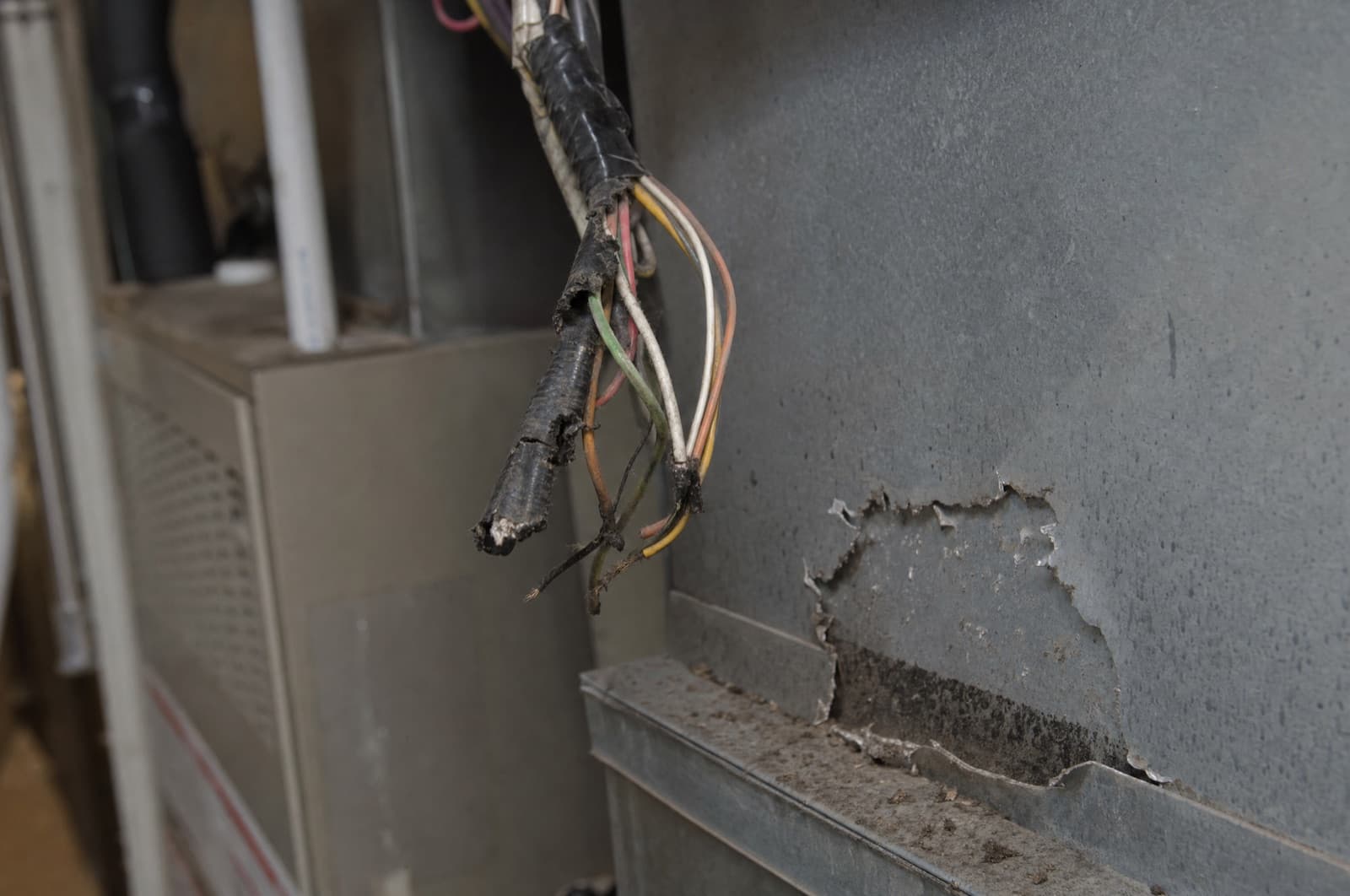
Can Pests Reduce Heating Efficiency?
Yes — rodents compress, shred, tunnel through, and contaminate insulation, block vents and ducts, and clear insulation away from heat sources, forcing the system to work harder to hold temperature.
This is an energy-cost and comfort issue worth fixing, not a safety emergency. Specific 'up to 30%' efficiency-loss figures circulate on marketing sites and are not asserted here; the underlying mechanism — compression and contamination lowering insulation's R-value — is well established.
At a glance
- The mechanism: Damages the system
- Who fixes it: A licensed pest pro
- The rest lives at: Do pests ruin insulation efficiency?
Yes — rodents compress, shred, tunnel through, and contaminate insulation, block vents and ducts, and clear insulation away from heat sources, forcing the system to work harder to hold temperature.
This is an energy-cost and comfort issue worth fixing, not a safety emergency. Specific 'up to 30%' efficiency-loss figures circulate on marketing sites and are not asserted here; the underlying mechanism — compression and contamination lowering insulation's R-value — is well established.
Heat doesn't spawn pests — it changes what you notice
The season and the building set the stage before the thermostat ever comes on. Here's the honest chain of events, spelled out.
What's really happening
Rodents nest in attic or wall insulation, and the physical act of nesting compresses batts and loose-fill and tunnels through them, which is exactly the kind of disturbance building science identifies as reducing insulation's effective R-value. Urine and droppings add contamination that can wick moisture and further degrade performance, and blocked vents or ducts restrict airflow on top of that — the combined effect is a system that has to run longer to hold the same indoor temperature.
Source:Extension / building-science literature— Insulation compression and contamination reducing effective R-value
Is this an HVAC problem or a pest problem?
Who actually fixes it
A licensed pest pro
Removing and excluding the rodents has to happen before insulation work makes sense, since replacing or restoring insulation while animals are still active would just invite the same damage again.
Contaminated insulation needs professional removal — do not dry-sweep or vacuum it yourself, since disturbing rodent droppings can aerosolize contaminants; route that step to an insulation contractor or HVAC professional.
This hub owns the heating-system angle
General winter behavior, rodent control, and equipment-damage severity live in siblings that already earn them. Here's exactly where.
This hub owns the heating-efficiency angle — why rodent-damaged insulation makes a heating system work harder. The full insulation-damage severity picture lives on our pest damage & risks FAQ, and rodent control is owned by our mice & rats FAQ.
How this calibrates for NH
In New Hampshire's cold-climate zones, with harsh interior winters and deep snow cover for months, insulation R-value matters more to the heating bill than it does in milder climates, so rodent-degraded insulation tends to show up as a noticeably higher winter heating demand rather than a subtle change.
NH-licensed applicator #782664 (NHDAMF, RSA 430) · NEPMA member · family-owned since 2017.
Frequently asked
Sources(3)
- [1]CDC
Controlling Wild Rodent Infestations — contamination cleanup guidance, do-not-sweep/vacuum rationale
- [2]Alabama Cooperative Extension
Eastern Gray Squirrels: Managing Attic Damage — insulation and structural damage from nesting wildlife
- [3]UNH Cooperative Extension
New Hampshire heating-season and cold-climate context
Written & reviewed by
VerifiedDaniel Brady
NH-Licensed Pesticide Applicator · License #782664 (NHDAMF, RSA 430)
Daniel Brady is the New Hampshire–licensed applicator behind Anchor Pest Services, a family-owned pest control company serving the Manchester area since 2017.
Anchor Pest Services
Worth a professional pest inspection?
We've protected Southern New Hampshire homes since 2017. Free inspection, same-day service — we tell you what's actually there before we treat anything.
- NH-licensed applicator
- Same-day service
- Pet & family-conscious
NH License #782664 · No obligation · We answer in person