
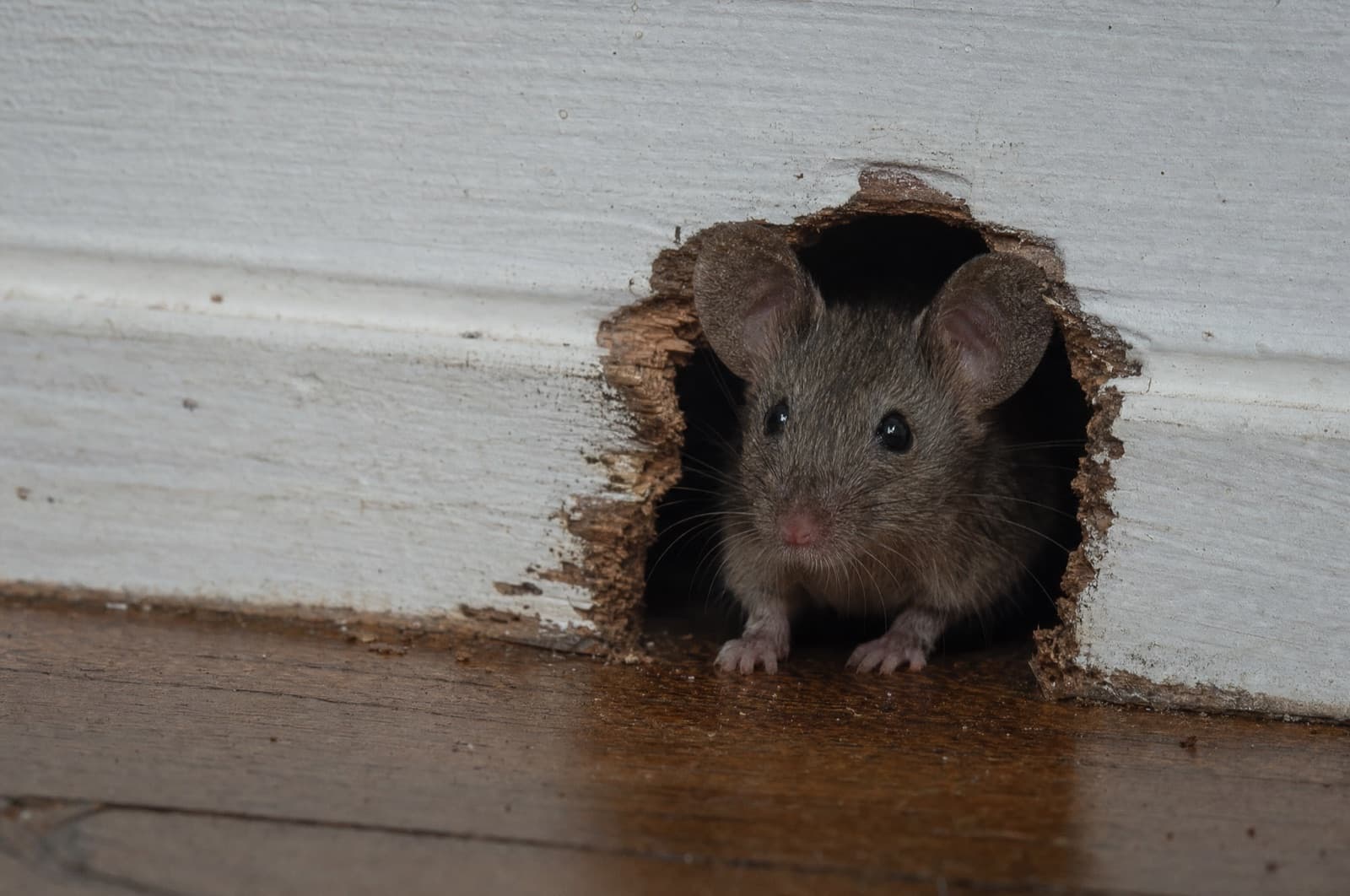
What Steps Prevent Mice From Entering a Home?
At a Glance
- Short answer: Seal every gap ¼ inch or larger with chew-proof materials; sanitation and harborage reduction support it.
- Key fact: 'Building them out' — permanent exclusion — is the most successful mouse-control method, per extension guidance.
- NH relevance: Finish mouse-proofing by late September, ahead of Manchester's first frost (~Oct 19 at 50%, ~Oct 29 at 80%).
- Action needed: Inspect the foundation, utility penetrations, and door thresholds with a flashlight, then seal every ¼-inch gap found.
The short of it
UNH Cooperative Extension puts it directly: the best way to start any mouse control effort is to keep them from getting inside to begin with, by sealing up all exterior cracks around the house, paying special attention to the foundation and where pipes and utilities enter the home. University of Missouri Extension calls this 'building them out' — eliminating every opening larger than ¼ inch is the most successful and permanent form of mouse control. Sanitation (airtight food storage, clean crumbs, secured garbage) supports exclusion, but because mice need so little food and water, sealing is the step that actually keeps them out.
What Steps Prevent Mice From Entering a Home — By the Numbers
¼ inch
Smallest gap a mouse needs — the exclusion threshold
24-gauge
Hardware cloth spec recommended for mouse-proofing larger holes
1
Rule of thumb: if light shows under a door, mice can enter
The full picture
Materials and the exclusion checklist
Fill small gaps with steel wool anchored by caulk, or copper mesh in damp spots, and cover larger holes with ¼-inch, 24-gauge hardware cloth, sheet metal, or cement. Plastic sheeting or screen, wood, rubber, and other gnawable materials are unsuitable because mice chew through them. Doors are a chronically overlooked entry point — if daylight is visible underneath, add a rodent-resistant door sweep. Inspect the full perimeter with a flashlight: foundation, sill plate, utility penetrations, door thresholds, vents, and rooflines.
Sanitation and harborage support exclusion
Exclusion is the foundation, but mice are nibblers that need almost no food or water, so sanitation is the necessary partner: store all dry goods and pet food in airtight glass, metal, or hard-plastic containers, clean crumbs and spills daily, and secure garbage. Reduce outdoor harborage too — elevate woodpiles 12 inches off the ground, trim vegetation away from the foundation, and clear debris — so mice have less reason to congregate against the house in the first place.
Bottom line — Seal every gap ¼ inch or larger with chew-proof materials, finishing before the fall frost window, then back it up with airtight food storage and reduced outdoor harborage. Exclusion does the heavy lifting; sanitation keeps the pressure from building back up.
Ready to build mice out for good?
Anchor's licensed NH technicians find and seal every ¼-inch gap sanitation alone can't fix, ahead of the fall push indoors.
Why this matters in New Hampshire
With Manchester's first frost near October 19 at 50% probability and October 29 at 80% (NOAA 1991–2020), complete mouse-proofing by late September across the service area to beat the seasonal push indoors, then re-inspect each fall.
Key local data
Much of southern and central NH's older housing stock has fieldstone or rubble foundations and wood sill plates that give rodents ground-level entry (UNH Cooperative Extension exclusion guidance).
- NH-licensed applicator · #782664
- Same-day service
- Family-owned since 2017
Service Area Map
Southern New Hampshire
Frequently asked
Written & reviewed by
VerifiedDaniel Brady
NH-Licensed Pesticide Applicator · License #782664 (NHDAMF, RSA 430)
Daniel Brady is the New Hampshire–licensed applicator behind Anchor Pest Services, a family-owned pest control company serving the Manchester area since 2017.
Preventive Rodent Control
Exclusion First, Sanitation Second
Anchor Pest Services inspects the full perimeter and seals mouse-sized gaps across southern and central NH before the seasonal push indoors. Family-owned since 2017, NH license #782664.
- Free inspection — no flat-price guesswork
- NH-licensed applicators (#782664)
- Seasonal preventive plans across southern & central NH
NH License #782664 · No obligation · We answer in person
Your next step
- Book a NH pro
Rodent Control
Book now - Next step
Do rodents count as fall invaders too?
Read the answer - Related guide
How Small of a Hole Can a Mouse Get Through?
Read the answer - Related guide
How Do I Store Food to Keep Mice Away?
Read the answer - Related guide
What Time of Year Are Mice Most Likely to Enter Houses?
Read the answer - Related guide
How Do I Store Food to Keep Mice Away?
Read the answer