
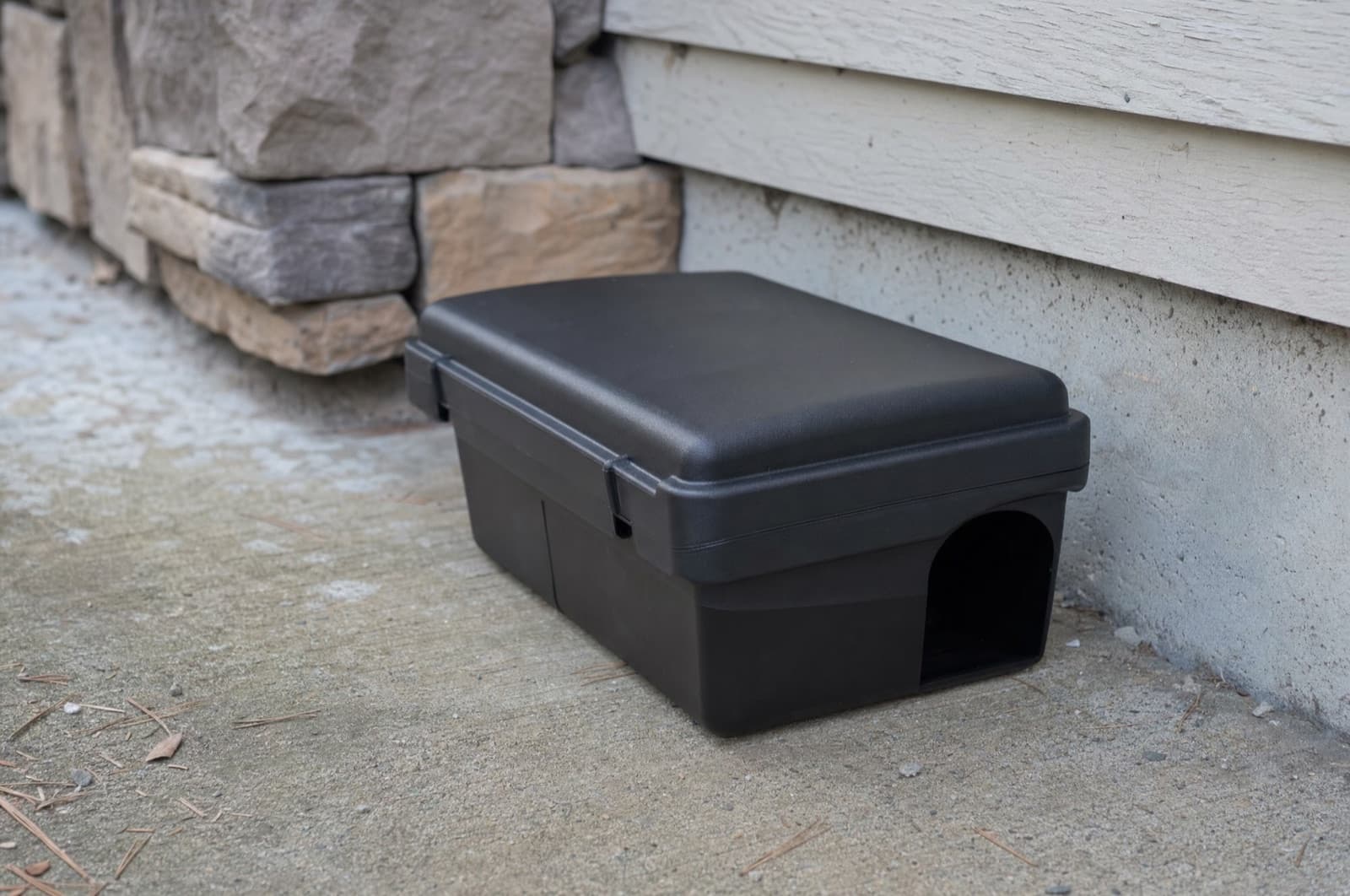
How to Use Catchmaster Baited Rat, Mouse & Snake Glue Traps
At a glance
- Efficacy: Weak
- Best job: A narrow monitoring role in dry indoor areas where poison and snap traps are ruled out
- Format: Non-toxic pre-scented adhesive glue board that captures by entanglement — no poison, no quick kill; labeled for rats, mice, and snakes
- Technique: Easy technique
Does this product actually work?
Weak as a rodent control tool, with a genuine welfare problem — a monitoring aid at best, not a way to solve a rat or mouse infestation.
This is an honest weak grade, not a harsh one: glue boards catch what wanders across them, not what a technician has actively targeted, and rats in particular are strong enough and wary enough to frequently avoid or escape a glue surface entirely. Independent welfare reviews describe the impact on a trapped animal as prolonged and severe when checks aren't frequent, and a growing number of jurisdictions restrict or ban glue traps outright for exactly that reason. Use it, if at all, as a short-term monitoring tool to confirm where activity is happening — then switch to a snap trap, an electronic trap, or a professional program to actually resolve it.
Best for
A narrow monitoring role in dry indoor areas, or occasionally capturing a mouse, where poison and snap traps are specifically ruled out.
Skip it for
Rats as a control strategy — they routinely detect and avoid or physically pull free of glue boards — and any welfare-sensitive household or setting.
What it is — and what it's really for
The label is the law. Here's the honest read on the format, the one job it does well, and the job people wrongly buy it for.
The technique walkthrough
Where DIY succeeds or fails is in the placement, patience, and the small pro moves the label never mentions. Follow the label; these are the technique details on top of it.
This is an easy trap to place and, honestly, a difficult one to fully justify for rodent control — the real technique question is whether to use it at all, and if so, how to limit the harm it can cause.
Decide whether it's the right tool first
Before placing a glue board, consider whether a snap trap, electronic trap, or bait station would serve the same goal with a better control rate and fewer welfare concerns — reserve glue boards for monitoring or situations where those other tools are specifically ruled out.
Common mistakeReaching for glue traps as a first-line rat-control method — extension and welfare sources both note rats frequently avoid or escape them.Place it flush along walls, in dry areas only
If you proceed, place the board flush along walls on active runway evidence — droppings, gnaw marks, grease rub — in a dry indoor location.
CautionCold, dust, and humidity all reduce adhesive tack, making the board even less effective.Never add oily bait to the glue surface
If the board isn't pre-baited, do not add peanut butter or another oily bait directly to the adhesive — oil breaks down the tack and reduces capture ability.
Check it very often
Check the trap at minimum daily, and ideally more often — an animal caught on a glue board is immobilized rather than killed and can suffer for an extended period if left unchecked.
CautionProlonged, unchecked capture is a significant animal-welfare concern and a reason several jurisdictions restrict this format.Use it as intel, not as the fix
Treat a capture (or lack of one) as information about where activity is concentrated, then deploy a snap trap, electronic trap, or bait station at that location for actual control.
Escalate for rats or any established activity
For rats specifically, or for any infestation that persists, move to a more effective control method or a licensed professional rather than continuing to rely on glue boards.
Do & don't
- Use it as a short-term monitoring tool, not a primary control method.
- Place flush along walls in dry indoor areas only.
- Check it at least daily — more often if possible.
- Switch to a snap trap, electronic trap, or bait station once you've confirmed where activity is.
- Don't rely on it as a rat-control method — rats frequently avoid or escape glue boards.
- Don't add oily bait directly to the glue surface — it breaks down the tack.
- Don't leave it unchecked — prolonged capture causes real suffering.
- Don't place it in cold, dusty, or humid areas where tack fails quickly.
- Don't place it where pets, birds, or other non-target animals can reach it.
Where it works vs. where it fails
No product fixes everything. This is the honest boundary — the situations it genuinely handles, and the ones it simply won't.
Where it works
- Used briefly as a monitoring tool to confirm where mouse or rodent activity is concentrated
- Placed in a dry, indoor, low-traffic area away from pets and non-targets
- Checked very frequently so any capture is resolved quickly
- The household has already ruled out snap traps, electronic traps, or bait stations for a specific reason
Where it fails
- Rats are the target — they routinely detect, avoid, or physically escape glue boards
- It's relied on as a standalone control method for an actual infestation
- It's placed in cold, dusty, or damp conditions where the adhesive loses tack
- It isn't checked frequently — the welfare cost becomes significant and the trap still hasn't solved the underlying problem
Mistakes that waste the product
Using glue boards as the primary rat-control method
Rats are strong and wary enough to frequently detect, avoid, or pull free of glue surfaces, so this format has a genuinely low true control rate against rats specifically.
Leaving a placed trap unchecked for more than a day
An animal caught on a glue board is immobilized, not killed, and can suffer for an extended period — this is the format's central welfare problem.
Adding oily bait to the adhesive surface
Oil breaks down the glue's tack, reducing the board's already-limited ability to hold a capture.
Placing it where non-target animals or pets can access it
Glue boards are non-selective — they can catch birds, pets, or other non-target animals, not just the intended rodent.
What to expect — and when
Judge this format by what it honestly is — a monitoring aid with occasional incidental captures, not a population-control tool.
Placement
Capture, if it happens, is immediate on contact — there's no waiting period like with a toxicant.
Ongoing use
Expect low, inconsistent capture rates, especially against rats; mice may be caught more often but still inconsistently compared to a well-placed snap trap.
As a monitoring tool
The real value shows up as intel — confirming which runways see traffic so you can place a more effective control device there.
When to stop DIY & call a pro
Glue boards have one of the lowest control ceilings in this hub. These are the signals to move past them entirely:
Rats are the target at all
Rats frequently avoid or escape glue boards, so relying on this format for rat control is unlikely to resolve the problem regardless of placement.
Any activity persists after switching to glue-board monitoring plus a more effective trap or bait
Persistent activity despite a properly targeted follow-up device signals a population or entry-point problem beyond consumer-scale tools.
You can't commit to checking placements very frequently
Infrequent checking turns a monitoring tool into a welfare problem without improving control — a professional program doesn't carry that same dependency.
Sign appears across multiple rooms or floors
That spread points to an established population that needs inspection depth and placement density beyond what glue boards, or any single homeowner-scale tool, can match.
Glue boards are best treated as a short bridge to a real solution — Anchor's licensed NH technicians bring the trapping, baiting, and exclusion methods that actually resolve rodent activity, with the welfare and effectiveness a glue board can't match. Free inspection, same-day service across southern and central New Hampshire.
Glue traps not solving your rat or mouse problem?
Is it safe for pets & kids?
The short version lives here; the full per-species verdict lives on this product's pet-safety page.
This is a non-toxic, pesticide-free device — there's no poisoning risk. The real concern is welfare and non-target capture: glue boards are indiscriminate and can catch pets, birds, or other animals in addition to the intended rodent, and a trapped animal can suffer for hours if not found promptly.
Re-entry: Keep placements out of reach of pets and children, and check every placement at least once daily. If a pet becomes stuck, contact a veterinarian rather than attempting home removal.
Rat and mouse pressure in New Hampshire
Rats and mice head indoors across southern and central New Hampshire once fall cooling removes their outdoor food and cover — and Norway rats in particular burrow in close along foundations, woodpiles, and compost near homes before they move in. Glue boards have a weak control rate against rats and raise real welfare concerns if left unchecked, so Anchor recommends using this product, if at all, only as brief monitoring — then switching to trapping, stationed baiting, or a professional inspection across Manchester, Nashua, Concord, and the surrounding towns.
Service area
Southern New Hampshire
Anchor Pest Services · NH license #782664 · NEPMA member · family-owned since 2017.
Frequently asked
Sources & further reading(4)
- [1]RSPCA Knowledgebase — What Are Glue Boards and Why Are They Inhumane
Welfare impact of prolonged glue-board capture and rats' tendency to avoid or escape glue surfaces
independentverified 2026-07-14 - [2]MSPCA — Glue Traps
Animal-welfare concerns and jurisdictional restrictions on glue-trap use
independentverified 2026-07-14 - [3]Motomco (Catchmaster parent) — Using Tomcat Traps & Glue Boards
Manufacturer placement guidance and product format (facts only)
manufacturerverified 2026-07-14 - [4]Humane World for Animals — Glue Traps FAQ
Welfare and non-target capture concerns with glue-trap use
independentverified 2026-07-14
Written & reviewed by
VerifiedDaniel Brady
NH-Licensed Pesticide Applicator · License #782664 (NHDAMF, RSA 430)
Daniel Brady is the New Hampshire–licensed applicator behind Anchor Pest Services, a family-owned pest control company serving the Manchester area since 2017.
Last updated July 2026
Related products in this category
Same shelf, different jobs — the dot shows each product's honest efficacy verdict at a glance.
Professional Pest Control
When Glue Traps Aren't Getting the Job Done
Glue boards are a weak, welfare-sensitive tool, particularly against rats. Anchor Pest Services brings effective trapping, stationed baiting, and exclusion work across southern and central New Hampshire. Family-owned since 2017, NH license #782664.
- Effective trapping and baiting, not glue-board guesswork
- NH-licensed applicators (#782664)
- Free inspection — same-day service across southern NH
NH License #782664 · No obligation · We answer in person
Your next step
- Book a NH pro
Rodent Control
Book now - Book a NH pro
Pest Control Services
Licensed, family-owned pest control across southern NH.
Book now - What to do next
Is the Baited Rat, Mouse & Snake Glue Trap by Catchmaster Safe for Pets?
Read the answer - What to do next
Is the Mouse & Insect Glue Trap by Catchmaster Safe for Pets?
Read the answer - What to do next
Are Glue Traps Effective for Mice?
Read the answer - Also relevant
Is the Baited Rat, Mouse & Snake Glue Trap by Catchmaster Safe for Pets?
Read the answer