
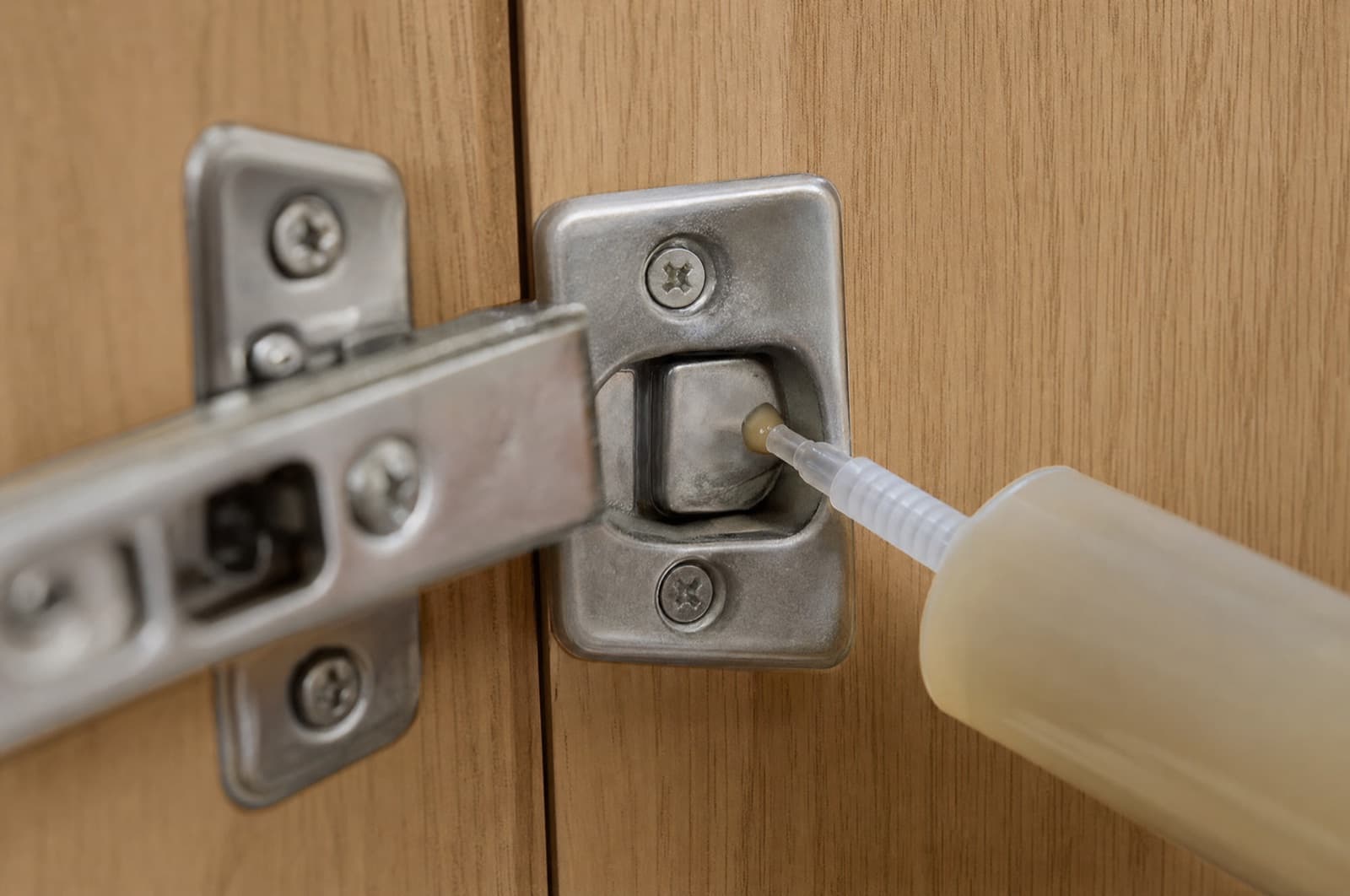
How to Use Advion Cockroach Gel Bait
At a glance
- Efficacy: Workhorse
- Best job: Reaching a hidden harborage population through colony-wide secondary kill, not just the roaches you see at night
- Format: Syringe/tube gel bait applied as small spots, roughly 1/4-inch diameter (EPA Reg. No. 100-1484)
- Technique: Finicky technique
Does this product actually work?
A genuine workhorse for cockroaches — but placement is finicky, and it earns its grade almost entirely on technique.
Placed as many small dots directly at harborage and left completely uncontaminated, Advion Cockroach Gel does something a spray or fogger structurally can't: it reaches the roaches you never see. Peer-reviewed field trials on indoxacarb gel found strong reductions in visible roach counts, and lab work has documented a single bait-fed roach's feces and carcass killing dozens of nestmates through secondary and even tertiary transfer. It stalls against a truly heavy, multi-room infestation, against roach populations with documented sweet-bait (glucose) aversion, or wherever sanitation and competing food give roaches an easier meal than the gel.
Best for
German-cockroach and large-roach (American, Oriental, brown-banded) infestations in cracks, crevices, and appliance voids where dots can be placed near harborage.
Skip it for
A large, established, building-wide German-roach infestation as a sole tool, and any food-contact or high-heat surface.
What it is — and what it's really for
The label is the law. Here's the honest read on the format, the one job it does well, and the job people wrongly buy it for.
The technique walkthrough
Where DIY succeeds or fails is in the placement, patience, and the small pro moves the label never mentions. Follow the label; these are the technique details on top of it.
This gel is one of the highest-payoff corrections in this hub precisely because it's finicky to place right — the mechanism only works if the dots are small, numerous, near harborage, and never contaminated by a spray.
Inspect with a flashlight before placing anything
Look for fecal spotting, shed skins, and roach activity behind and under appliances, in cabinet corners, sink cavities, and hinges — that's where dots go, not the open floor.
Common mistakePlacing dots wherever is convenient instead of where an inspection actually found harborage or activity signs.Place many small dots, not a few large ones
Lay down numerous small spots, roughly 1/4-inch in diameter, spread across every accessible harborage point rather than a handful of large deposits.
Pro moveConcentrate re-baiting where dots are consumed fastest — that tells you where the active roach traffic actually is.Common mistakeSqueezing one big blob into an obvious spot — it dries out and skins over faster than many small dots and covers far less harborage.Keep gel off food-contact, hot, and greasy surfaces
Never place dots on countertops, dishes, or food-prep surfaces, and avoid surfaces above roughly 130°F where the bait can run or melt.
CautionClean visible grease or dust off the target spot first so the gel adheres and stays attractive.Never spray insecticide or fog the room 'for good measure'
Keep all aerosols, foggers, and harsh-scented cleaners away from placed dots entirely, and don't wipe the placement area with cleaner.
Common mistakeFogging or spraying near the gel — this is the single most damaging and most common mistake in this cluster; repellent residue drives roaches away from the exact dot they need to eat.Improve sanitation around (not on) the placements
Clean up crumbs, grease, and standing food elsewhere in the kitchen so the gel competes better against real food, without disturbing the dots themselves.
Pro moveFix small moisture sources (a slow drip, a damp sink overnight) — roaches need water as much as food, and drying out competing sources helps the bait win.Inspect and refresh consumed or dried dots
Check placements periodically and re-bait spots that have been eaten, dried out, or picked up dust and grime.
Common mistakeAssuming one round of placement is a permanent fix — a depleted or skinned-over dot stops working long before it looks obviously gone.
Do & don't
- Inspect with a flashlight and place at confirmed harborage
- Use many small dots, not a few large blobs
- Improve sanitation around the placements
- Keep gel off food-contact and hot surfaces
- Refresh consumed or dried-out dots
- Don't spray insecticide or fog the room near placements
- Don't smear one large blob instead of many small dots
- Don't place on countertops or food-prep surfaces
- Don't kill visible roaches at the bait
- Don't expect a heavy infestation to clear in days
Where it works vs. where it fails
No product fixes everything. This is the honest boundary — the situations it genuinely handles, and the ones it simply won't.
Where it works
- Roach activity is visible but not yet a dense, multi-room infestation
- Harborage points (behind/under appliances, cabinet corners, sink cavities) can be found and accessed
- Sanitation can be improved so competing food and grease don't outcompete the gel
- You can tolerate a days-to-weeks timeline without switching to a spray or fogger
Where it fails
- The infestation is already dense and building-wide (a real DIY ceiling, not a placement mistake)
- The local roach population has documented glucose (sweet-bait) aversion
- Placements are sprayed, fogged, or cleaned with strong cleaner nearby
- Harborage is inaccessible — deep in a wall void or under a slab
- Grease, food debris, or standing water give roaches an easier meal than the gel
Mistakes that waste the product
Spraying or fogging near placed dots
Repellent residue drives roaches away from the exact spot the strategy needs them to visit — the #1 mistake in this cluster.
One large blob instead of many small dots
A single large bead dries out and skins over faster than many small dots and reaches far less harborage.
Placing on food-contact, hot, or greasy surfaces
Grease keeps the gel from adhering and heat above roughly 130°F can melt or run the bait, wasting it.
Poor sanitation nearby
Roaches will feed on crumbs, grease, and standing water in preference to bait if those are easier to reach.
Expecting a fast, total knockdown
Judging the gel on a 24-hour timeline and abandoning it for a spray misreads how the secondary-kill mechanism works.
What to expect — and when
This is a colony-and-harborage tool — judge it on declining roach counts over one to three weeks, not on tomorrow morning.
First few days
Roaches that feed directly on the gel begin dying; you may still see some activity as the colony hasn't yet been dosed through secondary transfer.
Days 3-14
Secondary and tertiary transfer through feces, vomitus, and cannibalism spreads the dose through the harborage population, and visible activity declines.
2-3 weeks
Meaningful population-level control for most household-scale infestations, assuming placements stayed uncontaminated and sanitation improved.
When to stop DIY & call a pro
German-cockroach populations breed faster than a hand-placed gel program can knock them down once numbers pass a threshold — the bait is right, the scale is wrong. Watch for these signals that it's time to escalate:
Roaches are still visible nightly after 2-3 weeks of correctly placed, uncontaminated gel
Persistent activity despite correct technique usually means the population is larger than a consumer gel program is designed to clear, or bait aversion is present.
You see roaches during the day, not just at night
Daytime sightings typically signal a population that has outgrown its harborage — a sign of a heavier infestation than surface counts suggest.
Activity spans multiple rooms, floors, or units in a multi-family building
An infestation at that scale exceeds what homeowner-scale syringe baiting is designed to handle and often needs coordinated, professional treatment.
Bait acceptance appears to stall despite correct placement
That pattern is consistent with glucose (sweet-bait) aversion, a documented resistance trait in some German-roach populations that a licensed technician can work around with a different active or format.
When correctly placed gel still isn't closing out an infestation, Anchor's licensed NH technicians identify the roach species, locate the harborage, and apply targeted, professional treatment matched to the population. Free inspection, same-day service across southern and central New Hampshire.
Roaches still active after three weeks of correct placement?
Is it safe for pets & kids?
The short version lives here; the full per-species verdict lives on this product's pet-safety page.
Advion Cockroach Gel carries the signal word CAUTION and is meant to be placed in small, concealed amounts specifically to keep it out of normal household traffic and away from food-contact surfaces. The practical precaution is deliberate placement, not avoidance of the product.
Re-entry: Place dots only in cracks, crevices, and cavities out of reach of children and pets — never on countertops, dishes, or food-prep surfaces.
Cockroaches in New Hampshire homes
German cockroaches can't survive New Hampshire's cold away from a heated structure, so an indoor infestation here is almost always a year-round, heat-dependent population living in kitchens, bathrooms, and multi-family buildings rather than a seasonal one — which is exactly the harborage-based, patient gel-bait approach this page teaches. Anchor Pest Services serves Manchester, Nashua, Concord, and the surrounding towns when an infestation outgrows what a syringe can finish.
Service area
Southern New Hampshire
Anchor Pest Services · NH license #782664 · NEPMA member · family-owned since 2017.
Frequently asked
Sources & further reading(6)
- [1]EPA Registered Product Label — Advion Cockroach Gel Bait (EPA Reg. No. 100-1484)
Verified active (indoxacarb 0.6%), spot size (~0.5g, ~1/4 in diameter), labeled cockroach species list
epa_labelverified 2026-07-14 - [2]Appel, A.G., 'Laboratory and Field Performance of an Indoxacarb Bait Against German Cockroaches,' J. Econ. Entomol. 96(3):863-870 (2003)
Indoxacarb gel bait significantly reduced visual German-cockroach counts in a controlled field trial
academicverified 2026-07-14 - [3]DeVries, Appel et al., 'Cockroaches as Trojan Horses for Control of Cockroach Aggregations With Baits,' J. Econ. Entomol. 116(2):529 (2023)
Indoxacarb bait causing secondary and quaternary mortality through coprophagy, necrophagy, and cannibalism
academicverified 2026-07-14 - [4]Wing et al., 'Bioactivation and mode of action of the oxadiazine indoxacarb,' Crop Protection (2000)
Indoxacarb bioactivation to DCJW, a sodium-channel blocker, giving delayed action suited to colony transfer
academicverified 2026-07-14 - [5]Wada-Katsumata & Schal, 'Glucose aversion: a behavioral resistance mechanism in the German cockroach,' Current Opinion in Insect Science (2024 review, citing 2021 Insects study)
Glucose (sweet-bait) aversion documented in a variable share of field German-cockroach populations — a real reason correctly placed sweet gel can plateau
academicverified 2026-07-14 - [6]Syngenta — Advion Cockroach Gel Bait product label page
Placement directions ('several small applications... more effective than 1 or 2 large quantities') and labeled species (facts only, not the efficacy verdict)
manufacturerverified 2026-07-14
Written & reviewed by
VerifiedDaniel Brady
NH-Licensed Pesticide Applicator · License #782664 (NHDAMF, RSA 430)
Daniel Brady is the New Hampshire–licensed applicator behind Anchor Pest Services, a family-owned pest control company serving the Manchester area since 2017.
Last updated July 2026
Related products in this category
Same shelf, different jobs — the dot shows each product's honest efficacy verdict at a glance.
Professional Pest Control
When Correct Gel Placement Still Isn't Enough
A gel bait genuinely reaches harborage a spray can't — but a heavy, building-wide infestation or a bait-averse population can outgrow what a consumer syringe is designed to handle. Anchor Pest Services treats the actual source with targeted, licensed methods across southern and central New Hampshire. Family-owned since 2017, NH license #782664.
- Targeted harborage treatment, not just more bait
- NH-licensed applicators (#782664)
- Free inspection — same-day service across southern NH
NH License #782664 · No obligation · We answer in person
Your next step
- Book a NH pro
Cockroach Control
Book now - Book a NH pro
Pest Control Services
Licensed, family-owned pest control across southern NH.
Book now - What to do next
Is Advion Cockroach Gel Bait Safe for Pets?
Read the answer - What to do next
Is Advion Ant Gel Bait Safe for Pets?
Read the answer - Also relevant
Is Advion Cockroach Gel Bait Safe for Pets?
Read the answer - Also relevant
Chemical Control for Roaches, Silverfish, Crickets & Termites
Read the answer