
Is Advion Cockroach Gel Bait Safe for Pets?
At a Glance
- Product: Cockroach Gel Bait by Advion · Advion
- Active ingredient: Indoxacarb 0.6%
- Re-entry: Not applicable in the spray sense; placements should be permanently out of pet reach, not just temporarily.
- Cat owners: Cats differ — read the cat card below
The short, honest answer
The score rolls up every per-species verdict below, weighted by the honest exposure that matters — a chewed-open tube, not a hidden dab — and is checked against the EPA label and veterinary toxicology.
A small crevice dab is low-concern — but a chewed-open tube is a real exposure that warrants a call.
Advion Cockroach Gel Bait (indoxacarb 0.6%, EPA Reg. No. 100-1484) is a genuinely differentiated bait: indoxacarb is a "pro-insecticide" that only becomes fully toxic after enzymes largely specific to insects convert it, which is a real, sourceable safety advantage over immediately-active neurotoxins. That does not make it harmless — mammals can still show toxicosis at sufficient exposure, and cats carry an added methemoglobinemia risk. The honest bottom line: a pet licking a properly placed crevice dab is a low-concern event, but a dog or cat that finds and chews open the whole syringe is a genuine poisoning risk. Placement out of pet reach, not drying time, is what keeps this product safe.
General information, not veterinary advice. For a suspected exposure, contact your veterinarian or a pet-poison hotline. Verdict checked 2026-07-13 against the EPA label and veterinary toxicology.
It's not one answer — it's one per animal
Cats, birds, and fish routinely differ sharply from dogs. That contrast is the whole point of this scorecard, and no manufacturer page draws it.
- DogsCaution
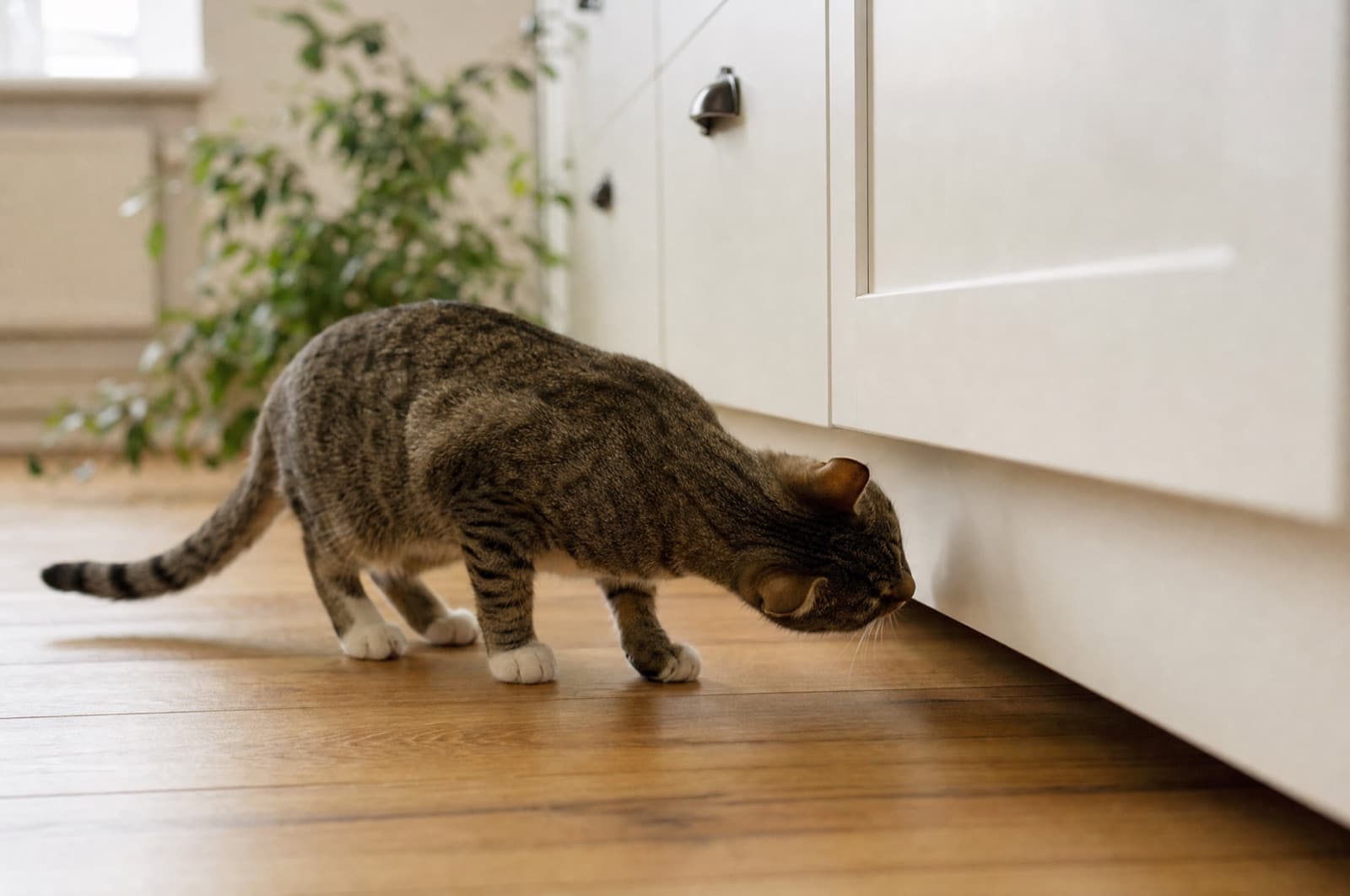
- CatsCaution
- Small mammalsCaution
- BirdsCaution
- FishAvoid
Tolerated in normal crevice placements — a chewed-open tube is the real risk
Dogs generally tolerate incidental indoxacarb exposure, but a dog that chews open a gel syringe ingests far more than a crevice dab, and oxadiazine toxicosis (ataxia, lethargy, tremors) is documented in dogs by the Merck Veterinary Manual.
Merck Veterinary Manual — Oxadiazine Toxicosis in Animals
Watch for methemoglobinemia if a cat grooms gel from fur or paws
Cats are the species of particular concern with oxadiazines because indoxacarb can cause methemoglobinemia, a treatable but serious blood disorder per the Merck Veterinary Manual. Grooming gel off paws or fur after brushing against a placement is a realistic exposure route.
Merck Veterinary Manual — Oxadiazine Toxicosis in Animals
Never let rabbits, guinea pigs, or ferrets access placements
A small pet's body size means a given amount of ingested gel is proportionally a much larger dose. Free-roaming small mammals should never have access to a bait placement.
Anchor Pest Services product research
Keep every placement physically inaccessible to a free or cage-free bird
Pet birds exploring gel dabs at counter or floor level could peck at and ingest bait. There's no inhalation concern with a gel, but direct pecking access is the route to prevent.
Anchor Pest Services product research
Never let gel or rinse water reach aquarium or pond water
The EPA label carries environmental-hazard language directing users not to apply to or contaminate water. Never rinse an applicator or dispose of gel where aquarium or pond water is involved.
EPA Registered Product Label (Reg. No. 100-1484)
What's in it — and what it does to pets
Indoxacarb is a prodrug: insect-specific esterase and amidase enzymes convert it into the active metabolite DCJW, a potent sodium-channel blocker. Mammals largely lack this conversion pathway, which underlies its favorable selective toxicity — but the Merck Veterinary Manual notes indoxacarb still has modulating actions on mammalian nicotinic receptors, and mammals can show toxicosis at sufficient exposure. Cats carry an added methemoglobinemia risk not shared by dogs.
ScienceDirect — Indoxacarb overview; Merck Veterinary Manual — Oxadiazine Toxicosis in Animals
How to use it safely around pets
Gel bait works by placement geometry, not drying time — there's no wet/dry safety window like a spray. The entire safeguard is keeping every dab somewhere a pet's tongue or paw physically cannot reach.
Dab only into true cracks, crevices, and voids
Apply as small dabs behind and under appliances, inside cabinet voids, and along inaccessible structural gaps — never on an open, exposed surface. The EPA label directs applying "to areas not able to be contacted by children or pets."
Wipe any gel that lands on an exposed surface
If a dab lands somewhere visible or reachable, remove it immediately with a damp paper towel rather than leaving it in place.
Store the syringe latched, elevated, and away from pets
Never leave the applicator syringe where a dog or cat can find and chew it — a full syringe is a far larger dose than any single placement.
Recheck placements periodically
Confirm placements remain in their original inaccessible spots and haven't been dislodged by cleaning, renovation, or a curious pet.
There is no "wait until dry" window with a gel bait — the safeguard is where you place it, not when pets can return to the room.
Not applicable in the spray sense; placements should be permanently out of pet reach, not just temporarily.
Store the applicator itself latched and elevated between uses — the syringe holds far more product than any single dab.
Rather not manage bait placement and storage around your pets?
Anchor's licensed NH technicians place bait in true structural voids your pets can't reach.
Symptoms to watch for
A sign, its urgency, and what to do — never a diagnosis. When in doubt, the emergency panel below is one tap away.
- Mild
Drooling or hypersalivation
- Moderate
Vomiting or reduced appetite
- Moderate
Lethargy or weakness
- Serious
Incoordination (ataxia) or head tilt
- Serious
Muscle tremors
- Emergency
Abnormal gum color or labored breathing (cats — possible methemoglobinemia)
Seek emergency veterinary care immediately
Act now — call a vet or a pet-poison line
Do not induce vomiting unless told to
If your pet ate, licked, or chewed into this product, act now — note roughly how much bait is missing and bring the syringe or a photo of the label when you call. This page is general information, not veterinary advice — for a suspected exposure, contact your veterinarian or ASPCA Animal Poison Control (888-426-4435) right away.
What each situation calls for
Your pet licked or nosed a properly placed crevice dab
This is typically a low-concern exposure, but monitor for drooling, vomiting, or lethargy over the next several hours and call your vet or a pet poison hotline if any sign appears.
Your dog or cat chewed open the gel syringe
This is a genuine exposure — note roughly how much gel is missing, then call your vet or ASPCA Animal Poison Control right away and have the syringe or its label on hand.
Your cat's gums look pale, gray, or bluish after exposure
Treat as an emergency — this can indicate methemoglobinemia. Get your cat to a veterinarian or emergency animal hospital immediately.
In the next 60 seconds
- Move your pet away from the bait and any remaining product.
- Estimate how much gel is missing from the syringe or placement — this genuinely helps a vet or hotline gauge the exposure.
- Do NOT induce vomiting unless a veterinarian or poison expert tells you to.
- Have the product name and EPA registration number (100-1484) ready.
- Call your veterinarian or one of the hotlines below.
ASPCA Animal Poison Control
(888) 426-4435
24/7; a consultation fee may apply
Pet Poison Helpline
(855) 764-7661
24/7; a per-incident fee applies
Northern New England Poison Center
(800) 222-1222
24/7 human poison control — for household/child exposure context; call a vet or the pet lines above for pet guidance
Safer pet-friendly alternatives
Honest options that reduce or remove pet-toxicity — no affiliate hype, real caveats included.
Physical exclusion and sanitation
SaferNon-chemical
Sealing entry gaps, fixing moisture issues, and removing food residue reduces the reason roaches are indoors at all — zero pet-toxicity.
Slower than baiting and needs consistency; often best paired with a targeted bait placed correctly.
Sealed, tamper-resistant bait stations
SaferEnclosed bait
Encloses the active away from paws and tongues entirely, cutting accidental-access risk versus an open gel dab.
Still contains an insecticide inside — place where pets and children can't pry the station open.
Mechanical glue monitors
SaferMechanical / detection
Non-toxic monitoring to confirm activity and placement without introducing any insecticide near pets.
Detects and captures roaches but doesn't control an established infestation on its own; keep out of pet-traffic areas.
Professional pet-conscious treatment (Anchor Pest Services)
SaferLicensed professional service
Licensed applicators place bait in true structural voids pets can't access, rather than relying on a homeowner's placement judgment.
A service, not a product — request a pet-safety-focused plan.
Pet-safe cockroach control in New Hampshire
Nearly every roach problem in New Hampshire is the German cockroach — a species that lives indoors year-round in heated structures and can't survive an NH winter outdoors, so it concentrates in the warm cabinet voids and appliance gaps where gel bait belongs. A homeowner can place a general-use gel themselves, but pest control performed for hire in New Hampshire must be done by an applicator licensed by the NH Department of Agriculture, Markets & Food (NHDAMF) Division of Pesticide Control under RSA 430. Anchor Pest Services is NH-licensed (#782664) and treats pet-consciously across Manchester, Nashua, Concord, and the surrounding towns.
NH-licensed applicator #782664 (NHDAMF, RSA 430) · NEPMA member · family-owned since 2017.
Service Area Map
Southern New Hampshire
Frequently asked questions
Sources(4)
- [1]EPA Registered Product Label — Advion Cockroach Gel Bait (Reg. No. 100-1484)
Verified active (indoxacarb 0.6%), placement directives, environmental hazard statement
epa_labelverified 2026-07-13 - [2]ScienceDirect — Indoxacarb Overview
Bioactivation mechanism and selective-toxicity explanation
academicverified 2026-07-13 - [3]Merck Veterinary Manual — Oxadiazine Toxicosis in Animals
Dog and cat toxicosis signs, methemoglobinemia risk in cats
veterinaryverified 2026-07-13 - [4]Syngenta SDS — Advion Cockroach Gel Bait
Concentration and CAS confirmation (facts only, not the verdict)
manufacturerverified 2026-07-13
Written & reviewed by
VerifiedDaniel Brady
NH-Licensed Pesticide Applicator · License #782664 (NHDAMF, RSA 430)
Daniel Brady is the New Hampshire–licensed applicator behind Anchor Pest Services, a family-owned pest control company serving the Manchester area since 2017.
Last updated 2026-07-13
Pet-Safe Professional Pest Control
Skip the Guesswork — and the Chewed-Open-Syringe Risk
DIY gel bait puts placement judgment and syringe storage on you. Anchor Pest Services treats roaches with targeted, pet-aware placement across southern and central New Hampshire. Family-owned since 2017, NH license #782664.
- Pet-conscious targeted treatment
- NH-licensed applicators (#782664)
- Free inspection — same-day service across southern NH
NH License #782664 · No obligation · We answer in person
Your next step
- Book a NH pro
Cockroach Control
Book now - Book a NH pro
Pest Control Services
Licensed, family-owned pest control across southern NH.
Book now - Next step
Where Do Cockroaches Go In The Winter?
Read the answer - What to do next
How to Use Advion Cockroach Gel Bait
Read the answer - What to do next
How to Use Advion Ant Gel Bait
Read the answer - Also relevant
Chemical Control for Roaches, Silverfish, Crickets & Termites
Read the answer