
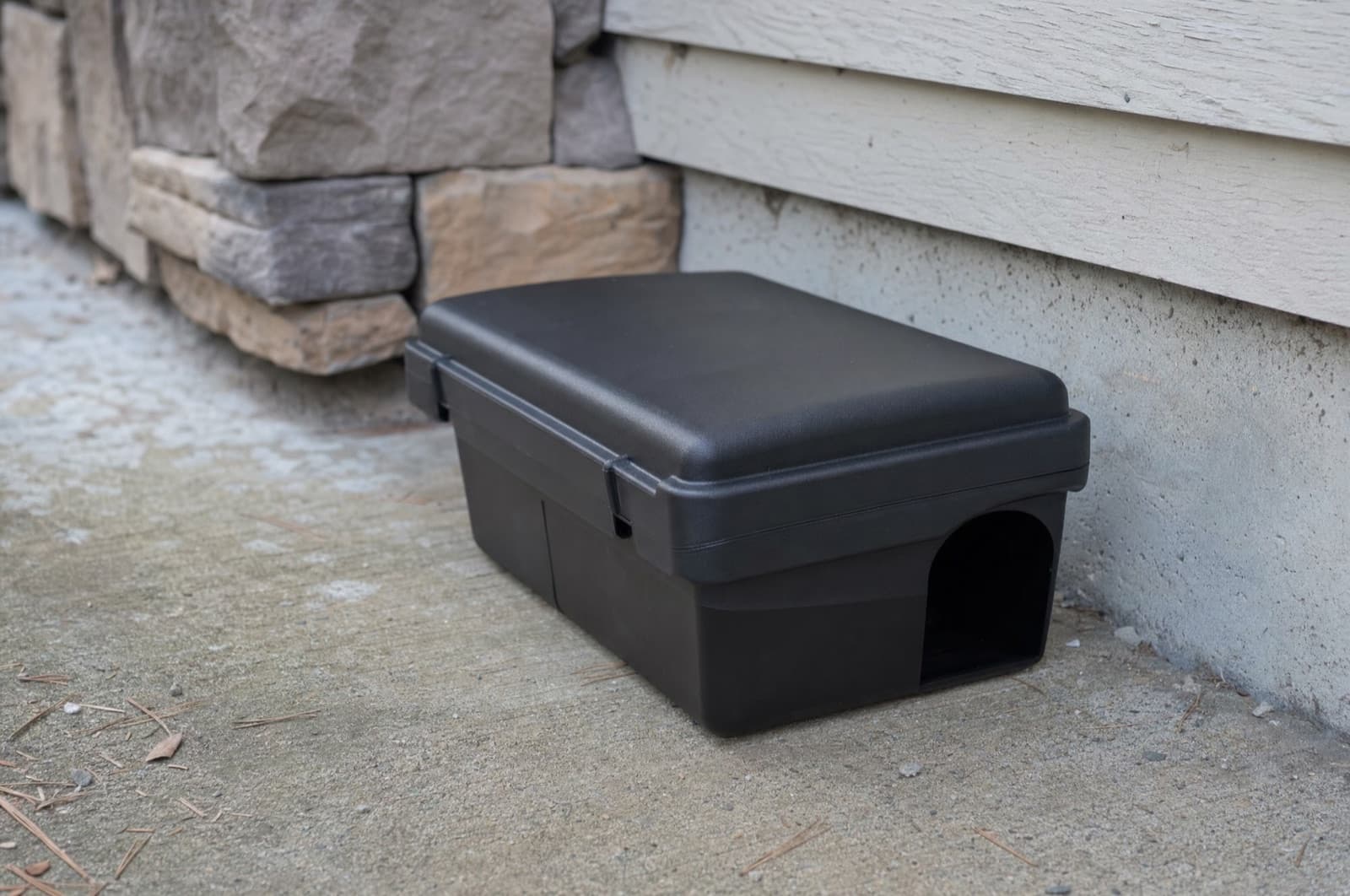
How to Use the Victor Rat Zapper Electronic Rat Trap
At a glance
- Efficacy: Workhorse
- Best job: A clean, hygienic, no-touch kill of rats indoors — once the initial neophobia is overcome
- Format: Battery-powered electronic high-voltage kill trap — an enclosed chamber delivers a roughly 2-minute lethal shock when a rat completes the circuit, with an LED catch indicator for no-see, no-touch disposal; indoor use only, no toxicant
- Technique: Moderate technique
Does this product actually work?
A genuine workhorse for rats indoors — but only if you out-wait their neophobia; rushing it is the most common way this trap 'fails.'
Placed correctly and given time, an electronic trap kills rats quickly and cleanly with no poison and no carcass search in a wall void. Its real ceiling isn't the mechanism — it's rat behavior: rats are strongly neophobic and will avoid a new object in their runway for days, sometimes longer, so a unit that goes untouched for the first few nights isn't broken, it's working as expected. Any evidence of rats inside a structure is itself a signal worth taking seriously; a single zapper handles a rat or two, not an established colony.
Best for
A few indoor rats where a clean, no-touch, non-toxic kill matters and you're willing to let the unit sit unused for a few days before it starts working.
Skip it for
Outdoor or damp locations (it's electronic and indoor-only) and a heavy or established rat infestation, which needs professional-scale placement and exclusion.
What it is — and what it's really for
The label is the law. Here's the honest read on the format, the one job it does well, and the job people wrongly buy it for.
The technique walkthrough
Where DIY succeeds or fails is in the placement, patience, and the small pro moves the label never mentions. Follow the label; these are the technique details on top of it.
This is an easy trap to set up and a genuinely moderate one to use well — the electronics do their job instantly, but rat psychology decides the timeline.
Install fresh batteries
Install four fresh AA alkaline batteries before baiting; weak or rechargeable batteries deliver a weaker shock that can fail to kill cleanly.
Common mistakeUsing older or rechargeable batteries — conductivity and voltage decide whether the kill is fast and humane.Bait with a swab, not your fingers
Apply a small amount of a high-protein bait such as peanut butter to the back wall of the chamber using a cotton swab rather than your hand.
Pro moveBaiting by swab avoids leaving human scent on the bait, which otherwise heightens a rat's natural wariness.Place it lengthwise against the wall
Set the unit lengthwise against the wall on a dry, level, indoor surface, on an active rat runway marked by droppings, gnaw marks, or grease rub.
CautionNever use it outdoors or in damp areas — this is an indoor-only electronic device.Let rats get used to it before expecting a kill
Leave the unit in place, powered on, for several days if needed. Rats are strongly neophobic and often avoid a new object in their runway before investigating it.
Pro moveResist moving the trap during this window — repositioning it resets the acclimation clock.Empty via the LED indicator and keep it clean
Check the LED catch indicator rather than opening the chamber unnecessarily; empty, clean, and dry the chamber after each catch to keep conductivity reliable.
Address sanitation and exclusion alongside it
Remove competing food sources and identify how rats are getting in — trapping controls what's already inside, not the supply line.
CautionAny confirmed rat activity in a structure is a strong reason to also involve a licensed professional.
Do & don't
- Use fresh alkaline batteries — weak batteries mean a weak, unreliable shock.
- Bait with a swab to avoid leaving human scent.
- Place lengthwise against the wall, indoors, on a dry surface, on an active runway.
- Be patient — expect several days before a wary rat approaches a new object.
- Keep the chamber clean and dry between catches.
- Don't use it outdoors or in damp basements or garages — it's an indoor-only electronic device.
- Don't expect a same-night kill from a neophobic rat population.
- Don't handle the bait with bare hands if you can avoid it.
- Don't move the unit repeatedly while rats are still acclimating to it.
- Don't treat one unit as a fix for activity across multiple rooms.
Where it works vs. where it fails
No product fixes everything. This is the honest boundary — the situations it genuinely handles, and the ones it simply won't.
Where it works
- You're dealing with one or a few rats confined to a dry, indoor runway
- You can leave the unit undisturbed for several days while rats overcome their initial wariness
- You want a clean, no-touch, non-toxic kill with no carcass search in a wall void
- The placement is against the wall on real runway evidence, not in the open
Where it fails
- The location is outdoors, damp, or dusty — the electronics and conductivity suffer
- You expect results in the first night or two, before neophobia has worn off
- Rat activity spans multiple rooms or floors — a single unit can't outpace an established population
- The entry point stays open — new rats keep replacing the ones caught
Mistakes that waste the product
Judging the trap as broken after one or two quiet nights
Rats are strongly neophobic and routinely avoid a new object in their runway for several days — an untouched trap in week one is normal, not a failure.
Baiting with bare hands
Leftover human scent on the bait heightens a rat's caution and can slow acceptance further.
Placing it outdoors or in a damp area
This is an indoor-only electronic device; moisture and dust degrade the contacts and can prevent a clean, reliable kill.
Skipping sanitation and exclusion
An open entry point or competing food source keeps feeding new rats in regardless of how many the trap catches.
What to expect — and when
This is a fast, clean kill mechanism wrapped around a slow behavioral timeline — judge it on whether activity declines over one to two weeks, not on the first few nights.
First few days
Little to no activity is normal — rats are typically investigating the new object from a distance before approaching.
Days 3-10
As neophobia fades, rats begin to feed near or enter the unit; catches often start in this window.
Ongoing
Catches should taper as the localized population is caught; continued activity points to a larger population or an unsealed entry point.
When to stop DIY & call a pro
Rats carry a lower DIY ceiling than mice. These are the signals the job is no longer a single-trap job:
Rat activity persists after roughly 2 weeks of correct, patient, undisturbed placement
Sustained activity despite proper technique points to a population or access problem beyond what one indoor unit can resolve.
Sign appears in multiple rooms or you hear activity in wall voids
That spread signals an established colony and inaccessible harborage that a homeowner can't fully inspect or reach.
You can't identify how rats are getting in
Rats can enter through gaps roughly a half-inch across; finding and sealing every one is inspection work most homeowners can't complete alone.
Any confirmed rat activity inside the structure at all
Rats reproduce quickly and are harder to fully clear with consumer-scale tools than mice — professional inspection and exclusion materially shorten the timeline.
Rat activity inside a structure is one of the clearest DIY ceilings in this hub — Anchor's licensed NH technicians combine professional trap and bait placement with a full exclusion inspection to close the entry points a single unit can't address. Free inspection, same-day service across southern and central New Hampshire.
Rats still active after patient, correct trapping?
Is it safe for pets & kids?
The short version lives here; the full per-species verdict lives on this product's pet-safety page.
This is a mechanical/electronic device with no poison involved — there's no ingestion or secondary-poisoning risk to worry about. The precaution is electrical: it delivers a genuine high-voltage shock, so it needs to stay out of reach of curious hands and paws.
Re-entry: Keep the unit out of areas pets or small children can reach while powered on, and always handle it with dry hands.
Rat activity in New Hampshire structures
Rats are less common than mice across southern and central New Hampshire but do turn up around older foundations, farms, and dense urban blocks in Manchester and Nashua, especially as cooler weather pushes them toward structures. Because rat neophobia can stretch a DIY timeline out for a week or more, and because any confirmed rat activity is a strong call-a-pro signal, Anchor Pest Services combines targeted trapping with a full exclusion inspection across Manchester, Nashua, Concord, and the surrounding towns.
Service area
Southern New Hampshire
Anchor Pest Services · NH license #782664 · NEPMA member · family-owned since 2017.
Frequently asked
Sources & further reading(4)
- [1]Victor Pest — Rat Zapper Classic Rat Trap product page
Electronic high-voltage kill mechanism, LED catch indicator, indoor-only use, battery specification (facts only)
manufacturerverified 2026-07-14 - [2]Colonial Pest Control — Rats Are Neophobic
Rat neophobia and the days-long acclimation window before a new trap is accepted
independentverified 2026-07-14 - [3]PCT Online — Capturing Smart Rats Requires Common Sense and New Ideas
Professional-practice guidance on rat trap placement and patience
independentverified 2026-07-14 - [4]Xcluder — How to Seal Entry Points
Exclusion as the necessary complement to trapping for rodents
independentverified 2026-07-14
Written & reviewed by
VerifiedDaniel Brady
NH-Licensed Pesticide Applicator · License #782664 (NHDAMF, RSA 430)
Daniel Brady is the New Hampshire–licensed applicator behind Anchor Pest Services, a family-owned pest control company serving the Manchester area since 2017.
Last updated July 2026
Related products in this category
Same shelf, different jobs — the dot shows each product's honest efficacy verdict at a glance.
Professional Pest Control
When Rat Activity Outgrows a Single Trap
An electronic trap handles a rat or two once neophobia wears off, but confirmed rat activity inside a structure often signals more than one trap can resolve. Anchor Pest Services combines targeted rat control with the exclusion work that ends the cycle, across southern and central New Hampshire. Family-owned since 2017, NH license #782664.
- Professional-scale rat trapping + exclusion inspection
- NH-licensed applicators (#782664)
- Free inspection — same-day service across southern NH
NH License #782664 · No obligation · We answer in person
Your next step
- Book a NH pro
Rodent Control
Book now - Book a NH pro
Pest Control Services
Licensed, family-owned pest control across southern NH.
Book now - What to do next
Is the Rat Zapper Electronic Rat Trap by Victor Safe for Pets?
Read the answer - What to do next
Is the Victor Electronic Mouse Trap Safe for Pets?
Read the answer - What to do next
Are Electronic Traps Effective for Rats?
Read the answer - Also relevant
Is the Rat Zapper Electronic Rat Trap by Victor Safe for Pets?
Read the answer