
Is Ant Block Home Perimeter Ant Bait by Amdro Safe for Pets?
At a Glance
- Product: Ant Block Home Perimeter Ant Bait by Amdro · Amdro
- Active ingredient: Hydramethylnon 0.88%
- Re-entry: No standard "wet re-entry" period applies since this is a granular product, not a spray; visible-granule cleanup is the practical guide.
- Cat owners: Cats differ — read the cat card below
The short, honest answer
The score rolls up every per-species verdict below, weighted by the honest exposure that matters — a chewed-open tube, not a hidden dab — and is checked against the EPA label and veterinary toxicology.
A low-toxicity granular bait, not a spray — the real risk is a pet eating scattered granules, not wet contact.
Ant Block Home Perimeter Ant Bait is a granular hydramethylnon bait (0.88%, EPA Reg. No. 73342-2), not a liquid concentrate — despite sitting in the barrier/concentrate product cluster, it's applied as scattered granules along a foundation band. Hydramethylnon is low in acute mammalian toxicity and not a pyrethroid, so this product is graded on a completely different framework: preventing pets from eating loose granules and keeping granules out of water, rather than wet-surface re-entry timing. Applied as a thin band with no visible piles, this is one of the genuinely lower-risk products in this cluster.
General information, not veterinary advice. For a suspected exposure, contact your veterinarian or a pet-poison hotline. Verdict checked 2026-07-13 against the EPA label and veterinary toxicology.
It's not one answer — it's one per animal
Cats, birds, and fish routinely differ sharply from dogs. That contrast is the whole point of this scorecard, and no manufacturer page draws it.
- DogsCaution
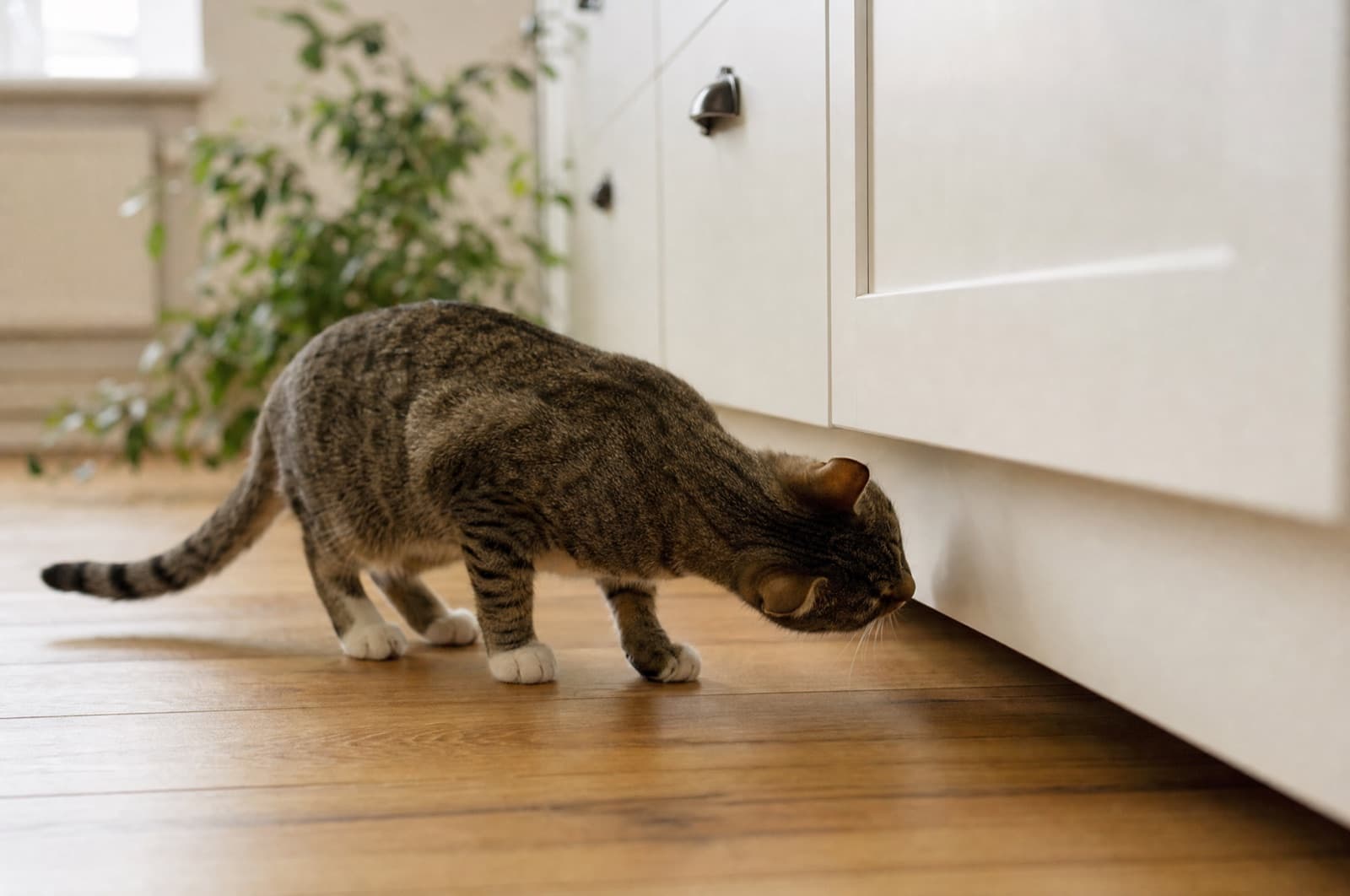
- CatsCaution
- Small mammalsCaution
- BirdsCaution
- FishAvoid
Low chemical toxicity, but don't let a dog vacuum up loose granules
Hydramethylnon has low acute mammalian toxicity — far lower than a pyrethroid — but a dog eating a visible pile of scattered granules can still get mild GI upset, and swallowed packaging is its own foreign-body risk. Keep dogs off the treated band until granules have settled into soil or turf.
NPIC Hydramethylnon fact sheets; ASPCApro bait toxicosis guidance
The feline pyrethroid concern doesn't apply here
This is not a pyrethroid, so the class-level feline-sensitivity issue that applies to most of this cluster doesn't apply to hydramethylnon. Cats rarely eat granular bait, but ingestion of scattered granules should still be prevented.
NPIC Hydramethylnon General Fact Sheet
Foraging pets could ingest scattered granules
A loose small mammal that forages on the ground could eat visible granules. Apply in a narrow band with no piles and keep such pets off the treated zone until granules are no longer visible on the surface.
NPIC Hydramethylnon fact sheets
Low toxicity if eaten, but scatter thinly to avoid pecking piles
NPIC classifies hydramethylnon as slightly toxic to practically non-toxic when ingested by birds. The practical guidance is still to leave no visible piles that a curious bird could peck at.
NPIC Hydramethylnon Technical Fact Sheet
Moderately to very highly toxic to freshwater fish
NPIC data show hydramethylnon is moderately to very highly toxic to freshwater fish. Never apply where granules can wash into drains, storm runoff, ponds, or any waterway.
NPIC Hydramethylnon Technical Fact Sheet
What's in it — and what it does to pets
A metabolic/mitochondrial ATP-synthesis inhibitor that works slowly on ant colonies rather than causing acute nerve poisoning like a pyrethroid. It is low in acute toxicity to mammals when ingested and low-to-practically-non-toxic to birds, but it is notably toxic to freshwater fish.
NPIC Hydramethylnon General & Technical Fact Sheets
How to use it safely around pets
This product is a granular bait applied as a thin band, not a wet spray — the safe-use protocol is about preventing granule ingestion and keeping granules out of water, not about a dry-time re-entry window.
Apply as a thin band, not a pile
Scatter granules in a narrow band, roughly a foot wide, around the foundation as the label directs. Never leave visible mounds or piles.
Avoid wet conditions
The label directs against applying when the ground is wet or when rain is expected within 24 hours, and against letting the product contact people or pets directly.
Keep pets off the band until granules settle
Keep dogs and other pets away from the treated band until the granules are no longer visible on the surface (worked into soil or turf).
Keep it away from water
Never apply where granules can reach drains, storm runoff, ponds, or other water features.
Keep pets off the treated band until granules are no longer visible on the surface and have settled into soil or turf.
No standard "wet re-entry" period applies since this is a granular product, not a spray; visible-granule cleanup is the practical guide.
There is no wet-film re-entry concern with this product — the pet-relevant controls are preventing granule ingestion and keeping granules away from water.
Want ant bait placed without the granule guesswork?
Anchor's licensed NH technicians place bait and barrier treatment with pet-conscious precision.
Symptoms to watch for
A sign, its urgency, and what to do — never a diagnosis. When in doubt, the emergency panel below is one tap away.
- Mild
Mild vomiting
If a meaningful amount of granules was eaten
- Mild
Diarrhea
- Mild
Reduced appetite
- Mild
Drooling
- Serious
Signs of a swallowed foreign object (straining, repeated vomiting)
Packaging ingestion can be a bigger concern than the bait's chemical toxicity
Act now — call a vet or a pet-poison line
Do not induce vomiting unless told to
If your pet ate a meaningful amount of this bait or its packaging, act now — bring the product label or container when you call. This page is general information, not veterinary advice — for a suspected exposure, contact your veterinarian or ASPCA Animal Poison Control (888-426-4435) right away.
What each situation calls for
Your pet ate a visible amount of scattered granules
Contact your vet or a pet poison hotline for guidance; hydramethylnon has low acute mammalian toxicity, but any meaningful ingestion still warrants a call. Do not induce vomiting unless instructed.
Your pet chewed or swallowed the product packaging or container
Watch for repeated vomiting, straining, or lethargy — this is a foreign-body risk separate from the chemical itself — and call your vet promptly.
Granules washed into a fish pond or water feature
Contact a vet or aquatic specialist, since hydramethylnon is notably toxic to freshwater fish; prevent further granules from entering the water.
In the next 60 seconds
- Get your pet away from the treated band and any remaining granules.
- Check whether packaging was chewed or swallowed, which carries its own risk.
- Do NOT induce vomiting unless a veterinarian or poison expert tells you to.
- Have the product name and EPA registration number ready.
- Call your veterinarian or one of the hotlines below.
ASPCA Animal Poison Control
(888) 426-4435
24/7; a consultation fee may apply
Pet Poison Helpline
(855) 764-7661
24/7; a per-incident fee applies
Northern New England Poison Center
(800) 222-1222
24/7 human poison control — for household/child exposure context; call a vet or the pet lines above for pet guidance
Safer pet-friendly alternatives
Honest options that reduce or remove pet-toxicity — no affiliate hype, real caveats included.
Enclosed/tamper-resistant bait stations
SaferEnclosed bait
Sealing the bait inside a station a pet can't open removes the granule-ingestion risk entirely, while still targeting the ant colony.
Still contains an insecticide — place where pets and children can't pry them open.
Professional ant program by Anchor Pest Services
SaferLicensed professional service
A licensed applicator can place bait or barrier product with pet-aware precision and follow up as the colony responds.
A service, not a product.
Vegetation trimming + exclusion
SaferNon-chemical
Keeping vegetation off the foundation and sealing entry points reduces ant pressure with zero pet toxicity.
Won't eliminate an established colony on its own.
Keeping the perimeter dry
SaferNon-chemical
Reducing moisture around the foundation makes the area less attractive to ants, lowering how much bait is needed.
A supporting measure, not a standalone fix for an active infestation.
Pet-safe ant control in New Hampshire
Carpenter ants are New Hampshire's most common and most destructive structural ant, tunneling into moist framing rather than eating wood like termites — which are far less common in NH's cold climate. A perimeter granular bait like Ant Block targets those foraging trails. In New Hampshire, treating a property for hire requires an applicator licensed by the NH Department of Agriculture, Markets & Food (NHDAMF) under RSA 430; Anchor Pest Services (NH License #782664) places pet-conscious bait and barrier work across Manchester, Nashua, Concord, and surrounding towns.
NH-licensed applicator #782664 (NHDAMF, RSA 430) · NEPMA member · family-owned since 2017.
Service Area Map
Southern New Hampshire
Frequently asked questions
Sources(5)
- [1]Amdro EPA Product Label — Ant Block Home Perimeter Ant Bait (Reg. No. 73342-2)
Hydramethylnon 0.88%, granular format, "do not apply … to contact any person or pet" directive
epa_labelverified 2026-07-13 - [2]Amdro — Ant Block Home Perimeter Ant Bait product page
Format confirmation (granules, facts only, not the verdict)
manufacturerverified 2026-07-13 - [3]
- [4]NPIC — Hydramethylnon Technical Fact Sheet
Avian dietary toxicity and freshwater fish toxicity data
npicverified 2026-07-13 - [5]ASPCApro — 10 Most Common Toxicoses in Pets
Bait toxicosis expectations and foreign-body ingestion risk
veterinaryverified 2026-07-13
Written & reviewed by
VerifiedDaniel Brady
NH-Licensed Pesticide Applicator · License #782664 (NHDAMF, RSA 430)
Daniel Brady is the New Hampshire–licensed applicator behind Anchor Pest Services, a family-owned pest control company serving the Manchester area since 2017.
Last updated 2026-07-13
Pet-Safe Professional Pest Control
Even a Low-Toxicity Bait Deserves Careful Placement
Anchor Pest Services applies ant bait and barrier treatments with pet-aware, precise placement across southern and central New Hampshire. Family-owned since 2017, NH license #782664.
- Pet-conscious targeted placement
- NH-licensed applicators (#782664)
- Free inspection — same-day service across southern NH
NH License #782664 · No obligation · We answer in person
Your next step
- Book a NH pro
Ant Pest Control
Book now - Book a NH pro
Pest Control Services
Licensed, family-owned pest control across southern NH.
Book now - Next step
What Attracts Acrobat Ants to Your House?
Read the answer - What to do next
How to Use Amdro Ant Block Home Perimeter Ant Bait
Read the answer - Also relevant
Chemical Ant Control: Why Bait Beats Spray
Read the answer - Also relevant
Chemical Control for Roaches, Silverfish, Crickets & Termites
Read the answer