
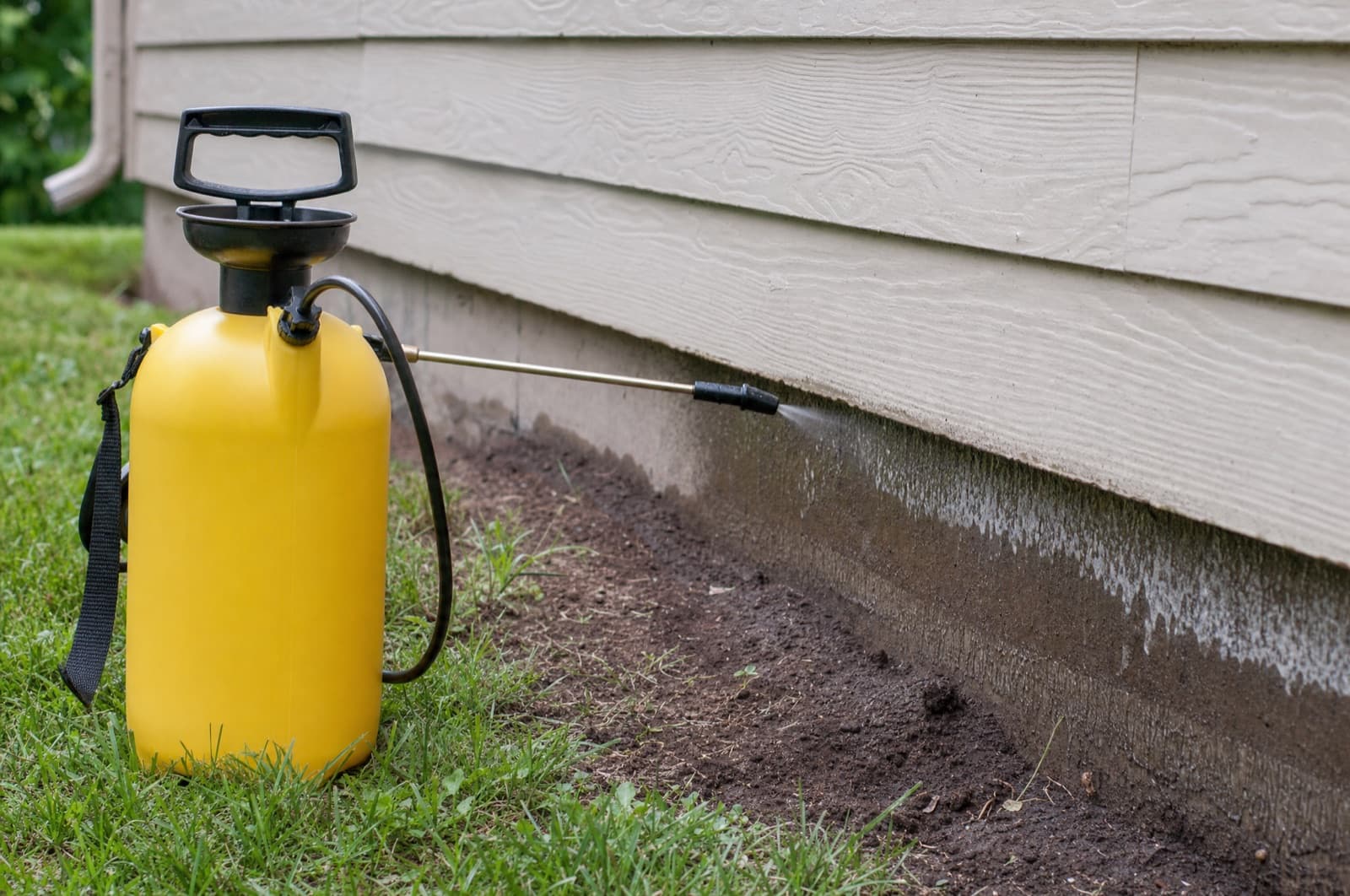
How to Use Amdro Ant Block Home Perimeter Ant Bait
At a glance
- Efficacy: Situational
- Best job: Killing an outdoor ant colony — including the queen — by letting foragers carry the bait home
- Format: Ready-to-use granular bait (shaker bottle) — this is a BAIT, not a spray or liquid concentrate, despite living in the barrier/concentrate category by manifest classification
- Technique: Easy technique
Does this product actually work?
A genuine colony-killer when you let it work — useless the moment you water it in or spray a repellent nearby.
Ant Block is a slow, social bait, not a barrier spray: foragers carry hydramethylnon granules back to the nest, and the colony — including the queen — declines over one to four weeks. That patience is exactly why UC IPM calls baiting 'the only type of insecticide recommended in most situations' for ants. But it fails outright if the bait gets watered in or swept up, or if a repellent spray goes down nearby — the two most common ways people sabotage this product.
Best for
Killing outdoor ant colonies — including carpenter ants — that are sending foragers toward the house, when you can wait one to four weeks.
Skip it for
Instant relief, indoor use, or pairing it with a repellent perimeter spray — either mistake defeats the bait mechanism entirely.
What it is — and what it's really for
The label is the law. Here's the honest read on the format, the one job it does well, and the job people wrongly buy it for.
The technique walkthrough
Where DIY succeeds or fails is in the placement, patience, and the small pro moves the label never mentions. Follow the label; these are the technique details on top of it.
This is an easy product to place and an easy one to ruin — the entire mechanism depends on foragers finding dry granules and carrying them home undisturbed.
Time it to active foraging
Apply during cool morning or evening hours when ants are actively foraging, on dry ground with no rain expected within 24 hours and temperatures above roughly 50°F.
Pro moveWatch for an active trail first — treating a spot ants are already using speeds uptake.Common mistakeApplying to wet ground or right before rain — moisture ruins the bait before foragers can carry it home.Scatter a narrow band
Scatter a narrow band at label width around the home's perimeter, near foundation edges, and directly onto or beside visible trails and mounds.
Pro moveExtension research points to where lawn meets pavement or foundation as a prime interception zone — prioritize those edges.Leave it dry and undisturbed
Do not water it in and do not sweep it up — the granules must stay exactly where you placed them and stay dry to remain attractive.
Common mistakeWatering the band in out of habit — a different granular product type (contact insecticide) requires watering-in, but for this bait, moisture is the enemy.Keep repellent sprays away
Do not apply a perimeter spray or aerosol over or near the bait band while ants are actively feeding on it.
Common mistakeCombining it with a barrier spray 'for extra protection' — the spray kills or repels the very foragers the bait needs alive to carry it back to the nest.Be patient, then check and reapply
Give it at least a week before judging results; check activity at the label's interval (about 30-40 days) and reapply if ants persist.
CautionKeep the shaker bottle and any spilled granules away from children and pets.
Do & don't
- Apply to dry ground with no rain in the forecast
- Place it directly on active trails and colony edges
- Be patient — colony decline takes one to four weeks
- Reapply at the label's check interval if ants persist
- Don't water it in or let it get wet
- Don't combine it with a repellent barrier spray nearby
- Don't use it indoors or on vegetable gardens
- Don't expect same-day results
- Don't sweep up granules before ants find them
Where it works vs. where it fails
No product fixes everything. This is the honest boundary — the situations it genuinely handles, and the ones it simply won't.
Where it works
- An outdoor ant colony (including carpenter ants) is sending foragers toward the house and you can wait 1-4 weeks
- You place it on or beside an active foraging trail
- The band stays dry and undisturbed until ants have fed
- You keep repellent sprays away from the treated area
Where it fails
- You need same-day or emergency relief
- It's applied indoors — it isn't labeled for that use
- Rain or watering-in washes the granules away before foragers find them
- A repellent perimeter spray is used nearby, killing or repelling the carriers
- Multiple or very large colonies need more than one application cycle
Mistakes that waste the product
Watering the bait in
Moisture ruins the granules' attractiveness before foragers can carry them home, unlike a granular contact insecticide, which must be watered in — this is a bait, and baits stay dry.
Spraying a repellent insecticide nearby
A pyrethroid barrier spray kills or repels the very foragers the bait needs alive to carry the toxicant back to the colony, defeating the whole mechanism.
Giving up after a few days
Hydramethylnon is a delayed-action bait; judging it before the colony has had time to feed and decline makes a working product look like a failure.
Applying in cold or wet conditions
Ants forage far less in cold or wet weather, so granules sit untouched and can degrade before they're carried home.
Using it as a barrier instead of a bait
Scattering it as if it were a repellent-spray substitute misses the point — it's a slow colony-transfer bait, not a contact barrier, and treating it that way leads to disappointment.
What to expect — and when
This is a patience product — judge it on colony decline over weeks, not on how many ants you see today.
First few days
No visible change — foragers are finding and carrying the bait, and nothing looks different yet.
About 1 week
Foraging activity typically starts to taper as the colony begins feeding the toxicant to nestmates and brood.
1-4 weeks
The colony, including the queen, declines significantly if the bait stayed dry, undisturbed, and free of nearby repellent spray.
When to stop DIY & call a pro
A granular perimeter bait only works while foragers keep carrying it back — and against a colony nesting inside the structure, that transfer never reaches the queen. These are the signals the job is no longer a shaker-bottle job:
Carpenter ants are involved and you find frass, rustling in walls, or winged swarmers indoors
Carpenter ants nesting in structural wood need inspection and often void treatment that an outdoor perimeter bait alone can't deliver.
Ant activity rebounds after two full bait cycles
Persistent activity after correct, patient application usually means a satellite colony or a nest the perimeter never reached.
A repellent product was accidentally sprayed nearby and activity hasn't recovered
Once foragers are killed or repelled from the bait, restarting the colony-transfer effect may need a professional reset of the whole program.
Ants are indoors and you can't trace the trail back outside
An indoor trail you can't source points to either an indoor nest or an entry point that needs a licensed inspection, not more outdoor bait.
When perimeter baiting isn't closing the loop, Anchor's licensed NH technicians trace the colony, identify carpenter-ant or satellite-nest activity, and apply targeted treatment the retail bait can't reach. Free inspection, same-day service across southern and central New Hampshire.
Colony still active after a full bait cycle?
Is it safe for pets & kids?
The short version lives here; the full per-species verdict lives on this product's pet-safety page.
Hydramethylnon bait is comparatively low in acute mammalian toxicity, but it's still a pesticide — keep the shaker bottle and any loose granules where children and pets can't reach or eat them, and never leave a visible pile.
Re-entry: Keep pets from eating or pawing at the treated band; don't leave loose granules where children or pets can access them.
Carpenter ants and NH's ant season
Carpenter ants are the ant UNH Extension flags alongside termites as New Hampshire's most troublesome structural pest, and they're exactly the kind of colony this bait is built to reach — foraging pressure typically builds through the warm months. Apply Ant Block before that pressure peaks, and if you spot frass, rustling in walls, or winged swarmers indoors, that's beyond what a perimeter bait alone should be asked to fix. Anchor Pest Services treats carpenter-ant colonies and the entry points behind them across Manchester, Nashua, Concord, and the surrounding towns.
Service area
Southern New Hampshire
Anchor Pest Services · NH license #782664 · NEPMA member · family-owned since 2017.
Frequently asked
Sources & further reading(4)
- [1]Amdro EPA Registered Product Label (Reg. No. 73342-2)
Verified active (hydramethylnon 0.88%), granular bait format, labeled ant species, dry/undisturbed application directions
epa_labelverified 2026-07-14 - [2]UC IPM — Ants (Home & Landscape)
Baiting is the recommended approach for most ant problems because it reaches the colony, not just foragers
extensionverified 2026-07-14 - [3]University of Tennessee Extension PB1739 — Managing Fire Ants in Urban Areas
Hydramethylnon bait timeline — maximum control roughly 2-4 weeks after application
extensionverified 2026-07-14 - [4]UNH Cooperative Extension — Carpenter Ants Fact Sheet
Carpenter ants are New Hampshire's most troublesome structural pest alongside termites — a call-a-pro escalation
extensionverified 2026-07-14
Written & reviewed by
VerifiedDaniel Brady
NH-Licensed Pesticide Applicator · License #782664 (NHDAMF, RSA 430)
Daniel Brady is the New Hampshire–licensed applicator behind Anchor Pest Services, a family-owned pest control company serving the Manchester area since 2017.
Last updated July 2026
Related products in this category
Same shelf, different jobs — the dot shows each product's honest efficacy verdict at a glance.
Professional Pest Control
When Perimeter Baiting Isn't Enough
A retail bait reduces a colony over weeks, but it can't reach a satellite nest or carpenter ants already in structural wood. Anchor Pest Services treats the actual source with targeted, licensed methods across southern and central New Hampshire. Family-owned since 2017, NH license #782664.
- Targeted colony and nest treatment, not just retail bait
- NH-licensed applicators (#782664)
- Free inspection — same-day service across southern NH
NH License #782664 · No obligation · We answer in person
Your next step
- Book a NH pro
Ant Pest Control
Book now - Book a NH pro
Pest Control Services
Licensed, family-owned pest control across southern NH.
Book now - What to do next
Is Ant Block Home Perimeter Ant Bait by Amdro Safe for Pets?
Read the answer - What to do next
Is Amdro Kills Ants Bait Stations Safe for Pets?
Read the answer - Also relevant
Is Ant Block Home Perimeter Ant Bait by Amdro Safe for Pets?
Read the answer - Also relevant
Chemical Ant Control: Why Bait Beats Spray
Read the answer