
Is d-CON Corner Fit Mouse Poison Bait Station Safe for Pets?
At a Glance
- Product: d-CON Corner Fit Mouse Poison Bait Station · d-CON
- Active ingredient: Cholecalciferol 0.075%
- Re-entry: Ongoing — check the station's integrity and placement every time you're in the area.
- Cat owners: Cats differ — read the cat card below
The short, honest answer
The score rolls up every per-species verdict below, weighted by the honest exposure that matters — a chewed-open tube, not a hidden dab — and is checked against the EPA label and veterinary toxicology.
d-CON markets this as its 'safest' station, but the cholecalciferol bait inside is still a real poisoning hazard.
d-CON Corner Fit is a compact, low-profile version of d-CON's tamper-resistant bait station, loaded with cholecalciferol (Vitamin D3) bait — the same active family d-CON has used in consumer products since 2018, not bromethalin and not an anticoagulant. d-CON markets Corner Fit as resistant to tampering by children and dogs, and its tight, wall-hugging shape does make it harder for a pet to access than loose bait. But the contents remain a narrow-margin toxicant with no true antidote, and a motivated pet can still sometimes reach a damaged or improperly placed station.
General information, not veterinary advice. For a suspected exposure, contact your veterinarian or a pet-poison hotline. Verdict checked 2026-07-13 against the EPA label and veterinary toxicology.
It's not one answer — it's one per animal
Cats, birds, and fish routinely differ sharply from dogs. That contrast is the whole point of this scorecard, and no manufacturer page draws it.
- DogsAvoid
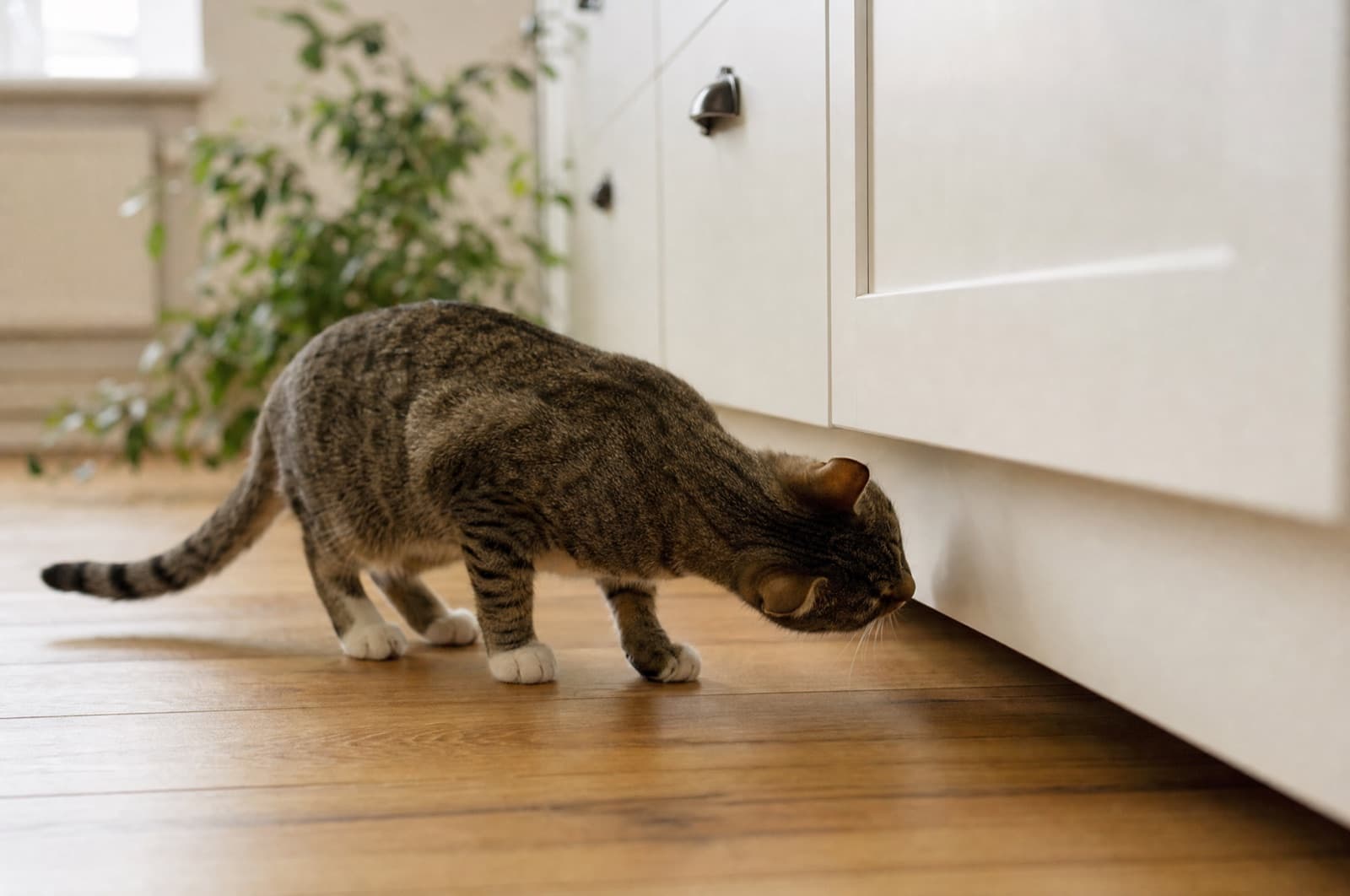
- CatsAvoid
- Small mammalsAvoid
- BirdsAvoid
- FishCaution
Compact station resists tampering, but a motivated dog can still defeat it
The low-profile, corner-fitting design is harder for a dog to grip and chew than a larger station, but it is not indestructible, and cholecalciferol toxicity is serious with a narrow margin of safety and no reliable antidote.
Pet Poison Helpline cholecalciferol; d-CON product page
Primary ingestion is less likely, but exposure is still an emergency
Cats rarely gnaw a bait block directly, and secondary poisoning from a cholecalciferol-affected rodent is considered less common than with anticoagulants — but any confirmed or suspected contact still warrants an immediate call to a vet or poison hotline.
Merck Veterinary Manual — Cholecalciferol Poisoning in Animals
Never place where a pet rodent or rabbit could reach it
Pet rodents and rabbits are close enough to the target species that any accessible cholecalciferol bait is a lethal, undiminished hazard regardless of the station's tamper resistance.
NPIC Rodenticides fact sheet
Product is labeled toxic to birds
Any bird with access to spilled bait, a damaged station, or a poisoned rodent carcass is at risk.
ASPCA — Rodenticide and Your Pet
Low direct risk indoors, but keep bait away from tanks
The label carries an aquatic-toxicity caution; the realistic concern is contaminated material reaching a tank, not a fish eating the bait.
EPA rodenticide labeling
What's in it — and what it does to pets
A metabolic toxicant, not an anticoagulant and not bromethalin. It pushes calcium and phosphorus to dangerous levels, mineralizing soft tissue and damaging the kidneys, heart, and GI tract. There is no true antidote — treatment is extended veterinary supportive care, and signs are often delayed 12–36 hours, which makes 'wait and see' a genuinely dangerous approach.
Merck Veterinary Manual — Cholecalciferol (Vitamin D3) Poisoning in Animals
How to use it safely around pets
Corner Fit's compact housing is a real safety feature, but it delivers a genuine toxicant — treat placement and handling with the same seriousness as any rodenticide.
Fit it snugly into a true corner pets can't work into
The design is meant to sit tight against two walls; use it there, not in open floor space where a pet can approach from any angle.
Keep the housing closed and undamaged
Check regularly that the station is intact. If it's cracked, chewed, or opened, replace or relocate it immediately and treat the area as contaminated.
Refill with gloves and never scatter loose blocks
Load fresh bait with gloves; never place a block outside the housing.
Store spares and dispose of carcasses safely
Keep unused refill bait sealed and out of reach, and glove-handle any rodent carcasses found nearby.
There's no 'dry time' — the bait inside is a hazard for as long as it's loaded, and pets should never be able to reach the station unsupervised.
Ongoing — check the station's integrity and placement every time you're in the area.
If a pet ever manages to open or chew the station, treat it as an active exposure, even without visible symptoms.
Rather not manage rodenticide bait around your pets?
Anchor's licensed NH technicians place and monitor rodent control so your pets never have to be near the bait.
Symptoms to watch for
A sign, its urgency, and what to do — never a diagnosis. When in doubt, the emergency panel below is one tap away.
- Moderate
Increased thirst and urination
Often one of the earliest signs, typically within 12–36 hours
- Moderate
Loss of appetite
- Moderate
Vomiting
- Serious
Lethargy or weakness
- Serious
Black, tarry stool (melena)
- Emergency
Signs of kidney failure (collapse, reduced urination)
Seek emergency veterinary care immediately
Act now — call a vet or a pet-poison line
Do not induce vomiting unless told to
If your pet chewed into the station, ate bait, or may have contacted an affected rodent, act now — bring the packaging or a photo of the label when you call. This page is general information, not veterinary advice — for a suspected poisoning, contact your veterinarian or ASPCA Animal Poison Control (888-426-4435) right away.
What each situation calls for
You find the station cracked, chewed, or open
Treat the area as contaminated — remove pets, collect any visible bait with gloves, and if a pet had access, call your vet or a pet poison hotline right away, even without symptoms.
Your pet may have eaten a poisoned rodent
Call your veterinarian or a pet poison hotline to describe the exposure; secondary poisoning is considered less common with cholecalciferol than with anticoagulants, but any suspected case still warrants a call.
In the next 60 seconds
- Get your pet away from the bait, station, or any dead/dying rodent.
- Do NOT induce vomiting or attempt any home treatment unless a veterinarian or poison expert tells you to.
- Save the packaging — the EPA registration number and 'cholecalciferol'/'Vitamin D3' on the label tell the vet this needs kidney-focused, not bleeding-focused, treatment.
- Call your veterinarian or one of the hotlines below right away — early signs (thirst, vomiting) can take 12–36 hours to appear.
ASPCA Animal Poison Control
(888) 426-4435
24/7; a consultation fee may apply
Pet Poison Helpline
(855) 764-7661
24/7; a per-incident fee applies
Northern New England Poison Center
(800) 222-1222
24/7 human poison control — for household/child exposure context; call a vet or the pet lines above for pet guidance
Safer pet-friendly alternatives
Honest options that reduce or remove pet-toxicity — no affiliate hype, real caveats included.
Victor Tin Cat live-catch trap
SaferLive-catch, no toxicant
A fully enclosed metal box with no poison and no lethal mechanism — the genuinely safest rodent-control format for a home with pets.
Requires daily checks to release captured mice promptly.
Enclosed electronic traps
SaferElectronic, no toxicant
The kill chamber is recessed and sized for a mouse, generally out of reach for typical dogs and cats.
Keep away from very small pets who could fit inside the entrance.
Mechanical exclusion and sanitation
SaferNon-chemical
Sealing entry points and removing food/water sources reduces the rodent problem at its source with zero pet-toxicity.
Slower than baiting and needs consistency.
Professional pet-safe rodent control (Anchor Pest Services)
SaferLicensed professional service
Licensed technicians place and monitor bait or traps with pet-aware protocols, keeping toxicant products out of your pets' reach.
A service, not a product — ask for a pet-safety-focused plan.
Pet-safe rodent control in New Hampshire
New Hampshire's cold winters push mice indoors, which is when homeowners reach for a poison bait station like this. Cholecalciferol raises calcium to toxic levels rather than thinning blood, and a poisoned mouse is still a secondary risk to the barred owls, red-tailed hawks, and great horned owls that hunt rodents across NH. Anchor Pest Services provides licensed, pet-conscious rodent control across Manchester, Nashua, Concord, and the surrounding towns — placement that keeps a sealed station's bait genuinely out of your pets' reach.
NH-licensed applicator #782664 (NHDAMF, RSA 430) · NEPMA member · family-owned since 2017.
Service Area Map
Southern New Hampshire
Frequently asked questions
Sources(7)
- [1]d-CON — Corner Fit Mouse Bait Station retail listing (Home Depot)
Active ingredient confirmation (cholecalciferol 0.075%), tamper-resistant marketing claim
manufacturerverified 2026-07-13 - [2]Pet Poison Helpline — Breaking News: d-CON Rodenticide Ingredient Changes to Vitamin D3
d-CON's 2018 switch to cholecalciferol; correction to the bromethalin assumption
pet_poisonverified 2026-07-13 - [3]Pet Poison Helpline — Cholecalciferol Is Toxic to Dogs
Mechanism, concentration, symptom timeline
pet_poisonverified 2026-07-13 - [4]Merck Veterinary Manual — Cholecalciferol (Vitamin D3) Poisoning in Animals
Toxicology, no true antidote, treatment approach
veterinaryverified 2026-07-13 - [5]VCA Animal Hospitals — Cholecalciferol Vitamin D3 Rodenticide Poisoning
Clinical signs, onset timeline, complications
veterinaryverified 2026-07-13 - [6]ASPCA — The Official Top 10 Toxins of 2024
Rodenticides among top pet toxins; pets exposed when rodents move bait
aspcaverified 2026-07-13 - [7]NPIC — Rodenticides Topic Fact Sheet
Rodenticide classes, primary vs. secondary exposure
npicverified 2026-07-13
Written & reviewed by
VerifiedDaniel Brady
NH-Licensed Pesticide Applicator · License #782664 (NHDAMF, RSA 430)
Daniel Brady is the New Hampshire–licensed applicator behind Anchor Pest Services, a family-owned pest control company serving the Manchester area since 2017.
Last updated 2026-07-13
Pet-Safe Professional Rodent Control
Skip the Poison Guesswork
DIY rodenticide puts the placement, monitoring, and pet-safety burden on you. Anchor Pest Services handles rodent control with licensed, pet-conscious methods across southern and central New Hampshire. Family-owned since 2017, NH license #782664.
- Pet-conscious rodent control planning
- NH-licensed applicators (#782664)
- Free inspection — same-day service across southern NH
NH License #782664 · No obligation · We answer in person
Your next step
- Book a NH pro
Rodent Control
Book now - Book a NH pro
Pest Control Services
Licensed, family-owned pest control across southern NH.
Book now - Next step
How can I protect my attic from mice and rats during winter?
Read the answer - What to do next
How to Use the d-CON Corner Fit Mouse Poison Bait Station
Read the answer - What to do next
How to Use the d-CON Refillable Mouse Bait Station
Read the answer - Also relevant
Chemical Rodent Control: Rodenticides, Risks & the Rules
Read the answer